An AI-made microdrama just premiered on ViX, and it may be the clearest sign yet of where television is heading. La Dama de las Camelias, a new vertical drama from TelevisaUnivision’s ViX MicrO, premiered on 28 November 2026, with generative AI at the centre of how it was made. It is the first fiction project from ViX MicrO AI Labs, turning a French literary classic into a test case for AI-assisted storytelling.
The series adapts Alexandre Dumas fils’s 1848 novel The Lady of the Camellias, moving the story from Paris to turn-of-the-century Mexico. It was produced in just 25 days by a young team that built new production workflows around the technology, recreating early twentieth-century Mexico without building full physical period sets.
What makes the premiere notable is not only the show itself but the economics behind it. TelevisaUnivision’s streaming chief has described generative AI as “almost one more camera”, and has said it could make microdramas far cheaper to produce and far more profitable. If La Dama de las Camelias works, expect many more AI-assisted productions to follow.
Key takeaways
- La Dama de las Camelias, an AI-made microdrama, premiered on 28 November 2026 on ViX MicrO, TelevisaUnivision’s mobile vertical-drama service.
- It is the first fiction project from ViX MicrO AI Labs, with generative AI used for its visuals and cast.
- It adapts Alexandre Dumas fils’s 1848 novel, relocating the story to Mexico during the Porfiriato era, 1876 to 1911.
- The whole production took just 25 days, adapted by writers Gerardo Cadena and José Spataro.
- TelevisaUnivision says generative AI can make microdramas far more cost-effective, calling it “almost one more camera”.
| Detail | What we know |
|---|---|
| Premiere date | 28 November 2026 |
| Platform | ViX MicrO, inside the ViX app, mobile only |
| Source material | Alexandre Dumas fils’s 1848 novel The Lady of the Camellias |
| Setting | Mexico during the Porfiriato era, 1876 to 1911 |
| Production time | 25 days |
| Writers | Gerardo Cadena and José Spataro |
| AI role | Generative AI for visuals and cast; first fiction project from ViX MicrO AI Labs |
A French classic, rebuilt in Porfiriato Mexico
The Lady of the Camellias is one of literature’s most famous love stories. Dumas fils’s 1848 novel follows Marguerite Gautier, a Paris courtesan, and her doomed romance with Armand Duval, and it later became the basis for Verdi’s opera La Traviata. Retold on stage and screen for more than 175 years, it makes a useful test for a new production method: the audience already knows the story, so the experiment is in how it is told.
ViX MicrO’s version moves the tale from Paris to Mexico during the Porfiriato, the 35-year period from 1876 to 1911 when General Porfirio Díaz ruled the country as a de facto dictator. The era was marked by sharp social contrasts: rapid economic modernisation and French-inspired luxury for the wealthy elite, paid for by authoritarian rule and extreme poverty for most Mexicans. That backdrop gives the story’s themes of wealth, status and forbidden love a distinctly Mexican setting.
The adaptation seeks to preserve the emotional depth of the original while giving it its own identity, tailored to the pace of the microdrama format. Short vertical episodes demand fast hooks, cliffhangers and constant momentum, and a classic melodrama suits that rhythm. The choice of material is deliberate: a story audiences already care about, retold in a format built for phones.
How the AI-made microdrama was actually produced
Generative AI is front and centre of La Dama de las Camelias. The series is the first fiction project produced under ViX MicrO AI Labs, and TelevisaUnivision describes it as using generative AI for its visuals and cast. An inspection of the official trailer shows the characters are synthetic, along with the sets, although the company has not said outright that the actors are AI-generated. The production is presented as AI-assisted, with a human creative team steering it, rather than as a fully automated show.
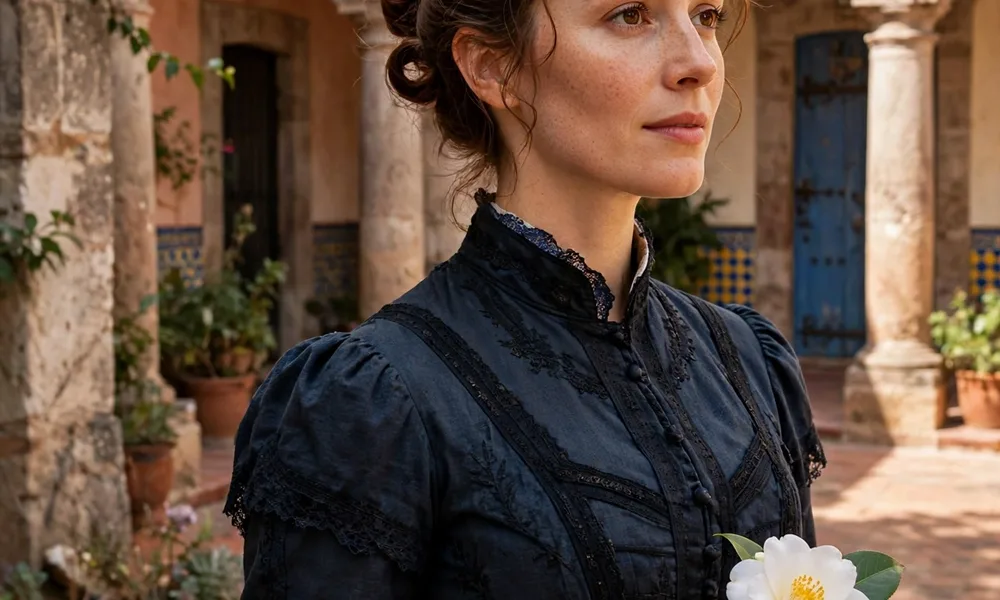
Writers Gerardo Cadena and José Spataro adapted the production, working with a young team that built new workflows around the technology. One of the main challenges was recreating early twentieth-century Mexico, and AI-assisted visuals allowed a distinctive visual approach without building full physical period sets. The tools sped up the work and shaped the visual style, letting the production show historical settings that would have been expensive to build by hand.
The headline number is the schedule: the whole project was produced in just 25 days. For a period drama, even a short-form one, that is strikingly fast. Traditional productions spend weeks on sets, costumes and locations before a single scene is shot. Here, the synthetic approach collapsed much of that timeline.
Why ViX is betting on microdramas
ViX MicrO is TelevisaUnivision’s vertical-drama service, available through ViX exclusively on mobile devices, including smartphones and tablets. It features original vertical-format stories designed for those screens, and La Dama de las Camelias will be available only there. The format is built for the way people watch now: short episodes, held upright, watched in spare minutes.
Microdramas have exploded as a format, and AI is accelerating them. Industry reporting on China, where the format is most mature, puts AI-generated titles at about 95% of roughly 128,000 micro-dramas released in the first quarter of 2026, and reports suggest AI can cut production costs by up to 80%. Those figures come from industry reporting rather than TelevisaUnivision, but they explain why a major streamer is moving fast.
For ViX, the appeal is reach as well as cost. As the leading Spanish-language streaming service, it has a vast audience that watches on phones. A classic story, retold in short bursts with AI-assisted visuals, produces more original content without the cost of traditional telenovela production.
What TelevisaUnivision’s streaming chief says about AI
Rafael Urbina, president of streaming and digital at TelevisaUnivision, described the potential use of generative AI in productions earlier this year. “I think you can look at generative AI today as, as almost one more camera. You can shoot whatever you want with generative AI. We can use it to create backgrounds,” he said. “You could have all the localization work that can also be done through generative AI. So I think across all those dimensions, you’ll see us leaning into that.”
Cost is part of that thinking. Urbina said microdramas run on a different economic model than the company’s traditional business. “The cost structure is very, very important. I think Gen AI is going to allow us to remain very competitive and, and make this very profitable for us.” That is the clearest statement of the strategy: AI is not a gimmick for one show, but a way to make an entire category of content economically viable.
The “one more camera” framing is deliberate positioning. It presents AI as a tool in the hands of human creators, not a replacement for them. Writers adapted the novel, a creative team built the workflows, and AI supplied visuals, sets and cast members that would otherwise have needed actors, locations and construction. Whether audiences accept that distinction will shape how far the approach spreads.
What it means for TV’s future
La Dama de las Camelias is a small show with large implications. If a major streamer can produce a credible period drama in 25 days with AI-assisted visuals, the cost of scripted content falls dramatically and the volume rises just as fast. That matters most for genres and markets traditional budgets cannot serve: historical drama, fantasy, and stories big studios overlook.
It also raises questions the industry has not answered yet. Viewers may not care how a show was made if the story grips them, but synthetic performers sit in an uneasy space: they look human, they emote on cue, and they raise questions about acting work, likeness and disclosure. TelevisaUnivision’s careful language around the cast suggests the company knows this, and how clearly streamers label AI-made content will become a live debate.
The other question is quality. Microdramas are built for speed and volume, and AI makes both easier. The risk is a flood of cheap, same-feeling content that burns out the format before it matures. The defence is curation and craft: strong source material, good writing and a distinctive visual approach. The test will be whether audiences come back for episode two, and whether they can tell, or care, that the actors are not real.
For now, the premiere is a milestone rather than a verdict. A classic novel, a 25-day production, a mobile-only release and a major streamer’s public bet on generative AI add up to a genuine experiment. If it succeeds, AI-assisted microdrama moves from novelty to routine. If it fails, the lesson is that speed alone is not enough.
Your AI microdrama checklist
- Watch La Dama de las Camelias in the ViX app on a phone or tablet, since ViX MicrO is mobile only.
- Pay attention to the visuals: the sets and characters are synthetic, and notice where the AI approach shows.
- Compare the story with Dumas’s novel or Verdi’s La Traviata to see what changed.
- Notice the pacing: microdramas are built around fast hooks and cliffhangers.
- Ask whether the show says it is AI-made, and decide whether that disclosure matters to you.
- Follow ViX MicrO’s next releases to see if AI-assisted production becomes its standard.
The tools behind this shift are already within reach of creators. If you want to experiment with AI-assisted video yourself, our guide to the best AI tools for video editors in 2027 is a good starting point, and our roundup of the best AI tools for photo editing in 2027 covers the image side. To watch it on the big screen at home, see how to set up a smart TV.
Frequently asked questions
What is La Dama de las Camelias?
La Dama de las Camelias is an AI-made microdrama from TelevisaUnivision’s ViX MicrO, premiering on 28 November 2026. It adapts Alexandre Dumas fils’s 1848 novel, relocating the story to Mexico during the Porfiriato era.
Where can I watch La Dama de las Camelias?
The series is available on ViX MicrO, inside the ViX app, exclusively on mobile devices such as smartphones and tablets.
Is La Dama de las Camelias really made with AI?
Yes, generative AI is central to the production. It is the first fiction project from ViX MicrO AI Labs, and TelevisaUnivision describes it as using generative AI for its visuals and cast. The trailer shows synthetic characters and sets, although the company has not said outright that the actors are AI-generated.
How long did it take to produce?
The production took just 25 days. Writers Gerardo Cadena and José Spataro adapted the novel, working with a young team that built new technology-driven workflows to recreate early twentieth-century Mexico.
What is the Porfiriato era?
The Porfiriato is the 35-year period from 1876 to 1911 when General Porfirio Díaz ruled Mexico as a de facto dictator. It brought rapid modernisation and French-inspired luxury for the wealthy elite, alongside authoritarian rule and extreme poverty for most Mexicans.
What are microdramas?
Microdramas are short, vertical-format drama series made for mobile viewing, usually released in brief episodes with fast hooks and cliffhangers. ViX MicrO is TelevisaUnivision’s hub for original vertical stories, available only on smartphones and tablets.
The bottom line
La Dama de las Camelias is a modest premiere with an outsized message. A major Spanish-language streamer has taken a beloved literary classic, rebuilt it in Porfiriato Mexico, produced it in 25 days with generative AI, and put it on phones only. The experiment tests whether AI-assisted production can deliver stories audiences care about at a cost that makes the format profitable.
Whether it succeeds will be decided by viewers, not by press releases. If the story grips people, the technology behind it will fade into the background, and AI-made microdramas will become a normal part of television. If it does not, the industry will learn that speed and savings are no substitute for a story well told.