The AI startup quietly winning over big retail is not a household name, and that is part of the story. Verneek, a small company co-founded by AI scientists Nasrin Mostafazadeh and Omid Bakhshandeh, has built its business by doing one thing well: building artificial intelligence specifically for retailers, rather than selling them another general-purpose tool.
Fortune’s Diane Brady reported on 25 November 2026 that the company has attracted attention from some of the most demanding buyers in the sector. Clients include Ralph Lauren, and strategic investors include Geoffroy van Raemdonck, chief executive of Exemplar Luxury Group, which owns Saks Fifth Avenue, Neiman Marcus and Bergdorf Goodman. Nordstrom, another client, turned to Verneek for help making its AI investments work together.
The timing matters. Black Friday, the biggest shopping day of the year in the United States, arrives with AI agents now participating in the sales, and retailers are trying to work out how to get both bots and people to buy. In September, traffic referred by AI tools generated 83 percent more revenue per visit for American retailers than non-AI traffic, according to Adobe. The question for retailers is no longer whether to use AI, but which partner understands their business well enough to make it pay.
Key takeaways
- Verneek, co-founded by AI scientists Nasrin Mostafazadeh and Omid Bakhshandeh, builds AI specifically for retailers.
- Clients include Ralph Lauren and Nordstrom; strategic investors include the chief executive of the group behind Saks Fifth Avenue, Neiman Marcus and Bergdorf Goodman.
- In September, AI-referred traffic generated 83 percent more revenue per visit for US retailers than non-AI traffic, according to Adobe.
- Nordstrom co-CEO Pete Nordstrom said of Verneek: “These guys have a lane.”
- Verneek’s pitch is to connect merchandising decisions behind the scenes with how employees work and customers buy.
| Fact | Detail |
|---|---|
| Company | Verneek, an AI startup focused entirely on retail |
| Founders | AI scientists Nasrin Mostafazadeh and Omid Bakhshandeh, who are married |
| Reported by | Diane Brady in Fortune’s CEO Daily, 25 November 2026 |
| Clients named | Ralph Lauren and Nordstrom |
| Strategic investor | Geoffroy van Raemdonck, CEO of Exemplar Luxury Group, owner of Saks, Neiman Marcus and Bergdorf Goodman |
| Key statistic | AI-referred traffic generated 83 percent more revenue per visit for US retailers in September, per Adobe |
| Founders’ stated aim | Help consumer brands and retailers take control of their profit and loss |
A small company with big retail clients
Verneek is not a household name, and Brady is open about that. She has followed the founders for several years, has met Mostafazadeh at conferences, and notes that her colleague Ellie Austin profiled the pair in Fortune in 2023. What intrigues her is how much attention the small company has received from major retailers since then.
The client list is weighted toward the sector’s most demanding buyers. Ralph Lauren is a client. Nordstrom, which turned to Verneek for AI help, is another. Strategic investors include Geoffroy van Raemdonck, chief executive of Exemplar Luxury Group, which owns Saks Fifth Avenue, Neiman Marcus and Bergdorf Goodman. Van Raemdonck called the AI company unique at dinner during New York Fashion Week, and its advisory board is, in Brady’s words, a who’s who of retail.
That combination of clients, investors and advisers is unusual for a company of Verneek’s size. Large retailers do not hand their operations to unproven vendors lightly, and the fact that several of them have done so is the clearest evidence that the startup has found a real opening.
What Verneek actually does for retailers
When Brady asked Mostafazadeh what differentiates her approach from a large enterprise tech company, the answer was focus. Verneek builds AI solutions that connect what happens behind the scenes, such as merchandising decisions, with how employees work and how customers buy. The core of what we do, Mostafazadeh said, is help these consumer brands and retailers take control of their profit and loss.
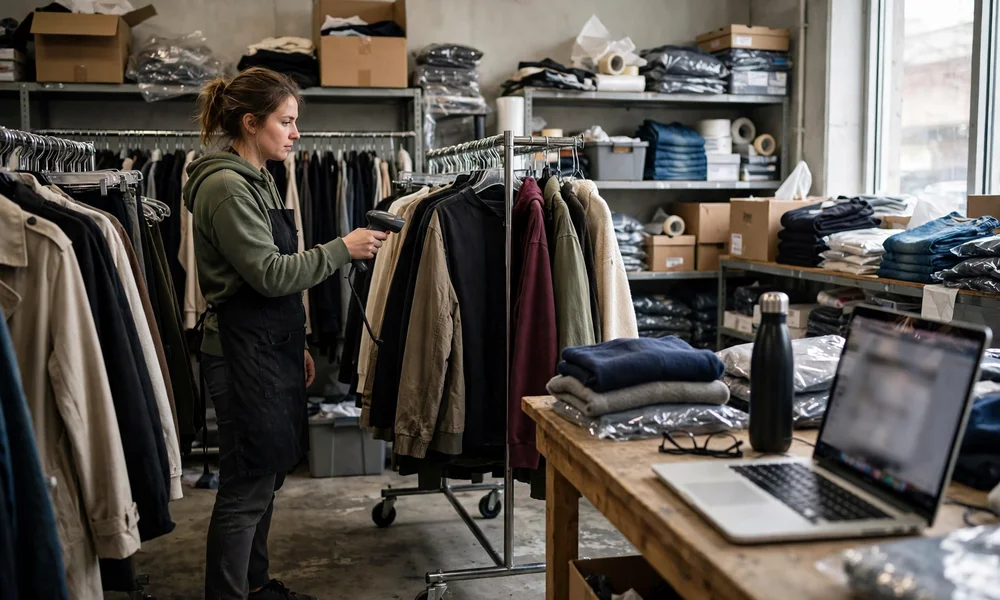
The examples she gave are deliberately practical. One is helping employees troubleshoot a malfunctioning point-of-sale device, the kind of everyday failure that holds up a queue and loses a sale. Another is helping retailers identify what colors are likely to appeal to certain customers next season, turning merchandising from guesswork into a decision backed by data.
That practicality is the point. Verneek is not selling a grand platform or a generic assistant. It is selling tools that fit into the way a retailer already works, linking the back office to the shop floor and the shop floor to the customer. For a sector where margins are thin, that kind of fit matters more than the size of the model behind it.
Why Nordstrom says Verneek has a lane
The most telling quote in Brady’s report comes from Nordstrom co-CEO Pete Nordstrom. “These guys have a lane,” he said, explaining that he does not need more AI tools. He needs partners who understand the business well enough to make the tools work together to solve retail challenges, improve the customer experience and drive more sales.
That distinction, between tools and partners, is the heart of Verneek’s appeal. Retailers are being offered AI products from every direction, and most are general-purpose systems that need heavy adaptation before they do anything useful in a store. A partner that already understands merchandising and store operations can skip that adaptation and start solving problems sooner.
Nordstrom’s view of the customer is equally blunt. Customers don’t ask a lot of questions about how the sausage is made, he told Brady. They just want what they want when they want it. Shoppers do not care about AI at all. They care about finding the right product, at the right price, without friction. The same logic applies to the wider shift toward AI-assisted shopping, where identity and payment questions are already surfacing, as covered in When AI Agents Go Shopping, Identity Decides Who Gets Paid.
AI agents arrive for Black Friday
The report landed two days before Black Friday, the biggest shopping day of the year in the United States, and Brady opened with what is different this year: a whole lot of agents fueled by chips instead of turkey will be participating in those sales. Retailers are trying to figure out how to leverage AI to get bots and people to buy.
In September, traffic referred by AI tools generated 83 percent more revenue per visit for American retailers than non-AI traffic, according to Adobe. That figure does not prove that AI shoppers are better customers in every respect, but it does show that visitors arriving through AI tools are buying more per visit, and retailers have noticed.
Is Verneek’s technology actually better?
Brady is careful about what she does not know. Is their technology better than everyone else’s? I don’t know, she writes. What she does know is that Verneek’s retail specialization and relationships have given it a leg up over some big competitors. That honesty matters, because the report is not a product review.
The distinction is worth keeping in mind. A startup can win clients because its technology is better, because its relationships are stronger, because it specializes, or because of all three at once. In Verneek’s case, the evidence Brady presents points mainly to the second and third: deep retail relationships and a focus narrow enough to understand retail deeply.
That narrow focus is also a risk, and it is one the company has chosen deliberately. A general-purpose AI vendor can sell to any industry. Verneek can only sell to retail. But in a market where retailers say they are drowning in general-purpose tools, being the company that only does retail is the selling point, not the limitation. The same specialization logic is reshaping how retailers choose software, from the tools covered in Retail Software in 2027: What to Use and Why to the AI systems now entering stores.
What it means
Verneek’s rise says less about one startup than about how retailers are buying AI now. The first wave of retail AI was about experiments and pilots. The second wave, visible in this report, is about partners that understand the business and can connect systems that were never designed to work together.
For other AI startups, the lesson is that specialization can beat scale. Verneek cannot outspend the large enterprise vendors, but it does not need to. It needs to understand retail better than they do, and to keep the clients and advisers who prove that it does. For retailers, the lesson is the opposite side of the same coin: the value of AI is not in the model, but in what it does to the profit and loss, the queue at the till, and the colors on the rail next season. As the holiday season shows, AI is already changing how people shop, a shift explored in Black Friday Isn’t Dead — AI and Online Shopping Are Rewriting It.
Checklist: what retailers should ask any AI vendor
- Does the vendor understand retail operations, or does it sell the same tool to every industry?
- Can it connect merchandising decisions with how employees work and customers buy?
- Does it solve everyday problems, such as a broken point-of-sale device, not just demos?
- Can it show results in profit and loss, not only in pilot projects?
- Does it have clients and advisers who actually work in retail?
- Will it work alongside existing systems, rather than demanding a rebuild?
Frequently asked questions
What is Verneek?
Verneek is an AI startup that builds artificial intelligence specifically for retailers. It was co-founded by AI scientists Nasrin Mostafazadeh and Omid Bakhshandeh, who are married to each other, and its tools connect merchandising decisions behind the scenes with how employees work and customers buy.
Which big retailers use Verneek?
Fortune’s report names Ralph Lauren and Nordstrom as clients. Strategic investors include Geoffroy van Raemdonck, chief executive of Exemplar Luxury Group, which owns Saks Fifth Avenue, Neiman Marcus and Bergdorf Goodman.
What does “these guys have a lane” mean?
It is Nordstrom co-CEO Pete Nordstrom’s way of saying Verneek has a clear, narrow focus. He said he does not need more AI tools, but partners who understand retail well enough to make tools work together to solve retail challenges, improve the customer experience and drive more sales.
How is AI changing retail shopping?
In September, traffic referred by AI tools generated 83 percent more revenue per visit for American retailers than non-AI traffic, according to Adobe. AI agents are also participating in holiday sales, and retailers are working out how to get both bots and people to buy.
What makes Verneek different from large enterprise AI vendors?
Its focus. Rather than offering a general-purpose AI tool, Verneek builds technology specifically for retail, linking back-office merchandising decisions with store operations and customer behavior. Its founders say the aim is to help brands and retailers take control of their profit and loss.
Is Verneek’s technology better than its competitors?
Fortune’s Diane Brady says she does not know. What she reports is that Verneek’s retail specialization and relationships have given it an advantage over some much larger competitors, and that major retailers keep choosing it.
The bottom line
Verneek is a small AI startup that has won the attention of big retail by refusing to be general. Its founders build tools for one industry, its clients include Ralph Lauren and Nordstrom, and its investors and advisers come from the top of the retail world. The pitch is simple: connect what happens behind the scenes with how employees work and customers buy.
Nordstrom’s verdict sums it up. He does not need more AI tools. He needs partners who understand the business enough to make the tools work together, and Verneek, in his words, has a lane. Whether that lane stays open depends on whether the startup keeps delivering results that show up in the numbers.