What does someone mean when they say “all generating”? The phrase is unusual enough that it stops you mid-sentence. It could describe a power grid dispatching every plant it has. It could be a clumsy translation of a foreign-language compound. It could even be a typo for something else entirely. The honest answer is that “all generating” has no single fixed definition. Its meaning depends entirely on where you encounter it, and getting it wrong can lead to real confusion, especially in technical settings where precision matters.
This article maps out the most common readings of the phrase, shows how each one works in practice, and explains how to figure out which meaning applies when you run into it. Along the way, it covers the grammar behind compound adjectives, the way power systems talk about “all generating units,” and what to do when the phrase appears in software or everyday writing.
Why “All Generating” Is Ambiguous
English lets speakers stack words together to build new meanings on the fly. “All generating” is a compound adjective in the making: “all” acts as a modifier, and “generating” supplies the core idea. Compounds like this are common in headlines and technical shorthand because they save space. The problem is that they also strip away context.
A few things make “all generating” especially slippery:
- No hyphen, no clarity. Written as two separate words, it can read as a noun phrase (“all generating [units]”) or as an adjective (“an all-generating [system]”).
- Translation artifacts. Many languages form compounds differently from English. A phrase translated word-for-word can land as “all generating” when the original meant something like “universal generator” or “everything-producing.”
- Domain dependence. In power engineering, “generating” almost always refers to electricity production. In software, it usually refers to content or code generation. In casual speech, it might mean nothing technical at all.
The practical lesson: never assume. Ask which field the speaker or writer is working in before you interpret the phrase.
Reading One: Power Systems and “All Generating Units”
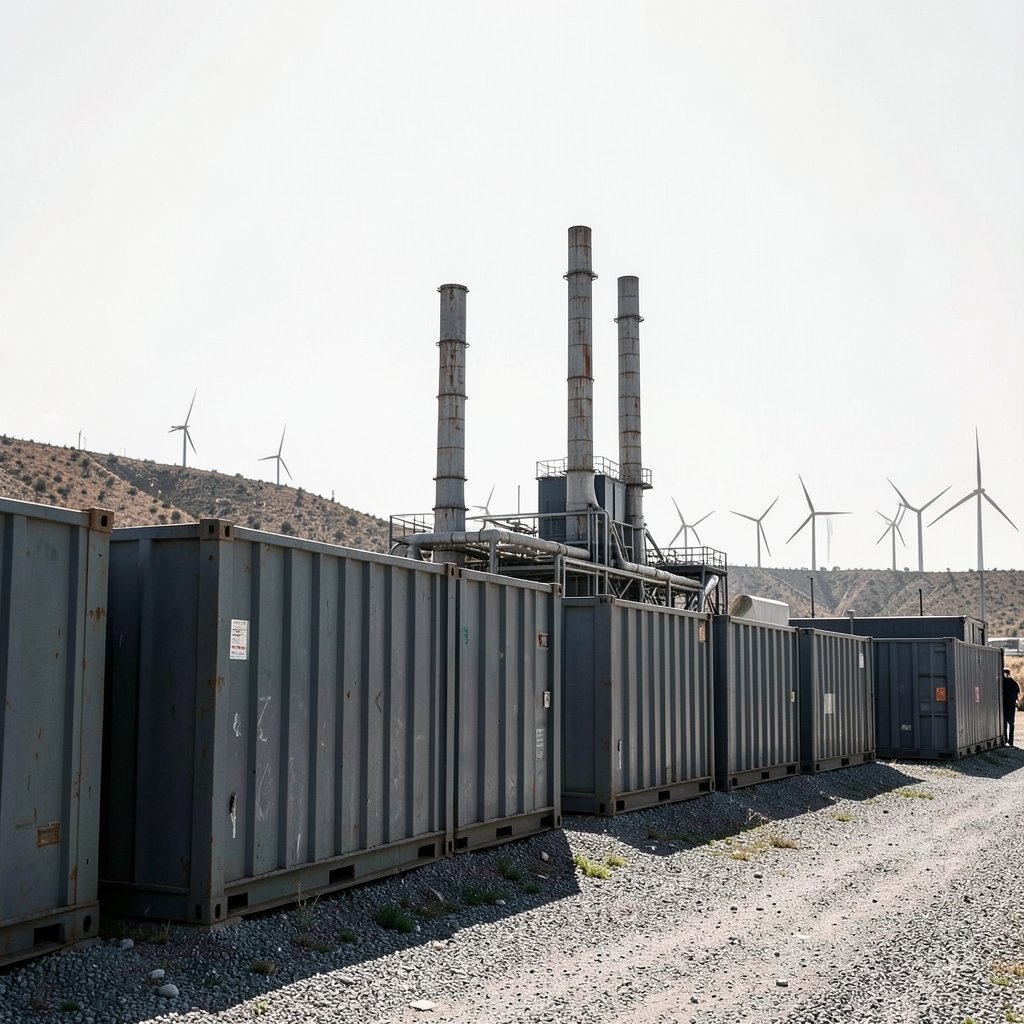
The most concrete use of “all generating” appears in power system operations. Grid operators routinely refer to “all generating units” or “all generating stations” when describing dispatch rules, market participation, or emergency procedures.
How the phrase works on the grid
In a deregulated electricity market, generators bid to supply power. Market rules often specify that certain obligations apply to all generating units above a size threshold, regardless of technology. A rule might state that all generating resources must provide frequency response, or that all generating capacity must be counted in reserve calculations.
The phrase matters because exclusions are expensive. If a rule says “all generating units,” a wind farm, a gas peaker, and a utility-scale battery are all in scope. If it says “all generating units above 10 megawatts,” smaller resources drop out. Lawyers and engineers argue over these boundaries constantly, because the difference between “all” and “all except” shapes who pays for grid reliability.
What actually works in practice
Engineers who work with these rules learn a few habits fast:
- Check the definition section first. Most market rules and grid codes define “generating unit” precisely, and the definition often differs from everyday usage.
- Look for thresholds. Size cutoffs are buried in footnotes more often than in headlines.
- Confirm whether storage counts. Battery systems blur the line between generation and load, and rules written before storage existed often handle them awkwardly.
- Ask about aggregation. Many small resources can be bundled to meet a threshold, which changes who is covered.
A common mistake is assuming “all generating” means “all power plants.” In practice, it usually means “all resources that inject power onto the grid,” which is a broader and messier category.
Reading Two: Grammar and the Compound Adjective
Outside engineering, “all generating” most often shows up as a compound adjective that describes something with universal creative or productive power. You might see “all-generating energy” in a poem or “an all-generating idea” in an essay. The hyphen is the tell: when the phrase modifies a noun, careful writers join it with a hyphen.
When to hyphenate
The rule of thumb is straightforward. If “all generating” comes before a noun and works as a single unit of meaning, hyphenate it: “an all-generating force.” If the words stand apart grammatically, leave them separate: “the plant was generating all the power the town needed.”
Three common mistakes trip people up:
- Hyphenating after the noun. “The force was all-generating” is acceptable in informal writing but looks odd in formal prose. Rewrite it if you can.
- Confusing it with “all-generation.” That form is rare and usually a typo.
- Dropping the hyphen in headlines. Headline style often omits hyphens, which is exactly why readers misparse the phrase.
What the dictionaries say
Standard dictionaries do not list “all-generating” as a headword, which is a useful signal. It is a productive compound, meaning speakers build it as needed rather than pulling it from a fixed list. That flexibility is why the phrase feels slightly unfamiliar: you are watching English make a word in real time.
Reading Three: Software and Content Generation
In software circles, “all generating” sometimes appears in descriptions of tools that produce content, code, or data automatically. A product description might claim a system is “all generating, no manual input,” meaning every output is machine-produced.
This usage is looser and more marketing-driven than the power-grid sense. It rarely has a formal definition, and claims like “all generating” deserve scrutiny. A few practical checks help:
- Ask what is actually generated. Text, images, code, and test data are very different outputs with different reliability profiles.
- Look for the human step. Almost every “fully automatic” pipeline has a human review stage somewhere, even if the marketing omits it.
- Check the failure mode. Systems that generate everything automatically also fail automatically, sometimes at scale.
If you are shopping for tools or evaluating a vendor claim, treat “all generating” as a prompt to ask follow-up questions rather than a technical specification.
How to Tell Which Meaning Applies
Context usually settles the question within a sentence or two. The table below summarizes the fastest way to sort the readings.
| Clue in the text | Likely meaning | What to do next |
|---|---|---|
| Mentions of megawatts, dispatch, grid, or markets | Power systems | Find the definition of “generating unit” |
| Hyphen before a noun, literary tone | Compound adjective | Read it as “universal” or “all-producing” |
| Mentions of AI, code, content, or automation | Software generation | Ask what output is produced and how it is checked |
| Awkward phrasing, translated feel | Translation artifact | Ask the writer what the original term was |
| No technical markers at all | Casual or figurative use | Interpret from the surrounding sentence |
When two readings seem possible, the safest move is to restate the phrase in plain language and confirm. “So you mean every power plant on the system, not just the big ones?” That one question prevents most misunderstandings.
Common Mistakes People Make
Even experienced readers stumble on phrases like this. A few patterns show up again and again.
Assuming a fixed definition exists. People often search for “all generating meaning” expecting a dictionary entry. There isn’t one, and treating the phrase as settled leads to overconfident conclusions.
Ignoring the hyphen. In formal writing, the hyphen changes how a sentence parses. Skipping it creates ambiguity that readers have to resolve on their own.
Overreading technical shorthand. A slide that says “all generating” may be shorthand for a longer phrase the presenter defined verbally. Ask for the full sentence.
Confusing scope with quantity. “All generating” describes which resources are included, not how much power they produce. A system can include all generating units and still produce very little at a given moment.
Forgetting that rules change. Grid codes and market rules get revised regularly. A definition that was accurate a few years ago may have been amended, especially as storage and distributed resources have grown.
Practical Tips That Actually Work
For anyone who deals with ambiguous technical phrases regularly, a few habits pay off.
First, keep a personal glossary. When you confirm what a term means in a specific document, write it down with the source. Future you will thank present you.
Second, quote the full phrase when you search. Searching for “all generating units” returns far more useful results than searching for “all generating” alone.
Third, check power ratings when hardware is involved. If a discussion about generating capacity drifts into cables and connectors, the power rating of the hardware becomes the real question. A practical comparison of 100w vs 240w usb c cable pick right power rating your setup shows how much difference the rating makes in real use, and the same principle applies to generation: the label matters as much as the number.
Fourth, separate the label from the behavior. What a system is called and what it actually does are two different questions. Test the behavior.
Fifth, write the definition down when you publish. If you use “all generating” in your own writing, define it in the same paragraph. Your readers will thank you, and your editors will stop asking questions.
Where the Phrase Is Heading
Language moves. Compounds that feel awkward today often become standard tomorrow. “All generating” may follow the path of other technical shorthands: first a convenience, then a convention, eventually a dictionary entry.
Two forces are pushing it along. The first is the energy transition, which keeps expanding what counts as a generating resource. As storage, aggregations, and distributed solar join the grid, the phrase “all generating units” covers more ground than it did a decade ago, and rule writers keep refining it. The second is automation, which makes “all generating” a natural way to describe systems that produce output without step-by-step human input.
Neither force has settled the meaning yet. For now, the phrase remains a useful reminder that context is everything in technical language. The word “all” sounds absolute, but in practice it always comes with boundaries, and finding those boundaries is the real work.
Conclusion
“All generating” is not a term with one clean definition. In power systems, it usually points to the full set of resources that inject electricity onto a grid, with thresholds and definitions doing the real work. In grammar, it is a compound adjective meaning universal or all-producing, best written with a hyphen. In software, it is loose marketing language that deserves follow-up questions. The thread connecting all three readings is scope: the phrase always claims completeness, and completeness always has edges. Readers who ask where those edges sit, and who confirm the definition before acting on it, avoid the confusion that trips up everyone else. Whether you are reading a grid code, editing a sentence, or evaluating a tool, the same habit applies. Slow down, find the definition, and check the boundaries. That approach turns a puzzling phrase into a manageable one.
Frequently Asked Questions
What does “all generating” mean?
It depends on context. In power systems, it usually refers to all generating units or resources on a grid. In grammar, it works as a compound adjective meaning universal or all-producing. In software marketing, it describes systems that produce output automatically. There is no single fixed definition.
Is “all generating” hyphenated?
Hyphenate it when the phrase modifies a noun, as in “an all-generating force.” Leave it unhyphenated when the words function separately in a sentence, as in “the plant was generating all the power needed.” The hyphen signals that the words act as one unit.
Does “all generating units” include batteries and solar?
Often yes, but not always. Modern grid rules increasingly include storage and distributed resources, yet many older rules were written before those technologies existed and handle them awkwardly. Always check the definition section and any size thresholds in the specific rule you are reading.
Why is “all generating” not in the dictionary?
Because it is a productive compound, meaning speakers build it as needed rather than drawing it from a fixed list. Dictionaries list established words, and this phrase has not settled into a single standard meaning across fields. Its flexibility is exactly why it causes confusion.
How can I tell which meaning someone intends?
Look at the surrounding words. Mentions of megawatts, dispatch, or markets point to power systems. A literary tone and a hyphen point to grammar. References to AI, code, or automation point to software. If it is still unclear, restate the phrase in plain language and ask for confirmation.
Is “all generating” the same as “all-generation”?
No. “All-generation” is rare and usually a typo or a different construction entirely. “All generating” is the form you will actually encounter, and even that phrase shifts meaning by field. Treat them as separate expressions rather than variants of one term.