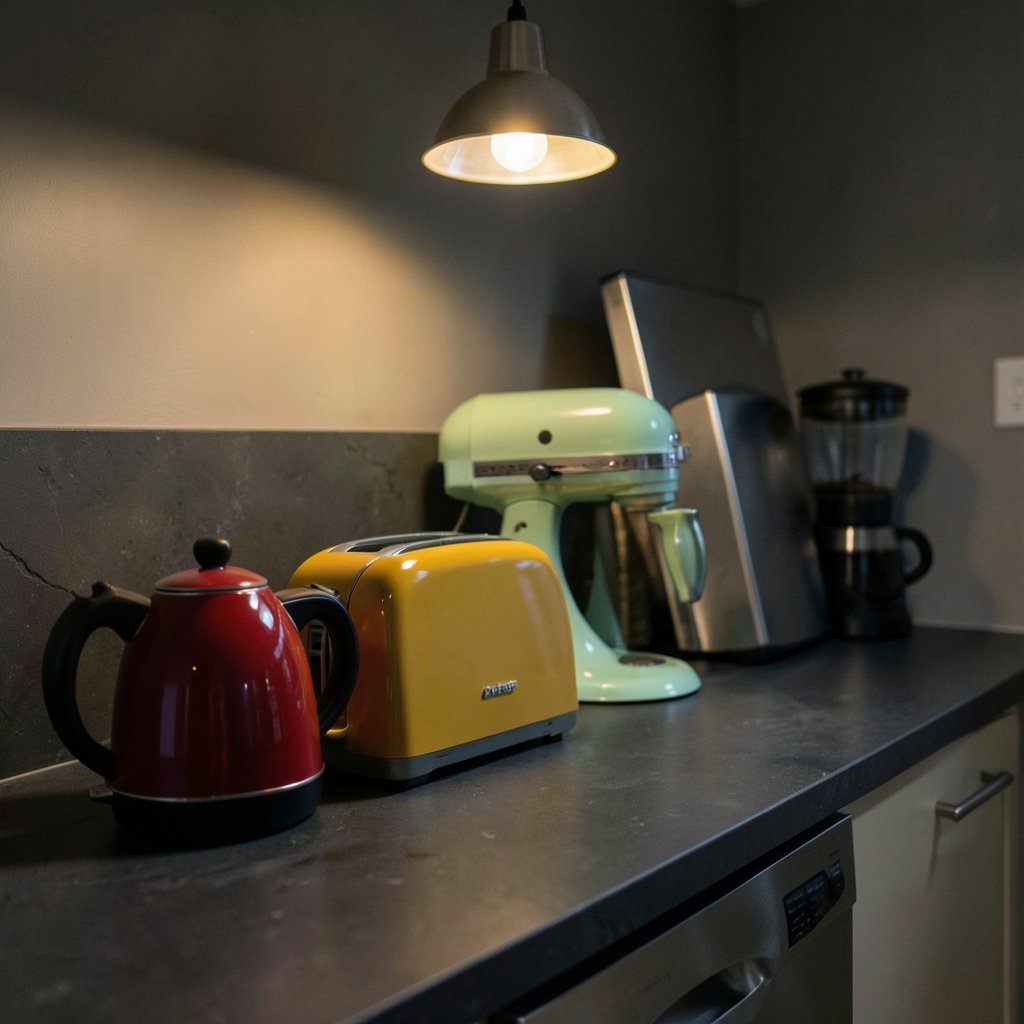
Which appliance brand is actually the best? Ask ten people and you will get ten answers, usually shaped by whichever refrigerator died on them in 2019. That is the problem with appliance rankings: they feel objective, but they are snapshots of different things measured in different ways. One list ranks reliability. Another ranks owner satisfaction. A third ranks sales volume. Mix them together and you get a tidy numbered list that tells you almost nothing about whether the dishwasher will still work in year eight. (Ai chatbot case studies 2027 ten brands roi numbers actually)
This guide breaks down how appliance brands actually get ranked, which brands cluster at the top of the major categories, where the methodology quietly falls apart, and how to read a ranking like someone who knows what they are looking at.
Why “appliance brands ranked” is a harder question than it looks
There is no single authoritative ranking of appliance brands. None. What exists instead is a patchwork: consumer magazine surveys, satisfaction studies, market-share trackers, and review sites, each measuring something different.
That matters because the axes do not move together. A brand can lead on owner satisfaction and sit mid-pack on reliability. A brand can dominate market share while generating a steady stream of repair complaints. A premium brand can score beautifully on durability and still be a poor value for a household that replaces appliances every decade anyway.
The other wrinkle is that rankings are regional. A brand with a strong service network in the United States may be an afterthought in Europe, where distribution and product lines differ. Any list presented as a single global ranking deserves skepticism.
The four ranking methods, and what each one actually measures

Before trusting a list, identify the method behind it. Almost every appliance ranking falls into one of four buckets.
| Method | What it measures | Strength | Weakness |
|---|---|---|---|
| Owner surveys | Reliability and satisfaction as reported by owners | Captures real-world experience over years | Self-selection bias; unhappy owners are louder |
| Satisfaction studies | Customer experience at purchase and early ownership | Consistent annual methodology | Says little about year-seven failures |
| Market share data | Units sold | Shows who the market trusts with money | Popularity is not quality |
| Expert lab testing | Performance on standardized tests | Repeatable and controlled | Short windows; hard to test longevity |
A ranking that blends all four into one number is doing you a disservice. The honest version would show you four separate columns and let you decide which one matters for your kitchen.
How the big brands tend to cluster
Specific positions shift year to year and are often locked behind subscription walls, so treat any precise placement with caution. What holds up better is the general clustering.
The volume leaders. In the United States, Whirlpool Corporation and Samsung and LG are among the largest sellers of major appliances. Whirlpool’s portfolio alone covers Whirlpool, Maytag, KitchenAid, Amana, and JennAir. In Europe, BSH (a Bosch–Siemens joint venture) and Electrolux are major players. These brands appear on nearly every list because they sell the most units, not necessarily because they top every quality metric.
The premium tier. Brands like Miele, Sub-Zero, and Bosch frequently earn high marks for satisfaction and perceived build quality, paired with prices that reflect it. A ranking that mixes price and reliability without separating them will make premium brands look artificially dominant.
The value tier. Mass-market brands often score well on value even when they trail on durability. For a rental property or a first home, that trade-off is entirely rational.
Ownership is the hidden variable
Many “different” brands are the same company wearing different badges. This is the single most useful thing to understand about appliance rankings, and the thing most lists bury.
- Whirlpool Corp. owns Whirlpool, Maytag, KitchenAid, Amana, and JennAir.
- Electrolux owns Frigidaire and Electrolux.
- BSH is a Bosch–Siemens joint venture.
- Haier acquired GE Appliances in 2016 and also owns Candy.
- Midea acquired Toshiba’s appliance business in 2016.
Why does this matter? Because a ranking that lists five Whirlpool-owned brands as five independent winners is really telling you one company makes a lot of appliances. Shared factories and shared platforms mean shared failure modes. If you are comparison shopping, check the parent company before you assume two brands are genuinely different bets. (Best e bike brands pick one that fits your life)
Where appliance rankings go wrong
Three failure modes show up again and again. Knowing them will save you from a bad purchase.
Reliability data is thin and proprietary. Independent repair-rate datasets are scarce. Most reliability numbers come from subscription surveys or warranty providers, both of which carry sampling and self-selection issues. People who bother to fill out an appliance survey are not a random sample of the population.
Satisfaction is not durability. A shiny range that works flawlessly for eighteen months can score high on satisfaction and still be a coin flip at year eight. Short-window studies simply cannot see long-term failures.
Efficiency is a separate axis entirely. Energy performance gets ranked on its own scale. In the United States, the ENERGY STAR program, run by the EPA and DOE, labels qualifying appliances. In the European Union, energy labels were rescaled to an A–G scale starting in 2021 for several product groups. An efficiency ranking tells you about operating cost, not build quality. Conflating the two is a common reader mistake.
A practical way to rank brands for your own household
Here is the method that actually works, and it takes about twenty minutes.
- Pick the category first. Refrigerator reliability and dishwasher reliability do not track together. A brand that does well in one category may be mediocre in another. Rank within a category, never across the whole store.
- Identify the parent company. If three of your five finalists share an owner, you have fewer real options than you thought.
- Check the warranty in writing. Standard major-appliance warranties in the U.S. are commonly one year parts and labor, with some brands offering longer sealed-system coverage. Verify per brand and model, because the difference between one year and five years on a sealed system is real money.
- Compare operating cost along with sticker price. Use the yellow EnergyGuide label in the U.S. to estimate annual running costs. A cheaper unit that drinks electricity can lose on total cost of ownership.
- Read the service network along with the review score. A brand with no authorized repair tech within an hour of your house is a bad brand for you, regardless of its ranking. This is the factor rankings almost never capture.
- Weight the failure you can least tolerate. A broken dishwasher is an inconvenience. A broken refrigerator is a food-safety event. Spend your reliability budget accordingly.
Common mistakes people make with ranked lists
Treating the number one slot as a universal answer. It is an average across thousands of households, none of which are yours.
Ignoring the sample. A brand ranked highly on a survey of 400 owners is a different claim than one ranked on 40,000.
Forgetting that models beat brands. Brand-level rankings hide enormous variation within a lineup. The entry-level model and the flagship from the same brand may share a logo and nothing else.
Skipping the fine print on the return window. A generous return policy is worth more than a half-point of satisfaction score if the unit arrives damaged.
Assuming a high price signals reliability. It often signals features, finishes, and brand positioning. Sometimes it signals durability too, but not automatically.
If you are weighing big purchases generally, the same discipline applies to other categories. The logic behind the highest-paying skilled trades ranked by earnings is a good reminder that headline numbers rarely capture the full picture, and the same is true when you pick the best e-bike brands that fit your life rather than the ones topping a leaderboard.
What the rankings are genuinely good for
None of this means rankings are useless. They are excellent at three things.
First, they surface brands you might not have considered. Second, they flag patterns. When a brand shows up at the bottom of multiple independent surveys across several years, that is a signal worth respecting. Third, they give you a starting shortlist so you are not wandering a showroom blind.
They are bad at telling you which specific model to buy. That decision needs the warranty terms, the service network, the operating cost, and your own tolerance for risk.
How to spot a ranking you can trust
A trustworthy appliance ranking will tell you its method, its sample size, its year, and its country. It will separate reliability from satisfaction from efficiency. It will name parent companies. And it will admit what it cannot measure, like long-term repair rates.
A ranking that gives you a bare numbered list with no methodology is entertainment, not research. That is fine, as long as you know which one you are reading.
Conclusion
Appliance brands ranked is a question with no single answer, and that is the most useful thing to know. The lists disagree because they are measuring different things: reliability, satisfaction, sales, and efficiency are four separate yardsticks, and no brand wins all four across every category in every country. The smart move is to pick your category, identify the parent company behind each finalist, verify the warranty and the service network, and compare total operating cost rather than sticker price. Rankings can narrow the field. They cannot make the call for you, and any list that pretends otherwise is selling certainty it does not have.
FAQ
What is the most reliable appliance brand?
There is no single answer, because reliability data comes from subscription surveys and warranty providers rather than an independent public dataset, and results shift by category and year. Premium brands like Miele, Sub-Zero, and Bosch frequently earn high satisfaction marks, but price is baked into that perception. The practical approach is to check reliability within one specific category, like refrigerators or dishwashers, rather than trusting a brand-wide verdict.
Are appliance brand rankings trustworthy?
Partly. They are useful for building a shortlist and spotting consistent patterns across multiple years and sources. They are unreliable when a list blends reliability, satisfaction, and price into one number without explaining the method. A ranking that does not disclose its sample size, year, and country should be treated as entertainment rather than research.
Do different appliance brands come from the same company?
Often, yes. Whirlpool Corporation owns Whirlpool, Maytag, KitchenAid, Amana, and JennAir. Electrolux owns Frigidaire and Electrolux. BSH is a Bosch–Siemens joint venture. Haier acquired GE Appliances in 2016 and also owns Candy, while Midea acquired Toshiba’s appliance business the same year. Shared ownership means shared factories and platforms, so two brands on your shortlist may not be genuinely independent options.
Is a higher price a sign of better quality?
Not automatically. Premium pricing often reflects features, finishes, and brand positioning as much as durability. Some premium brands do earn consistently high satisfaction and build-quality marks, but a high price tag alone proves nothing. Check the warranty length, the sealed-system coverage, and the service network in your area before assuming price equals reliability.
How long do major appliance warranties usually last?
In the United States, standard major-appliance warranties are commonly one year for parts and labor, with some brands offering longer coverage on sealed systems such as compressor assemblies. Terms vary significantly by brand and model, so read the warranty document for the specific unit rather than assuming the brand-wide standard applies. Longer sealed-system coverage is one of the most concrete comparison points available.
Does energy efficiency factor into quality rankings?
No, it is a separate axis. In the U.S., the ENERGY STAR program run by the EPA and DOE labels qualifying appliances, and in the EU energy labels were rescaled to an A–G scale starting in 2021 for several product groups. An efficiency rating tells you about operating cost, not build quality or expected lifespan. Use the yellow EnergyGuide label to compare running costs, and use reliability data to judge durability.