
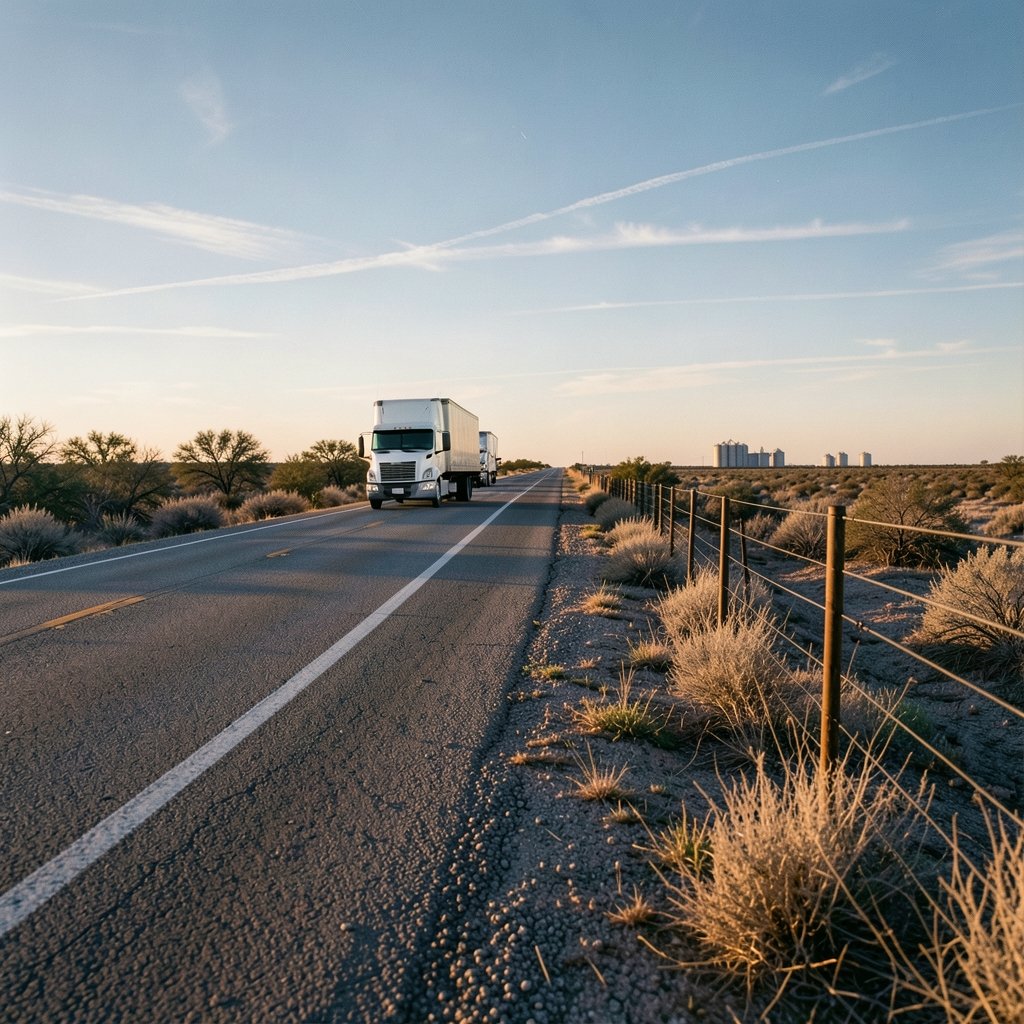
Can a self-driving semi really cover 1,200 miles with nobody in the cab, and does 2026 mark the year that becomes routine? That question sits at the center of a lot of hype, a fair amount of confusion, and a genuinely important shift in freight. Aurora Innovation, the Pittsburgh-based autonomous trucking company, has spent years promising driver-out operations on Texas highways. The details around long-haul mileage claims and the “observer returns” framing deserve a careful, skeptical read. (Self-driving car)
This article separates what is publicly known from what is still unverified. It also explains why the 1,200-mile figure matters so much, what “observer returns” likely describes, and how to judge 2026 announcements without getting swept up in the marketing.
What Aurora Actually Promised
Aurora went public through a SPAC merger in late 2021, and its core commercial thesis has been consistent: autonomous Class 8 trucks running freight lanes in Texas, starting with the Dallas–Houston corridor. That lane is roughly 200 miles, a short, well-mapped, high-volume route that makes sense as a first proving ground.
The company has publicly discussed “driver-out” runs, meaning trucks operating without a human safety driver in the cab. That milestone is distinct from the earlier phase of safety-driver operations, where an employee sits behind the wheel ready to intervene. The shift from safety driver to no driver is the single biggest regulatory and engineering leap in the entire program. (Automated Vehicles Safety)
Aurora’s stated target, as of its 2023–2024 public communications, was to launch driverless commercial operations in Texas by the end of 2024, with the Dallas–Houston lane as the first route. Whether that target was met on schedule is something readers should verify directly against the company’s newsroom and investor materials rather than take from secondhand summaries.
The 1,200-Mile Number: Where It Comes From and Why It’s Tricky
Here is the part that trips people up. A 1,200-mile driverless run does not match any Aurora route that is publicly documented. Dallas to Houston is about 200 miles. A 1,200-mile haul would be a multi-state, long-duration run of a completely different character, crossing regulatory boundaries and far more varied road conditions.
That does not mean the number is meaningless. It may refer to cumulative miles across a test period, a projected long-haul lane, a simulation figure, or a specific article’s framing. But as a single driverless trip, the claim should be treated as unverified until confirmed by Aurora’s own announcements or by regulators.
Why does the distinction matter so much? Because long-haul autonomy is where the economics get interesting. A truck that can run 1,200 miles without a driver changes the cost structure of freight in ways a 200-mile shuttle never will. If that milestone is real, it is a genuine inflection point. If it is a cumulative or simulated figure dressed up as a single run, it is marketing.
The practical takeaway for anyone reading 2026 headlines: check whether a mileage figure describes one trip, a fleet total, a simulation, or a projection. Those are four very different claims, and press coverage often blurs them.
What “Observer Returns” Likely Describes
The phrase “observer returns” is not a standard term tied to any known Aurora milestone. In autonomous trucking coverage, it most plausibly describes one of a few scenarios:
- A journalist or analyst riding along to observe a driverless operation and reporting back
- A regulator or third-party auditor observing a run and filing findings
- A company update describing the return of an observer program after a pause
None of these can be confirmed from available public knowledge. Readers should treat “observer returns” as a framing device in a specific article rather than an industry-standard milestone. When you see it, ask: who is the observer, what did they observe, and did they publish their findings independently? A ride-along by a reporter is not the same as an audit by a safety regulator.
How to Judge 2026 Autonomous Trucking Announcements
The autonomous vehicle industry has a long history of timelines that slip. That is not cynicism; it is pattern recognition. The gap between a demo and a durable commercial operation is where most programs stall. Here is a practical checklist for evaluating any 2026 claim about driverless trucks.
| What to check | Why it matters | Red flag |
|---|---|---|
| Is a human in the cab? | Driver-out is the real milestone | Vague language like “autonomous-capable” |
| Is the mileage one trip or cumulative? | Single long runs are far harder | Numbers without a definition |
| Which lane and state? | Regulation varies enormously | “Nationwide” claims with no route detail |
| Who verified it? | Independent observation beats PR | Only company-produced footage |
| What does the regulator say? | NHTSA and FMCSA maintain dockets | No filings or exemptions mentioned |
That last row is the one most readers skip. Federal and state regulators maintain public records on autonomous vehicle operations, exemptions, and incident reporting. If a company claims a major milestone, there is usually a paper trail. If there is no paper trail, the claim deserves scrutiny.
The Technology Stack Behind Driver-Out Operations
Understanding why driver-out is hard helps you read the claims. Aurora’s system, like most Level 4 autonomous trucking stacks, combines lidar, radar, and cameras with a high-definition map and a planning system that predicts how other vehicles will behave. The hard part is not detecting a lane line. It is handling the long tail: a mattress in the road, a construction zone with hand signals, a sudden hailstorm on I-45.
Trucking adds difficulty that robotaxis do not face. A loaded Class 8 truck weighs up to 80,000 pounds, stops far more slowly, and cannot swerve the way a car can. The safe operating envelope is narrower, which is why the industry has focused on predictable highway lanes first.
There is also a hardware theme worth noting across the broader autonomy and tech sector: companies are making big, expensive bets on custom silicon and specialized sensors. That pattern shows up well beyond trucking, as seen in reporting on Tesla’s robotaxi, semi, and roadster hardware bets. The lesson for Aurora watchers is the same: hardware timelines are unforgiving, and a single supplier delay can push a launch by quarters.
Why Texas Became the Proving Ground
Texas has become the default testing ground for autonomous trucking for reasons that are easy to understand. The state has permissive autonomous vehicle rules, wide highways, a dense freight network, and weather that is mostly cooperative. The Dallas–Houston lane is short enough to support frequent runs and long enough to generate real operational data.
That geographic concentration is also a limitation. A company that has mastered a 200-mile Texas shuttle has not solved Donner Pass in winter or Chicago’s Dan Ryan Expressway at rush hour. When you read a 2026 claim about long-haul autonomy, ask which corridor it covers. The answer tells you how much of the problem has actually been solved.
For readers tracking how regulatory and legal pressure shapes tech rollouts more broadly, the pattern is familiar. Apple’s long fight over App Store fees, for instance, shows how a single court ruling can reshape an entire business model overnight, a dynamic explored in coverage of the Apple Supreme Court 27 percent App Store fee case. Autonomous trucking faces the same kind of regulatory overhang: one rule change at the federal or state level can accelerate or freeze an entire rollout plan.
The Economics: Why Freight Is Pushing So Hard
The trucking industry faces a persistent driver shortage and high turnover. Long-haul driving is grueling work, and the pool of qualified drivers has not kept pace with freight demand. That labor gap is the economic engine behind autonomy investment. A truck that can run overnight without a driver addresses a real constraint, not an imagined one.
But the economics cut both ways. Autonomous trucks carry expensive sensor suites, require remote monitoring staff, and need maintenance infrastructure that traditional fleets do not have. The business case only works at scale, on high-volume lanes, with high utilization. That is why the first commercial deployments cluster on short, dense corridors rather than cross-country routes.
There is also a data infrastructure angle that gets overlooked. Every autonomous mile generates enormous amounts of sensor data that must be stored, transferred, and analyzed. Fleets investing in this capability face the same storage and migration challenges as any data-heavy operation, which is why guides on how to clone a hard drive to an SSD stay relevant to engineering teams building out autonomous vehicle data pipelines. The unglamorous plumbing matters as much as the headline technology.
What Would Actually Count as a 2026 Breakthrough
If Aurora or a competitor wants to make a credible 2026 announcement, here is what would move the needle:
- A single documented driverless run of 1,000+ miles on a defined route, with a third party confirming no human was in the cab.
- Sustained commercial operations, meaning paying customers and repeat runs, not a one-time demo.
- Regulatory filings that show the operation is authorized rather than merely tolerated.
- Published safety data, including disengagement rates and incident reports.
- A clear cost-per-mile figure that shows the economics work without subsidies.
Anything short of that is a step, not a milestone. The industry has produced plenty of impressive steps. What it has not yet produced is proof that long-haul driverless freight is a durable business at scale.
Common Mistakes Readers Make With These Headlines
A few traps show up again and again when people read autonomous trucking news.
The first is confusing cumulative with single-run mileage. A fleet that has driven 1,200 miles total across many trips is not the same as a truck that drove 1,200 miles in one go.
The second is treating a safety-driver run as driver-out. The presence of an employee behind the wheel changes everything about what the run proves.
The third is ignoring the route. A successful Texas shuttle says little about mountain passes or dense urban delivery.
The fourth is assuming a press release is a launch. Announcements of partnerships, permits, and “readiness” are not the same as commercial operations with paying customers.
Avoid those four traps and you will read 2026 coverage more accurately than most of the people writing it.
Conclusion
The question of whether Aurora’s driverless trucks have covered 1,200 miles and what “observer returns” means in 2026 is best answered with disciplined skepticism. Aurora’s public plan centered on driver-out operations in Texas, starting with the roughly 200-mile Dallas–Houston lane, with a stated goal of launching by the end of 2024. The 1,200-mile figure and the observer framing do not match any publicly documented milestone and should be verified against the company’s own announcements and regulatory filings before being treated as fact.
What is clear is the direction of travel. Autonomous trucking is moving from demos toward real operations, and the milestones that matter are documented, independently observed, and regulator-visible. Readers who check the route, the driver status, the mileage definition, and the paper trail will be right far more often than those who take headlines at face value. The technology is real. The timelines are the part that deserves a second look.
FAQ
What is a driver-out run in autonomous trucking?
A driver-out run means the truck operates with no human safety driver in the cab. It is the key milestone that separates a genuine autonomous operation from a supervised test, and it typically requires regulatory authorization and extensive prior testing with a safety driver present.
Does the 1,200-mile Aurora claim refer to a single trip?
That is unverified. Aurora’s publicly documented commercial lane, Dallas to Houston, is roughly 200 miles. A 1,200-mile figure could refer to cumulative fleet miles, a simulation, a projected long-haul route, or a specific article’s framing. Readers should confirm the definition before treating it as a single driverless trip.
What does “observer returns” mean?
It is not a standard industry term tied to a known Aurora milestone. It most likely describes a journalist, analyst, or regulator riding along and reporting back, or a company update about an observer program. The key question is whether the observer published independent findings.
When did Aurora plan to launch driverless operations?
Aurora’s public target, as stated in its 2023–2024 communications, was to launch driverless commercial operations in Texas by the end of 2024, beginning with the Dallas–Houston corridor. Whether that target was met on schedule should be verified against the company’s newsroom and investor materials.
How can I verify an autonomous trucking milestone?
Check four things: whether a human was in the cab, whether mileage is single-trip or cumulative, which specific route and state were involved, and whether there is a regulatory paper trail through agencies like NHTSA and FMCSA. Independent third-party confirmation is the strongest signal.
Why is Texas the focus for autonomous trucking?
Texas offers permissive autonomous vehicle rules, wide highways, dense freight volume, and mostly favorable weather. The Dallas–Houston lane is short enough for frequent runs and long enough to generate meaningful operational data, making it a practical first commercial corridor.



