
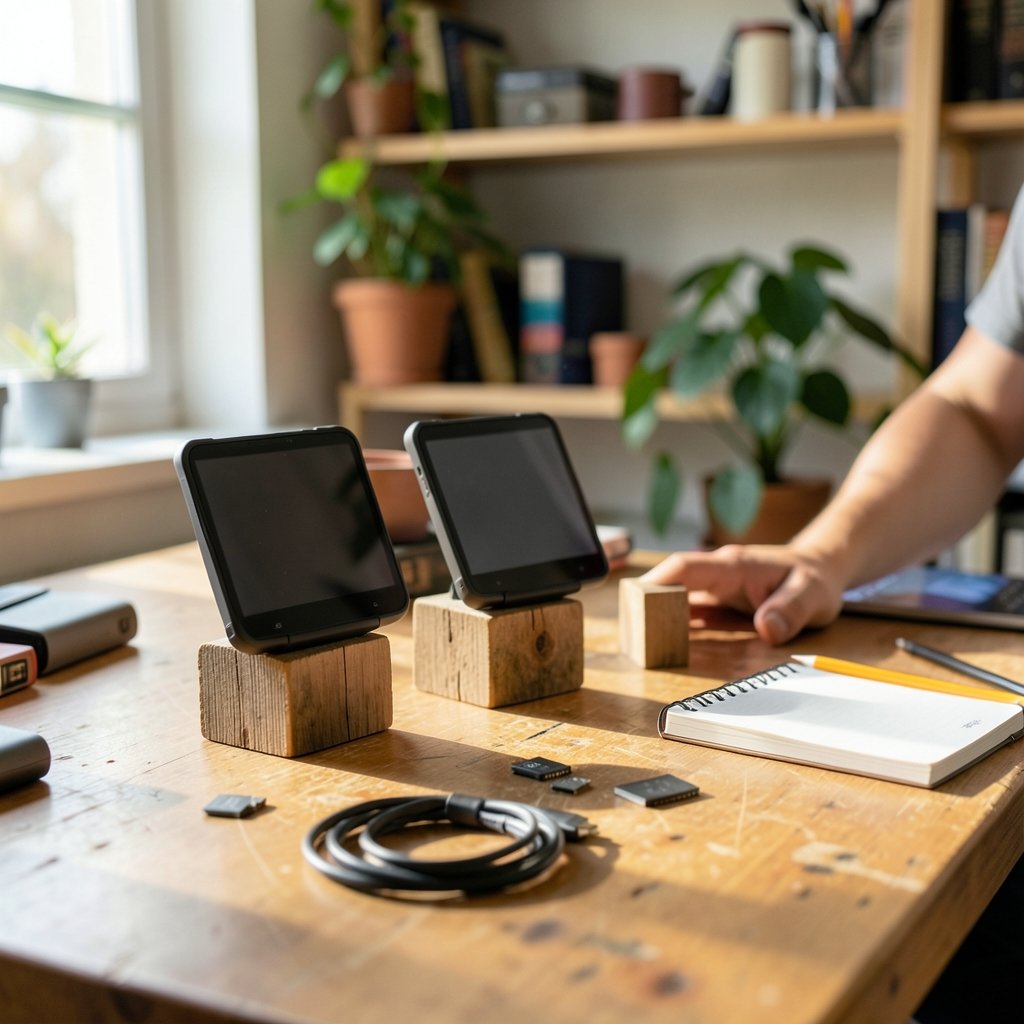
What if the biggest question in retro handhelds this year isn’t about raw power at all, but about how many screens you’re willing to carry? That’s the debate surrounding the AYANEO Pocket DS, the Retroid Pocket Duo, and the Anbernic RG DS Plus. All three chase the same idea: a pocket device that folds open like a Nintendo DS. Yet they come from very different corners of the handheld world, and that difference shapes everything about how you’d actually use one.
Here’s the honest starting point. As of late 2026, verified, official spec sheets for these three specific models are thin on the ground. Anyone who tells you they have a locked-down comparison table with confirmed prices is probably guessing. So instead of inventing numbers, this article focuses on what each brand reliably stands for, what the dual-screen format demands, and how to judge these devices on the things that genuinely matter. That’s more useful than a fake spreadsheet anyway.
Why dual-screen handhelds suddenly matter again
For years, the retro handheld market chased one goal: cram the most powerful chip into the smallest shell. The result was a flood of horizontal bricks that all played the same libraries. The dual-screen concept breaks that pattern. It opens up the Nintendo DS and 3DS catalogs in a way a single screen never quite manages, because those games were designed around two panels working together.
There’s a practical reason this matters. Games like The World Ends With You, Professor Layton, and the Pokémon DS titles use the bottom screen for maps, menus, and touch input while the top screen shows the action. Stretching that onto one display always involves compromise, whether it’s a squeezed layout or an awkward toggle. A real second panel removes the compromise.
That’s the promise all three devices share. The question is which company is best positioned to deliver it well.
Meet the three contenders
AYANEO Pocket DS: the premium wildcard
AYANEO built its reputation on ambitious, well-finished handhelds, often running Windows or higher-end Android setups. Its devices tend to sit at the pricier end of the market, with metal-feeling builds and specs that push boundaries. If the Pocket DS follows that playbook, expect a device aimed at enthusiasts who want polish and are willing to pay for it.
The upside of that positioning is real. A company used to engineering complex handhelds is more likely to get dual-screen hinges, display calibration, and thermals right. The downside is equally real: premium pricing and the occasional rough launch firmware. AYANEO’s track record includes gorgeous hardware and software that sometimes needs a few updates to settle.
Retroid Pocket Duo: the value specialist
Retroid has carved out a loyal following by delivering strong Android handhelds at prices that undercut the big names. Its fans care about performance-per-dollar and clean emulation setups. A dual-screen device from Retroid would likely target the same crowd: people who want the DS experience without a flagship price tag.
The risk here is different. Value-focused hardware sometimes trims the things dual-screen gaming leans on hardest, like hinge durability and screen quality. If Retroid nails those, it could be the sweet spot of the trio. If it cuts corners, the savings won’t feel worth it after a year of folding.
Anbernic RG DS Plus: the budget veteran
Anbernic is the household name in budget retro handhelds. Its RG line has shipped dozens of models, and the company knows how to hit a low price while keeping build quality respectable. A dual-screen entry under the RG banner would almost certainly aim at first-time buyers and casual players.
The trade-off is usually raw power and screen refinement. Anbernic devices often run more modest chips, which is fine for older systems but can strain when you push into heavier 3DS-era software. For someone mainly interested in DS classics, though, that may not matter at all. (The Verge)
How the three compare on the things that count
Since confirmed specs aren’t available, the fairest approach is to compare them on the factors that decide whether a dual-screen handheld is worth owning. Here’s how the three brands typically stack up.
| Factor | AYANEO Pocket DS | Retroid Pocket Duo | Anbernic RG DS Plus |
|---|---|---|---|
| Likely price positioning | Premium | Mid-range value | Budget |
| Build and finish reputation | High-end materials | Solid for the price | Respectable budget builds |
| Software maturity at launch | Usually needs updates | Generally stable Android | Simple, proven setups |
| Best fit for | Enthusiasts wanting polish | Value hunters | First-time buyers |
| Main risk | Price and early firmware | Possible hardware trimming | Limited performance headroom |
Read that table as a map of reputations, not a spec sheet. It tells you where each company usually lands, which is genuinely useful when official details are scarce.
The hinge problem nobody talks about enough
Here’s where practical experience beats spec-chasing. The single most important part of any dual-screen handheld isn’t the chip. It’s the hinge. A folding device lives or dies by how that joint holds up after thousands of open-and-close cycles.
Common mistakes buyers make are predictable. They judge a device by its screen resolution and ignore the hinge entirely. They buy on launch day before any long-term reports exist. They assume a metal shell automatically means a durable hinge, which isn’t true. What actually works is waiting for teardown videos and owner reports that specifically mention hinge wobble, screen flex, and whether the panels stay aligned after months of use.
This is exactly the kind of scrutiny early adopters of folding phones learned the hard way. The same caution applies here. If you’re curious how fragile new folding hardware can be before manufacturers iron out the kinks, the coverage of the iPhone Duo screen damage under 20 folds early buyer risk is a useful cautionary tale about buying first-generation folding designs.
What to check before you buy any of them
- Hinge durability reports. Look for owners describing months of use, not unboxing videos.
- Screen alignment. Both panels should sit flush when closed and stay level when open.
- Emulator support for dual displays. Confirm the software actually maps the second screen correctly.
- Battery behavior with two panels. Two screens draw more power; check real-world runtime.
- Firmware update history. A brand that ships fixes quickly is worth more than one that doesn’t.
Performance expectations, honestly framed
Without confirmed chips, the smart move is to think in tiers. AYANEO’s premium positioning suggests the most headroom, which matters if you want to push beyond DS games into heavier 3DS titles or Android gaming. Retroid’s value focus usually lands in a comfortable middle, strong enough for most DS and 3DS libraries with some tuning. Anbernic’s budget roots suggest the most modest performance, best suited to DS classics and older systems.
The practical tip here is to match the device to your library. If you mainly want to replay DS RPGs and puzzle games, even modest hardware handles them well. If you dream of upscaling 3DS titles, you’ll want the headroom the premium option likely provides. Buying more power than your games need is the most common way people overspend on retro handhelds.
There’s a broader context worth noting. The handheld market has been reshaped by platform economics and legal battles over app store fees, which affect what software reaches these devices and at what cost. The ongoing saga around the Apple scotus 27 percent app store fee shows how store policies ripple into what handheld owners can access. It’s a reminder that hardware is only half the story.
Software and app support: the invisible differentiator
Two devices with identical screens can feel completely different depending on software. AYANEO tends to ship feature-rich but occasionally busy interfaces that improve with updates. Retroid’s Android builds are usually cleaner and easier to set up. Anbernic often favors simplicity, which suits newcomers but can feel limited to tinkerers.
The mistake people make is treating software as an afterthought. In practice, a clunky launcher or poor dual-screen mapping can ruin the experience more than a slightly weaker chip. What works is checking community forums for how each device handles the DS emulator’s dual-screen layout specifically. That one detail separates a smooth experience from a frustrating one.
If you want a sense of how deep the dual-screen rabbit hole goes, the Anbernic RG DDS dual screen 3DS handheld 2026 coverage shows how seriously the community treats these designs. There’s also a detailed Anbernic RG DDS Dual Screen 3DS Handheld 2026 review worth reading for hands-on impressions of the format. (Engadget)
Which one should you actually pick?
The answer depends on who you are, and that’s not a cop-out. It’s the honest truth when three devices target three different buyers.
Choose the AYANEO Pocket DS if you want the most polished build and the most performance headroom, and you’re comfortable paying a premium and tolerating early firmware quirks. You value finish over savings.
Choose the Retroid Pocket Duo if you want strong value and a clean Android experience. You’re willing to accept some uncertainty about how aggressively the hardware was trimmed, in exchange for a more accessible price.
Choose the Anbernic RG DS Plus if you’re new to dual-screen handhelds or mainly want DS classics. You prioritize a low entry price and proven simplicity over raw power.
One more consideration: timing. Launch-window devices carry the most risk. Waiting a few months for hinge reports and firmware fixes is almost always the smarter play. Early buyers effectively pay to beta-test hardware, and that’s true across the entire industry, from handhelds to foldables to gaming laptops.
The broader competitive landscape reinforces this. Rival devices keep raising the bar on what a handheld can do, as the Rog xbox ally x20 vs msi claw 8 ex ai plus 2026 comparison illustrates. Even chip supply rumors, like the Nintendo switch 2 lite samsung 8lpu plus chip rumor 2026, show how fast the hardware picture shifts. Buying a dual-screen handheld means accepting that next year’s model will likely be better.
The bottom line
The AYANEO Pocket DS, Retroid Pocket Duo, and Anbernic RG DS Plus represent three philosophies: premium polish, value performance, and budget accessibility. None is objectively best, because each solves a different problem for a different buyer. What unites them is the format itself, a folding dual-screen design that finally does justice to the DS and 3DS libraries so many players grew up with.
The smartest approach in 2026 is patience plus targeted research. Confirm the hinge holds up. Confirm the second screen maps correctly. Confirm the firmware gets updates. Do that, and whichever of the three you choose will reward you for years. Skip it, and you’ll join the ranks of early buyers wishing they’d waited a few months.
FAQ
Are the AYANEO Pocket DS, Retroid Pocket Duo, and Anbernic RG DS Plus confirmed products?
Verified official specifications for these exact models are limited as of late 2026, so buyers should confirm details on each manufacturer’s official store page before purchasing. The brands themselves are well established, but treat any unconfirmed spec table with caution.
Which of the three is best for playing Nintendo DS games?
All three target the DS catalog, since the dual-screen format matches how those games were designed. The deciding factors are screen quality, hinge durability, and how well the emulator maps the second display, not raw chip power.
Is a dual-screen handheld worth it over a single-screen device?
For DS and 3DS libraries, yes. Two panels preserve the original layout, with maps and touch controls where they belong. For older systems that used one screen, a single-screen handheld is often cheaper and simpler.
What is the biggest risk when buying one of these devices?
Hinge durability. A folding handheld depends on that joint surviving thousands of cycles. Wait for owner reports covering months of use rather than unboxing videos alone before committing.
Should I buy at launch or wait?
Waiting a few months is usually smarter. Early firmware often needs fixes, and long-term hinge data takes time to appear. Early buyers effectively pay to test hardware for everyone else.
How much performance do I really need?
Match the device to your library. DS classics run comfortably on modest hardware. If you want to upscale 3DS titles or dabble in Android gaming, prioritize the model with the most performance headroom.



