
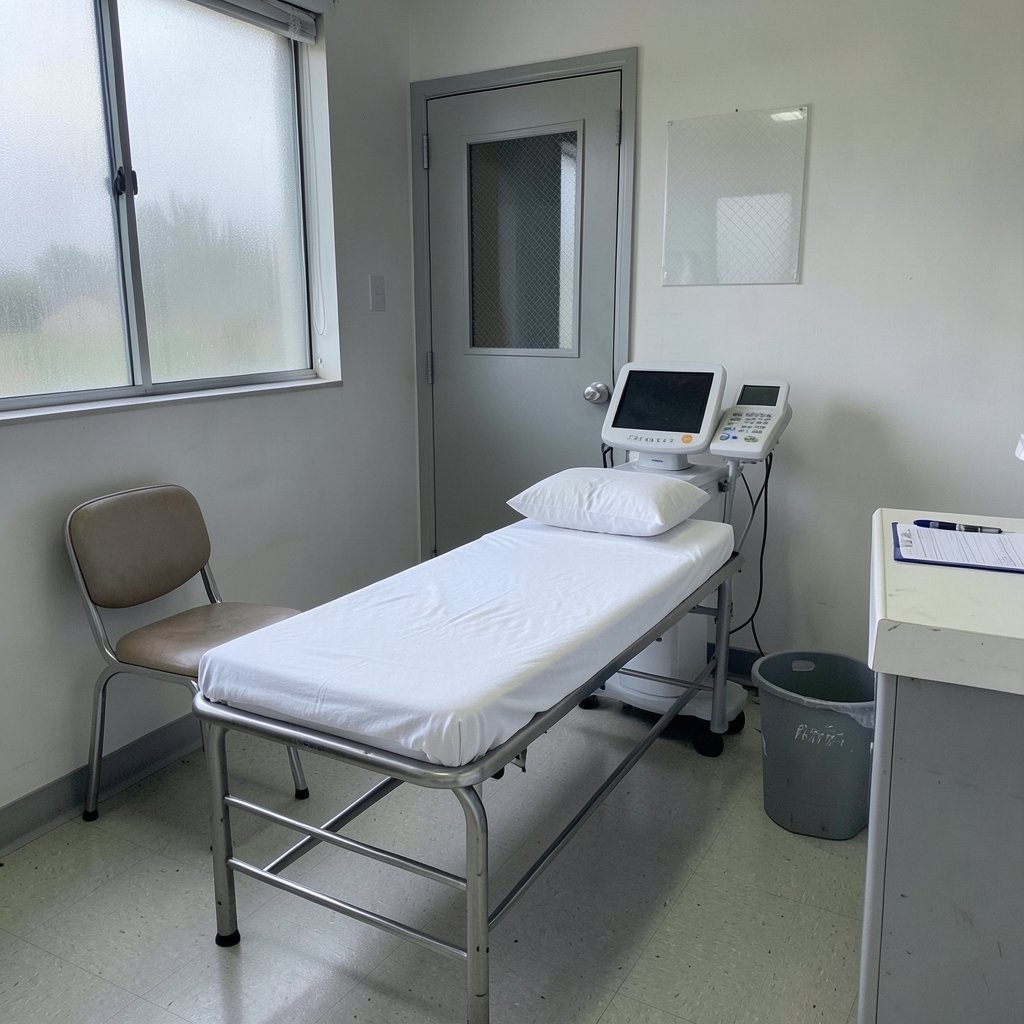
What do people mean when they say someone was “Baker Acted”? The phrase sounds like slang, and in everyday Florida speech it often is. But it points to a real law with real rules, real paperwork, and real consequences for the person taken into custody. If you have heard the term in a news story, a police report, or a family conversation, the short answer is this: it refers to an involuntary mental-health examination under Florida law, usually lasting up to 72 hours. The longer answer involves who can start the process, what has to happen during those hours, and why the whole subject stirs strong feelings on both sides.
Where the Term Comes From
The Baker Act is the informal name for the Florida Mental Health Act. It was passed in 1971 and sponsored by Maxine Baker, a state representative from Miami. The law is codified in Part I of Chapter 394 of the Florida Statutes, spanning sections 394.451 through 394.47892. Because the statute is long and technical, the shorthand took over. People started saying a person “was Baker Acted” the same way they might say someone was “arrested,” turning a proper name into a verb.
That habit is worth noticing. Style guides do not recognize “Baker Acted” as standard English, and legal writers usually prefer phrases like “taken into custody for an involuntary examination” or “held under the Baker Act.” Still, the verb form is everywhere in Florida media and daily conversation, so anyone reading local news needs to understand it.
One caution before going further: “Baker” also shows up in “baker’s dozen” and as a common surname. If you encounter “Baker acted” in a context that has nothing to do with mental health or Florida, check the surrounding text before assuming the law is involved.
What the Law Actually Allows

Under the statute, a person who appears to have a mental illness and meets certain criteria can be taken into custody for an involuntary examination. The criteria center on danger and self-care. A person may qualify if there is reason to believe they are a danger to themselves, a danger to others, or unable to care for their own basic needs.
The examination period is the detail most people know: up to 72 hours. During that window, the person is held and evaluated. The hold is not a criminal arrest, and it is not a conviction of anything. It is a short-term assessment period designed to answer a narrow question: does this person need further treatment, or can they be released?
That distinction matters in practice. A Baker Act hold does not create a criminal record. It does, however, create a paper trail, and it can feel frightening to the person involved. Families often describe the experience as confusing, partly because the law moves quickly and the paperwork is dense.
Who Can Start the Process
Only certain people can have a neighbor Baker Acted. The statute limits who may initiate an involuntary examination. The list generally includes:
- A law enforcement officer, typically acting on observations or a report.
- A physician, who may initiate based on an examination.
- Certain designated mental-health professionals, such as those working at receiving facilities.
A family member cannot simply demand that a hold take place. What a family member can do is call for help, describe what they are seeing, and let an officer or clinician decide whether the legal criteria are met. In practice, this is where most confusion arises. People assume that a frightening situation automatically justifies a hold. It does not. The criteria have to be met, and the person making the call has to be authorized to act.
A practical tip that comes up again and again: write down specific observations before you call. “He seemed off” is not useful. “He has not eaten in three days, has not slept, and told me he planned to hurt himself tonight” gives an officer something concrete to work with. Specifics about time, statements, and behavior carry far more weight than general worry.
What Happens During the 72 Hours
Once a person is taken into custody, they are brought to a receiving facility for examination. The facility may be a hospital, a crisis unit, or another designated setting. During the hold, clinicians evaluate the person and decide on next steps. Broadly, three outcomes are possible:
| Outcome | What It Means |
|---|---|
| Release | The person is found not to meet criteria for further treatment and leaves. |
| Voluntary admission | The person agrees to stay for treatment. |
| Involuntary placement | The facility pursues a longer court process for continued care. |
The 72-hour figure is a maximum for the examination, not a guarantee that someone will be held the full time. Many people are released sooner. Others stay longer, but only through a separate legal process that involves a court, not simply by extending the original hold.
Common mistakes people make during this window are worth naming. One is assuming the hold is punishment. It is not, and treating it that way can damage trust. Another is expecting daily updates from staff. Privacy rules limit what a facility can share, even with close family. A third is failing to ask what happens next. Staff can usually explain the process in plain terms if asked directly.
The Debate Around the Law
The Baker Act is not without critics. Disability-rights and civil-liberties advocates have raised concerns about civil commitment, arguing that the power to hold someone against their will can be misused and that the process deserves close scrutiny. Supporters counter that the law provides a needed tool for situations where someone is in genuine danger and cannot or will not seek help voluntarily.
Both positions have real weight. A law that allows the state to detain a person who has not been charged with a crime is a serious power, and serious powers need limits. At the same time, families in crisis often have nowhere else to turn, and the alternative to a structured hold can be far worse. The honest position is that the law is a blunt instrument. It helps in some cases and fails in others, and the quality of the outcome depends heavily on the people applying it.
How the Term Is Used in Everyday Speech
In Florida, “Baker Acted” functions as informal jargon. Headlines use it. Police scanners use it. Neighbors use it. The verb form has spread well beyond legal circles, which is exactly why it confuses people who encounter it for the first time.
Three usage patterns show up most often:
- Literal use: a news report describing that a person was taken into custody for an involuntary examination.
- Threat or joke: someone saying “I’ll Baker Act you” in a casual or hostile way. This is common and usually careless.
- Misuse: applying the term to any psychiatric hospitalization, including voluntary ones. A voluntary admission is not a Baker Act hold, and conflating the two spreads bad information.
That third pattern causes real harm. When people use the term loosely, they blur the line between a voluntary choice to get treatment and a legal hold. If you are writing or speaking about a specific case, it is worth being precise about which one happened.
Practical Guidance for Families and Friends
If you are trying to help someone and the situation feels urgent, the practical steps matter more than the terminology. A few things tend to work better than others.
First, call the right number. For an immediate safety emergency, that means emergency services. For guidance on a mental-health crisis, a local crisis line can help you think through options before anyone is detained.
Second, be specific and calm when you describe the situation. Officers and clinicians are making a legal judgment, and they need facts. Vague alarm is easy to dismiss. Concrete detail is not.
Third, ask about the process rather than demanding an outcome. You can ask what the criteria are, what happens after the hold, and who to contact for follow-up. Staff are more likely to explain when the request is framed as a question.
Fourth, take care of yourself. Supporting someone through a crisis is draining, and the paperwork and uncertainty add to the strain. People who have been through it often say they wish they had asked for help sooner, both for the person in crisis and for themselves.
For readers who want to follow the law itself, the statutory text is published by the Florida Legislature, and the state’s Department of Children and Families publishes guidance on involuntary examination. Plain-language explanations also appear through court and bar resources. Reading the actual statute is dry work, but it is the only way to see the exact criteria rather than a paraphrase.
Why Precision Matters
Words shape how people treat each other. Calling someone “Baker Acted” when they chose treatment voluntarily is inaccurate. It can also follow them in conversation and change how others see them. Using the term as a joke does the same thing more casually. The law already carries a stigma, and loose language makes it heavier.
Precision also helps in practical settings. A school, an employer, or a landlord who hears “Baker Acted” may react differently than one who hears “was hospitalized for a few days.” Getting the facts right protects the person involved and keeps the conversation focused on what actually happened.
None of this requires becoming a legal expert. It requires knowing that the phrase refers to a specific Florida law, that the law has limits, and that the people applying it are making judgment calls under pressure. That much is enough to read a news story accurately or to help a neighbor without spreading confusion.
Conclusion
“Baker Acted” is shorthand for an involuntary mental-health examination under Florida law, a hold that can last up to 72 hours and that only certain authorized people can initiate. The law is named for Maxine Baker, dates to 1971, and lives in Chapter 394 of the Florida Statutes. It is a genuine legal tool, not a slang invention, even though the verb form is informal and widely misused.
Understanding the term is useful for anyone who lives in Florida, follows local news, or supports someone in crisis. The law is powerful and imperfect, praised for offering a path when someone is in danger and criticized for the civil-commitment power it grants. Knowing who can start a hold, what the 72 hours actually mean, and how the phrase gets stretched in everyday speech makes it easier to respond well when the situation is real.
Frequently Asked Questions
What does it mean to be Baker Acted?
It means a person was taken into custody for an involuntary mental-health examination under Florida’s Baker Act. The hold can last up to 72 hours while clinicians evaluate whether the person meets criteria for further treatment. It is not a criminal arrest and does not create a criminal record.
Who can Baker Act someone in Florida?
Only certain people are authorized to initiate an involuntary examination, generally including law enforcement officers, physicians, and designated mental-health professionals at receiving facilities. A family member or friend cannot do it directly; they can call for help and provide specific observations so an authorized person can decide.
How long can someone be held under the Baker Act?
The examination period is up to 72 hours. That is a maximum, not a fixed sentence, and many people are released sooner. Staying longer requires a separate legal process involving a court rather than a simple extension of the original hold.
Is a Baker Act hold the same as a criminal arrest?
No. It is a civil mental-health process, not a criminal charge. The person is not accused of a crime and does not receive a criminal record from the hold. That said, the experience can feel similar to being detained, which is one reason families often find it distressing.
Can someone be Baker Acted against their will?
Yes. The entire purpose of the law is to allow an involuntary examination when a person appears to have a mental illness and meets criteria such as being a danger to themselves or others or being unable to care for their own basic needs. Voluntary admission is a separate path and does not involve the same legal mechanism.
Where can I read the actual Baker Act law?
The statute is Part I of Chapter 394 of the Florida Statutes, sections 394.451 through 394.47892. The text is published by the Florida Legislature, and the state Department of Children and Families publishes guidance on involuntary examination. Reading the statute directly is the best way to see the exact criteria rather than a summary.



