
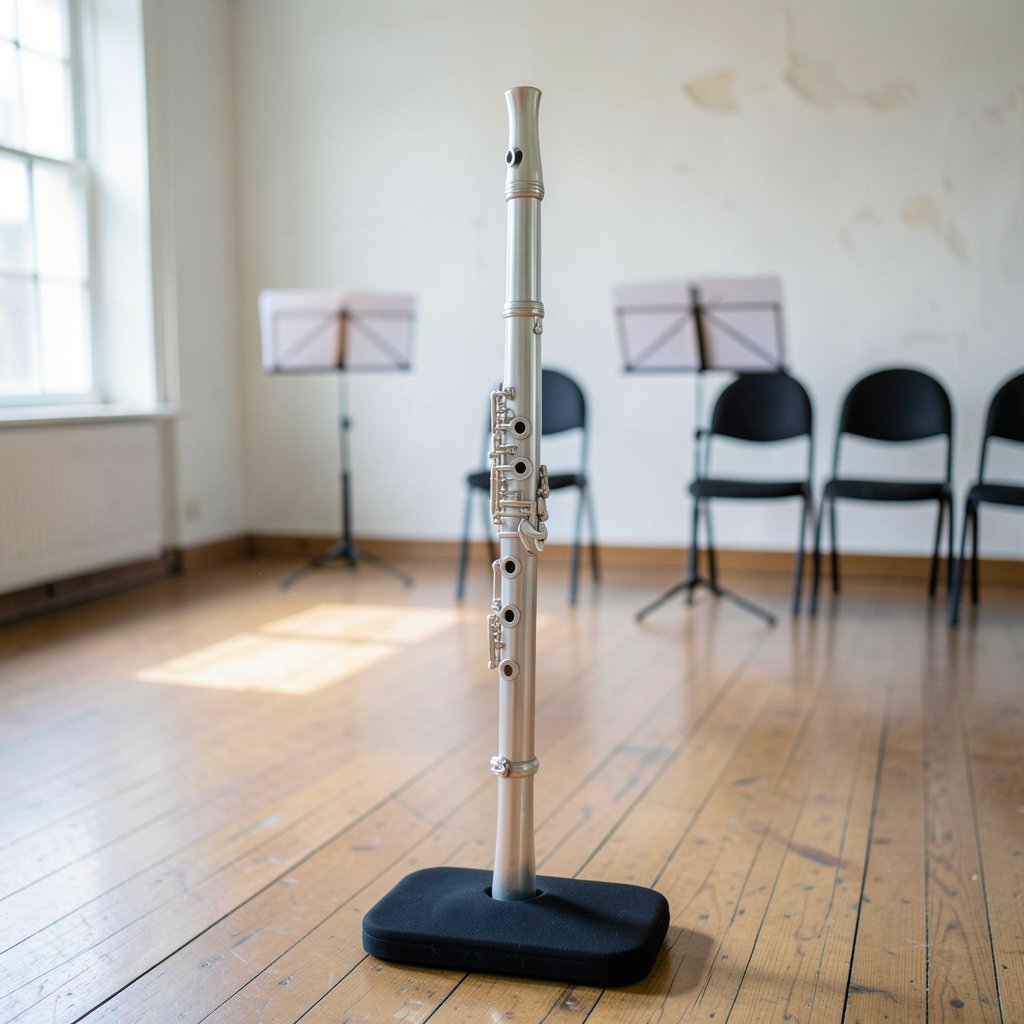
Have you ever stood in a concert hall, heard a low, breathy tone rolling out from the flute section, and wondered what instrument could possibly make that sound? It wasn’t a clarinet. It wasn’t a bassoon. In all likelihood, it was a bass flute — the gentle giant of the flute family, an instrument that sounds an octave below the flute you probably learned on.
The bass flute is one of those instruments that most people have heard without knowing it. It shows up in film scores, flute choirs, and contemporary chamber music, yet it rarely gets the spotlight. This article walks through what the bass flute actually is, how it’s built, how it sounds, where it fits in ensembles, and the practical realities of playing one. If you’re a flutist curious about low flutes, a composer wondering whether to write for it, or just a listener who likes to know what they’re hearing, there’s something here for you.
What Exactly Is a Bass Flute?
The bass flute is the tenor member of the flute family. It is pitched an octave below the standard concert (C) flute and, like all flutes, is notated in treble clef. That one fact — it sounds an octave lower than written — explains much of the confusion around the instrument. A written middle C on the page comes out as the C an octave below.
Because it sits an octave down, the tube needs to be roughly twice as long as a concert flute’s. That extra length is why the instrument looks so unusual: most bass flutes are built with a U-shaped “J-headjoint” (sometimes just called a curved head) so the player can actually reach the keys. Straight-head versions do exist, but they’re awkward to hold and to balance, which is why the curved design dominates in practice.
One important warning for anyone reading older books: the term “bass flute” has been used for very different instruments across history. The bass flutes of the Renaissance and Baroque periods were not the same thing at all — they were often cylindrical, sometimes recorder-like or serpent-like in form. The modern bass flute is a 20th-century development, and mixing the two up is a genuine source of confusion in older literature.
How the Bass Flute Is Built
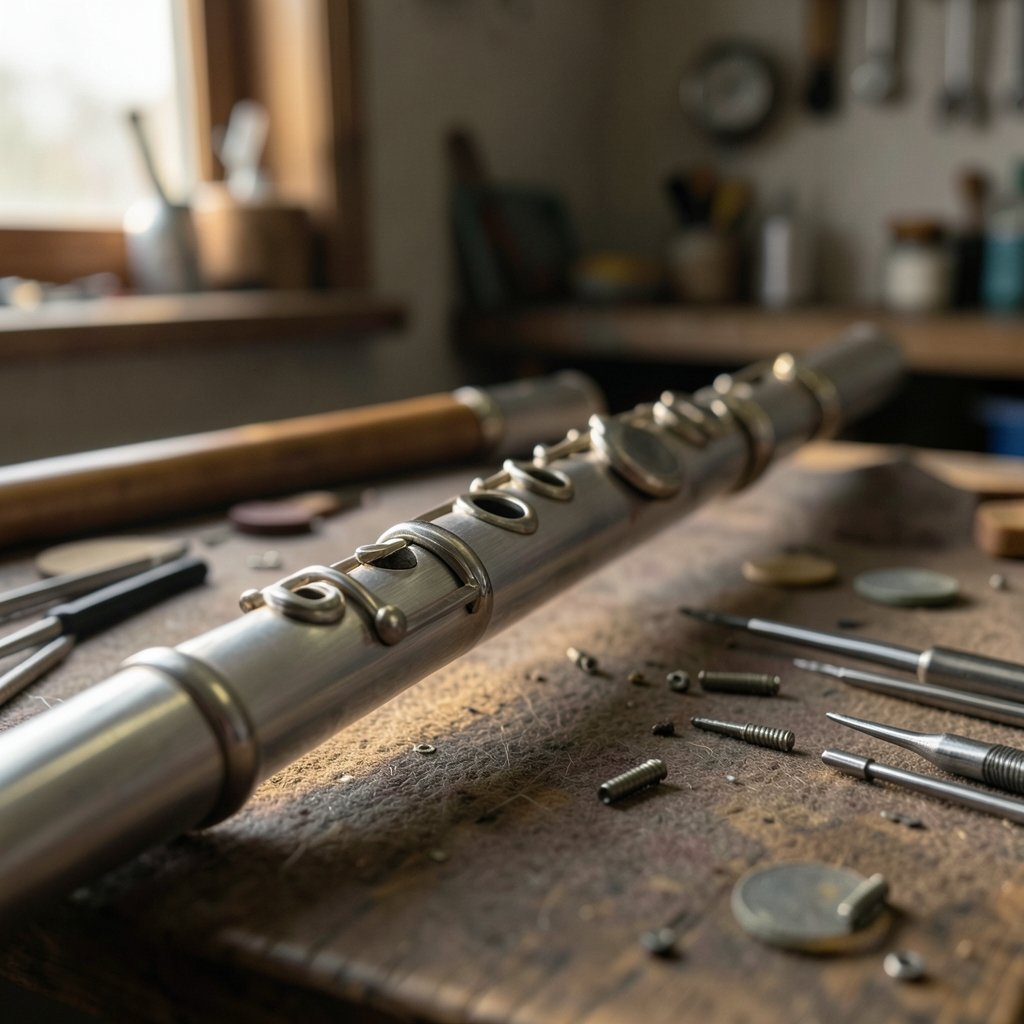
Understanding the construction helps explain both the sound and the ergonomic challenges.
The curved headjoint
The J-headjoint isn’t a cosmetic choice. Doubling the tube length puts the tone holes and keys much farther from the player’s face than on a concert flute. Bending the top of the tube back toward the player brings everything within reach. Players who try a straight-head bass flute for the first time usually discover quickly why the curved design became standard.
Keywork and the Kingma system
Standard bass flutes use keywork closely related to the concert flute, scaled up. But there’s a specialized option worth knowing about: the Kingma system, developed by Dutch maker Eva Kingma from the 1970s onward. This key system allows full quarter-tone and multiphonic capability on low flutes, including the bass flute. It’s widely cited in contemporary repertoire notes, and it has made the bass flute far more viable for new music that demands microtones and extended techniques.
Acoustics in plain terms
Like all flutes, the bass flute behaves essentially as an open pipe — a tube open at both ends. An open pipe’s fundamental pitch is roughly half that of a stopped pipe of the same length, and doubling the tube length relative to a concert flute drops the pitch by an octave. That’s the whole trick behind the instrument’s low register. There’s no reed, no mouthpiece, no electronic assistance — just a longer column of vibrating air.
The Bass Flute’s Range and Transposition
The transposition rule is simple but trips people up constantly: the bass flute sounds one octave below written pitch. Composers write in treble clef exactly as they would for a concert flute, and the performer’s instrument handles the octave drop automatically.
Notation practice, however, is not fully standardized. Because the instrument transposes by an octave, some publishers add an “8vb” indication to the staff, while others leave it off entirely and expect the player to know. Conventions vary by publisher and by score, so a composer working with a copyist or engraver should confirm which approach is being used. This is one of those small details that causes real headaches in rehearsal if nobody checks.
What Does a Bass Flute Sound Like?
The bass flute’s voice is often described as mellow, breathy, and slightly hollow — closer to a soft wooden instrument than to the bright, piercing upper register of a concert flute. It has a distinctive airy quality, partly because moving that much air through a long tube produces a sound with a lot of breath noise mixed into the tone.
Volume is the instrument’s great limitation and its great charm. The bass flute does not project the way a concert flute does. In a large orchestra it can be swallowed up, which is precisely why composers tend to use it for color, atmosphere, and moments of intimacy rather than for big melodic statements over a full brass section. In a flute choir or amplified setting, though, it can anchor an entire ensemble.
Where the Bass Flute Fits in Ensembles
Standard symphony orchestra instrumentation does not include the bass flute as a regular member. That surprises people who assume every instrument in the flute family has an orchestral chair. It doesn’t. The bass flute is an occasional guest, not a section regular.
Its more natural home is the flute choir or flute ensemble, where it typically appears alongside the alto flute and the contrabass flute. In that setting it fills the tenor-to-bass range, giving the group a low foundation it would otherwise lack. It also turns up in film scores and contemporary orchestral writing, usually for atmospheric effect.
Here’s how the low flutes stack up against each other:
| Instrument | Transposition | Role in the family |
|---|---|---|
| Concert flute | None (in C) | Soprano voice, standard orchestral member |
| Alto flute | In G (a fourth below) | Between concert and bass, warm and rounded |
| Bass flute | One octave below concert flute | Tenor voice of the family |
| Contrabass flute | Two octaves below concert flute | Deep foundation, large and rare |
| Subcontrabass (“double contrabass”) flute | Even lower | Extremely large, very rare |
The alto flute sits neatly between the concert and bass instruments, and many players move to bass flute after spending time with the alto. The contrabass and subcontrabass flutes are larger relatives again, impressive to see but rarely encountered outside specialist ensembles.
Repertoire: Limited but Growing
The bass flute is rare as a solo instrument. That’s an honest assessment, not a criticism. Its repertoire is small compared with the concert flute’s, and much of the most interesting music written for it comes from contemporary composers working with low-flute specialists. Players who own a bass flute often find themselves commissioning new works rather than mining a deep historical catalog.
For a flutist, this is both a frustration and a chance. The frustration is obvious: you can’t just pull a sonata off the shelf the way a concert flutist can. The upside is that the field is wide open. Composers actively looking for performers willing to explore the instrument’s breathy low register and extended techniques will find plenty of collaborators.
Practical Tips for Playing the Bass Flute
If you’re thinking about picking one up, a few practical realities are worth knowing before you commit.
- Air consumption goes up sharply. A longer tube means more air. Players new to the instrument often run out of breath mid-phrase and assume something is wrong with the flute. It isn’t — it’s just physics. Plan your breaths more carefully than you would on a concert flute.
- Support matters more than force. Because the instrument doesn’t project easily, the temptation is to blow harder. That usually just produces a louder breathy sound rather than a stronger tone. Focused, well-supported air works better than brute force.
- Balance takes adjustment. The curved headjoint changes how the instrument sits against your body. Give yourself time to find a comfortable hand position, and don’t be surprised if your arms and shoulders complain during the first few weeks.
- Check the notation before rehearsing. Confirm with the composer or score whether an 8vb indication is present. It saves confusion later.
- Try before you buy. Bass flutes are expensive and vary considerably in feel. Play several if you can.
A common mistake is treating the bass flute as simply “a big concert flute.” It isn’t. The response, the resistance, and the tonal character are different enough that it plays more like its own instrument. Approaching it with concert-flute habits and expectations leads to frustration.
Who Makes Bass Flutes Today?
Several established flute makers produce bass flutes, and the market splits roughly between student-oriented instruments and professional models. The professional end includes makers known for low-flute specialization, and the Kingma key system remains a notable option for players focused on contemporary repertoire.
For anyone curious about the broader instrument-making world and how ownership works in the flute and woodwind industry, the business side can be surprisingly tangled. The same curiosity applies across the instrument world — for instance, people often wonder who owns embassy suites when they encounter a brand name in a hotel lobby, and the answer is rarely as simple as the signage suggests. Instrument brands work similarly: a familiar name on the tube doesn’t always mean a single family workshop is behind it.
Common Misconceptions About the Bass Flute
A few myths come up again and again.
“The bass flute is just a low concert flute.” It’s related, certainly, but the response and character are different enough that it deserves to be treated as its own voice.
“It’s a standard orchestral instrument.” It isn’t. Standard symphony orchestra instrumentation does not include it as a regular member.
“It was invented in the 16th century.” The historical “bass flute” of the Renaissance and Baroque was a different instrument entirely. The modern bass flute is a 20th-century development, with early examples appearing in the 1910s through the 1930s and some sources crediting English makers in the early 20th century. Dates vary by source, so treat any single “invented in year X” claim with caution.
“It’s too quiet to matter.” In the right setting — a flute choir, a chamber group, a film score — its soft, breathy tone is exactly the point.
Conclusion
The bass flute is a niche instrument with a distinctive personality. It sounds an octave below written pitch, uses a curved J-headjoint to make its doubled tube length playable, and offers a mellow, breathy voice that no other flute quite matches. It isn’t a regular orchestral member, its solo repertoire is thin, and it demands more air and more patience than a concert flute. Yet for flutists who love low sounds and composers who want atmosphere rather than volume, it’s an instrument worth getting to know. Whether you’re hearing one in a flute choir or writing your first piece for it, the bass flute rewards a little understanding with a sound that’s hard to forget.
Frequently Asked Questions
What is the range of a bass flute?
The bass flute sounds one octave below written pitch and is notated in treble clef. Because it transposes down an octave, its sounding range sits a full octave beneath the concert flute’s, giving it a low, mellow register that the standard flute cannot reach.
Is the bass flute a standard orchestral instrument?
No. Standard symphony orchestra instrumentation does not include the bass flute as a regular member. It appears occasionally in orchestral and film scores for color and atmosphere, but its more natural home is the flute choir or flute ensemble, often alongside alto and contrabass flutes.
Why does the bass flute have a curved headjoint?
The bass flute’s tube is roughly twice as long as a concert flute’s, which puts the keys much farther from the player’s face. The U-shaped J-headjoint bends the top of the tube back toward the player so the keys are reachable. Straight-head versions exist but are awkward to hold and balance.
What is the Kingma system on a bass flute?
The Kingma system is a key system developed by Dutch maker Eva Kingma from the 1970s onward. It allows full quarter-tone and multiphonic capability on low flutes, including the bass flute, making the instrument far more practical for contemporary music that uses microtones and extended techniques.
How is the bass flute different from the alto flute?
The alto flute is pitched in G, a fourth below the concert flute, and sits between the concert and bass instruments in the family. The bass flute sounds a full octave below the concert flute, making it the tenor member of the family. The bass flute is larger, uses more air, and has a lower, breathier tone.
Is the historical bass flute the same instrument?
No. The “bass flute” of the Renaissance and Baroque periods was a different instrument, often cylindrical and sometimes recorder-like or serpent-like in form. The modern bass flute is a 20th-century development, with early examples appearing in the 1910s through the 1930s. Mixing the two up is a common source of confusion in older literature.



