
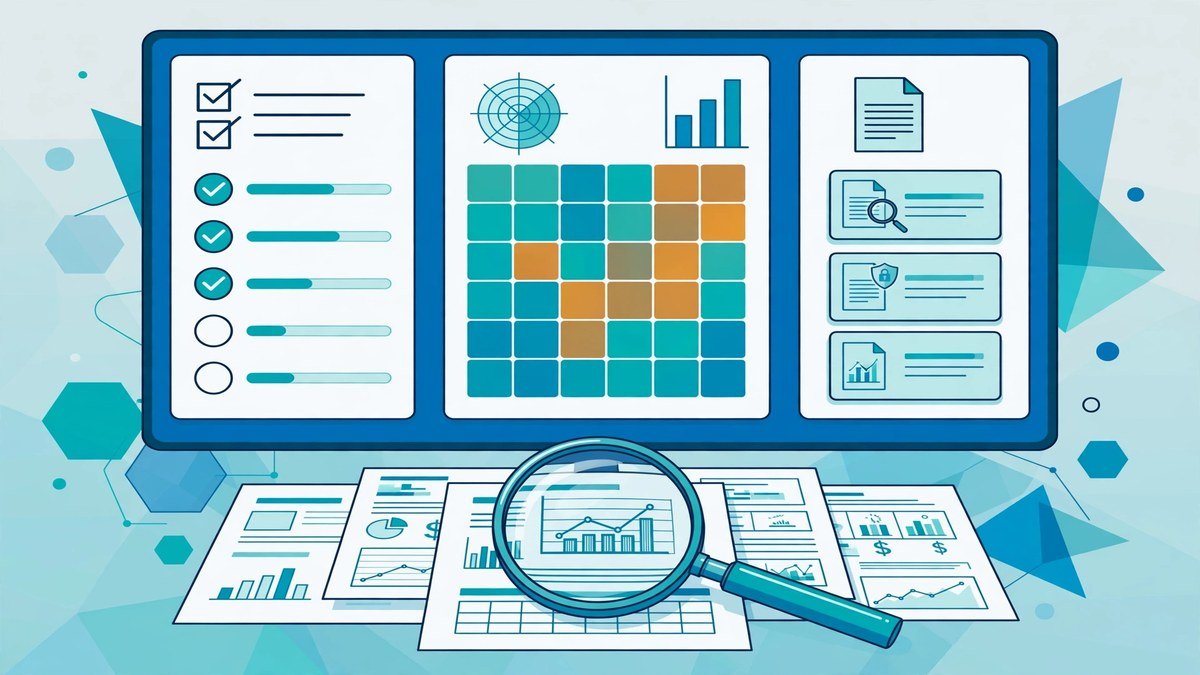
Audit management used to mean spreadsheets, shared drives, and a long trail of emails chasing evidence. Internal audit teams, finance leaders, and compliance managers spent more time gathering documents and updating trackers than they did testing controls or advising the business. In 2027, that balance is finally shifting. AI-powered audit management tools can now read documents, flag anomalies, draft test steps, link risks to controls, and keep every piece of evidence in one place, so auditors spend their time on judgement rather than administration.
That does not mean the software does the audit for you. The best tools in this roundup are still built around sound audit method: planning, risk assessment, fieldwork, testing, findings, and reporting. What AI adds is speed and coverage. Instead of sampling a handful of transactions, a team can scan a full population and focus human attention on the exceptions. The result is a faster audit cycle, a clearer audit trail, and fewer late-night scrambles before a board meeting.
We chose the eight tools below for teams that run real internal audit, SOX, operational audit, or compliance programmes, from mid-sized companies building their first formal audit function to large enterprises with hundreds of controls. We weighed audit workflow depth, AI assistance, risk and control libraries, evidence handling, reporting, integrations with finance and ERP systems, and value for money. AuditBoard leads for connected risk, TeamMate+ leads for traditional internal audit depth, and the rest each suit a different team shape, budget, or industry. Read the shortlist, then use the checklist before you pay.
Key takeaways
- AuditBoard is the best overall choice for teams that want audit, risk, and compliance in one connected platform.
- TeamMate+ is the best pick for established internal audit departments that want deep, traditional audit methodology.
- Workiva suits large, regulated teams that need audit evidence tied directly to financial reporting and filings.
- Most leading tools use custom or quote-based pricing, so budget for implementation, training, and annual renewal before you commit.
- Do not buy on AI promises alone: check evidence handling, control testing, permissions, and export options first, because those decide whether the tool survives your first real audit cycle.
At a glance: the shortlist
| Product | Best for | Starting price | Standout limit |
|---|---|---|---|
| AuditBoard | Connected audit, risk, and compliance | Custom pricing — check current pricing | Can be more than a small team needs |
| TeamMate+ | Established internal audit teams | Custom pricing — check current pricing | Setup takes time and training |
| Workiva | Financial reporting and SOX audit | Custom pricing — check current pricing | Premium pricing for smaller teams |
| Galvanize HighBond | Risk analytics and continuous monitoring | Custom pricing — check current pricing | Analytics depth needs skilled users |
| MetricStream | Enterprise governance, risk, and compliance | Custom pricing — check current pricing | Long implementation for large rollouts |
| Ideagen | Quality, safety, and regulated industries | Custom pricing — check current pricing | Module choice can get confusing |
| Onspring | Flexible, no-code audit workflows | Custom pricing — check current pricing | Flexibility needs clear internal design |
| FloQast | Close management and audit readiness | Custom pricing — check current pricing | Not a full internal audit suite |
AuditBoard — Best overall
AuditBoard is the most complete audit management platform in this roundup, and it is the easiest to recommend to a team that wants audit, risk, and compliance work in one place. Its Audit Management module covers the full cycle: annual planning, risk assessment, engagement scoping, fieldwork, testing, findings, and reporting. Controls, risks, entities, and issues are linked, so when a control changes, the connected risk and audit history change with it, rather than living in three separate spreadsheets that drift apart over the year.
The AI assistance is practical rather than theatrical. AuditBoard can help draft control descriptions, summarise evidence, suggest risks linked to a process, and surface similar findings from past audits. That matters most during planning and fieldwork, when auditors otherwise spend hours rewriting familiar material. The platform also supports SOX management, operational audits, and IT audits, with frameworks and templates that help a growing team standardise its approach without forcing every engagement into the same shape.
Reporting is a genuine strength. Audit committees and executives get clean dashboards and board-ready reports, while auditors keep the working papers and evidence behind each conclusion. Integrations with common business systems help keep entity and control data current, and the permissions model lets you control who sees sensitive findings. For a mid-sized or large team that wants one system of record for audit and risk, AuditBoard is the safest starting point in this list, and teams comparing related management software will find our guide to the best AI tools for contract management useful for seeing how connected platforms handle documents and approvals in a similar way.
Pros: Connected audit, risk, and compliance in one platform; strong planning, testing, and reporting; useful AI drafting and summarising; good board-ready dashboards.
Cons: Custom pricing with no public starting price; can be more platform than a very small team needs; implementation benefits from a clear internal owner.
TeamMate+ — Best for established internal audit teams
TeamMate+ comes from Wolters Kluwer and has been used by internal audit departments for years, which shows in its depth. It is built around the way audit teams actually work: audit universe and risk assessment, annual planning, engagement planning, work programmes, testing, issue tracking, and follow-up. If your team follows Institute of Internal Auditors methodology closely, or answers to a demanding audit committee, TeamMate+ will feel familiar in a good way, with structure that supports rigour rather than getting in its way.
The platform handles the unglamorous parts of audit well. Working papers are organised by engagement, evidence is attached to test steps, review notes and sign-offs are tracked, and issues flow into a single register with owners and due dates. That discipline pays off at year end, when you need to show what was tested, what was found, and what has been fixed, without rebuilding the story from email threads. TeamMate Analytics, the companion analytics tool, adds data analysis for teams that want to test full populations rather than samples, which is increasingly where AI-assisted audit is heading.
Pros: Deep internal audit methodology and working-paper structure; strong issue tracking and follow-up; companion analytics for full-population testing; trusted by large audit departments.
Cons: Custom pricing — check current pricing; setup and training take real time; interface feels more traditional than newer cloud tools.
Workiva — Best for financial reporting and SOX audit
Workiva is best known for financial reporting, and that is exactly why it belongs on an audit management list. For SOX teams, the hardest part of the audit is often not the testing itself but keeping controls, evidence, and financial statements linked and consistent. Workiva connects those pieces: controls are documented and tested in the same environment that produces reports and filings, so a change to a number or a disclosure can be traced back to the control and the evidence behind it.
The platform supports SOX and internal controls programmes with control libraries, testing workflows, certifications, and issue management. Auditors can request evidence, track its status, and link it to specific controls and assertions, which reduces the back-and-forth that usually fills the weeks before a filing. AI features help with drafting, summarising documents, and finding relevant content across a large reporting library, which is useful when a team manages hundreds of controls across multiple entities and reporting periods.
Pros: Tight link between controls, evidence, and financial reporting; strong SOX and internal controls support; good for multi-entity, multi-period programmes; useful AI drafting and search.
Cons: Custom pricing — check current pricing; premium cost for smaller teams; reporting depth can be more than a pure internal audit team needs.
Galvanize HighBond — Best for risk analytics and continuous monitoring
Galvanize HighBond, now part of Diligent, is the analytics-led choice in this roundup. Its strength is turning audit from a periodic exercise into something closer to continuous assurance. HighBond combines audit management with risk management, controls, and data analytics, so teams can monitor key controls and transactions between audits, not just test them once a year. For teams that audit high-volume processes such as payments, procurement, or expenses, that shift is significant.
The audit management side covers planning, fieldwork, testing, and issue tracking, with the analytics engine sitting alongside it. Auditors can run tests over full data sets, look for duplicates, outliers, and unusual patterns, and turn the results into audit evidence. AI and automation help by flagging anomalies, suggesting risk indicators, and reducing the manual work of pulling and preparing data. That makes HighBond a strong fit for internal audit teams that already think in data, or that want to build that capability with a platform that supports it properly.
Pros: Strong data analytics and continuous monitoring; audit, risk, and controls in one platform; good for high-volume transaction testing; AI-assisted anomaly detection.
Cons: Custom pricing — check current pricing; analytics depth needs skilled users; may be heavy for teams that only want basic audit tracking.
MetricStream — Best for enterprise governance, risk, and compliance
MetricStream is an enterprise governance, risk, and compliance platform, and its audit management capability sits inside that wider system. For very large organisations, that is the point. Audit does not happen in isolation: it connects to enterprise risk, compliance obligations, third-party risk, and regulatory change, and MetricStream is built to hold all of those together. If your audit programme needs to serve a global business with multiple regulators, business units, and risk frameworks, MetricStream is designed for that scale.
Inside the platform, audit teams can plan engagements, manage work papers, test controls, track findings, and report to senior management and the board. The link to the wider risk and compliance data means an audit finding can be connected to the underlying risk, the relevant regulation, and the corrective action, with ownership and deadlines tracked in one place. AI features focus on helping teams work through large volumes of regulatory and risk content, summarising material, and keeping audit plans aligned with changing risk priorities.
Pros: Enterprise-scale governance, risk, and compliance in one system; strong links between audit, risk, and regulation; good for global, multi-regulator organisations; mature reporting.
Cons: Custom pricing — check current pricing; long implementation for large rollouts; more platform than most small or mid-sized teams need.
Ideagen — Best for quality, safety, and regulated industries
Ideagen is a strong choice for audit teams in regulated industries where audit, quality, and safety overlap. Its products cover audit management, quality management, and risk, and they are used widely in sectors such as healthcare, aviation, manufacturing, and food, where an audit finding can have safety or regulatory consequences. For those teams, an audit tool that also understands corrective actions, non-conformances, and regulatory requirements is more useful than a generic audit tracker.
The audit management tools support planning, checklists, fieldwork, findings, and corrective action tracking, with workflows that fit inspection-style audits as well as traditional internal audit. Teams can build audit templates and checklists, assign audits across sites, and track actions to closure, which matters when the same issue appears at several locations. AI assistance helps with drafting, summarising audit content, and working through documentation, although the core value of Ideagen remains its structured approach to regulated audit and quality work rather than any single AI feature.
Pros: Strong fit for regulated industries and quality-linked audit; good corrective action and checklist support; useful for multi-site audit programmes; practical AI drafting help.
Cons: Custom pricing — check current pricing; module choice can get confusing; less of a broad financial audit platform than Workiva or AuditBoard.
Onspring — Best for flexible, no-code audit workflows
Onspring takes a different approach from the other platforms here: it is a no-code governance, risk, and compliance platform that teams can shape around their own audit process. Instead of adopting a fixed audit workflow, you build the one you need, with custom forms, fields, workflows, and reports. For teams whose audit process does not fit a standard template, or who want audit, risk, and compliance in a single flexible system, that freedom is the main attraction.
In practice, that means an audit team can design its own planning, fieldwork, testing, and findings workflows, connect them to risk registers and control libraries, and automate reminders, approvals, and reporting. The platform supports internal audit, IT audit, SOX, and vendor risk work, and its reporting tools let teams build dashboards without waiting for a developer. AI features help with content and workflow efficiency, but the real strength of Onspring is configurability: if you can describe your audit process clearly, you can usually build it in Onspring.
Pros: Highly configurable no-code audit workflows; audit, risk, and compliance in one flexible system; good dashboards and automation; fits unusual or evolving processes.
Cons: Custom pricing — check current pricing; flexibility needs clear internal design and an owner; less out-of-the-box audit methodology than TeamMate+.
FloQast — Best for close management and audit readiness
FloQast is not a full internal audit suite, and it is included here for a specific reason: for many finance teams, audit pain starts with the month-end close. FloQast manages the close checklist, reconciliations, and supporting evidence, and its AI features help match transactions, flag exceptions, and prepare the documentation an auditor will ask for. When the close is organised, the audit that follows it is faster, calmer, and cheaper, because the evidence is already gathered and tied to the right accounts.
The platform gives accounting teams a single place to track close tasks, ownership, and deadlines, with reconciliations and flux analysis built in. Auditors benefit because they can see the trail: who prepared a reconciliation, who reviewed it, what changed, and what supports the balance. FloQast also integrates with common ERP and accounting systems, which keeps the close connected to the underlying ledger rather than floating in a separate spreadsheet. For SOX teams, that structure supports control evidence for close-related controls.
Pros: Excellent close management and reconciliation workflow; AI-assisted matching and exception flagging; strong audit trail for close evidence; good ERP integrations.
Cons: Custom pricing — check current pricing; not a full internal audit suite; best as a companion to a dedicated audit platform.
How to choose
Start with the audit work you actually do, not the feature list. A team that runs SOX and financial controls needs different depth from a team that runs operational audits across factories, and both differ from a team that mainly needs close readiness. Write down your audit types, your team size, the number of controls you test, and the reports your audit committee expects. Then match the tool to that list, and be honest about what you will not use in the first year.
Finally, look beyond the licence price. Implementation, template setup, data migration, training, and annual renewal all add cost, and custom-priced platforms vary widely, so get a written quote that covers the first two years. Ask about export options too: you should be able to take your audit history, findings, and evidence out of the system in a usable form. A tool that locks your audit trail inside it is a risk, not a convenience. Teams weighing connected management platforms should also compare how similar tools handle related work, and our roundup of the best AI tools for asset management shows how AI roundups in this series judge workflow depth, pricing transparency, and reporting.
Checklist: before you pay
- Run a trial or a pilot engagement on a real audit, using your own template, controls, and evidence, not a vendor sample.
- Get written pricing for year one and year two, including implementation, training, user licences, and renewal terms.
- Confirm how evidence is attached, versioned, and exported, and test taking a full audit file out of the system.
- Check permissions and sign-off workflows for auditors, auditees, managers, and the audit committee.
- Confirm integrations with your ERP, finance, and document systems, and ask what happens when those systems change.
- Agree who owns the platform internally, who configures templates and libraries, and how new auditors will be trained.
Frequently asked questions
What is AI audit management software?
AI audit management software is a platform that runs the audit lifecycle, from planning and risk assessment through fieldwork, testing, findings, and reporting, with AI features that help draft content, summarise evidence, flag anomalies, and search past audit work. The AI assists the auditor; it does not replace professional judgement, testing, or sign-off, and every conclusion still needs a human reviewer.
Which AI audit tool is best overall?
AuditBoard is the best overall choice in this roundup because it connects audit, risk, and compliance in one platform with strong planning, testing, and board reporting. TeamMate+ is the best choice for established internal audit departments that want deep traditional audit methodology, and Workiva is the best choice for SOX teams tied closely to financial reporting.
How much does AI audit management software cost?
Most leading tools in this category use custom, quote-based pricing, so there is no single starting price to rely on. Expect the total cost to include licences, implementation, template setup, training, and annual renewal, and ask each vendor for a written quote based on your team size and audit volume. Mark any public price you see as a guide only, and check current pricing before you budget.
Can AI replace internal auditors?
No. AI can scan full populations, draft working papers, summarise documents, and highlight exceptions, but it cannot exercise professional scepticism, interview people, judge the design of a control, or take responsibility for an audit opinion. The best teams use AI to cover more ground and spend more human time on the judgements that matter.
Do these tools work for small audit teams?
Yes, with the right choice. Small teams should favour tools with clear out-of-the-box templates, simple evidence handling, and pricing that fits a small user count, and should avoid enterprise platforms that need a long implementation. A pilot engagement is the best way to tell whether a tool fits a small team, because it shows the real setup effort, not just the sales promise.
What should I check before switching audit tools?
Check that you can migrate your audit history, findings, control library, and evidence, and test the export before you sign. Confirm the new tool supports your audit methodology, your reporting needs, and your permission model, and plan training and a handover period so no live audit is disrupted. If you are comparing management platforms more broadly, the best AI tools for vendor management roundup uses the same checks for workflow depth and value, and those checks transfer well to audit software.
The bottom line
For most teams, AuditBoard is the right starting point: it covers the full audit cycle, connects audit to risk and compliance, and produces the reporting an audit committee expects. If your team follows traditional internal audit methodology closely, choose TeamMate+ instead. If your audit programme exists to support financial reporting and SOX, choose Workiva. If you want data-led, continuous audit, look at Galvanize HighBond, and if your audit work overlaps with quality and safety in a regulated industry, look at Ideagen.
Whichever tool you choose, run a pilot on a real audit before you commit, get written pricing for two years, and make sure your audit history can be exported. AI will keep improving the drafting, summarising, and anomaly detection in these platforms, but the tool that wins in 2027 will still be the one that makes planning, testing, evidence, and follow-up easier for the auditors who use it every day.
Note: Prices and plans change. Check the product’s current plan details before buying — no link is provided here by design, all links in this article go to other occcy.com guides.



