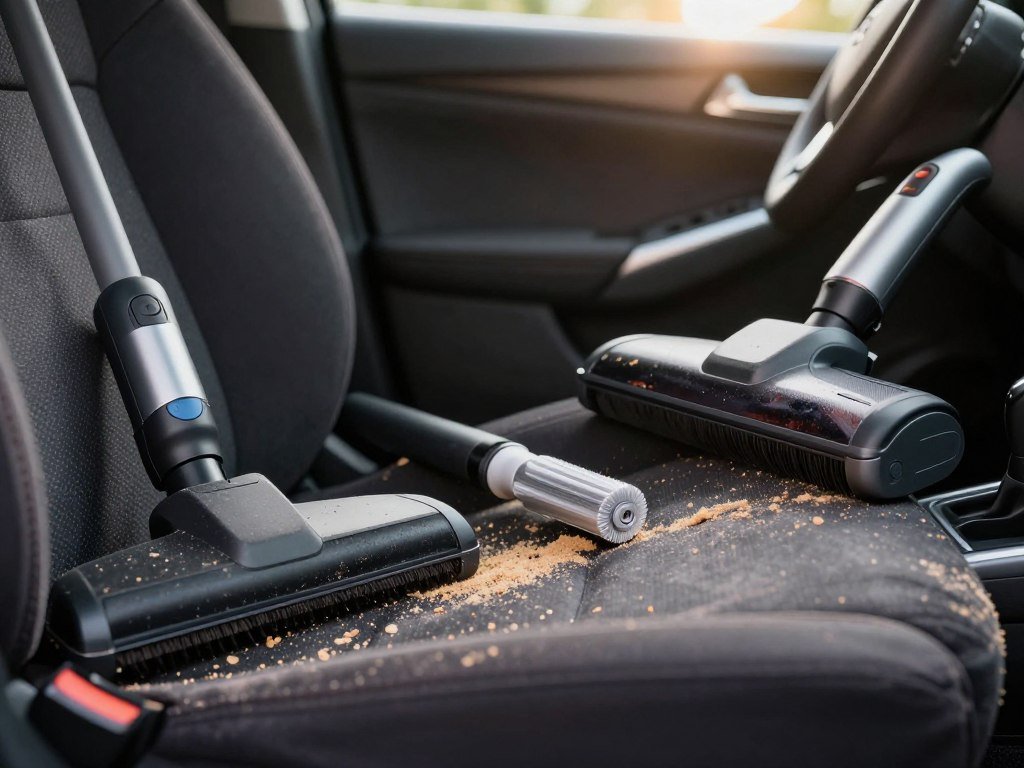
A handful of crumbs under a seat and embedded grit on a floor mat call for different tools. The best car vacuum for you depends on the mess, the space you need to reach, and the power source you can use. A small cordless vacuum can handle quick cleanup, while a wet/dry shop vacuum suits a larger job.
We picked the Fanttik Slim V10 APEX for quick cleanups, with other options for floor-mat messes, pet hair, tight spaces, and deeper wet/dry cleaning. A household or shop vacuum can clean a vehicle, too, when its size and features fit the task. You do not need a special tool for every crumb, but a compact model may struggle with a packed cabin.
A good match saves time without leaving the dirt that matters behind.
Key Takeaways
- Fanttik Slim V10 APEX suits compact, frequent spot cleaning.
- Black+Decker Dustbuster has a wide opening for mixed floorboard debris.
- Dyson Car+Boat offers high water lift and useful detailing tools.
- Armor All wet/dry vacuum handles wet and dry pickup.
- Choose based on mess, reach, storage, and available power.
How should you choose the best car vacuum?
Start with the hardest mess you expect to clean, not the smallest device you can store. The best car vacuum depends on debris, reach, and power access. Water lift is the height of a water column a vacuum can lift, used as a measure of suction.
Loose crumbs need a different setup from grit pressed into a floor mat. Market forecasts describe product-category patterns, not a guarantee that a vacuum will clean well. A model’s tools and design still decide how it handles your car’s mess.
| Cleaning need | Suitable format | Main trade-off |
|---|---|---|
| Loose crumbs | Compact handheld | Smaller bin |
| Embedded sand | Wet/dry shop vac | Cord and outlet needed |
| Pet hair | Vacuum with motorized or upholstery tool | Extra attachment |
| Quick roadside touch-ups | 12-volt vacuum | Lower mobility and power |
Portable car vacuums are a growing product category. The market is projected to reach USD 14.3 billion in 2026 and USD 33.5 billion in 2036, with an 8.9% annual growth rate over that period. A portable car vacuum market forecast also projects handheld cordless vacuums at 39.0% of the product segment in 2026.
The same forecast puts battery-operated models at 52.0% of the market by power source, and HEPA filtration at 44.0% of the filtration segment. Those numbers describe market shares, not cleaning ability or battery life.
Use this short checklist to compare car vacuums:
- Suction for the mess you face most often.
- Reach into footwells, seat gaps, and the trunk.
- Power source that suits your cleaning spots.
- Useful attachments for mats, hair, or tight gaps.
- Easy emptying, especially after a full cabin cleanup.
For a serviceable spot-cleaning tool, the deciding trade-off is often convenience against the effort of a deeper clean.
What do suction, noise, and runtime measurements show?
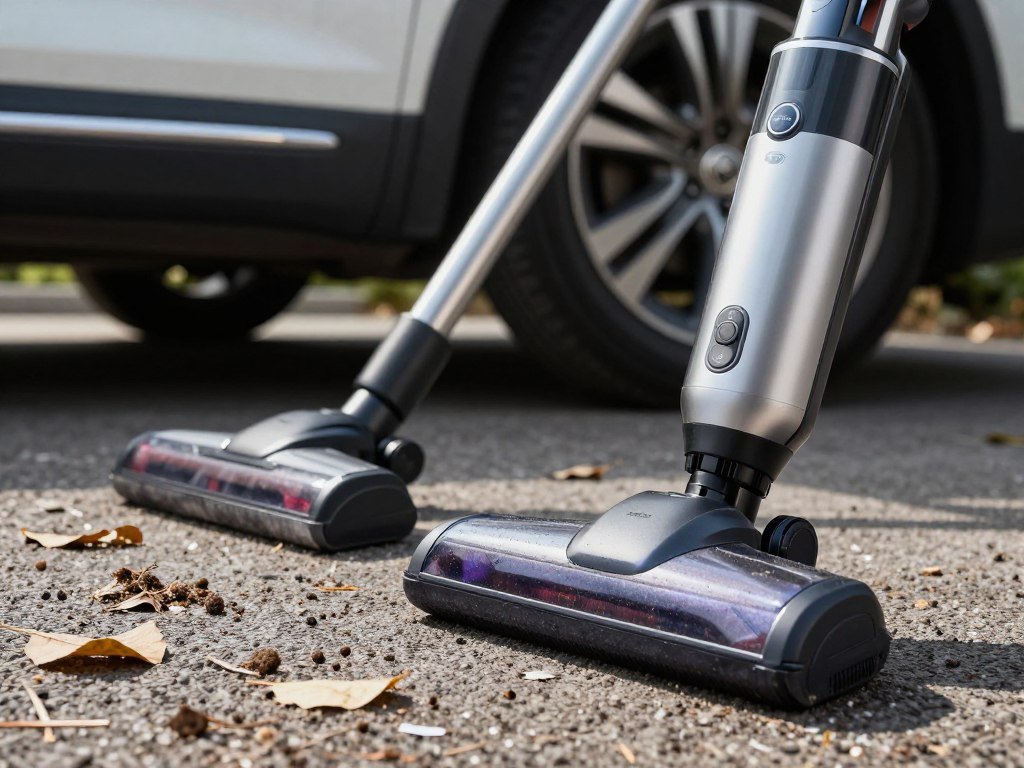
The Dyson Car+Boat leads these four in high-mode water lift, while the Fanttik combines lower weight with a longer maximum-power run than the Dyson. Use water-lift figures to compare suction only within that measurement system.
Water lift does not equal air watts, so the two measures are not interchangeable. A handheld vacuum’s weight can also affect how long it feels comfortable to hold. Runtime figures below show the maximum-power test, not every mode.
| Model | Weight | Suction | Average noise | Maximum-power runtime |
|---|---|---|---|---|
| Fanttik Slim V10 APEX | 1.16 pounds | 28 inches low; 70 inches high | 71.7 dBA | 14 minutes, 26 seconds |
| Black+Decker Dustbuster | 2.42 pounds | 16 inches of water | 82.1 dBA | 14 minutes, 1 second |
| Dyson Car+Boat | 3.42 pounds | 28 inches low; 86 inches high | 79.5 dBA | 6 minutes, 36 seconds |
| Worx Cordless Cube | 3.96 pounds with battery | 30 inches low; 50 inches high | 78.8 dBA | 11 minutes, 20 seconds |
Read the measurements with the job in mind:
- High suction can help lift stubborn debris from fabric and mats.
- Maximum-power runtime is not the same as low-mode runtime.
- A quieter reading can make longer cleanup more comfortable.
Consumer Reports tests handheld models on debris pickup, crevice cleaning, pet hair, noise, and runtime. Its handheld vacuum lab tests use methods that differ from the measurements in this comparison.
Those tests can add another view of performance, but results from different methods should not be treated as direct matches. Treat the numbers as a way to narrow choices, then prioritize the tool shape that reaches your actual mess.

Is the Fanttik Slim V10 APEX the right quick-clean vacuum?
For a quick tidy between full cleanings, the Fanttik offers more than a vacuum in a compact package. Its light build makes it easy to keep handy, and the attachments let it work as a blower, inflator, and vacuum sealer.
At 1.16 pounds, the portable unit is comfortable to lift and steer around seats. Its maximum-power run lasts 14 minutes, 26 seconds, enough for short jobs but not every deep clean.
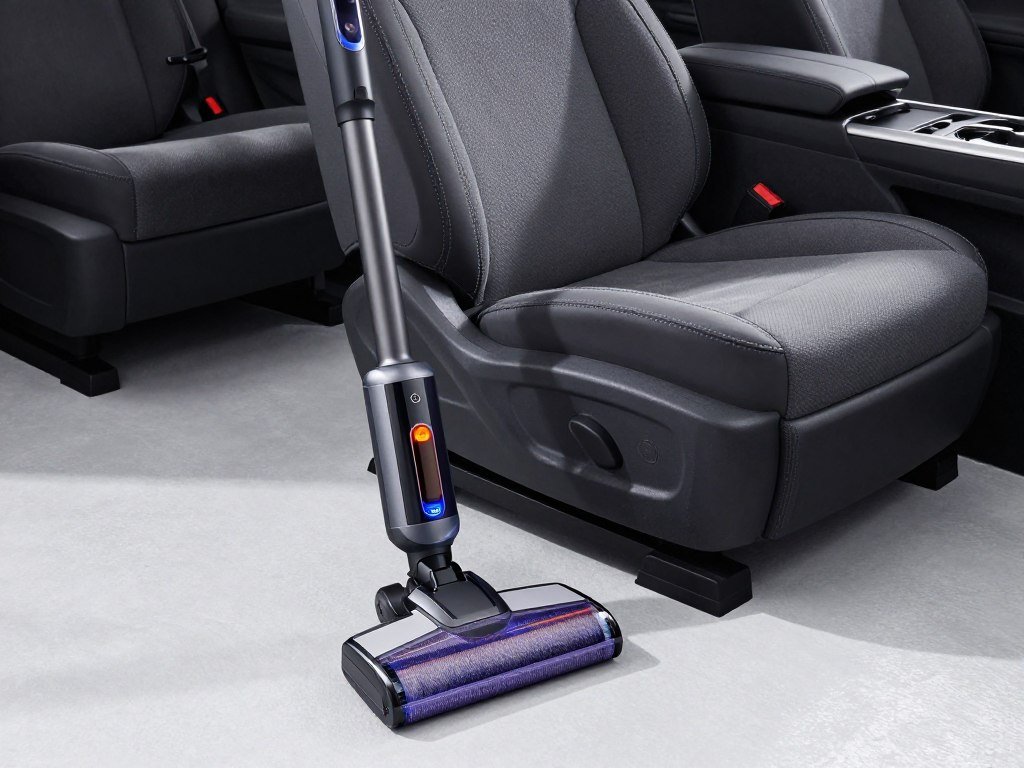
The Fanttik is a best portable car vacuum choice for compact spot cleaning. It is not a substitute for a large-capacity cleaner when a cabin has weeks of dirt or a full set of floor mats needs work.
The small collection space fills quickly, so frequent emptying is part of using it. Dust can clog the filter, and Cheerio-sized debris can be hard for the small intake to pick up.
Its extra functions can help around the home, though they do not add bin capacity. Choose it for light, frequent messes rather than a single cleanup of a heavily soiled interior.
Why is the Black+Decker Dustbuster good for everyday messes?
A wide intake can matter more than a long attachment list when crumbs and mixed floorboard debris are the main job. The Dustbuster’s wide opening cleared every contaminant in the floor-mat test without clogging. That broad intake suits everyday floor mats and loose debris.
The collection chamber is easy to empty, which helps after a quick pass through the footwells. This simple car vacuum has a built-in crevice tool and a flip-down brush for edges and light surface dust.

The built-in crevice tool reaches between seats, while the brush works on surfaces that need a softer touch. It is a modest attachment set, but the parts are close at hand rather than separate pieces to track down.
The main drawback is sound. Its loud, high-pitched tone can be tiring during a longer cleanup, especially in a small garage or enclosed space.
Choose this model when straightforward pickup matters more than specialized detailing tools.
Does the Worx Cordless Cube reach tight spaces?
A short vacuum body is easier to maneuver when an extendable hose does the reaching. The Worx Cordless Cube pairs its hose with a crevice attachment to reach around seats and into gaps. Its suction is adequate for small jobs, not the strongest in the test.
The flexible hose lets you keep the main body outside a cramped footwell while the nozzle moves under a seat. That can make it easier to clean narrow spots than using a bulky handheld directly.
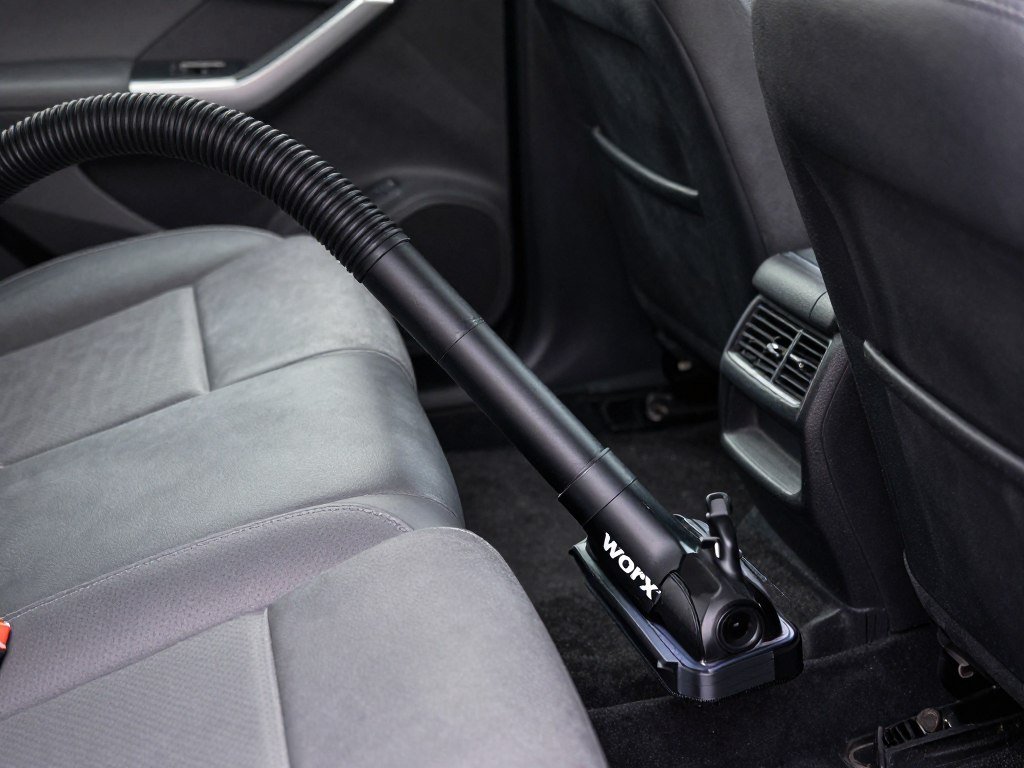
The crevice tool helps pull crumbs from seams and tight edges. The cordless design avoids a power cord crossing the cabin, though the battery life still limits long sessions.
Its debris-release opening can clog when the chamber holds a larger load. Clearing the opening may take manual effort instead of a quick shake.
Allow time to clear the release opening if the collection chamber has taken in a larger load.
Can the Dyson Car+Boat handle demanding cleanup?
A motorized brush and strong high-mode suction make this a more capable option for stubborn interior debris. The Dyson car vacuum has three useful attachments, and the motorized tool can help pull debris from fabric and hair from upholstery.
Its claimed low-mode runtime is up to 40 minutes, while maximum power runs for much less during testing. Use the setting that fits the job, since higher suction can drain the battery faster.
The tools each suit a different part of the car interior:
- Crevice tool: reach narrow gaps and seat seams.
- Motorized brush: work on upholstery and stubborn debris.
- Combined crevice-and-brush tool: switch between edges and surfaces.
The set gives you options for more than bare floor mats. A slim nozzle may still be easier to guide in the tightest corners than a motorized head.
Pick it when performance and attachment choice matter more than extended cleaning on maximum power.
Is the Monozel Portable Car Vacuum a smart budget pick?
The Monozel is an unexpectedly capable option for routine crumbs and light debris. At 1.38 pounds, it is easy to carry, and its collection chamber held a solid amount of floor-mat debris.
The chamber is simple to empty, which makes ordinary cleanup less fussy. The vacuum also ran for 15 minutes, 57 seconds and averaged 72.3 dBA, a relatively quiet result among these picks.
Its water lift measured 40 inches on low and 58 inches on high. That gives the portable model useful performance for routine dirt without making it a heavy-duty cleaner.
The build and attachments feel inexpensive. The lower-cost construction may feel less confidence-inspiring when you handle the tools, so consider how often you expect to use them.
Choose it for a simple, light-duty cleanup role if premium materials are not the priority.
When does the Black+Decker Pivot 20-Volt make sense?
A nozzle that changes angle can make the gap beside a seat easier to reach. The Black+Decker Pivot nozzle turns through up to 200 degrees, giving it access to spots a straight handheld may miss. Its pivoting design is the main reason to choose it.
The vacuum weighs 2.94 pounds and measures 26 inches of water lift. Its average noise reading is 83.1 dBA, and its maximum-power runtime is 10 minutes, 9 seconds.
The adjustable nozzle can help with awkward angles in the car interior. That feature matters most when you cannot easily change your own position beside the vehicle.
Large particles can clog the narrow intake channel while emptying. The model may suit smaller dirt better than big chunks that need a wider opening.
Keep debris loads small and empty the bin often when tackling larger chunks.
Can the Dyson V8 work at home and in a car?
A home-and-car combination can replace a dedicated handheld, but the exact V8 configuration matters. The tested Dyson V8 weighs 3.56 pounds and measures 76 inches of water lift. Its maximum-power test run was 7 minutes, 58 seconds.
This stick vacuum can serve at home and in a car, but its full-size body is bulkier in tight spaces. The tested V8’s figures are separate from those of the Dyson V8 Cyclone + Car Cleaning Kit.
The separate kit lists at $299.99 and has 150 air watts in Powerful mode, up to 60 minutes of runtime, four-hour charging, a 5.74-pound weight, and a 0.14-gallon bin. Its swappable seven-cell battery and Eco, Medium, and MAX modes belong to this kit configuration.
The kit has sealed filtration that captures 99.99% of particles as small as 0.3 microns. Its extension hose adds up to 24 inches of reach, and its tools include a stubborn-dirt brush, crevice tool, and mini soft dusting brush.
Compare the kit’s features and full-size weight against the simpler maneuverability of a dedicated handheld.
Is the Chemical Guys DetailVac useful for quick cleanup?
A plug-in vacuum avoids charging, but its cord determines where and how you can clean. The Chemical Guys DetailVac plugs into a vehicle’s 12-volt outlet and has a 16-foot cord. That cord can reach around much of a vehicle, but the vacuum needs the outlet.
The 1.52-pound car vacuum measures 22 inches of water lift and averages 78.1 dBA. It is ready for a quick cleanup without waiting for a battery to charge.
The power cord limits use to a vehicle with a suitable outlet. Check its path around doors and seats, since the cord can shape where you can stand and how you move.
Its one-way debris flap can leak material instead of keeping it in the chamber. Larger pieces may require removing the filter during emptying, which adds a step to cleanup.
Confirm that the cord reaches the far end of your vehicle before relying on it for a full interior.
Who should choose the Craftsman 3-In-1 V20?
A multi-use tool makes more sense when the other functions will get used beyond the car. The Craftsman 3-In-1 V20 works as a vacuum, blower, and inflator. It suits households that already use the V20 battery system.
Its 7.94-pound weight makes it a heavier choice for car cleanup. The unit measures 44 inches of water lift and runs 23 minutes, 3 seconds at maximum power.
The blower can move loose dirt before vacuuming, while the inflator can serve other household tasks. Those added uses can make the design more practical than a dedicated car vacuum for some owners.
Tank reinstallation can be finicky, and switching modes can interrupt a cleaning session. The setup asks for more patience than a small handheld model.
Favor it if you can accept a heavier package and occasional setup friction in exchange for one tool doing several jobs.
Is the Armor All 2.5-Gallon Wet/Dry Vac right for deep cleaning?
A small wet/dry vacuum is a practical step up when the cleanup includes more than loose crumbs. The Armor All 2.5-Gallon Wet/Dry Utility Vac handles wet and dry pickup, and its 2.5-gallon tank offers more room than a handheld bin.
It weighs 7.48 pounds, measures 58 inches of water lift, and averages 83.0 dBA. The included attachments and tank suit garage-to-car cleaning, especially when a spill needs more than surface dust pickup.
A wet/dry shop vac is useful when you want one unit for mats, loose dirt, and wet messes. The Armor All’s shop-vac comparison includes details on capacity and wet-cleanup tests.
The flexible hose is described as brittle, so handle it with care. Its power cord is just over 12 feet long, which can limit access when the car sits far from an outlet.
Check outlet access and hose reach before choosing it for a vehicle parked away from a garage.
Which car vacuum type fits your vehicle and routine?
Pick the format around where you clean and how long each session lasts. Handheld and stick vacuums favor easy storage, while shop vacs offer more capacity.
Four broad formats cover most car vacuums: handheld, stick, battery-powered shop vac, and corded shop vac. Handheld models typically run about 10-20 minutes, while cordless models with larger batteries can offer more cleaning time.
| Format | Power source | Best fit | Trade-off |
|---|---|---|---|
| Handheld | Rechargeable battery | Quick cleanups | Small bin and limited runtime |
| Cordless stick | Rechargeable battery | Car plus home | Bulkier in tight spaces |
| 12-volt | Vehicle outlet | On-the-go crumbs | Lower suction and vehicle-only use |
| Corded wet/dry | Household outlet | Deep cleaning and wet spills | Cord and storage needs |
| Cordless shop vac | Tool battery | Extended cleanup | Added bulk and possible separate battery purchase |
Handheld and cordless stick vacuums
A handheld suits quick cleanups and small cars, while a cordless stick vacuum can cover the car and home. Larger batteries can add cleaning time, but a stick vacuum takes more room and may feel bulky around seats.
The best cordless car vacuum depends on runtime, attachment reach, and whether you already own a compatible battery. A cordless handheld can be easy to store, though its bin may need frequent emptying.
12-volt and corded wet/dry vacuums
A 12-volt model plugs into a vehicle outlet, which can suit roadside crumbs. Its power and mobility are more limited than those of a unit plugged into a household outlet.
A wet/dry shop vac is a sound format for car detailing when deeper cleaning and wet pickup matter. The cord and storage needs make it less handy for quick jobs away from a garage.
Cordless shop vacs for larger jobs
A cordless shop vac can suit a longer cleanup without a household outlet nearby. Its larger body can be harder to store, and some models need a separate battery.
Make the choice with four practical checks:
- Outlet access where you usually clean.
- Existing tool batteries that fit the vacuum.
- The size of the vehicle and its cabin.
- Available storage for the body, hose, and tools.
For an entire vehicle cleaned in one session, favor a longer-running unit or a nearby outlet.
What works best for pet hair and detailed cleaning?
Pet hair is easier to remove after it has been loosened from the seat or mat fibers. The best car vacuum for pet hair pairs suction with a tool that agitates fabric.
A floor-mat test used six debris types: potting soil, sand, pet hair, gravel, cereal, and mulch. Each vacuum pass lasted 15 seconds, showing how mixed dirt can challenge one intake and attachment.
| Mess | Useful tool | What to do | Limit |
|---|---|---|---|
| Pet hair | Motorized or rubberized upholstery tool | Loosen fibers before vacuuming | Deeply woven hair may need repeated agitation |
| Sand | Narrow high-suction nozzle | Brush the mat first | Surface passes can leave embedded grit |
| Crumbs | Wide opening | Move steadily over the floor mat | Small ports can clog on large pieces |
| Vents and seams | Narrow crevice tool or detailing brush | Work from edges toward gaps | A broad nozzle may not fit |
Loosen pet hair before vacuuming
Pull a motorized or rubberized tool across the fabric to lift hair caught between the fibers. Then use the vacuum to collect what the brush frees.
A brush attachment does not automatically help with every kind of dust or sand. On loose grit, it may move debris around instead of lifting it.
Reach seams, vents, and narrow gaps
A crevice tool can clean seams and narrow spaces where a broad nozzle cannot fit. Start at the edges and guide the tool toward the gap, so loose dirt moves toward the intake.
Sand can stay pressed into a mat even after a surface pass. Remove loose floor mats first so debris from one cleaning pass does not scatter back into the cabin.
How should you maintain and store a car vacuum?
A vacuum works best when its airflow path stays clear and its battery is ready for the next cleanup. Check the bin, filter, and inlet as part of routine care.
Handheld vacuums typically run about 10-20 minutes, and a full bin or clogged filter can make that session less useful. Compact models often have limited capacity, so frequent emptying is normal rather than a sign of failure.
Empty the bin and clear the filter
Use these three checks to keep the airflow path open:
- Empty the bin before it is packed.
- Remove trapped debris from the filter and inlet.
- Check that attachments and hose openings are clear.
Fine dust can collect on a filter even when the bin looks empty. Follow the care instructions for the filter, since some types can be rinsed and others cannot.
Protect the battery between uses
Cordless vacuum batteries can be damaged by long exposure to extreme vehicle temperatures. Store battery-powered vacuums indoors or in a temperature-moderate garage instead of leaving them in a hot or cold car.
A dry storage spot also keeps the vacuum and its attachments ready for the next job. Keep the vacuum and charger in a dry indoor spot where the battery can be recharged before a longer cleaning session.
Product reviews, guides, and deals can help you keep up with new cleaning tools and useful updates. Choose the inbox topics that fit your interests.
Conclusion
The right pick is the one that reaches the mess you actually have without adding unnecessary bulk. Choose the Fanttik Slim V10 APEX for compact quick cleanups, the Black+Decker Dustbuster for mixed everyday debris, or the Armor All wet/dry vacuum for wet and dry capacity.
Match the tool to your common mess and the power source you can use. A car vacuum that fits your routine is more useful than a larger model that stays in storage.
Choose your leading option, confirm its power and attachment needs, and keep it stored where you can reach it.
FAQ
What is the best car vacuum cleaner?
The Fanttik Slim V10 APEX is the best pick for quick portable cleanup, while the Black+Decker Dustbuster is a strong everyday floor-mat alternative. The Fanttik is light and easy to keep nearby, but its small collection space limits longer jobs. The Dustbuster’s wide opening suits mixed floorboard debris, and its chamber is easy to empty after a routine pass.
What car vacuum has the most powerful suction?
Among the measured handheld picks, the Dyson Car+Boat reached 86 inches of water lift on high. Water lift measures suction by the height of a water column the vacuum can lift. It is not the same as air watts, so compare models only when their suction readings use the same measurement system. Strong suction alone does not ensure a nozzle will fit every gap.
What do professional detailers use to vacuum cars?
A wet/dry shop vac with a hose and detailing tools is a practical choice for deep cleaning. Its capacity and wet-pickup ability can suit jobs beyond loose crumbs. Larger professional setups trade portability for capacity, so they may be less convenient for a quick cleanup at home. For a personal vehicle, choose a size that you can store and move without hassle.
What is the best car vacuum in 2026?
For compact quick cleaning, choose the Fanttik Slim V10 APEX; for everyday messes, choose the Black+Decker Dustbuster; for wet/dry capacity, choose the Armor All. Each serves a different kind of cleanup. Think about the debris you see most, how far the tool must reach, and whether you can use a vehicle outlet, household outlet, or charged battery.
What is a good car vacuum brand?
A good car vacuum brand is one that offers a format, attachments, and power platform suited to your routine. Brand name alone cannot tell you whether a nozzle fits between seats or a bin holds enough debris. Check the included tools and power needs, then consider whether the vacuum works with batteries you already own. That match can matter more than a long feature list.
Which vacuum has the strongest suction power?
Among the handheld picks measured here, the Dyson Car+Boat recorded 86 inches of water lift on high. Measurement methods differ across product types, so do not compare water lift directly with air watts. A strong reading can help narrow your choices, but reach and attachment design still affect how well a vacuum cleans a specific spot.
Is shark more powerful than Dyson?
The tested Dyson Car+Boat measured 86 inches of water lift on high, while the Shark WandVac struggled with Cheerio-size debris. Those results describe tested models, not every vacuum from either brand. Compare the exact model, intake size, and tools for your needs. A brand-wide claim can hide differences in design and use.
How much should I spend on a good vacuum?
A serviceable spot-cleaning vacuum can cost around $50, while a model for full detailing is closer to $100. Capability and attachments affect the choice, so a lower price may mean less capacity or fewer useful tools. Consider what you need to clean before paying for extra features. A simple model may be enough for crumbs between full cleanings.