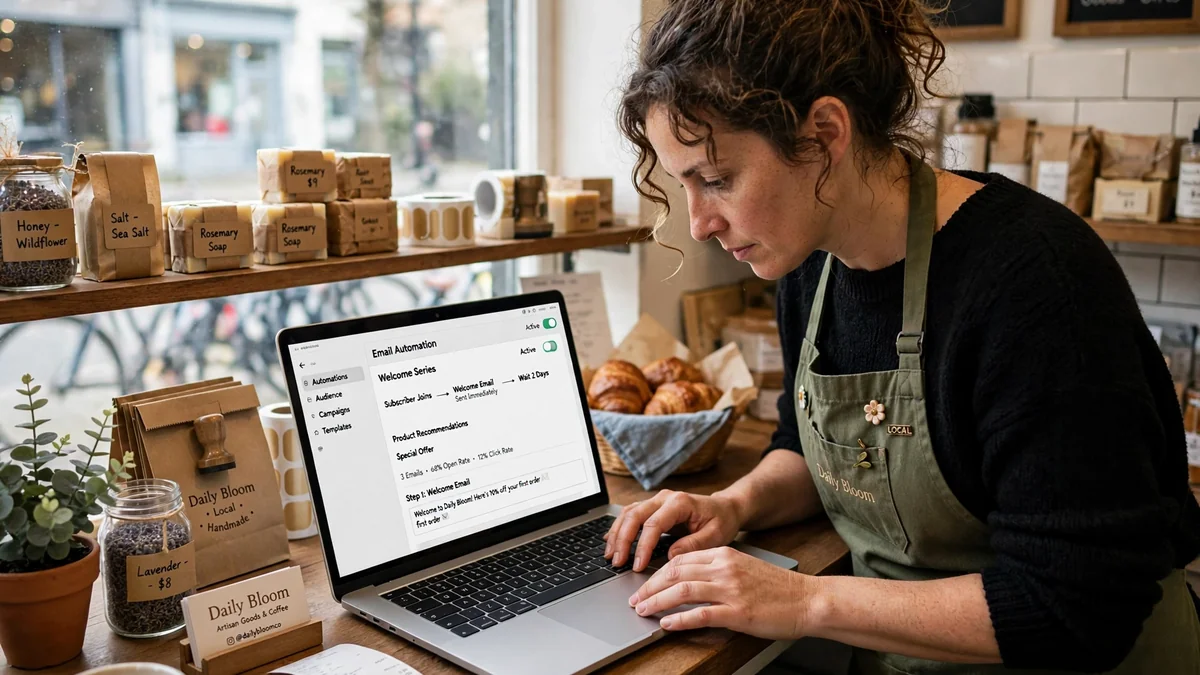
Best content marketing software for retailers in 2027 helps a shop turn everyday products, staff knowledge and local events into content that brings people through the door and back to the website. Retail content is different from general business content: it has to sell a specific product, match a season or promotion, and work across email, social media, search and in-store screens at the same time. The right tool keeps that work in one place instead of spreading it across five disconnected apps.
What matters most for retailers is speed, consistency and proof. A good platform lets a small team plan a week of posts in an afternoon, reuse a product photo across email and Instagram, and see which campaign actually drove sales. Price matters too, because retail margins are thin and a tool that charges per contact or per location can become expensive fast as a customer list grows.
This shortlist covers eight tools that fit real retail workflows, from a single boutique to a multi-location chain. HubSpot leads for teams that want email, social and analytics together, Mailchimp suits small shops starting out, and Klaviyo is strongest for retail email and SMS. The rest fill clear gaps: social scheduling, search content, design and budget-friendly publishing.
Key takeaways
- HubSpot Marketing Hub is the best overall choice for retailers that want email, social media and reporting in one system.
- Mailchimp is the best starting point for small retailers, with a free plan and simple campaign tools.
- Klaviyo is the best option for retail email and SMS, with strong segmentation based on purchase behaviour.
- Expect starting prices from free to about $199 per month, and check current pricing before buying, because plans and contact limits change often.
- Avoid paying for enterprise features you will not use; pick the tool that fits your team size, store count and main sales channel.
At a glance: the shortlist
| Product | Best for | Starting price | Standout limit |
|---|---|---|---|
| HubSpot Marketing Hub | All-in-one retail marketing | From about $20 per month | Advanced features need higher plans |
| Mailchimp | Small retailers starting out | Free plan; paid from about $13 per month | Contact-based pricing rises with list size |
| Klaviyo | Retail email and SMS | Free plan; paid from about $20 per month | SMS credits are charged separately |
| Sprout Social | Social media management | From about $199 per month | No free plan |
| Hootsuite | Multi-location scheduling | From about $99 per month | Lower plans limit users and accounts |
| Semrush | Search content and SEO | From about $139.95 per month | Higher cost for small shops |
| Canva | In-store and social design | Free plan; Pro from about $120 per year | Not a full marketing platform |
| Buffer | Budget-friendly scheduling | Free plan; paid from about $6 per month per channel | Basic analytics on lower plans |
HubSpot Marketing Hub — Best overall
HubSpot Marketing Hub is the strongest all-round choice for retailers because it connects email, social media, landing pages and reporting in one system. A shop can send a promotion email, schedule the matching social posts and see which channel brought in the most revenue without exporting data between tools.
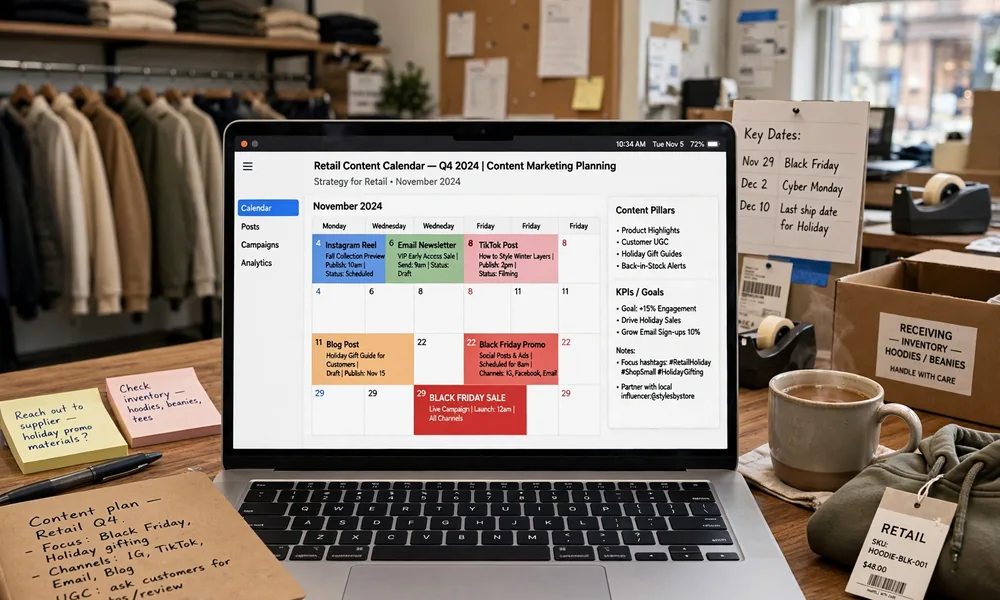
HubSpot also suits retailers that are growing.
Pros: email, social and analytics in one place; strong automation; free CRM included. Cons: higher plans are expensive; some features take time to learn.
Mailchimp — Best for small retailers
Mailchimp is the easiest starting point for a small retailer that needs email campaigns, simple landing pages and basic social posts without a long setup. Its editor is straightforward, its templates look clean, and a shop can import a customer list and send a first promotion the same day.
Mailchimp also includes audience segmentation, simple automation for welcome emails and product recommendations, and reports that show opens, clicks and sales. Its main weakness is pricing as a list grows: costs rise with contact numbers, and some advanced segmentation and testing features need a higher plan.
Pros: easy to learn; free plan available; good templates and automation for beginners. Cons: costs rise with list size; advanced features cost more.
Klaviyo — Best for retail email and SMS
Klaviyo is built for retail and ecommerce marketing, and it shows in the way it segments customers. A retailer can target shoppers who bought a particular product, browsed a category without buying, or have not visited in ninety days, then send each group a different message.
Its automation flows cover welcome series, abandoned baskets, back-in-stock alerts and post-purchase messages, and its reporting links campaigns to revenue. Klaviyo is not the cheapest option, and SMS credits are billed separately, so retailers should watch total spend.
Pros: excellent purchase-based segmentation; strong automation flows; clear revenue reporting. Cons: SMS costs extra; pricing grows with contacts.
Sprout Social — Best for social media management
Sprout Social is the best choice for retailers that take social media seriously and need to manage several accounts, reply to customers and report on results. It combines scheduling, a shared inbox for comments and messages, and detailed reports on which posts drive engagement and traffic. A team can plan a product launch across Instagram, Facebook, TikTok and Pinterest from one calendar.
The main drawback is price: plans start at about $199 per month, which is high for a single shop.
Pros: strong scheduling and inbox; detailed social reports; useful listening tools. Cons: expensive for small retailers; no free plan.
Hootsuite — Best for multi-location scheduling
Hootsuite suits retail chains and franchises that need to schedule content for many locations from one dashboard. Each store can have its own social accounts while head office controls brand templates, approval steps and campaign timing.
Hootsuite is less strong as a design or email tool, and lower plans limit the number of users and social accounts.
Pros: good for many locations; approval workflows; central brand control. Cons: user and account limits on lower plans; not an email tool.
Semrush — Best for search content and SEO
Semrush is the best tool on this list for retailers that want their content found through search. It finds the keywords shoppers actually use, shows which product pages rank, and checks what competitors publish. A retailer can plan blog posts, buying guides and category pages around real demand instead of guessing what customers search for.
Semrush is not a publishing or email platform, so it works best alongside Mailchimp, Klaviyo or HubSpot.
Pros: strong keyword and competitor research; content audits; rank tracking. Cons: higher price; not a full marketing platform.
Canva — Best for in-store and social design
Canva is the fastest way for a retailer to produce clean, on-brand visuals without hiring a designer. It offers templates for social posts, sale signs, price cards, email headers and in-store posters, and a team can save brand colours, fonts and logos so every piece of content looks consistent. A new promotion can go from idea to finished graphic in under an hour.
Canva does not send emails, schedule posts or report on sales, so it is a design companion rather than a marketing platform.
Pros: very easy design tools; low cost; brand kits keep visuals consistent. Cons: no email or scheduling built in; not a marketing platform.
Buffer — Best budget scheduler
Buffer is the simplest low-cost scheduler for retailers that mainly need to plan and publish social posts. It supports the main social networks, offers a clean calendar view and lets a small team queue a week of product posts, sale announcements and behind-the-scenes content in one sitting. Its free plan is enough for a shop testing a regular posting routine.
Paid plans add more channels, engagement tools and better analytics, starting at about $6 per month per channel. As a first scheduler, though, it is hard to beat on price and simplicity, especially when paired with Canva for design.
Pros: low cost; simple calendar; free plan available. Cons: basic analytics; no email marketing.
How to choose
Start with your main sales channel. If most repeat sales come from email and text, choose Klaviyo or Mailchimp. If social media drives footfall, pick Sprout Social or Buffer and pair it with Canva. If you need one system for everything, HubSpot is the safest all-round pick, and if search brings in most new customers, add Semrush to whichever platform you choose.
Then check the real cost at your size, not the headline price. Contact-based pricing, SMS credits and per-location fees can double a bill as you grow, so ask for a quote based on your current list size and store count, and check current pricing on the plan you would actually use. For a wider view of the tools that support retail marketing, see our guide to the best sales intelligence software for retailers, which covers how retail teams find and prioritise customers.
Checklist: before you pay
- Try the free plan or trial with one real campaign, not a demo account.
- Check the total price at your current contact, location and user count.
- Confirm renewal pricing and how easy it is to cancel or downgrade.
- Check that customer and product data can be exported if you leave.
- Test the limits that matter: contacts, sends, social accounts and users.
- Confirm support hours and whether help is available when your stores are open.
Frequently asked questions
What is the best content marketing software for retailers?
HubSpot Marketing Hub is the best overall choice because it combines email, social media and reporting. Small retailers often start with Mailchimp, while shops that rely on email and SMS usually get better results from Klaviyo.
How much should a retailer spend on content marketing software?
Most small retailers can start free or for under $50 per month with Mailchimp, Buffer or Canva. Larger shops and chains typically spend $100 to $500 per month, depending on contacts, locations and whether they add a tool such as Semrush.
Do retailers need both email and social media tools?
Yes, in most cases. Email drives repeat purchases from existing customers, while social media brings in new shoppers and supports product launches. One platform such as HubSpot can cover both, or a retailer can pair Mailchimp with Buffer.
Can one person run retail content marketing alone?
Yes, with the right tools. Canva for design, Buffer or Mailchimp for publishing, and a simple weekly calendar are enough for one person to run content for a single store, provided the workload stays realistic.
What is the best free content marketing software for retailers?
Mailchimp, Buffer and Canva all offer useful free plans. Mailchimp covers email, Buffer covers social scheduling and Canva covers design, so together they form a capable free starter kit for a small shop.
How do retailers measure content marketing results?
Track sales from email and SMS campaigns, footfall and clicks from social posts, and search traffic to product and guide pages. A good tool links each campaign to revenue, not just opens and likes, so you can see which content actually pays. For help understanding what your audience responds to, read our guide to the best AI tools for customer insights.
The bottom line
For most retailers, HubSpot Marketing Hub is the best overall pick, Mailchimp is the best place to start, and Klaviyo is the best choice when email and SMS drive repeat sales. Add Canva for design, Buffer or Sprout Social for social publishing, and Semrush when search traffic matters.
Retail content works best when it is regular, specific and tied to real products. Pick the tool your team will actually use every week, run one full campaign on a trial, and let the results decide. Store your product and customer data safely with a reliable backup, as covered in our guide to the best cloud storage for online stores, so a lost laptop never loses your content library.