
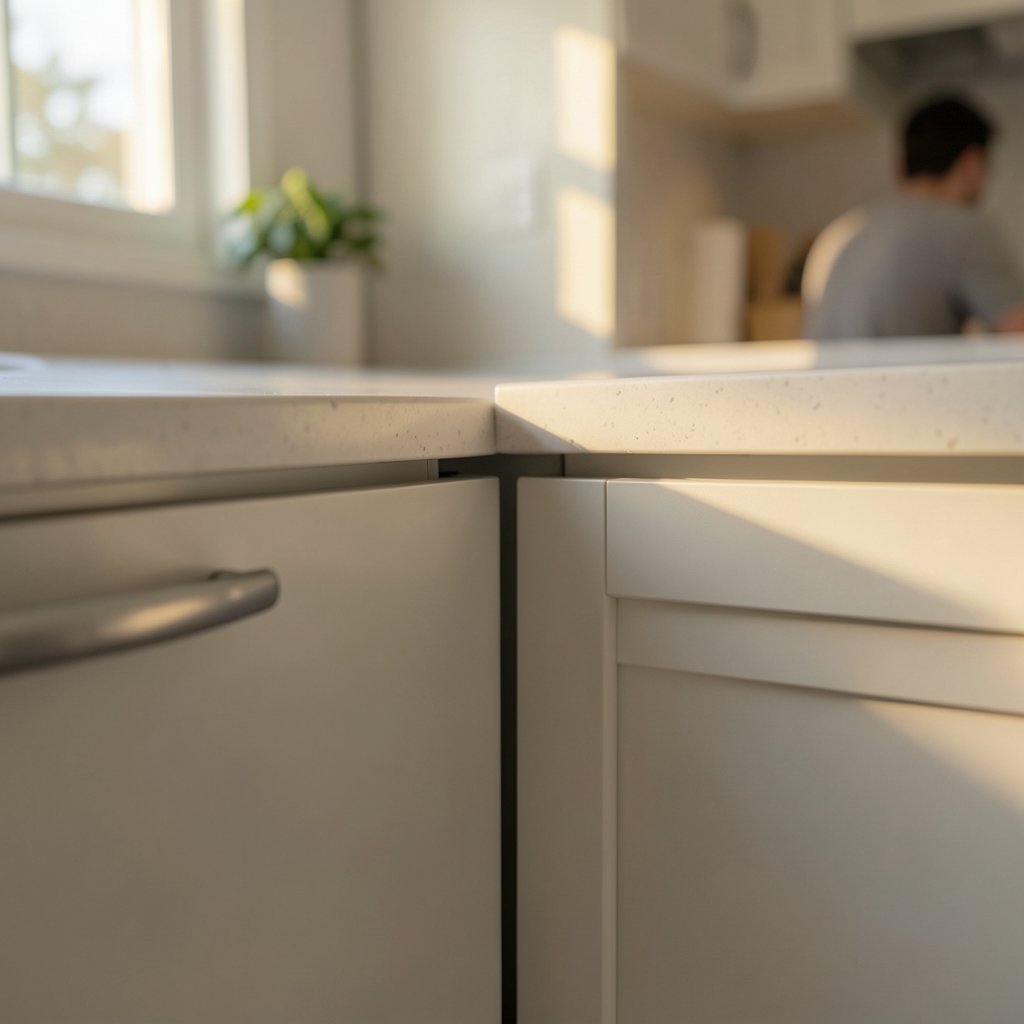
Ever walked into a kitchen where the fridge juts out past the counters like a stubborn boulder? It looks wrong, and it makes the whole room feel cramped. That’s the exact problem counter-depth French door refrigerators were invented to solve. They slide back closer to flush with your cabinets, giving you a cleaner line and more walkway. But here’s the catch: “counter depth” is not a standard, and shopping by that label alone is how people end up with a fridge that still sticks out or barely holds a week of groceries. This guide breaks down what the label really means, how to measure before you buy, and which features actually matter. (Say money french words slang currency rules)
What “Counter-Depth” Really Means (And Why It’s Confusing)
Here’s the first thing to understand: counter depth is a marketing term, not a regulated standard. In practice, it usually describes a refrigerator body roughly 24 to 25 inches deep, excluding doors and handles. That’s designed to sit near flush with standard 24-inch base cabinets, which measure about 25 inches once you add the countertop overhang.
Full-depth French door models, by comparison, typically run about 30 to 36 inches deep. That’s a big difference in a narrow galley kitchen.
The trouble is that manufacturers play fast and loose with the label. Some “counter-depth” models measure 26 to 28 inches deep. Others hit the true 24-inch mark. There’s no single industry definition, so two fridges with the same label can sit very differently in your kitchen.
The measurement mistake almost everyone makes
Listings often quote “depth” without doors and handles. But doors and handles can add another 4 to 8 inches when the fridge is closed, and far more when a door swings open. A fridge that looks perfect on paper can block a doorway or clip a cabinet once it’s installed.
The fix is simple. Before buying, pull up the manufacturer’s spec sheet and compare two numbers side by side:
| Measurement | What it tells you |
|---|---|
| Case depth | The body of the fridge, excluding doors |
| Depth with doors and handles | What actually sticks into your kitchen |
| Depth with door open 90 degrees | Clearance needed to pull drawers and bins out |
That third number is the one people forget. French door fridges have wide doors, and the lower freezer drawer needs room to slide out. If your kitchen is tight, that door-open depth is the number that decides whether the layout works. (Garage door repair near me find trustworthy pro fast)
Why the Trade-Off Is Real: Capacity Versus Fit
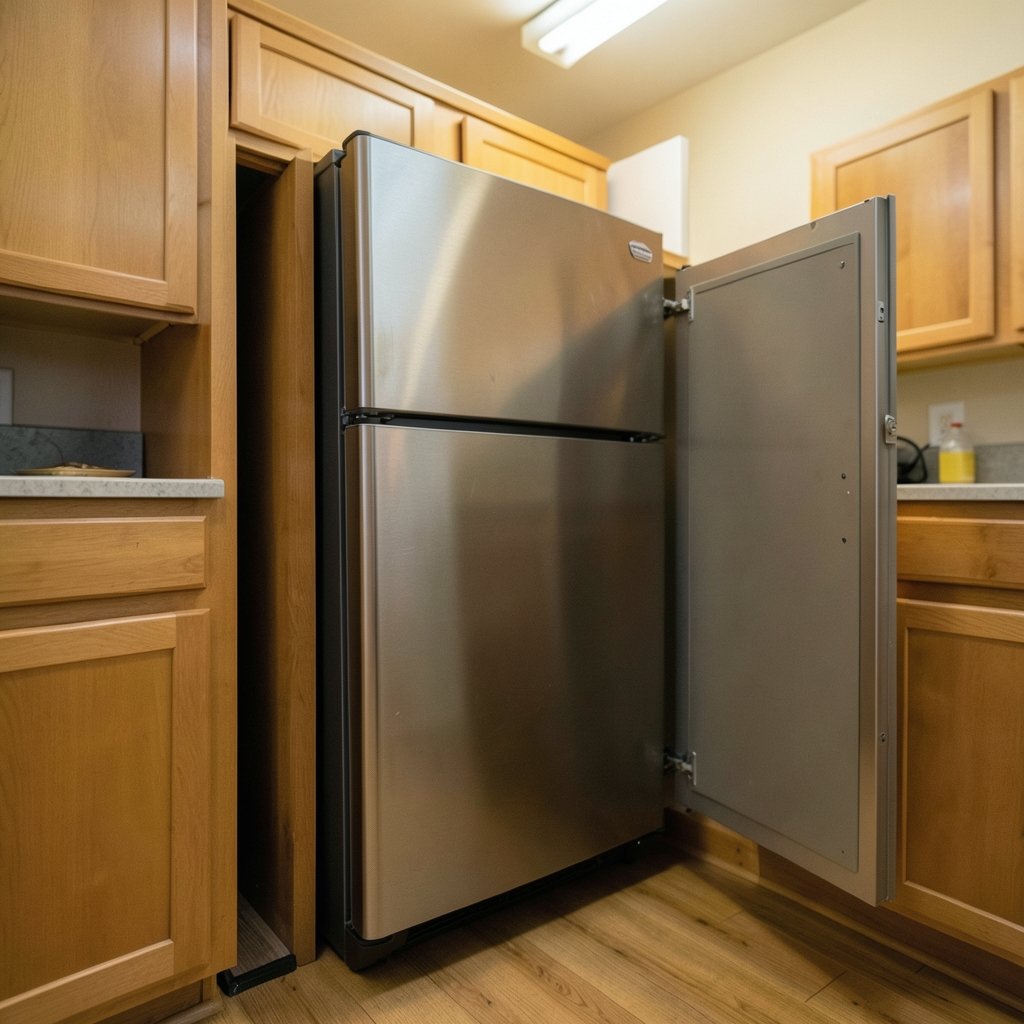
Nobody gets a counter-depth fridge without giving something up. Because the body is shallower, counter-depth models typically hold less usable volume than full-depth models of the same width. The commonly cited gap is roughly 2 to 4 cubic feet, though it varies by model.
That’s not a dealbreaker. It’s a trade you should make with your eyes open. A family of four that cooks at home constantly may feel the squeeze. A couple or a smaller household usually won’t notice.
Practical tips that actually help
- Measure your doorways and hallways, then the fridge alcove. A counter-depth fridge still has to get into the house. Narrow stairwells and tight turns have ruined more deliveries than bad cabinet measurements.
- Check the hinges. Some models need extra side clearance for the doors to swing. Others have zero-clearance hinges that let doors open against a wall.
- Leave breathing room. Refrigerators need airflow around the compressor. Cramming one into a cavity with no gap shortens its life and hurts efficiency.
- Confirm the water line. If you want an ice maker or water dispenser, you need a supply line nearby. Retrofitting one after delivery is a plumbing job, not a quick fix.
If something does go wrong after installation, knowing how to troubleshoot beats panicking. A fridge that stops cooling is usually a airflow, thermostat, or compressor issue, and this practical guide to fixing a refrigerator that stopped cooling walks through the common culprits before you call a technician.
Efficiency, Labels, and the Fine Print
Refrigerators in the U.S. are regulated under the National Appliance Energy Conservation Act, passed in 1987, and tested under Department of Energy procedures. Standards have been tightened several times since. That’s good news for buyers: even a budget counter-depth model today uses a fraction of the electricity a 1990s fridge did.
You’ll also see the yellow EnergyGuide label on every new fridge. Federal rules require it to show estimated annual energy use and cost, so you can compare models on the showroom floor. It’s not glamorous, but it’s the most honest number on the machine.
Then there’s ENERGY STAR, a voluntary program run by the U.S. Environmental Protection Agency. Its refrigerator criteria have been revised several times over the years. A certified model typically uses noticeably less energy than the minimum standard requires, though the exact threshold depends on the current program version. Check the certification on the specific model rather than assuming.
One more piece of fine print worth knowing: modern refrigerants. Most new fridges use R-600a (isobutane) or R-134a. The EPA’s SNAP program governs which refrigerants are acceptable, and the AIM Act of 2020 set a schedule to phase down HFCs. This mostly matters when you need a repair, because a technician must use the correct refrigerant for your unit.
Features Worth Paying For (And Ones You Can Skip)
Walk through any appliance showroom and the feature list gets dizzying. Here’s a grounded way to sort it.
Worth it
- Adjustable, split shelves. A full-width shelf that only moves in two positions wastes space. Split shelves that fold or slide let you fit a stockpot and a sheet cake on the same level.
- A reliable sealed system warranty. Major-appliance warranties commonly run one year full coverage, with longer coverage on sealed refrigeration systems, often 5 to 10 years parts only. That longer coverage is the one that protects against the expensive failures.
- Good interior lighting. Sounds trivial until you’re digging for a jar in a dim crisper at 11 p.m.
- A freezer drawer that glides. Cheap drawer slides wear out and start sticking. Test the drawer in the store.
Usually skippable
- Built-in screens and app connectivity. These add cost and another thing that can break. A fridge’s core job is keeping food cold.
- Through-the-door ice and water. Convenient, yes, but it eats interior space and adds a common failure point. If you rarely use ice, skip it.
- Fancy finishes. Fingerprint-resistant stainless is genuinely useful. Exotic panel finishes mostly add price.
One related upgrade worth thinking about while you’re renovating the kitchen: if you’re already spending on a flush-fit fridge, a smart lock on the back door is a small addition that tightens up home security. This roundup of the best smart locks for 2026 that actually keep your door secure covers what holds up in real use.
How to Compare Models Without Getting Lost
The smartest approach is to shop by measurements first, features second, brand third. Here’s a sequence that works.
- Measure your opening at the width, height, and depth, including any trim or wall obstructions.
- Measure the path from your front door to the kitchen, noting every doorway width and turn.
- Write down your must-haves (capacity, ice maker, finish) and your nice-to-haves.
- Pull spec sheets for three to five candidate models and compare case depth, depth with doors, and door-open depth.
- Check the warranty terms on the sealed system as well as the headline coverage.
- Read owner reviews for failure patterns, not star ratings. Repeated complaints about the ice maker or compressor tell you more than an average score.
A quick comparison of the three main configurations
| Type | Typical depth | Best for | Main drawback |
|---|---|---|---|
| Counter-depth French door | 24–28 in (case) | Tight kitchens, flush look | Less capacity |
| Full-depth French door | 30–36 in | Big families, max storage | Protrudes past counters |
| Standard-depth top freezer | 28–32 in | Budget buyers | Fewer features, less style |
Notice that “counter depth” overlaps with some standard-depth models. That’s exactly why the label alone can’t be trusted. The tape measure is the only honest judge.
Common Mistakes That Cost Real Money
A few pitfalls show up again and again in appliance forums and repair shops.
Buying by exterior dimensions only. The interior layout matters just as much. A fridge with 22 cubic feet of poorly arranged space can feel smaller than a well-designed 19-cubic-foot model.
Ignoring the door swing. A French door fridge needs both doors to open wide enough to remove bins and crispers for cleaning. If a wall blocks one door, you’ll be fighting it for years.
Skipping the delivery checklist. Confirm the delivery crew will remove the old unit and that the new one fits through the door before they leave. Once they’re gone, the problem is yours.
Assuming all repairs are equal. Some fixes are cheap and some aren’t. If you own an RV or are weighing whether a repair is worth it, this breakdown of RV refrigerator repair failures and what replacement really costs is a useful reality check on when to fix and when to replace.
Forgetting the small stuff. Flies and pests around a kitchen often trace back to a door left ajar or a seal that’s failing. If you’ve noticed a sudden swarm, learning how to get rid of flies by finding the source and then shutting the door properly solves the root cause instead of just swatting the symptom.
Matching the Fridge to Your Kitchen’s Other Dimensions
A counter-depth fridge is part of a bigger design picture. Standard door heights, cabinet runs, and clearance all interact. If you’re mid-renovation, it helps to confirm that the surrounding doors and openings follow the dimensions you expect. This explanation of standard door height and why it actually varies is a good sanity check before you finalize cabinet plans around a new appliance.
The same logic applies to entry points. A new fridge, a new door, and a new lock all need to work together. If you’re upgrading hardware at the same time, it’s worth understanding what you’re actually buying before you commit.
Conclusion
The best counter-depth French door refrigerator isn’t the one with the longest feature list or the flashiest finish. It’s the one that fits your kitchen’s real measurements, holds enough for your household, and comes with a warranty that protects the parts most likely to fail. Start with a tape measure, not a showroom. Compare case depth against depth with doors and handles, check the door-open clearance, and read owner reviews for failure patterns rather than star ratings. Do that, and you’ll end up with a fridge that sits flush, runs efficiently, and quietly does its job for a decade or more. The extra ten minutes with a tape measure is the best money you’ll never spend.
FAQ
What is the actual depth of a counter-depth refrigerator?
Most counter-depth models have a body about 24 to 25 inches deep, excluding doors and handles. Some stretch to 26 or 28 inches. Because there’s no formal standard, always check the manufacturer’s spec sheet for case depth versus depth with doors.
Do counter-depth refrigerators hold less food?
Generally, yes. The shallower body means less usable volume than a full-depth model of the same width, commonly cited as roughly 2 to 4 cubic feet less. How much that matters depends on your household size and shopping habits.
How much clearance do I need around a French door refrigerator?
Enough for airflow around the compressor, plus room for both doors to swing open and the freezer drawer to slide out. Check the spec sheet for “depth with door open 90 degrees” and any required side clearance, since these vary by model and hinge design.
Is ENERGY STAR worth it on a refrigerator?
It can be. ENERGY STAR is a voluntary EPA program, and certified models typically use less energy than the minimum federal standard requires. The exact threshold depends on the current program version, so confirm certification on the specific model you’re considering.
How long do refrigerator warranties usually last?
Major-appliance warranties commonly run one year of full coverage, with longer protection on the sealed refrigeration system, often 5 to 10 years parts only. Terms vary widely by brand, so read the sealed-system coverage closely, since that’s where the expensive repairs happen.
Can I install a counter-depth fridge in an existing cabinet opening?
Often yes, but measure carefully. Confirm the opening’s width, height, and depth, plus the path from your door to the kitchen. Also verify the water line location if you want an ice maker, and leave airflow gaps so the compressor isn’t boxed in.



