
Ever opened a dishwasher after a full cycle and found a film of grit on the glasses, or a pool of water sitting in the bottom of a mug? That moment tells you more about a machine than any showroom demo ever will. The frustrating part is that most shoppers compare the wrong numbers. They look at price, brand, and maybe the star rating on the door, then wonder why the machine underperforms two years later.
This guide cuts through that. It explains which specifications genuinely change daily results, how European and American efficiency rules differ, and where buyers routinely waste money. No model list, no invented test scores, just the decision framework that holds up.
Start With the Label, Not the Brochure
In the EU, every dishwasher sold since 1 March 2021 carries a rescaled energy label running from A to G. The old A+, A++ and A+++ classes are gone. That matters because a machine marketed as “A+++” in an old listing may actually sit in the middle of today’s scale. The label shows energy per 100 cycles, water per cycle, noise in decibels, and programme duration, a field that did not exist on earlier labels.
In the United States, the reference point is different. ENERGY STAR-qualified standard-capacity dishwashers must stay at or below 270 kWh per year and 3.5 gallons (about 13.2 litres) per cycle under the Version 6.0 specification. Buyers comparing a European label with an American one are looking at two different measuring systems, so the numbers are not directly interchangeable.
Here is a practical comparison of what the two systems actually tell you:
| What you want to know | EU label | US ENERGY STAR |
|---|---|---|
| Energy figure | kWh per 100 cycles | kWh per year |
| Water figure | Litres per cycle | Gallons per cycle |
| Noise | dB(A) stated | Not required |
| Programme length | Stated on label | Not required |
| Efficiency classes | A to G | Qualified or not |
The lesson: read the units before you read the grade. A machine that looks efficient on one scale may look ordinary on the other simply because the measurement basis differs.
Capacity: Place Settings Are Not Created Equal
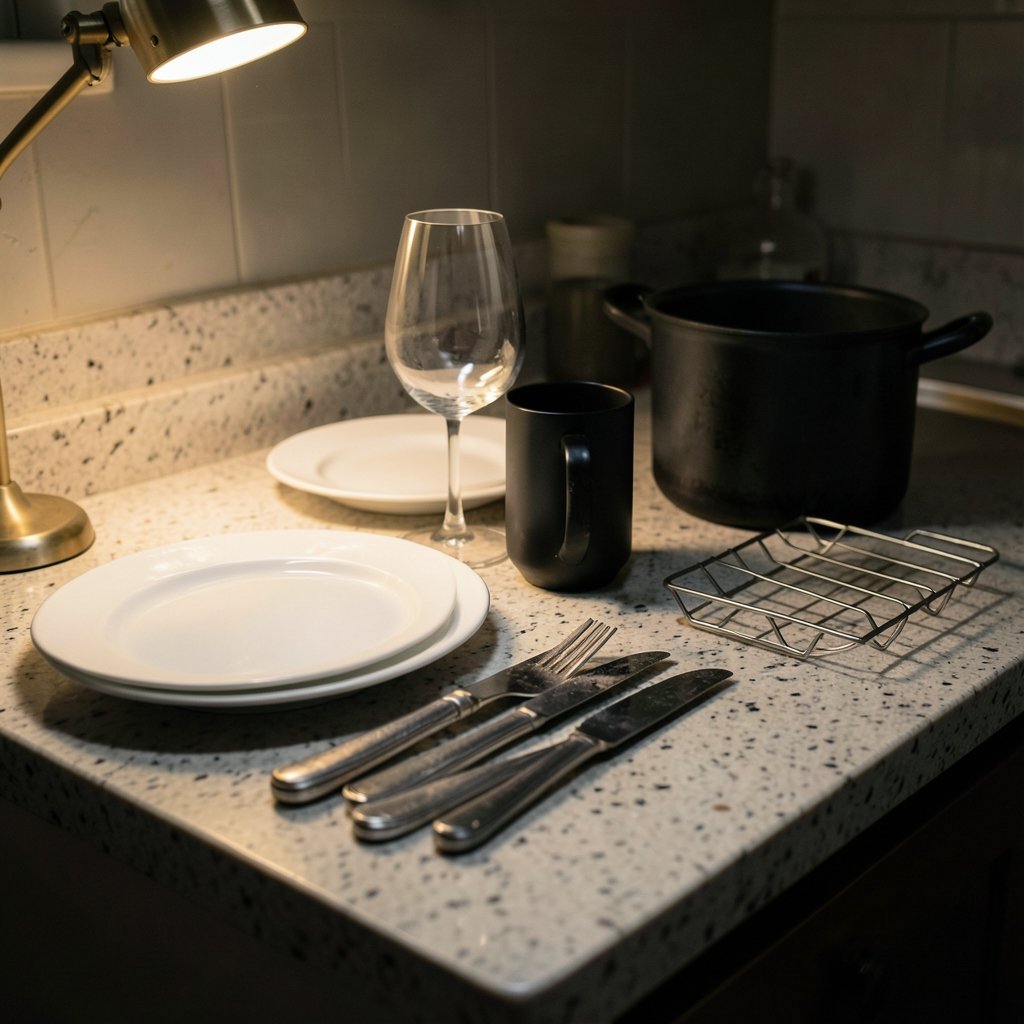
Capacity is quoted in place settings, meaning the plates, glasses and cutlery for one person. Full-size models typically run 12 to 16 place settings, while compact and tabletop units usually handle 6 to 9. Definitions vary slightly between manufacturers, so a 14-setting machine from one brand may not match a 14-setting machine from another.
The mistake people make here is buying for the biggest dinner party they host once a year. A household of two that buys a 16-setting machine will run it half full most weeks, which wastes both water and detergent. A household of five that buys a 9-setting compact will run two cycles a day. Match the capacity to your normal week, not your holiday gatherings.
Check the physical interior in addition to the stated number. Tall wine glasses, stockpots and baking trays need adjustable or folding racks. A machine can claim 15 place settings and still refuse to fit a saucepan with the handle attached. Bring a tape measure to the shop, or measure your tallest item at home before ordering online.
The Eco Programme Is the One That Counts
EU rules require an eco programme to be the default setting, and the label’s energy and water figures are measured on that cycle. Eco cycles run longer, often three to four hours, at a lower temperature. This is not a design flaw. Longer soaking at lower heat cleans well while using less power to heat the water.
Many owners never use it. They pick the intensive or quick programme out of habit, then complain about the electricity bill. The practical advice is simple: run eco for everyday loads, and save the intensive cycle for burnt-on pans.
Quick cycles deserve a warning too. A 30-minute programme usually uses more energy per minute and cleans less thoroughly, because it relies on higher temperatures and aggressive spray pressure rather than time. It is a tool for a single urgent load, not a default.
Noise Ratings in Plain Terms
Noise is quoted in dB(A), and the bands are easy to remember once you know them. Under 45 dB(A) is very quiet, roughly a soft conversation in the next room. Between 45 and 50 dB(A) is quiet enough for most homes. Above 50 dB(A) becomes noticeable in an open-plan kitchen or a small flat where the machine sits near the sofa.
These bands are a rule of thumb rather than an official standard, so treat them as guidance. What genuinely helps is listening to a machine running before you buy, or reading owner comments about nighttime cycles. A dishwasher that scores well on every other measure but hums through movie night is a bad purchase for an open-plan home.
Drying Technology: Where the Money Goes
Four drying methods dominate the market, and each has trade-offs.
Residual heat drying lets the dishes sit in the warmth of the final rinse. It costs nothing extra and works reasonably well, though plastic items stay wet.
Condensation drying uses a cooler wall inside the tub so moisture runs off and drains away. It is quiet and cheap to run but slower.
Zeolite, or mineral drying, uses a mineral that releases heat when it absorbs moisture. Manufacturers market it as faster and more energy-efficient, and it does a good job on plastics. Independent test data on the long-term performance of these systems is limited, so weigh the marketing claims accordingly.
Fan-assisted drying pushes air through the tub. It is effective but adds a small amount of energy use and a little noise.
In hard-water areas, none of these systems performs well without rinse aid and salt. Limescale coats heating elements and glassware, and drying suffers first. Check your water hardness, usually given in dH, °fH or ppm by your supplier, and set the machine accordingly. This is one of the most common setup mistakes, and it quietly ruins performance for years. The same principle of reading the fine print applies to laundry: knowing what each symbol means, as with clothing wash care symbols and what each label icon actually means, prevents expensive damage.
Water and Energy: The Hand-Washing Comparison
A commonly cited peer-reviewed study from the University of Bonn, published in 2012 in Environmental Research Letters, found that machine dishwashing used roughly half the energy and about one-sixth the water of hand-washing under typical conditions. The climate impact of hand-washing varied widely depending on technique, mainly how long the tap ran.
That study is often quoted loosely, so the honest version is this: a full, well-loaded dishwasher cycle beats hand-washing under a running tap. A half-empty dishwasher cycle, or a pre-rinse under hot water before loading, can erase the advantage entirely.
Modern full-size machines typically use around 9 to 13 litres per eco cycle and 0.7 to 1.0 kWh. Those figures come from label data and vary by model, so check the actual label rather than a general range.
Practical habits that protect the efficiency gain:
- Scrape plates instead of rinsing them under the tap.
- Load fully before running a cycle.
- Use the eco programme as your default.
- Keep the salt reservoir topped up in hard-water areas.
- Clean the filter monthly, since a clogged filter forces longer, hotter cycles.
Durability, Repairs and the Right to Fix
Dishwashers are one of the appliances covered by EU right-to-repair rules adopted in 2024 under Directive (EU) 2024/1799. The directive requires manufacturers to supply spare parts and repair information for a set period after purchase. The exact spare-parts list and national deadlines are worth checking before you buy, because repairability now has legal weight behind it.
In practice, the machines that last share a few traits: stainless steel tubs rather than plastic, accessible filters, and a service network in your country. A cheap machine with no local technician is expensive the first time it breaks.
There is a parallel in other household equipment. Buyers who choose commercial-grade construction for laundry, as explained in this guide to the Speed Queen washer and the commercial grade durability you get, are applying the same logic: pay once for build quality rather than twice for replacement.
Loading and Rack Design Decide Results
A surprising number of “bad dishwasher” complaints trace back to loading. Water sprays in arcs from rotating arms, and anything blocking those arms stops the wash. Common mistakes include nesting bowls face-up so they fill with water, placing tall items in front of the spray arm, and cramming cutlery so densely that water cannot reach it.
Rack flexibility is therefore a real specification, not a marketing extra. Look for folding tines, a height-adjustable top basket, and a dedicated cutlery tray if you dislike sorting a basket. If you regularly wash delicate glassware, check for a glass-care cycle and a lower-temperature option.
Detergent choice matters as much as the machine. Tablets with built-in rinse aid suit most homes, but in very hard water, separate salt remains essential. Powder lets you adjust the dose for small loads, which saves money and reduces residue.
Matching the Machine to Your Kitchen
Before comparing models, answer four questions honestly.
How many people live here? Two people need 9 to 12 place settings. Four or more need 13 to 16.
Is the kitchen open-plan? Then noise below 45 dB(A) becomes a priority, not a luxury.
How hard is the water? Hard water demands good salt management and, ideally, a machine with an adjustable water-hardness setting.
Who loads it? A household with reluctant loaders benefits from flexible racks and a clear layout more than from extra programmes nobody uses.
The same fit-to-purpose thinking applies elsewhere in the home. Just as you would choose the best electric pressure washer for real household work rather than the most powerful one on the shelf, a dishwasher should be sized to the actual job, not to the showroom.
Care Habits That Extend Life
A dishwasher that is looked after will outlast one that is not, often by years. Wipe the door seal weekly, because food trapped there causes smells and leaks. Run a hot maintenance cycle with a dedicated cleaner every couple of months. Check the spray arms for blocked holes, especially after washing anything with seeds or broken glass.
Delicate items deserve separate handling. Wool and hand-knits should never go near a dishwasher, and the same careful approach used to wash a wool sweater without shrinking it applies to anything labelled hand-wash only. If you use a retinol skincare routine, the same principle of reading labels applies to what touches your skin, as covered in this guide to a gentle cleanser and retinol wash without wrecking your skin. Small habits, consistently applied, protect expensive things.
Conclusion
The best dishwasher is not the one with the longest feature list or the loudest badge on the door. It is the one whose capacity matches your household, whose noise level suits your kitchen, whose eco programme you will actually use, and whose build quality and repair support mean it is still running in ten years. Read the label in the right units, check the water hardness before your first cycle, load it properly, and keep the salt topped up. Do those things and almost any well-chosen machine will deliver clean dishes quietly for a very long time.
Frequently Asked Questions
Is a more expensive dishwasher worth it?
Usually yes, but only up to a point. The money buys quieter operation, better drying, stainless steel construction and a stronger repair network. Beyond the mid-to-upper range, you are often paying for connectivity features and brand prestige rather than cleaner dishes.
How many place settings do I need?
Count the people in your household and add one or two. Two people are well served by 9 to 12 settings, while families of four or more should look at 13 to 16. Buying far more capacity than you fill means running half-empty cycles, which wastes water and energy.
Does the eco programme really clean as well as the normal one?
For everyday loads, yes. Eco cycles run longer at a lower temperature, and the extra time compensates for the gentler heat. For burnt-on pans and dried food, an intensive cycle still does better. The eco setting is the sensible default for most washes.
Why are my dishes still wet after the cycle?
Plastic items and hard water are the two usual culprits. Plastic holds less heat, so residual drying struggles. Hard water reduces the effectiveness of rinse aid. Check your water hardness, refill the salt, and confirm the rinse aid dispenser is not empty.
How noisy is too noisy for an open-plan kitchen?
Above 50 dB(A) becomes noticeable while you are watching television or talking in the same room. Under 45 dB(A) is very quiet and rarely intrusive. If your kitchen opens onto a living area, treat the noise figure as one of your top three specifications.
Do I still need salt if my tablets include it?
In hard-water areas, yes. Tablets contain some salt, but not enough to regenerate a softener across hundreds of cycles. Separate dishwasher salt protects the heating element and glassware from limescale, and skipping it is one of the most common causes of cloudy glasses and poor drying.



