
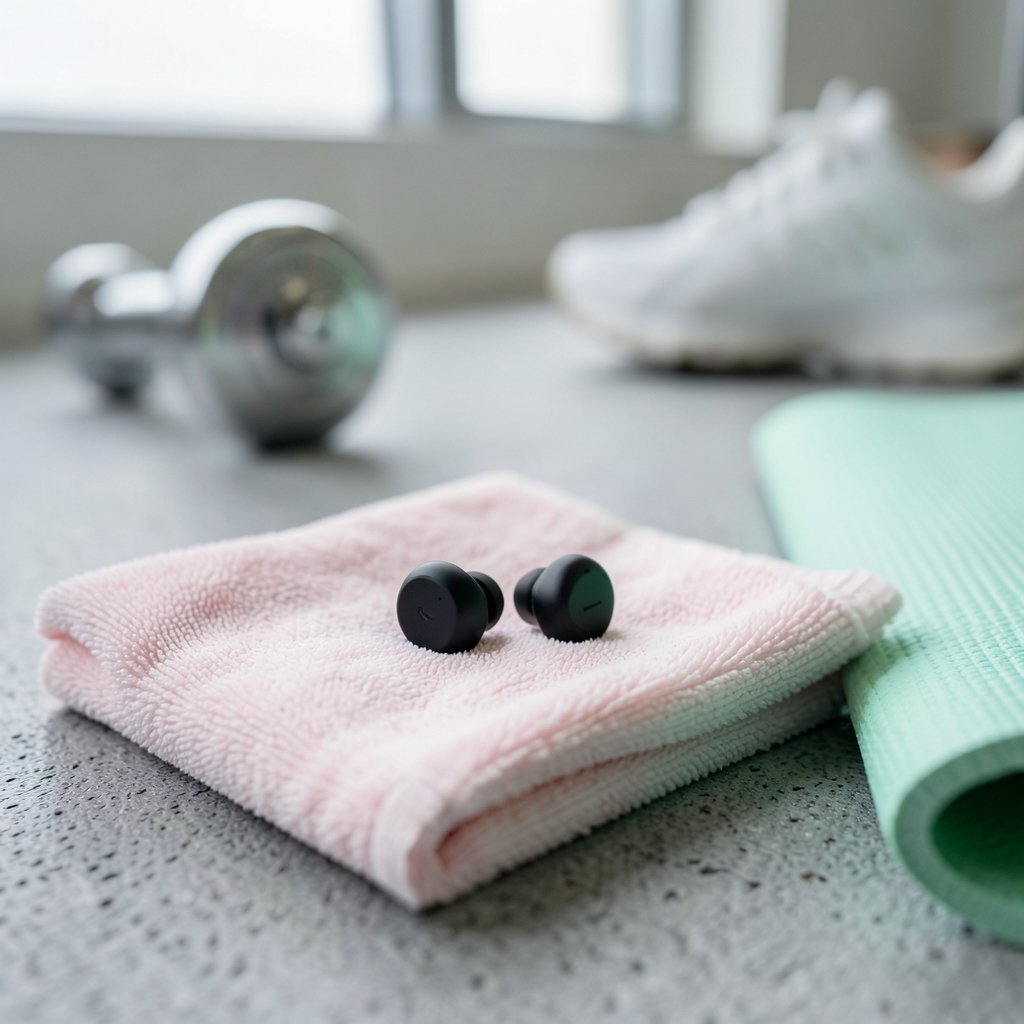
Roughly one in five earbuds comes back from a workout dead or damaged within a year, according to repair-shop anecdotes that anyone who has dunked a bud in sweat can believe. The real number is hard to pin down, but the pattern is not: people buy earbuds for sound, then discover the gym tests something else entirely. Fit, sweat resistance, and staying power matter more than bass response when you are mid-sprint.
This guide explains what actually separates workout-ready earbuds from desk-friendly ones, which specs matter and which are marketing noise, and how to avoid the mistakes that send most people back to the store. (Preventing Noise-Induced Hearing Loss)
Why Workout Earbuds Fail (and What the Ratings Really Mean)
The single most useful spec on any earbud box is its IP rating. The system comes from the IEC 60529 standard, which defines how well an enclosure resists dust and water. The first digit covers solids, the second covers liquids. When you see something like IPX4, the X means dust protection was never tested, and the 4 is the water score.
Here is what the water digits actually mean in practice:
| Rating | Protection level | Real-world meaning |
|---|---|---|
| IPX2 | Dripping water | Light sweat only, tilted at an angle |
| IPX4 | Splashing water | Sweat, light rain, most gym sessions |
| IPX5 | Water jets | Heavy sweat, hose-down, outdoor rain |
| IPX7 | Temporary immersion | Accidental drop in a puddle or sink |
| IPX8 | Continuous immersion | Swimming, with manufacturer-specified depth |
Most workout earbuds land at IPX4 to IPX5. That is genuinely enough for the gym. Where people go wrong is assuming a higher number means a tougher product overall. An IPX7 bud with a flimsy cable joint will still die before an IPX5 bud built like a tank.
The second failure point is fit. An earbud that shifts when you chew, clench, or sprint will slowly work loose, and every micro-adjustment grinds sweat and earwax into the nozzle. Over months, that is what kills sound quality, not water.
The warranty trap nobody mentions
Read the fine print before you buy. Most manufacturers exclude sweat and moisture damage from warranty coverage, even on buds marketed specifically for exercise. If a bud is rated IPX4 and you sweat through it, you may be on your own. That is why buying a model with a proven track record beats chasing the highest rating on the shelf.
Fit and Stability: The Spec That Decides Everything

Ask anyone who has run a half marathon with earbuds and they will tell you the same thing: sound quality is a distant third behind staying in and not hurting. Ear shape varies enormously between people, which is why no single “best” pick exists.
Three fit designs dominate:
- Winged or finned tips hook into the bowl of your ear. Excellent for running and jumping; less comfortable for long wear.
- Ear-hook designs loop over the top of the ear. The most secure option, and the go-to for people with small or oddly shaped ear canals.
- Plain in-ear with silicone tips rely on a good seal alone. Fine for lifting and walking, risky for high-impact work.
Practical tip: buy from a retailer with a real return window and test the buds during an actual workout within the first week, not while sitting at a desk. Walk briskly, shake your head, do ten jumping jacks. If they move, return them. This single habit prevents more disappointment than any review can. (Headphones)
If you want a deeper shortlist of secure-fitting options, this roundup of the best wireless earbuds for working out covers stability-focused models in more detail.
Sweat, Heat, and the Battery Problem
Two things shorten earbud life faster than anything else: sweat and heat. Lithium batteries degrade when they run hot, and a bud jammed in a hot ear during a 45-minute spin class gets warm. Add a charging case left in a hot car and you have a recipe for a battery that holds half its original charge within a year.
What actually helps:
- Wipe the buds after every session with a dry cloth before they go back in the case. Moisture trapped in a closed case is worse than moisture on open air.
- Let them air-dry for a few minutes before charging. Charging wet contacts is a common cause of dead buds.
- Never store the case in a gym bag next to a water bottle or in a car on a sunny day.
- Clean the mesh over the nozzle monthly with a dry brush. Clogged mesh kills volume and makes people think the bud is broken.
Battery life claims are usually measured at moderate volume with features off. Expect real-world runtime to be 20 to 30 percent lower than the box says once you enable noise cancelling or take calls.
Sound, Noise Cancelling, and What You Actually Need
Here is where buyers overspend. For gym use, active noise cancelling (ANC) is genuinely useful in a loud weight room but can be a liability on a run outdoors, where hearing traffic matters. Many buds offer a transparency or ambient mode for exactly that reason.
What matters more than premium audio tuning:
- A secure seal, which does more for bass and isolation than any driver spec.
- Low-latency connection if you watch videos on a treadmill or rower.
- Multipoint pairing if you switch between a phone and a gym TV.
- Button or physical controls over touch, because sweaty fingers and touch panels are a bad combination. This is one of the most common complaints in real user reviews.
If calls matter to you between sets, the picky details of microphone performance are worth checking separately; this guide to the best earbuds for phone calls and meetings breaks down what actually works in noisy spaces.
Budget versus premium: where the money goes
| Price band | What you typically get | What you give up |
|---|---|---|
| Under $50 | Decent fit, IPX4, 5–6 hours | Weak mics, no ANC, shorter lifespan |
| $50–$150 | Solid stability, IPX5, good app support | Average ANC, plastic build |
| $150–$250 | Strong ANC, multipoint, premium tips | Diminishing returns for gym use |
For most people, the $50 to $150 band is the sweet spot. Spending more buys features that matter at a desk more than on a treadmill. If budget is tight, the best budget earbuds under 50 list is a sensible starting point, and the best wireless earbuds under 200 roundup covers the middle tier where value peaks.
Platform Matters More Than You Think
The earbuds you choose should match your phone. Codec support, firmware updates, and features like fast pairing are often locked to one ecosystem. An iPhone user gets the most from Apple’s own buds; Android users get more flexibility and often better value from brands that support higher-quality Bluetooth codecs.
This is not a trivial point. A pair that sounds great on one phone can drop connections or lose features on another. If you are on Android, check a dedicated list of the best earbuds for Android before committing, and cross-reference the best wireless earbuds for Android for current model comparisons.
Common Mistakes That Cost People Money
Most bad purchases follow the same script. Here is the pattern to avoid.
- Buying on sound quality alone. Reviews recorded in a quiet lab tell you nothing about whether a bud survives a burpee.
- Ignoring the return window. Fit is personal. Treat the first week as a trial, always.
- Trusting “sweat-proof” marketing. That phrase has no legal definition. Look for an actual IPX number.
- Skipping the app. Firmware updates fix connection bugs and sometimes add features. Install it once and update.
- Overpaying for ANC on outdoor runs. You will likely turn it off anyway for safety.
- Forgetting ear tip sizes. Most buds ship with three sizes. Try all of them, including the pre-installed pair; fit can change completely.
How to Test a Pair in the First Week
A simple, repeatable process beats any spec sheet:
- Day one: try every ear tip size, then wear the buds for an hour while walking. Note any pressure points.
- Day two: do your hardest workout. Shake your head hard mid-set. If they shift, they will fail.
- Day three: make a phone call from a noisy room and ask the person on the other end how you sound.
- Day four: check battery drain honestly. Run them from full to empty and compare to the claim.
- Day five: clean them and inspect the mesh and charging contacts for sweat residue.
If any step disappoints, return them. Retailers expect this, and a returned pair costs you nothing but time.
Conclusion
The best earbuds for working out are not the ones with the biggest driver or the longest feature list. They are the pair that stays in your ear, survives your sweat, and still connects on the days you forget to charge them. Prioritize an honest IPX4 or IPX5 rating, a fit design that matches your ear shape, physical controls, and a retailer with a generous return policy. Buy in the middle of the price range unless you have a specific reason to go higher, test them hard in week one, and clean them after every session. Do those things and a modest pair will outlast a premium one that never quite fit.
FAQ
Are expensive earbuds worth it for the gym?
Usually not. Above roughly $150, most of the extra cost goes into noise cancelling, premium materials, and audio tuning that matter more at a desk than on a treadmill. A well-fitting pair in the $50 to $150 range typically survives workouts just as well.
Can I shower or swim with IPX7 earbuds?
IPX7 means the buds can survive temporary immersion, but that is not the same as being designed for swimming. Chlorine, soap, and continuous water pressure are harsher than the test conditions. Unless a manufacturer explicitly markets a model for swimming, treat IPX7 as protection against accidents, not a license to swim laps.
Why do my earbuds keep falling out during runs?
Almost always the wrong ear tip size or the wrong fit design for your ear shape. Try every included tip size before giving up, and if the buds still shift, switch to a winged or ear-hook design. High-impact movement exposes fit problems that walking never will.
Does sweat really damage earbuds?
Yes. Sweat is salty and mildly acidic, and it corrodes charging contacts and clogs the mesh over the speaker. Most warranties exclude moisture damage, so prevention matters: wipe the buds dry after each session, let them air out before charging, and clean the mesh monthly.
Do I need noise cancelling for workouts?
It depends where you train. ANC helps in loud weight rooms and on noisy cardio machines, but on outdoor runs it can block traffic sounds and create a safety risk. Many buds offer a transparency mode that lets outside sound in, which is the better choice outdoors.
How long should workout earbuds last?
With reasonable care, two to three years is typical before battery capacity drops noticeably. The biggest factors are heat exposure and charging habits. Buds kept out of hot cars, wiped dry after use, and not charged while wet routinely outlast ones that are not.



