
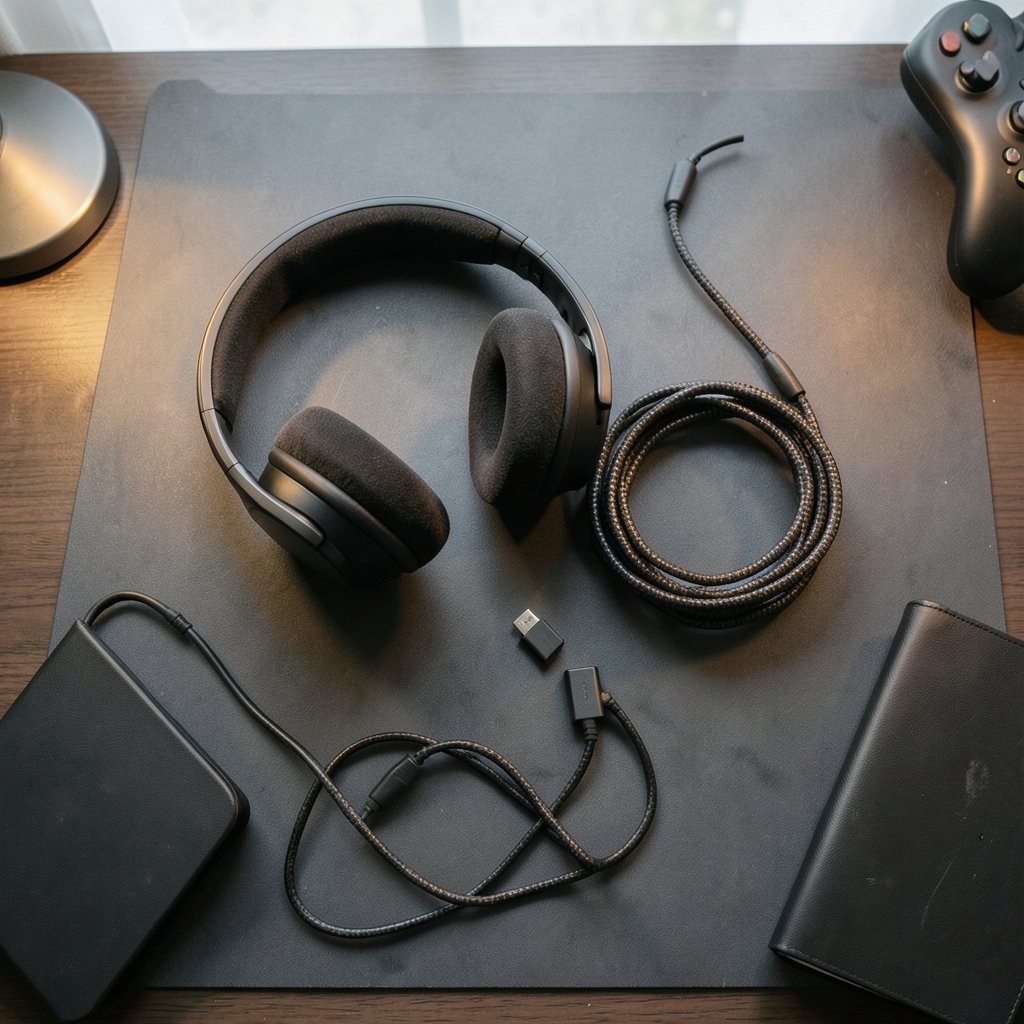
Roughly two-thirds of regular gamers now play with some form of headset, and the market has responded with a flood of options that all promise “immersive audio” and “crystal-clear chat.” The problem is that most of those claims are marketing, not measurement. In 2026, the gap between a genuinely good headset and a mediocre one has less to do with driver size or RGB lighting and more to do with connection stability, microphone clarity, and whether the software gets in your way. (Headset (audio)))
This guide cuts through the noise. It explains what separates the best gaming headsets in 2026 from the rest, which categories suit which players, and the mistakes that cost people money every year.
The Three Things That Decide Whether a Headset Is Good
Before brand names matter, three fundamentals determine almost everything about your experience. Get these right and most headsets in a given price band will feel similar. Get them wrong and no amount of tuning saves you.
Connection type. Wired headsets still win on latency and reliability. A 3.5mm or USB connection delivers audio the instant the game does. Wireless headsets split into two camps: 2.4GHz dongle connections, which prioritize low latency, and Bluetooth, which prioritizes convenience and battery life. Many 2026 models offer both, and that dual-wireless approach is genuinely useful if you also take calls or listen on a phone.
Microphone quality. This is where budget headsets fall apart. A headset can sound wonderful in-game and still make you sound like you’re broadcasting from a tin can. Detachable boom mics generally outperform built-in ones, and software noise rejection has improved dramatically. If you stream or play competitively with voice chat, the mic matters as much as the drivers.
Comfort over long sessions. Weight, clamp force, and ear cushion material determine whether you can wear a headset for four hours without a headache. Memory foam and breathable fabric tend to beat leatherette in warm rooms, though leatherette isolates better. Comfort is the spec nobody advertises and everybody notices.
Wired vs Wireless in 2026

The wired-versus-wireless debate has softened. Battery life on premium wireless models now routinely clears 30 hours, and fast-charging means a short cable break restores hours of play. Latency on 2.4GHz dongles is low enough that most players cannot perceive a delay.
| Factor | Wired | 2.4GHz Wireless | Bluetooth |
|---|---|---|---|
| Latency | Lowest | Very low | Noticeable in fast games |
| Battery needed | No | Yes | Yes |
| Convenience | Tethered | High | Highest |
| Best for | Competitive play, long sessions | Most PC and console gamers | Mobile, calls, casual play |
| Typical price | Lower | Higher | Varies |
The practical rule: if you play fast-paced competitive shooters and hate charging things, stay wired. If you move between PC, console, and phone, a dual-wireless model earns its price. For a broader look at what’s landing on shelves this year, the roundup of the best wireless gaming headsets 2026 covers specific models and trade-offs.
What to Look For in Each Price Band
Price does not scale linearly with quality. There are clear tiers, and each has a sweet spot.
Budget tier
Entry-level headsets have gotten genuinely good. Expect solid stereo sound, a passable boom mic, and plastic build quality that survives careful use. What you give up is refinement: cushions flatten faster, software is thinner, and wireless options at this level often compromise on latency or battery.
Mid-range tier
This is where most buyers should shop. Mid-range headsets typically add better drivers, a detachable mic, sturdier frames, and more mature companion software with EQ presets. Wireless models here hit the reliability threshold where you stop thinking about the connection.
Premium tier
Above the mid-range, you’re paying for materials, advanced driver designs like planar magnetic units, premium microphones, and multi-platform switching. Diminishing returns are real. A premium headset is worth it if you log serious hours or need one device across several platforms, not if you play a few hours a week.
Platform Matters More Than You Think
A headset that shines on PC may frustrate you on console, and vice versa. Console manufacturers restrict which USB audio devices work and how chat mixes, so check compatibility before buying. PC players get the widest latitude, including full software suites for EQ and surround processing.
Handheld and hybrid players have their own considerations. If you’re weighing a portable console purchase alongside audio gear, the chatter around the Nintendo Switch 2 Lite and Samsung 8LPU Plus chip rumor 2026 is worth following, since portable audio support shapes which headsets make sense. Similarly, if you’re building a setup around a new phone, the picks in this guide to the best phones 2026 help you judge which Bluetooth codecs you can actually use.
Spatial Audio: Useful or Hype?
Spatial audio and virtual surround sound remain the most oversold features in the category. Done well, they help you place footsteps and gunfire directionally. Done poorly, they smear the soundstage and make everything sound hollow.
Two honest observations. First, built-in game engines increasingly handle positional audio themselves, which reduces the value of headset-side processing. Second, stereo with a good frequency response often beats a poorly tuned virtual surround mode. Try before you trust the marketing. If a headset lets you toggle spatial processing off, that flexibility is worth more than a fixed “7.1” badge.
The Software Problem
Companion software is the most common source of buyer regret. A headset with excellent hardware can be dragged down by bloated software that resets your EQ, conflicts with other audio drivers, or requires an account for basic functions.
Practical advice: check whether the software works without an internet connection after setup, whether profiles save to the headset itself (so they travel between devices), and whether the app has a reputation for stability. A headset that stores EQ onboard is far more useful across PC and console than one that depends entirely on a desktop app.
Microphone Tips That Actually Improve Chat Quality
Most complaints about “bad mic” are really complaints about placement and gain.
- Position the boom mic a finger’s width from your mouth, slightly off to the side to reduce plosives.
- Lower input gain in your OS or app until background noise stops triggering the mic.
- Enable noise suppression in the chat app itself rather than only in the headset software.
- Test with a recording, not by listening to yourself live through the headset.
A five-dollar fix in placement routinely outperforms an upgrade. This is the single most common mistake buyers make: they replace a fine headset because the mic was simply too far from their mouth.
Common Buying Mistakes
People overpay in predictable ways. Watch for these.
- Buying for RGB and brand. Lighting does nothing for audio. Judge on measurements and mic tests.
- Ignoring clamp force. A tight headset that sounds great becomes unbearable by hour three.
- Assuming “gaming” means better. Many general-purpose headphones with a clip-on mic outperform gaming-branded models at the same price.
- Skipping the return window. Audio is personal. Buy where you can return within 30 days.
- Chasing driver size. A 50mm driver is not automatically better than a 40mm one. Tuning and enclosure design matter more.
How Gaming Audio Fits Into a Wider Setup
A headset is one piece of a larger spending picture. Players who also chase deals on games and hardware tend to get more value per dollar. Comparing storefront discounts, as in this breakdown of Humble Bundle vs Fanatical vs Green Man Gaming 2026, frees up budget for audio gear that lasts years. Timing hardware purchases around sales events, similar to how buyers approach Black Friday car deals, can shave meaningful amounts off premium headsets.
There’s also a platform-risk angle worth noting. Industry shakeups, like the reported Xbox layoffs affecting 3,200 staff and studio sales in 2026, can influence which ecosystems get long-term accessory support. It’s a reminder to favor headsets with broad compatibility rather than ones locked to a single platform’s proprietary wireless protocol. (Headphone Reviews)
Conclusion
The best gaming headset in 2026 is not the most expensive one or the one with the flashiest feature list. It’s the one whose connection type matches how you play, whose microphone you can position properly, and whose comfort holds up past the two-hour mark. Wired still wins for competitive reliability, dual-wireless wins for flexibility, and mid-range models deliver most of the premium experience for a fraction of the cost. Buy where you can return, test the mic with a recording, and ignore the RGB. Your ears, your teammates, and your wallet will all be better off.
Frequently Asked Questions
Are wireless gaming headsets good enough for competitive play in 2026?
Yes, for most players. Modern 2.4GHz dongle connections keep latency low enough that few people can detect a delay. Bluetooth is the weaker option for fast games because its latency is noticeably higher. If you play at a high competitive level and want zero compromise, wired remains the safest choice.
How much should I spend on a gaming headset?
Most players get the best value in the mid-range, where you find better drivers, detachable mics, sturdier builds, and reliable wireless. Budget headsets are fine for casual play, and premium models make sense mainly for people who log long sessions or need one headset across several platforms.
Is spatial audio worth paying extra for?
Often not. Well-implemented spatial audio helps with directional cues, but many game engines now handle positional audio internally. Poorly tuned virtual surround can muddy the soundstage. Favor headsets that let you toggle spatial processing off, and prioritize a clean stereo response.
Why does my headset microphone sound bad to other players?
Placement and gain are usually the culprits, not the hardware. Move the boom mic about a finger’s width from your mouth and slightly to the side, lower input gain until background noise stops triggering it, and enable noise suppression in your chat app. Test with a recording rather than live monitoring.
Do I need separate headphones and a microphone instead of a headset?
Not necessarily, but it’s a legitimate route. Many general-purpose headphones with a clip-on or desktop mic outperform gaming-branded headsets at the same price. The trade-off is convenience: a headset bundles everything into one cable and one control scheme.
How long should a gaming headset last?
With careful handling, a well-built headset can last several years. The parts that fail first are ear cushions, cables, and battery cells in wireless models. Replaceable cushions and detachable cables significantly extend lifespan, so check whether those parts are user-serviceable before buying.
A final note on fit and fatigue. Comfort is the spec sheet’s blind spot, yet it decides whether you actually wear the headset. Weight matters, but distribution matters more: a 350-gram model with a wide, well-padded headband can feel lighter after four hours than a 280-gram model that pinches at the temples. If you wear glasses, look for cushions with a soft, deep channel that won’t press the frames into your skull. If you have a larger head, check for a metal or generously adjustable band rather than a fixed plastic arc. Where possible, buy from a retailer with a no-questions return policy and wear the headset for a full evening before committing. Your ears will tell you in one session what no review can.
Keep your gear alive. Store the headset on a stand or hook rather than tossing it in a bag, coil cables loosely instead of wrapping them tight around the earcups, and wipe cushions monthly with a barely damp cloth. For wireless models, avoid leaving the battery at zero for weeks; a partial charge in storage preserves cell health. These habits cost nothing and routinely add a year or two of service.
With connection type settled, budget tier chosen, and comfort verified in person, the decision becomes simple. Everything else is marketing.



