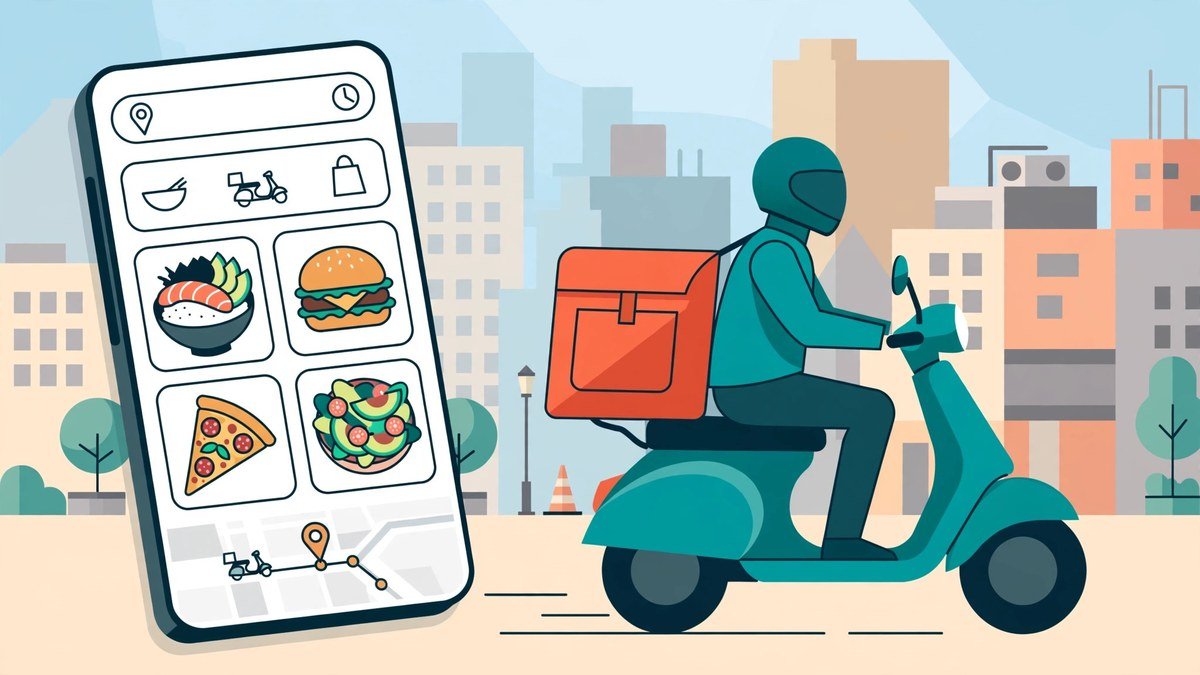
Food delivery apps now move more meals than many restaurant dining rooms, and the gap between the best and the rest comes down to three things: how many restaurants are actually available near you, what the real total costs after fees, and how often orders arrive hot and on time. The app with the biggest national footprint is not always the best choice on your street.
In 2027 the leading apps compete on subscriptions that waive delivery fees, faster courier dispatch, grocery and convenience delivery alongside restaurants, and loyalty perks that reward repeat orders. The trade-off is that headline menu prices can hide service fees, small-order fees and tip expectations that add up fast over a month of ordering.
We compared the biggest food delivery apps on coverage, fees, delivery speed, restaurant quality, subscription value and order reliability, using the plans and pricing each app publishes for 2027. The seven below are the strongest options for most people, with a clear pick for budget orders, families, late-night cravings and grocery runs.
Key takeaways
- DoorDash is the best overall food delivery app in 2027, with the widest restaurant and grocery coverage in the United States.
- Uber Eats is the strongest choice if you already use Uber, thanks to shared membership perks and fast courier dispatch in cities.
- Grubhub remains the best option in many college towns and smaller cities where its restaurant network is deepest.
- A delivery subscription only saves money if you order at least three or four times a month — otherwise pay-per-order is cheaper.
- Always check the final total before confirming, because service fees and small-order fees vary by restaurant and time of day.
At a glance: the shortlist
| Product | Best for | Starting price | Standout limit |
|---|---|---|---|
| DoorDash | Widest coverage | From $0 delivery with DashPass ($9.99/month) | Service fees up to 15% |
| Uber Eats | Fast city delivery | From $0 delivery with Uber One ($9.99/month) | Smaller coverage outside big cities |
| Grubhub | Local restaurants | From $0 delivery with Grubhub+ ($9.99/month) | Slower rollout of new features |
| Instacart | Grocery delivery | From $3.99 delivery; Instacart+ $9.99/month | Restaurant choice is limited |
| Deliveroo | High-end dining | From £0 delivery with Deliveroo Plus (£3.49/month) | Limited to select cities |
| Just Eat Takeaway | European coverage | Delivery fees vary by restaurant | No US presence |
| Glovo | Multi-category delivery | Delivery fees vary; Glovo Prime from €4.99/month | Limited to select markets |
DoorDash — Best overall
DoorDash is the largest food delivery app in the United States, and that scale is its biggest advantage: in most towns and cities it lists more restaurants, grocery stores and convenience shops than any rival, including many local spots that do not appear on other apps. Orders are usually dispatched within minutes, and the app’s estimated arrival times are among the most accurate we have seen.

DashPass, the $9.99 monthly membership, waives delivery fees on orders over $12 from eligible restaurants and adds reduced service fees and member-only deals. Heavy users can save far more than the membership costs, but occasional users should skip it and pay per order instead. DoorDash also handles grocery, alcohol and pharmacy delivery in many areas, which makes it a genuine all-round delivery app rather than just a restaurant service.
Pros: Largest restaurant and store network; accurate ETAs; DashPass pays off for frequent orders; grocery and retail delivery included.
Cons: Service fees can be high without DashPass; menu prices are often higher than in-store prices; surge pricing at peak times.
Uber Eats — Best for city dwellers
Uber Eats benefits from Uber’s huge courier network, which means fast pickup and delivery in dense urban areas, often in under 30 minutes. The app is clean and reliable, with live courier tracking, clear item-level receipts and good customer support when an order goes wrong. If you already use Uber for rides, the shared Uber One membership covers both, which is a real saving.
Uber One costs $9.99 a month and waives delivery fees on eligible orders over $15, adds discounts on rides and gives members exclusive restaurant deals. The restaurant selection is strongest in major cities and thinner in smaller towns, where DoorDash or Grubhub usually list more places. Uber Eats also offers grocery delivery through partner stores, and its scheduled ordering works well for planning meals ahead.
Pros: Very fast in cities; live tracking is excellent; Uber One bundles rides and delivery; strong grocery options.
Cons: Weaker restaurant choice outside major cities; service fees apply on most orders; some menu prices carry a markup.
Grubhub — Best for college towns
Grubhub built its business on independent restaurants, and it still shines in college towns and mid-size cities where its local listings run deeper than the bigger national apps. Many long-running local restaurants list only on Grubhub, so if your favourite neighbourhood spot is missing elsewhere, this is usually where you will find it.
Grubhub+ costs $9.99 a month and waives delivery fees on orders over $12, with member perks and free items from partner restaurants. Delivery times are competitive, though the app’s courier network is smaller than DoorDash’s, so peak-hour waits can stretch. Grubhub also integrates with campus dining programs at many universities, which makes it the default choice for students.
Pros: Deepest local restaurant selection in many towns; campus dining integration; Grubhub+ perks are genuinely useful.
Cons: Smaller courier network than DoorDash; fewer grocery and retail options; app feels less polished than rivals.
Instacart — Best for groceries
Instacart is first and foremost a grocery delivery app, and it is the best at it: it partners with major supermarket chains and local grocers, lets you shop full aisles with substitutions you control, and delivers in as little as an hour in most metro areas. For households that want one app for the weekly shop and the occasional restaurant meal, it is hard to beat.
Instacart+ costs $9.99 a month and waives delivery fees on grocery orders over $35, with lower service fees and credit back on pickup orders. Restaurant delivery is available through partner kitchens but is a smaller part of the service, so dedicated food apps win on restaurant choice. Where Instacart stands out is produce quality handling, real-time shopper chat and reliable substitutions when an item is out of stock.
Pros: Best grocery selection and substitution control; fast delivery from major chains; shopper chat works well.
Cons: Restaurant delivery is a side feature, not the focus; service fees add up; minimum order for free delivery is $35.
Deliveroo — Best for premium restaurants
Deliveroo focuses on quality over quantity, listing well-regarded restaurants, premium kitchens and well-known chains in the cities it serves, mainly across the UK, Europe and parts of Asia and the Middle East. Its courier fleet is known for careful handling, and orders from higher-end restaurants tend to arrive in better condition than on mass-market apps.
Deliveroo Plus costs £3.49 a month in the UK and waives delivery fees on orders over a set minimum, with member-only offers. The app also runs grocery and convenience delivery through partner stores. Coverage is the catch: Deliveroo only operates in select cities, so many users will not have it as an option at all, and in the United States it is not available.
Pros: Strong premium restaurant selection; careful courier handling; affordable Plus membership.
Cons: Available only in select cities; no US service; smaller overall restaurant count than DoorDash.
Just Eat Takeaway — Best for Europe
Just Eat Takeaway is the dominant food delivery brand across much of Europe, combining the Just Eat and Takeaway.com networks into one of the widest restaurant listings on the continent. It covers everything from local takeaways to national chains, and in many European cities it is the app with the most choice by a wide margin.
There is no single subscription price because fees and membership offers vary by country, so value depends on where you live. The app supports ordering ahead, group orders and a wide range of payment methods, including local options that global apps sometimes skip. Delivery speed is solid in cities, though rural coverage is thinner than in urban centres.
Pros: Widest restaurant choice across Europe; local payment options; group ordering works well.
Cons: No service in the United States; delivery fees vary a lot by restaurant; fewer grocery options than rivals.
Glovo — Best for anything delivery
Glovo stands out because it delivers almost anything, not just food: restaurants, groceries, pharmacies, flowers and even parcels from local shops, all through one courier network. In the cities where it operates, mainly in Southern and Eastern Europe, Africa and parts of Central Asia, it is the most flexible delivery app available.
Glovo Prime starts at around €4.99 a month and waives delivery fees on eligible orders, with free delivery on groceries over a minimum. The app’s courier tracking is clear and its pickup times are competitive. The main limitation is geography: Glovo does not operate in the United States or the UK, so it is a niche pick for most readers, but an excellent one inside its markets.
Pros: Delivers food, groceries, pharmacy and parcels in one app; flexible courier network; affordable Prime plan.
Cons: Limited to select markets; no US or UK service; restaurant depth varies by city.
How to choose
Start with coverage, because the best app in the world is useless if your favourite restaurants are not on it. Search for three or four places you order from regularly on each app before committing, and check whether delivery times at dinner peak look realistic. A smaller app with your local spots beats a big app with only chains.
Then compare the real total, not the menu price. Add a typical order to the cart on two apps and compare the final checkout figure including service fees, delivery fees and tax. Subscriptions change the maths: if you order three or more times a month, a $9.99 membership usually pays for itself in waived delivery fees, and if you order once a month it does not. The best AI tools for last mile delivery show how the routing and dispatch technology behind these apps keeps improving, which is why ETAs keep getting more accurate.
Finally, think about what else you order. If most of your delivery is groceries, a grocery-first app wins even if its restaurant list is shorter. If you travel, pick an app with broad international coverage so your account, payment methods and order history follow you. And if you use rideshare apps, a bundled membership that covers both rides and delivery can be the cheapest option overall.
Checklist: before you pay
- Check that your regular restaurants are listed before you pay for a subscription.
- Compare the final checkout total, including service and small-order fees, on two apps.
- Confirm the delivery time estimate at peak dinner hours, not just mid-afternoon.
- Read the refund policy for missing or wrong items before your first order.
- Set a default tip you are comfortable with — couriers see it before accepting.
- Check whether the app covers groceries or pharmacy in your area if you want one app for everything.
Frequently asked questions
Which food delivery app is cheapest in 2027?
There is no single cheapest app, because fees vary by restaurant, city and time. DoorDash and Uber Eats are usually cheapest with a subscription if you order often, while pay-per-order is cheaper for occasional users. Always compare the final checkout total on two apps before ordering.
Is a delivery subscription worth it?
A $9.99 monthly subscription is worth it if you order at least three or four times a month, because waived delivery fees and reduced service fees usually cover the cost. If you order once or twice a month, skip the membership and pay per order.
Why are menu prices higher on delivery apps?
Restaurants pay commission to delivery apps, often 15 to 30 percent of the order, and many pass part of that cost to customers through higher menu prices. Ordering directly from a restaurant, when it offers its own delivery, is sometimes cheaper.
Which app is fastest for delivery?
In big cities Uber Eats and DoorDash are usually fastest, with typical deliveries in 25 to 40 minutes, because their courier networks are largest. In smaller towns the fastest app is whichever one has the most couriers working locally at that hour.
Can I get groceries delivered on food delivery apps?
Yes. DoorDash, Uber Eats, Instacart and Deliveroo all offer grocery delivery in many areas, and Instacart is the strongest for full supermarket shops. Check which stores are covered in your postcode before relying on it for a weekly shop.
What happens if my order is wrong or missing items?
All major apps let you report a problem in the app and usually refund missing or wrong items quickly, often as account credit. Keep the receipt and photos if food arrives damaged, and report it within the app the same day for the fastest resolution.
The bottom line
For most people in 2027, DoorDash is the best food delivery app overall because it lists the most restaurants and stores in the most places, with reliable ETAs and a subscription that pays off for regular users. Uber Eats is the better pick if you live in a dense city or already pay for Uber One, and Grubhub wins in college towns where its local restaurant depth is unmatched. If groceries matter more than restaurants, Instacart is the clear choice.
Whichever app you pick, compare the final checkout total before you order, and only pay for a subscription if you order often enough for it to pay for itself. Delivery apps keep adding perks and raising fees in turn, so the best deal this year may not be the best deal next year — and the best AI tools for route optimization behind these services mean delivery times will keep getting tighter. For running a food business of your own, the best ecommerce platforms for small businesses are the natural next step once delivery demand grows.
Note: Prices, fees and subscription costs change often and vary by city. Check the app’s current pricing before ordering — no link is provided here by design, all links in this article go to other occcy.com guides.