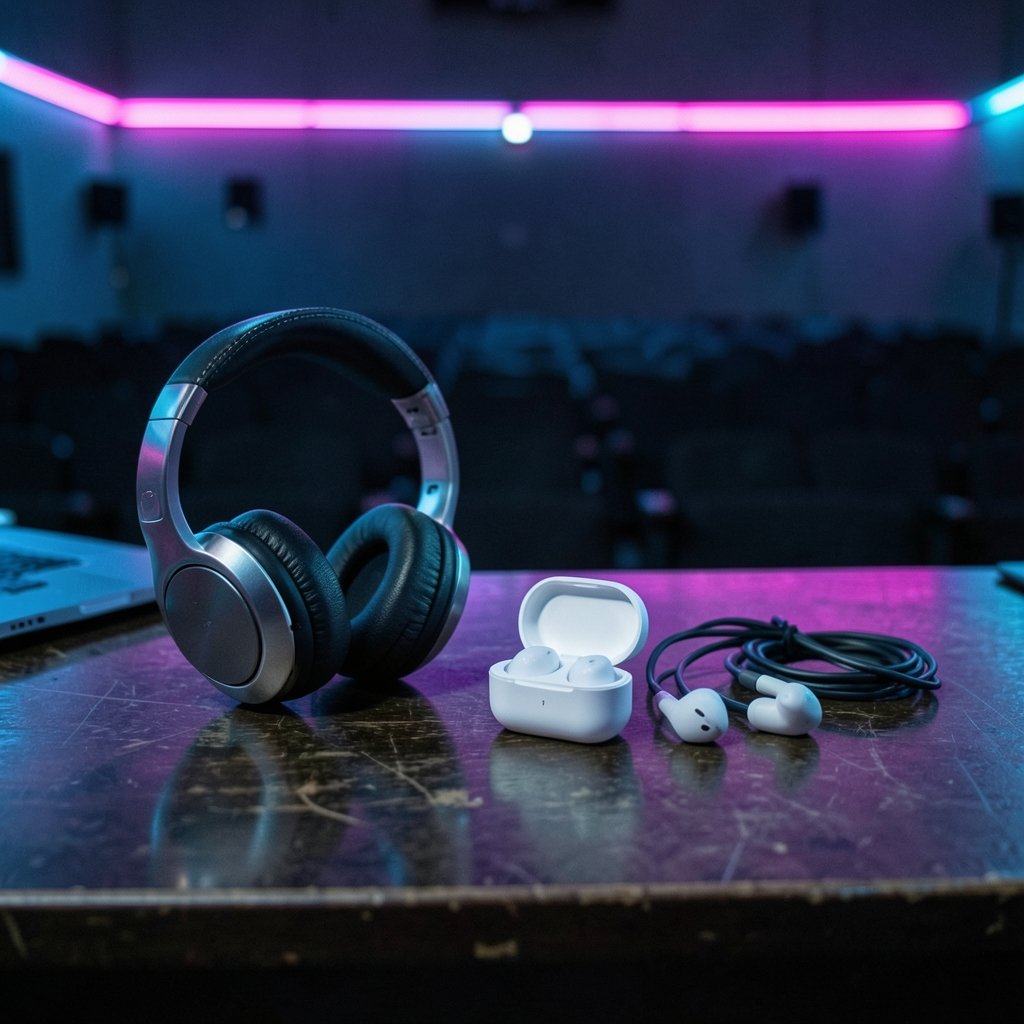
What if the headphone you buy this season could still sound genuinely current in three years? That is the real question behind the search for the best headphones for music 2027, and it is a harder one than it looks. The market is shifting fast: planar magnetic drivers are shrinking into portable shells, budget active noise cancellation has stopped being a joke, and open earbuds now claim to cancel noise without sealing your ear canal. Picking blindly means either overpaying for a badge or buying into a format that quietly fades.
This roundup cuts to the shortlist. Every option below is named, tied to a specific listener, and paired with an honest limitation. Where a price is mentioned, it comes from published coverage, not guesswork.
The Shortlist at a Glance
| Headphone | Best for | Form factor | Standout trait | Watch out for |
|---|---|---|---|---|
| Sennheiser Momentum 4 | All-round listening | Wireless over-ear | Widest, most holographic soundstage of its trio | Bass needs app EQ taming |
| Audio-Technica ATH-M50x | Studio-neutral sound on a budget | Wired closed-back | Detachable cable, durable build | No noise cancelling, no mic |
| Beyerdynamic DT 770 Pro X | Long studio and desk sessions | Wired closed-back | Modern take on a 1985 studio classic | Wired only |
| Austrian Audio The Composer | Reference-grade critical listening | Wired open-back | Built as a true reference headphone | Needs serious amplification |
| HIFIMAN HE400se | Technical performance per dollar | Wired open-back | Planar detail at an entry price | Leaks sound, needs power |
| Philips Fidelio X3 | Gaming plus music crossover | Wired open-back | Open staging with real bass | Sound leakage |
| ASUS ROG Kithara | Competitive gaming that still sounds musical | Wired open-back | 100 mm planar drivers, 8 Hz to 55 kHz | Gaming-first tuning |
| Shokz OpenFit Pro | Awareness-first listening | Open earbuds | Noise reduction without sealing the ear | Less isolation than closed designs |
| Nothing Ear (3) | Feature-rich everyday carry | True wireless | Mic and talk button on the case | Not an audiophile reference |
Sennheiser Momentum 4: The Safest All-Rounder
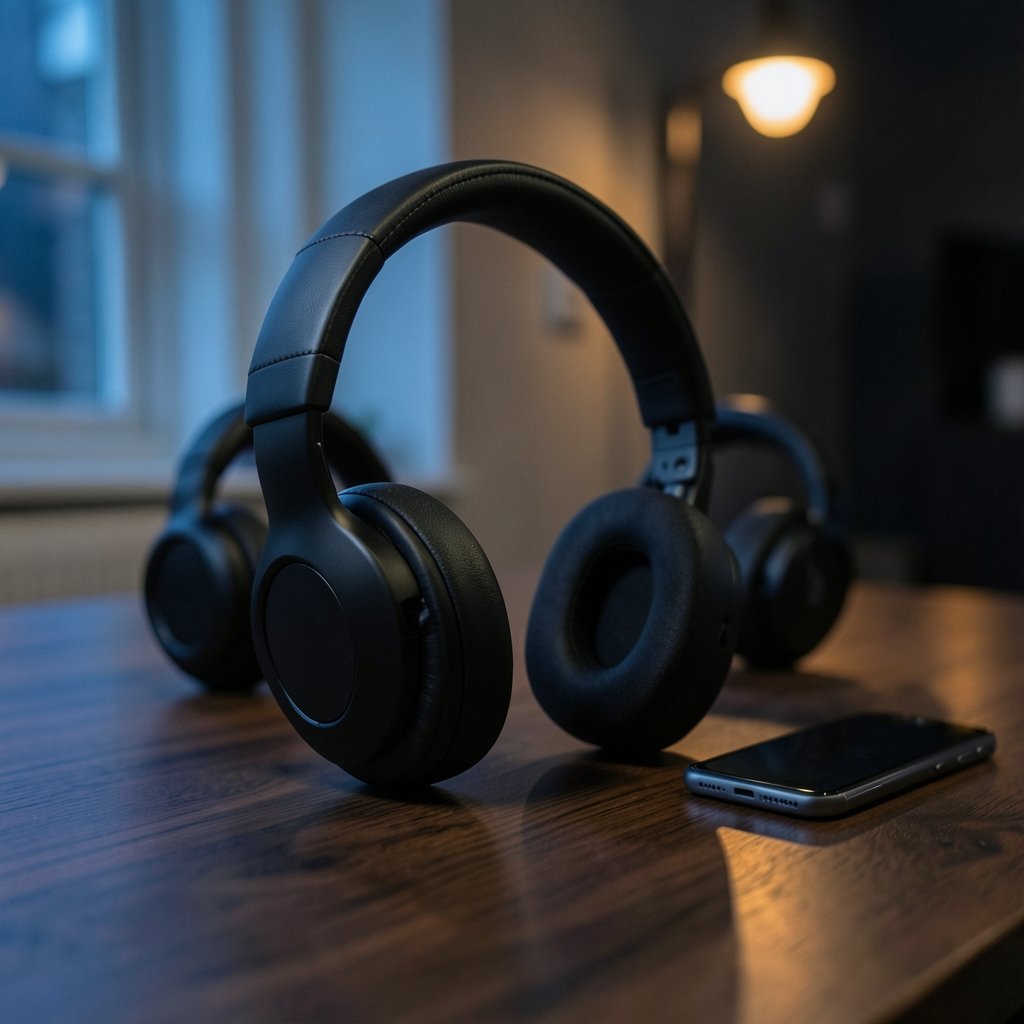
For most listeners, the Momentum 4 is the least risky purchase on this list. In a direct three-way comparison against the Audio-Technica M50xBT2 and the B&W PX7 S2e, it came out ahead for people who want clear instrument separation, controlled bass on rock, city-pop and EDM, plus long-wear comfort. The reason is staging: it throws the widest, most three-dimensional image of the three, which is exactly what lets you follow individual instruments in dense mixes.
It also carries the strongest noise cancelling of that group, and its companion app includes EQ so you can pull back the low end if the default tuning feels heavy.
The limitation is honest: its bass is not the most disciplined out of the box, and the B&W alternative is described as more bass-forward. If you want thump without touching a settings screen, this is not the pick. If you are happy to spend five minutes in an EQ, it is.
Audio-Technica ATH-M50x: Studio Honesty Without the Bill
The M50x is the headphone that studios bought and gamers adopted. It is closed-back and accurate, with a detachable cable that meaningfully extends its lifespan, and it is widely available around the $158 mark. For someone building a first serious music setup, that combination is hard to beat.
What it does well is neutrality. Nothing is exaggerated, which makes it a useful reference when you are learning what a recording actually sounds like.
The limitation is equally clear: no microphone and no noise cancelling. On a plane or a busy open office, you will hear the world. Treat it as a desk and home headphone, not a commuter one.
Beyerdynamic DT 770 Pro X: The Studio Classic, Updated
Some headphones earn their reputation over decades. The DT 770 Pro X is a modernized edition of a studio classic that dates back to 1985, and it keeps the closed-back isolation that made the original a tracking-room staple. For long writing sessions, editing work, or late-night listening when you do not want to disturb anyone, it is a dependable companion.
Its strength is consistency. The tuning is familiar to anyone who has worked in a studio, so mixes translate predictably.
The trade-off is that it is a wired, workmanlike tool rather than a lifestyle product. No wireless, no app, no adaptive anything. Buy it for the sound and the durability, not the feature list.
Austrian Audio The Composer: For Critical Listening
The Composer was designed from the ground up as a reference headphone, and that intent shows in how it is meant to be used: as a neutral window, not a crowd-pleaser. If your listening is analytical, if you want to hear what a recording engineer heard in the room, this belongs on your audition list.
It pairs naturally with serious amplification. In the same coverage, the Chord Alto amplifier is described as a studio product that can also drive nearfield speakers, which tells you the class of chain this headphone expects.
The limitation is cost and commitment. This is not a plug-into-your-phone purchase, and it will expose weak sources rather than flatter them.
HIFIMAN HE400se: Planar Detail on a Budget
Planar magnetic drivers were once exotic and expensive. They are now genuinely accessible, and the HE400se is the clearest example, sitting around $109 while delivering the speed and separation that planar designs are known for. If you want the most technical performance per dollar, this is the argument.
The wider trend supports the pick. Planar magnetics are finally getting portable, which means the format is no longer a niche dead end.
The limitation is physics: open-back designs leak sound in both directions. Anyone nearby will hear your music, and you will hear them. It also rewards a decent amplifier.
Philips Fidelio X3: The Gaming and Music Crossover
Plenty of people want one pair for everything. The Fidelio X3 is built for that person: open staging with real bass, positional audio that helps in shooters, and enough musicality that soundtracks and albums do not feel like an afterthought. At around $134.99, it undercuts most dedicated gaming headsets with comparable staging.
The catch is the same as any open-back: leakage. If you share a room, this is a headphones-on-alone purchase.
ASUS ROG Kithara: When Gaming Comes First but Music Still Matters
The Kithara earned an EISA gaming headset award for the 2026-2027 season, and the engineering behind it is unusual. It uses 100 mm planar magnetic HIFIMAN transducers specifically optimized for the job, an open-shell design, and an extended frequency response from 8 Hz to 55 kHz. The result is a spacious soundstage with detailed mids, crystalline highs and controlled bass, which lets players localize cues without the tuning turning harsh on music.
The limitation is positioning. It is a gaming headset first, so buyers who never play should look at the pure music options above.
Shokz OpenFit Pro: Open Earbuds That Reduce Noise
The category lines are blurring. Open earbuds that do not seal the ear canal were long assumed incapable of noise reduction, and the OpenFit Pro challenges that assumption directly. For runners, cyclists and office workers who need to stay aware of their surroundings, this is a genuinely different proposition from a sealed design.
The limitation is inherent: without a seal, bass depth and isolation cannot match a closed over-ear. Expect awareness, not silence.
Nothing Ear (3): Everyday Convenience With Extras
True wireless buyers increasingly want the case to do more. The Nothing Ear (3) puts both a microphone and a talk button on the charging case, a small idea that turns out to be useful when you take a call mid-commute. The Soundcore Liberty 5 Pro goes further with a touchscreen case, and the AirPods Pro 3 can measure your heart rate during workouts, which shows where the segment is heading.
The limitation: these are convenience-first products. None of them will out-resolve a wired reference headphone, and buyers chasing pure fidelity should look elsewhere.
How to Choose Without Regret
Start with the room you listen in, not the spec sheet. The single biggest fork in this list is open versus closed. Open-back designs like the HE400se, Fidelio X3, Kithara and The Composer give you a wider stage and more natural imaging, but they leak. Closed designs like the M50x and DT 770 Pro X keep your music yours.
Then match the chain to the headphone. A reference model on a phone output is money wasted. A budget planar on a weak source sounds thin.
Four practical checks that experienced buyers run before paying:
- Ask whether the battery is replaceable and whether the maker sells spare parts. That single question decides whether you own the product for three years or ten.
- Confirm what your phone actually supports for lossless codecs before you pay for a higher-resolution tier you cannot use.
- Decide whether you need a microphone. It is the most common regret among people who bought a music-first headphone and then started taking calls.
- Audition open-back models in a quiet room if you can. Their advantage disappears in noise.
A common mistake is buying for the spec that looks best on paper. Frequency response numbers, driver sizes and codec lists rarely predict how a headphone feels after two hours. Comfort and weight distribution do. Another frequent error is ignoring the earcup material in summer, or buying a sealed design for gym use and discovering that sweat and clamping force do not mix.
If your interests run broader than audio, the same “wait for the settled version” logic applies elsewhere, whether you are tracking the Toyota Tacoma 2027 details buyers can realistically expect or following the 2027 recruiting rankings board that keeps moving. Audio rewards patience too. (Best ai tools writers 2027 15 apps compared head head)
Conclusion
The best headphone for music in 2027 is not the most expensive one. It is the one that matches your room, your source and your habits. Buy the Momentum 4 if you want one safe do-everything pair. Buy the M50x or DT 770 Pro X if you work at a desk and value neutrality and durability. Buy the HE400se or Fidelio X3 if you have a quiet space and want staging that closed designs cannot match. Buy the Kithara if gaming pays the bills. And buy the OpenFit Pro or Nothing Ear (3) if convenience and awareness matter more than absolute fidelity.
Audition what you can, check the return window on what you cannot, and spend the saved money on a better source. That upgrade will follow you through every headphone you buy next.
Frequently Asked Questions
Are open-back headphones better for music?
They generally offer a wider soundstage and more natural imaging, which many listeners prefer for critical listening. The trade-off is sound leakage in both directions, so they suit quiet rooms rather than shared spaces or commutes.
Do I need an amplifier for planar magnetic headphones?
Most benefit noticeably from one. Entry models like the HE400se will play from a phone, but they sound fuller and more controlled with dedicated amplification. Reference models such as The Composer are built assuming a serious chain.
Is a gaming headset good enough for music?
It can be. The ASUS ROG Kithara uses large planar drivers and an extended frequency range, so it handles music well for a gaming-first design. Dedicated music headphones still tend to offer more neutral tuning for the same money.
What should I check before buying wireless headphones?
Ask whether the battery is replaceable and whether spare parts are sold, since that determines usable lifespan. Also confirm which lossless codecs your phone supports before paying for a higher-quality streaming tier.
Are budget headphones worth buying in 2027?
Yes, more than before. Noise cancelling DSP chips have dropped in price, so active noise cancellation at the budget end is now a real feature rather than marketing copy, and planar drivers have reached entry-level prices.
How long should a good pair of headphones last?
With a replaceable battery and available spare parts, a well-built pair can reasonably serve you for many years. Wired studio designs with detachable cables, like the ATH-M50x and DT 770 Pro X, are the easiest to keep alive long term.