
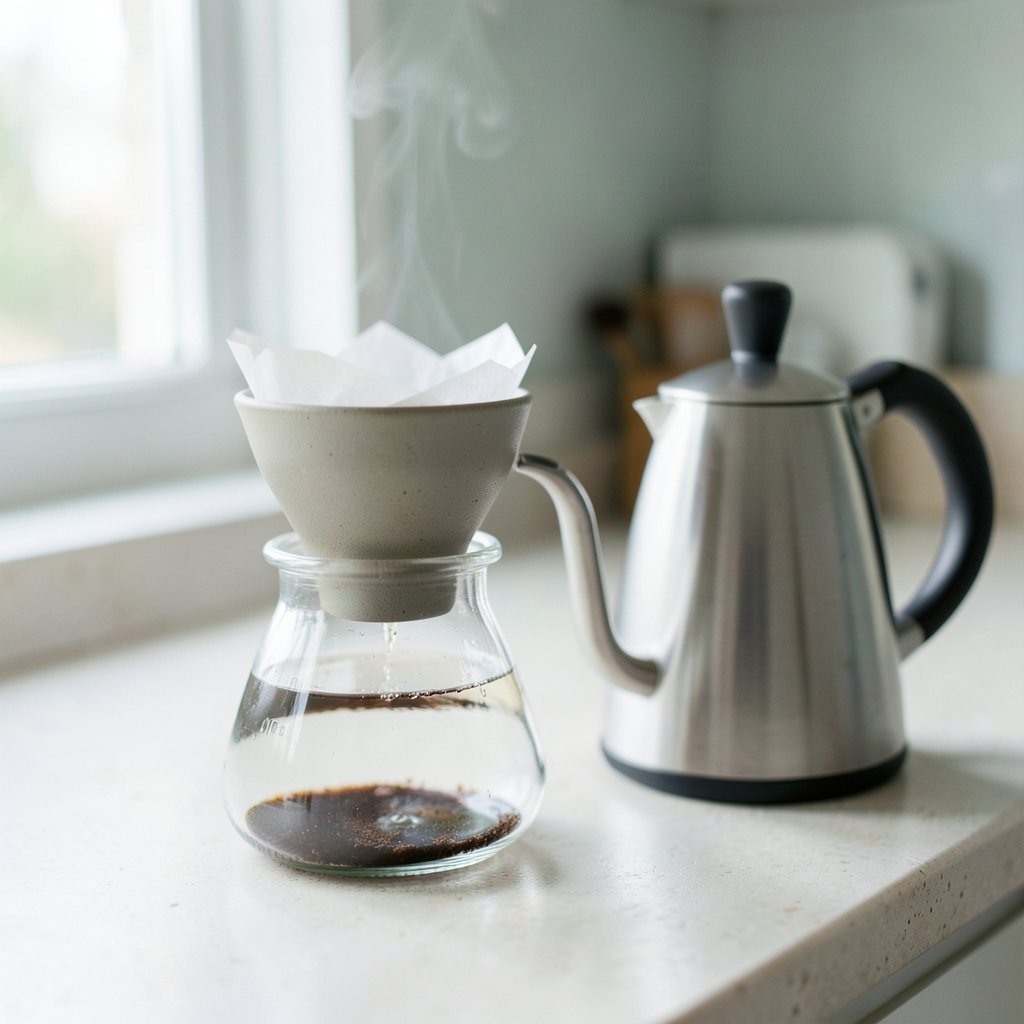
What if the best upgrade to your coffee routine is a machine with fewer buttons, fewer parts, and less to break? That is the promise of the minimalist pour over wave, and 2027’s lineup makes it a genuinely realistic choice rather than a design fantasy. The category has split into two clear camps: bare-bones glass and ceramic drippers that ask for a steady hand, and smart brewers that hide their complexity behind a clean shell.
This roundup covers six specific options, from a sensor-driven ceramic cone to a borosilicate classic that has outlived most kitchen gadgets. Each entry gets the same treatment: who it suits, what it nails, one honest limitation, and a price only where a source states one. If you want a shortlist rather than a lecture, start with the table.
The Shortlist at a Glance
| Option | Type | Best for | Standout trait | Main drawback |
|---|---|---|---|---|
| Melitta Senz V | Smart ceramic pour over | Tech lovers who want a calm counter | Integrated sensors manage ratio, temperature and time | Premium, appliance-level commitment |
| xBloom Studio | Automated pour over | Precision without barista skills | Grinds into pods, brews with a circular pour pattern | Pod system ties you to one brand |
| xBloom Original | Automated pour over | First-time smart brewer buyers | Same core automation in the earlier design | Older platform than the Studio |
| Chemex 6-Cup with Glass Handle | Manual glass brewer | Batch brewing for two or three | Thick filters produce a very clean cup | Special filters cost more than standard ones |
| Hario-style glass cone (V60 type) | Manual glass dripper | Solo cups and travel | Cheap, light, endlessly repairable | Fragile; needs a separate kettle and filters |
| Collapsible silicone dripper | Portable manual brewer | Camping and small kitchens | Folds flat, packs anywhere | Less thermal stability than ceramic |
1. Melitta Senz V: The Smart Brewer That Still Looks Like Pottery

The Melitta Senz V is the clearest answer to the question “can a smart brewer be minimalist?” Its design language leans on ceramics, wood and glass, which gives it a modern, pared-back look that would not embarrass a shelf of handmade mugs. The Red Dot Design Award jury described it as a filigree coffee maker with smart technology that convincingly supports manual preparation.
That is the whole trick. Sensors inside the appliance control the optimum ratio of coffee to water, along with temperature and time, and the system monitors the brewing process in real time. It can even determine the coffee’s taste profile in advance. So the ritual stays visible, but the variables that ruin a cup get handled quietly.
Who it suits: anyone who wants pour over flavor without weighing beans at 6 a.m., and who cares how the thing looks between brews.
The limitation: this is an appliance, not a dripper. When the electronics age, you replace more than a cone. Buyers who want a lifetime purchase should weigh that carefully.
2. xBloom Studio: Automation Without the Plastic Blob Aesthetic
xBloom is the company most responsible for making automated pour over look stylish rather than sci-fi. Both the Studio and the Original grind beans directly into their pods with automated grind size adjustment, then brew using a circular pouring pattern for an even steep. Livingetc’s write-up called the result practical, precise, and a bit posh, which is a fair summary of the experience.
The Studio is the newer of the two machines and the one to look at first if you are buying into the system now. It handles the part of pour over that most people get wrong, which is consistency: same grind, same pour pattern, same contact time, cup after cup.
Who it suits: households where one person wants specialty-level consistency and nobody wants to learn bloom timing.
The limitation: pods. You are buying into a closed pod format, and that is a real ongoing cost and a real supply consideration. If you like swapping beans weekly from a local roaster, check how the pod system handles your favorite bags before committing.
3. xBloom Original: The Earlier Model Still Worth Knowing
The Original shares the core architecture with the Studio: automated grind adjustment, pod-based dosing, circular pour. It is the machine that established the brand’s reputation for blending coffee-making basics with smart-home features.
Who it suits: bargain hunters who find the Studio overkill and mainly want the automated pour.
The limitation: it is the older platform, so expect fewer refinements than the Studio. The two machines are close enough in concept that the decision usually comes down to availability and price rather than capability.
4. Chemex 6-Cup with Glass Handle: The Minimalist Classic That Still Wins
If minimalism means fewer moving parts rather than fewer buttons, the Chemex is the benchmark. The six-cup version (30 ounces) is made from durable borosilicate glass, comes in several sizes, and uses thick paper filters that produce a notably clean-tasting cup. Testing notes on non-toxic brewers single out this size for its versatility, and the glass handle version removes the fiddly wood collar in favor of a safer grip when you pour hot water into the slurry.
The hourglass shape creates a single channel for the brew to pass through, which means the grind needs to be coarser than a cone dripper to avoid a stalled drawdown that tastes over-extracted. That is the one technique note worth memorizing.
Who it suits: anyone brewing 20 to 30 ounces at a time, or people who want a plastic-free path to drip-machine convenience.
The limitation: the proprietary filters cost more than standard paper ones, and the brewer is heavy and not remotely portable. It is also glass, so treat the sink with respect.
5. Hario-Style Glass Cone: The Cheapest Honest Pour Over
Cone-shaped glass drippers in the V60 mold show up on nearly every shortlist for good reason. They are heat-resistant, lightweight, available in 02 and 03 sizes, compatible with widely sold filters, and produce a clean, flavorful cup with real precision. The design is elegant in the way a good kitchen knife is elegant: nothing extra.
Who it suits: solo brewers, small kitchens, and anyone who wants to spend money on beans instead of hardware.
The limitation: it is fragile, and it needs a separate filter and gooseneck kettle to work at all. Budget for both. A slow, controlled pour matters more here than with any other option on this list.
6. Collapsible Silicone Dripper: Minimalism That Folds Flat
The collapsible two-pack drippers that keep appearing on travel lists solve a different problem: storage. They fold flat, pack into a bag, and turn any mug and any kettle into a pour over station.
Who it suits: campers, frequent travelers, and anyone in a tiny apartment where counter space is the real constraint.
The limitation: silicone does not hold heat like ceramic or glass, so pre-heating matters more, and the brew is less stable in cold rooms. It is a compromise tool, not a daily driver for most people.
How to Choose Without Overthinking It
Work backward from your worst morning. If you oversleep and rush, a manual cone will punish you and a sensor-driven brewer will not. If you enjoy the ritual, automation removes the part you love.
Then check three practical things:
- Filter supply. Proprietary filters (Chemex) and pods (xBloom) create ongoing dependencies. Confirm they are easy to buy locally before you commit.
- Material and heat. Ceramic and glass hold temperature better than silicone or thin plastic. If your kitchen runs cold, this matters more than brand.
- Water and maintenance. Hard water is the quiet killer of every brewer, automated or not. The mineral buildup it leaves behind can wreck temperature sensors and clog showerheads, so learn how hard water actually affects brews well and descale on schedule. If you notice scale or strange flow early, deal with it before it becomes a repair.
One more practical note: if your current setup already misbehaves, fix the small stuff first. A filter basket that overflows is usually a grind or pour-rate problem, not a reason to buy new gear, and it is worth knowing how to fix an overflowing filter basket before you spend. The same logic applies to leaks: most drips trace back to a seal or a crack, and understanding why a coffee maker leaks from the bottom helps you decide whether to repair or replace.
Conclusion
The best minimalist pour over coffee maker for 2027 depends on which kind of minimalism you actually want. If it is visual calm plus invisible precision, the Melitta Senz V and the xBloom Studio are the standouts, and the Senz V’s sensor-driven approach earned independent design recognition for a reason. If it is fewer parts and nothing to plug in, the Chemex 6-Cup remains the most satisfying batch brewer, with the glass cone close behind for solo cups. And if minimalism means fitting into a backpack, the collapsible dripper wins by default.
Buy for the mornings you actually have, not the ones you imagine. That single rule eliminates most of the wrong choices.
Frequently Asked Questions
Is a smart pour over maker still considered minimalist?
Yes, if minimalism means a clean counter and a simple routine rather than zero electronics. The Melitta Senz V pairs ceramics, wood and glass with sensors that manage ratio, temperature and time, so the visible experience stays calm while the math happens inside.
Do I need a gooseneck kettle for a glass cone dripper?
Practically, yes. A cone dripper gives you precise control only if you can pour slowly and steadily. Standard kettles dump water too fast, which disturbs the bed of grounds and produces uneven extraction. A basic gooseneck is the cheapest meaningful upgrade in manual brewing.
Are Chemex filters worth the extra cost?
They are the reason the Chemex tastes the way it does. The thick paper traps fines and oils, delivering a very clean cup with low bitterness. The trade-off is price and availability, so buy in bulk and store them flat.
Can an automated brewer like the xBloom replace a grinder?
The xBloom machines grind beans directly into their pods with automated grind size adjustment, so a separate grinder is not required for that workflow. The catch is that you are working within the pod system rather than dosing loose coffee your own way.
How often should I clean a minimalist pour over setup?
Rinse glass and ceramic daily and do a deeper clean weekly. If you use hard water, descale more often, because mineral film dulls flavor and, on smart machines, can interfere with sensors. A monthly vinegar soak handles most manual brewers.
Is glass or ceramic better for pour over?
Ceramic holds heat longer, which keeps extraction stable in cool kitchens. Glass is lighter, cheaper to replace, and lets you watch the brew. Both beat silicone on temperature retention, so pick based on whether you value thermal stability or visibility and portability more.
For anyone still deciding, the simplest test is to brew one cup with each shortlisted method before buying. Note the time, the mess, and whether you enjoyed the process. The brewer that fits your routine without friction is the minimalist choice, whatever the spec sheet says.
That final test costs almost nothing: a borrowed cone, a paper filter, and ten minutes on a Saturday morning. Compare the cleanup, too, since the brewer you dread rinsing is the one that ends up in a cupboard. Whichever option survives that trial is the one worth buying, and it will likely outlast several trend cycles. Minimalism, after all, is not a spec you purchase but a routine you keep. Choose the brewer that makes the good morning repeatable, and 2027 will take care of itself.



