One night you may want a quick shared puzzle, and the next you may want a game that turns every move into a duel. The best two player board games offer both kinds of experience, whether you are choosing with a partner, a friend, or family member.
These 15 picks cover different moods and levels of interaction, from thoughtful card play to direct competition. You will get practical distinctions, not one winner for every table. Tile drafting means choosing a tile from a shared selection and using it in your own play area.
A good choice depends on the time you have, the space you can use, and how much you want to interact. Some games ask you to read an opponent’s plans; others give you a shared problem to solve. The best starting point is the kind of evening you want to have together.
Key Takeaways
- Pick a game that suits the mood and time you have.
- Check whether it is made for exactly two players.
- Choose cooperation for a shared goal, or competition for a duel.
- Compare board space and setup needs before game night.
- Try different styles before building a collection.
Sirens Builds a Song from 18 Cards
Sirens is a strong fit when you want card decisions to produce something you can see taking shape. In 2026, this two-player game uses 18 cards, card drafting, and layout to build a song. Each pick affects both your choices and the arrangement you create.
The puzzle comes from choosing cards and placing them with a plan. You are not just collecting a hand; you are shaping a song in your own play area. That makes the game appealing if you like a creative result alongside a contest.
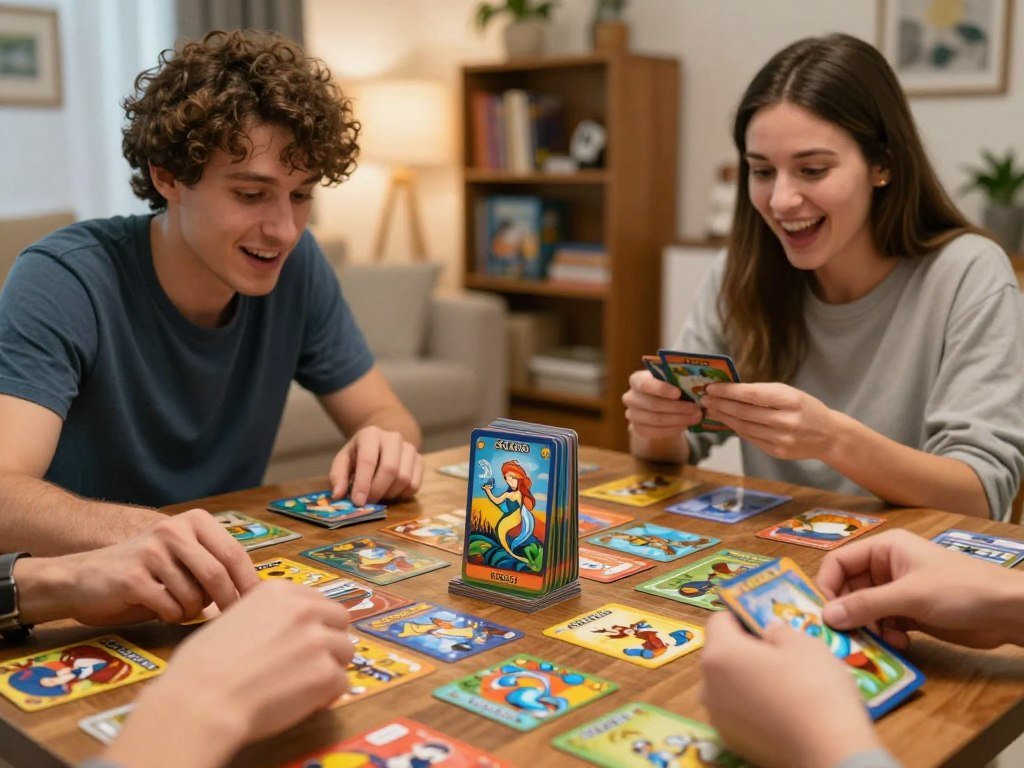
During a game, pay attention to three connected decisions:
- Which card to draft from the shared choices.
- Where to place that card in your layout.
- How the full layout is developing as you add cards.
That mix gives each card a visible job. A choice may suit the song you are building, yet leave a useful option open to the other player. This keeps the game interactive without turning every turn into a direct attack.
| Game | Player count | Core activity |
|---|---|---|
| Sirens | Two | Draft and lay out cards into a song |
| Jaipur | Two | Trade and collect cards |
| 7 Wonders Duel | Two | Draft cards in a strategic duel |
Choose each card for both what it adds to your song and what its placement does to your layout.
The table shows how a shared card supply can support very different games. Sirens puts a creative layout at the center, while other card games focus on trading or a tactical contest. Choose it when arranging the cards sounds as appealing as competing over them.
Jaipur Turns Trading into a Two-Player Card Duel
Jaipur makes a good choice when you want a small card game where taking a card also changes what your opponent can collect. Jaipur is a two-player trading card game built around set collection. A limited hand makes every exchange feel like a choice.
You must balance building your own sets with denying useful cards to your opponent. A card that helps complete your collection may also be one they need. That tension makes the game active even when both players are focused on their own hand.
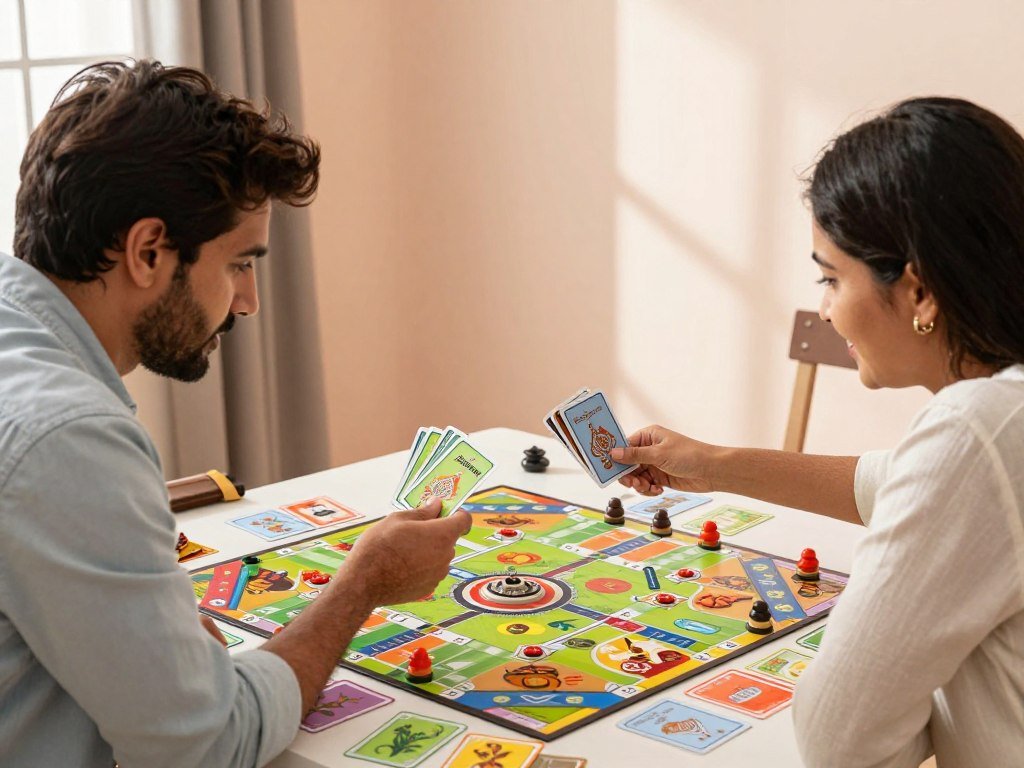
Jaipur is a two-player card game with a clear rhythm: manage a limited hand, collect matching goods, and watch the other player’s options. Set collection rewards you for gathering related cards. The game also gives you chances to deny an opponent a useful card by taking it first.
That can make a small decision matter more than it first appears. Do you take a card that improves your set now, or leave it available while you look for a better exchange? The strongest choice depends on the cards in your hand and the collection your opponent seems to be building.
If you searched for a Jaipur board game, the direct answer is that Jaipur is a trading card game for two. Its compact, travel-friendly character makes it easy to consider when you want a game that does not call for a large board. It keeps the focus on cards, choices, and the person across from you.
The limited hand helps prevent a long wait between decisions. You have to weigh what to keep against what to trade, while also noticing the cards that leave the shared supply. Keep an eye on the cards your opponent is gathering, not just the set you are building.
Patchwork Pairs Tile Placement with Button and Time Management
Patchwork turns the table into two small quilt puzzles, with each tile choice affecting both space and resources. In 2026, players select oddly shaped tiles to cover a quilt board while managing buttons and time. The shape matters because each piece must fit your open spaces.
Every piece asks you to weigh its fit against its button cost and time effect. A tile may cover a useful gap, but still make it harder to afford later choices. The time track adds another trade-off to what looks like a simple placement puzzle.
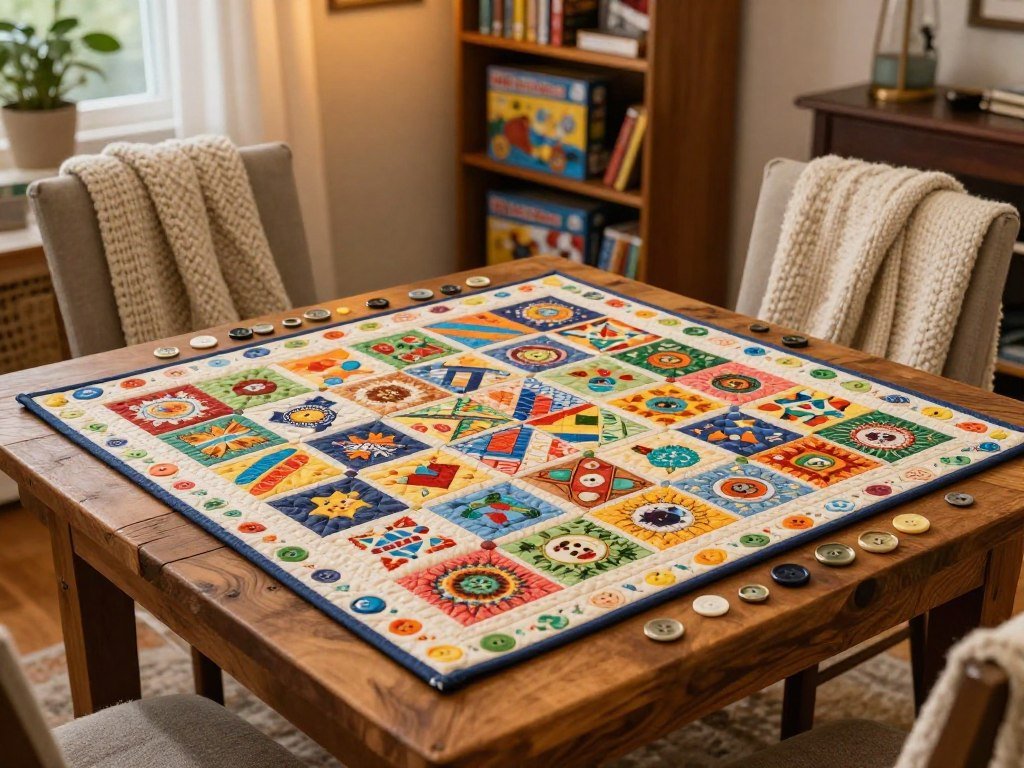
Before selecting a piece, weigh these three factors:
- How well it fits the open spaces on your quilt.
- How many buttons it costs.
- How it affects your place on the time track.
The puzzle stays visible on your board, so you can see which holes remain and how each tile changes the pattern. That is a good fit if you prefer solving a spatial problem over relying on card play. You can plan around the shape in front of you, then adjust when the choices change.
Buttons and time make the fit question more than a matter of covering space. A large piece can fill more of the quilt, while its cost may leave fewer resources for later. A smaller piece might suit your current plan, but leave awkward gaps to solve.
The game gives you two related tasks: create a quilt that fills its area and manage the resources that let you keep adding pieces. It rewards looking beyond the immediate move. A tile that fills a gap is not automatically the best choice if its button and time costs leave you short later.
Hive Makes the Queen Bee the Center of a Boardless Duel
Hive is an appealing pick when a flat surface is available but a separate board is not. In 2026, this abstract strategy game uses bug pieces with different powers, and the goal is to surround the opponent’s queen bee. The pieces make the board as players place and move them.
Hive needs no board, and its hexagonal pieces are about 1.5 inches across. The durable pieces form a growing playing area, so you can set up without a printed grid. Each bug’s movement options shape how you approach the queen and defend your own position.
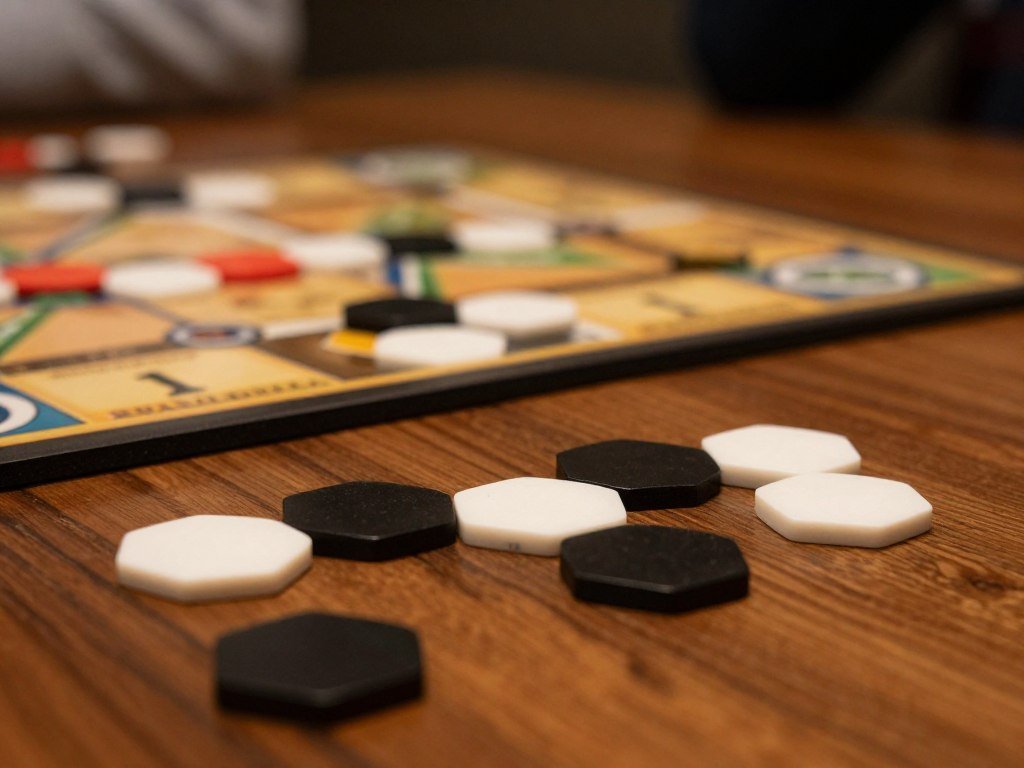
Movement is the heart of the strategy. Different bug powers give players distinct ways to shift pieces around the layout. You must consider how a move may open a route to the opposing queen, or make it easier for the other player to surround yours.
| Game | Playing area | Main puzzle |
|---|---|---|
| Hive | Expanding tile layout | Move bug pieces to surround the queen |
| Patchwork | Player quilt board | Fit tiles while managing buttons and time |
| boop. | Shared grid | Push kittens and build lines |
Its lack of a board makes Hive useful when you want a strategy game with fewer setup parts. The hexagonal pieces need a flat surface, but the playing area grows from the pieces themselves. That gives each match a changing shape as the contest develops.
As you learn the rules, focus first on what each bug can do. Those movement powers guide both your attacks and your defense, so they shape the choices you can make. Keep the movement rules handy for early plays, since learning what each bug can do is the first hurdle.
boop. Turns a Line of Kittens into a Tactical Upgrade
In boop., a placement can disrupt the opponent’s position as well as improve your own. This two-player game uses kittens that push adjacent pieces when placed. The push changes the board around both players, so a move can help or unsettle a plan.
Three kittens in a row upgrade to cats, and three cats in a row win. That two-step route gives you a clear goal while leaving room for tactical play. You must first build a kitten line, then turn the upgraded cats into a winning line.
Before you place a kitten, check three things:
- Where each adjacent piece will be pushed.
- Whether the move can form a line of kittens.
- Whether a line of cats is within reach.
Those checks connect the immediate placement to what happens next. A kitten may move another piece away from a useful spot, or create room for a line you could not form before. You need to consider both the space your piece occupies and the space its push changes.
The clear upgrade path makes the game easy to explain, but the board can still shift in surprising ways. A move that blocks one line might push an opponent’s piece into a better position. Watch the whole grid, rather than focusing only on the space where you plan to place your kitten.
That gives boop. a distinct feel from a game where pieces stay in place after each move. Here, the push is part of the decision, not just a side effect. Before placing a kitten, trace where the neighboring pieces will end up.
The Duke Changes Each Tile’s Movement after a Move
The clever twist in The Duke is that using a tile changes how it can move next. Movement patterns appear on the tiles, and each tile flips after a player moves it. The reverse side counts because it shows the next movement options.
The goal is to capture the opponent’s Duke on a 6-by-6 grid. Matches usually take around 15-20 minutes, giving the game a compact shape without removing the need to plan. Each move changes both the tile’s location and its future use.
The rules print movement information directly on each tile. Once you move a tile, flip it over to reveal a different pattern. This means you need to consider not only where a piece can go now, but how it will move after the turn.
That changing movement makes The Duke a good fit for players who enjoy planning several moves ahead. A tile might reach an open space, then lose the movement pattern that made it useful. Your opponent faces the same challenge, so the board can change in ways both players must track.
The 6-by-6 grid gives the contest a defined space, while the double-sided tiles keep each choice shifting. A move that seems safe can change which routes remain open. Look at the reverse side of a tile before committing to a move that opens a route for your opponent.
Floristry Makes Each Auction a Split-Tile Decision
Floristry makes a bid matter because the winner takes most of the tiles, but not all of them. In 2026, the game lasts over ten rounds, with players bidding on four domino-style flower tiles each round. The reward is split after the auction.
The auction winner takes three tiles, while the other player takes one. Winning gives you the larger share, but the other player still receives a tile. That makes each bid a choice between seeking the best selection and saving your bid for another round.
A round can be understood in three steps:
- Consider the four flower tiles available.
- Bid against the other player.
- Take the three-to-one split based on the result.
The split makes the auction more interesting than a simple win-or-lose contest. Even if you lose the bid, you still take one tile. If you win, you take three, but you have spent your bid to secure the larger share.
The key tension is deciding whether the tiles you want are valuable enough to justify bidding. You may have a strong reason to compete for a particular selection. You may also see more value in conceding that round and keeping your options open later.
Over ten or more rounds, the same question returns with a different group of flower tiles. The best bid depends on the selection in front of you and how much you want to claim. Before bidding, decide whether the strongest three-tile haul is worth giving up the auction’s value.
Toy Battle Takes the Contest Across Multiple Maps
Toy Battle is the pick in this set for two players who want a war-game theme and more than one map to play on. In 2026, it is a two-player war game with multiple battle maps. Map variety gives players different settings for their head-to-head contest.
Toy Battle is built for two players, not a larger group. That makes it a direct choice for a pair who want opposing forces across the table. The theme and map options help distinguish it from a contest built around cards, tiles, or shared clues.
Think about whether both players enjoy direct conflict before choosing a war-game theme. The experience centers on facing another person, rather than working toward a shared result. If that rivalry sounds fun, multiple maps offer variety between plays.
Different maps can change the setting of the contest without changing the fact that two players face each other. That makes the game worth considering when you want a head-to-head war game and prefer more than one map. You can choose it for the theme and the chance to play across multiple battle maps.
A war-game theme may suit one partner and not the other, so make sure the direct contest appeals to both. That choice matters more than the number of maps. Check that both players enjoy direct conflict before choosing a head-to-head war game.
Codenames Duet Makes Clue-Giving a Cooperative Challenge
Codenames Duet gives both players the same goal, but each clue still needs careful interpretation. In 2026, this cooperative game is designed for two players, who work together to find their agents. Shared information can help, but a clue still leaves room for a risky guess.
The team must find its agents without revealing an assassin before time runs out. Instead of trying to score against a partner, you both work through clues and aim for the same result. That shifts the pressure from rivalry to trust and interpretation.
Give clues that help find agents
Each player offers clues that help the other identify agents. The challenge is that partners may connect a clue to different cards. You must interpret what the other person means, not just pick the word that feels closest to your own idea.
Codenames Duet works well when you enjoy discussing how clues connect to a shared set of cards. It rewards clear thinking, but the information each player holds does not always point to one obvious choice. A good clue can guide the team, while a loose interpretation can lead it away from an agent.
For more choices built around cooperative and competitive board games, consider how much the players enjoy solving a shared task together.
Keep the assassin and the clock in view
The assassin is the central risk: revealing one ends the team’s chance to complete its task. The players also need to work before the clock runs out. The two-player cooperative rules keep the challenge focused on making careful guesses under pressure.
This kind of pressure feels different from facing an opponent who wants to outscore you. Your partner is not trying to mislead you; the hard part is making sense of the same clues in different ways. Agree on how cautious you want to be before a clue sends the team toward a risky guess.
Sky Team Puts Pilot and Copilot on the Same Landing
Sky Team gives each partner a distinct job in one shared landing challenge. One player is the pilot, and the other is the copilot. Silent coordination is part of the task: players use dice placement to land a plane safely.
Sky Team is a strong fit when you want role-based teamwork without spoken planning. The two players work toward the same landing, but must coordinate through their dice choices. That makes it a different kind of shared challenge from clue-based deduction.
For the best cooperative board games for two players, match the style of teamwork to what you both enjoy. Sky Team suits role-based coordination, while Codenames Duet suits clue-based deduction. Kinfire Delve offers a solo option as well as two-player play.
| Game | Player options | Shared task | Communication style |
|---|---|---|---|
| Sky Team | Two | Land a plane | Silent dice placement |
| Codenames Duet | Two | Find agents | Clue-based deduction |
| Kinfire Delve | Solo or two | Cooperative delve | Coordinate play |
Sky Team gives you clear roles without turning the experience into a conversation about every move. You each make choices that affect the shared landing. That can suit players who like trying to read a partner’s plans while working toward the same goal.
The game is built around two people, so both partners have a defined part in the task. The silent dice placement asks you to coordinate with limited information, rather than planning out loud. Choose it when coordinating through limited information sounds more fun than discussing every move.
Kinfire Delve Works for Solo Play or Two Players
Kinfire Delve stands out here because it can be played alone as well as with a second player. In 2026, the game supports solo or two-player play. That flexibility can matter when you want one game that fits more than one kind of evening.
Kinfire Delve works as a cooperative choice for one player or a pair. You can choose a solo session when no partner is free, then return to two-player play when someone can join. That gives the game a different kind of flexibility from options designed only for a pair.
For two people, it offers a cooperative alternative to head-to-head games. You can choose it when you want to work with a partner rather than compete over points or moves. Its solo option also means the game can remain useful when plans change.
The player count matters if you often play alone and with a friend at different times. A game that supports both can fit into either routine without requiring a separate pick for each. You do not have to make solo play the only reason to choose it, but the option adds flexibility.
Kinfire Delve is worth considering when shared play is appealing and solo play would also be useful. The choice is straightforward: play alone, or bring in a second player for a cooperative experience. Consider whether you want a game that stays useful on nights when a partner is unavailable.
Lord of the Rings Duel Offers Several Paths to Victory
Lord of the Rings Duel is a good fit when you want a head-to-head game with more than one route to winning. In 2026, this two-player game offers multiple paths to victory. More than one route asks you to watch how the contest is developing.
Track your own progress and the opponent’s threats, since either can change what you need to do. Multiple victory paths give players more than one way to pursue a win. They also make it important to notice which route the other player is advancing.
As the game unfolds, ask yourself three questions:
- Which victory route is advancing?
- What is the opponent threatening?
- Will this move help or block a route?
Those checks keep you from focusing only on your own plan. A move can help your progress while leaving the opponent’s path open. You may need to block a threat rather than take the action that first looked best for you.
Themed competition can make this appealing if you enjoy keeping several possibilities in view. Players who prefer one simple objective may prefer a more direct abstract game. Multiple routes create variety, but they also ask you to monitor more than one goal.
That shifting focus is the central choice for this recommendation. Choose the game if you like adjusting your plan as the opponent advances. Keep checking the opponent’s progress, since a second victory path can change what needs defending.
The Fox in the Forest Makes Trick-Taking Work for Two
The Fox in the Forest is for players who already enjoy the rhythm of winning tricks and want a two-person version. It is a two-player trick-taking game, with three suits of 11 cards and a starting hand of 13 cards for each player. Odd-numbered cards add special abilities.
A full game takes about 30 minutes. The card game asks you to consider both the suit in play and the special effects on odd-numbered cards. That can make familiar trick-taking choices feel fresh for a pair.
Each player begins with 13 cards, so you have a hand to manage as tricks are played. The three suits give you different card choices, while odd-numbered cards carry special abilities. Those effects shape how you approach a trick, rather than leaving every card with the same role.
If you like card games with set choices and changing hands, more two-player card games can help you compare different play styles. Trick-taking has its own rhythm: each play responds to the cards already laid down, and you aim to win a trick.
The Fox in the Forest Duet is a separate cooperative alternative played in silence. It does not turn the competitive game into a cooperative one; it offers a different experience for players who want teamwork. The silent cooperative version suits partners who want to work together instead of competing for tricks.
The original is the pick for a contest over tricks, while Duet shifts the focus to cooperation and silence. Keep their goals separate when choosing between them. Pick the Duet version when cooperation and silence are the point, not when you want to compete for tricks.
Azul Turns Tile Drafting into a Pattern Puzzle
Azul makes tile drafting appealing by turning each selection into a decision about a visible pattern. Players build a Portuguese-style wall, scoring for adjacent tiles, completed rows and columns, and full sets. Each tile can help your pattern or leave you with a choice you cannot use.
Unusable drafted tiles cost points, so consider where a selection can go before taking it. The pattern gives you several ways to score, but each one asks you to think ahead. A tile that seems useful now may not fit the wall you are building.
Keep these three scoring checks in mind:
- Build connected tiles to score for adjacency.
- Complete rows or columns.
- Collect full sets.
Those goals can pull your choices in different directions. You might take a tile to connect a pattern, or focus on filling a row. The best move depends on what is open and what your wall still needs.
Tile drafting gives you a shared selection, but the wall you build is your own. That makes it easy to see how a choice affects your plan. The tactile pieces also give the pattern puzzle a clear, hands-on feel.
The main risk comes when you take tiles that cannot fit where you need them. They do not simply sit unused without consequence; unusable drafted tiles cost points. Leave yourself a plan for any tiles that might not fit before taking more from the supply.
7 Wonders Duel Rewards Careful Card Drafting
7 Wonders Duel makes each card choice matter because taking a card also changes what remains available to the other player. The game is designed exclusively for two players and uses card drafting in a tactical duel. Every choice affects both your plans and your opponent’s options.
7 Wonders Duel gives you strategic decisions in a focused two-player contest. You must consider what a card adds to your collection and what it leaves for the other player. That creates a close back-and-forth without asking you to manage a larger group.
The game suits players who enjoy careful card choices and watching an opponent’s options. The card drafting keeps decisions connected: taking one choice changes what remains for the next turn. You need to weigh the immediate benefit against the options you leave open.
If you are looking for the best heavy board games for two players, separate a focused strategy game from a much larger commitment. 7 Wonders Duel offers a tactical duel, while Through the Ages: A New Story of Civilization is a much heavier, longer civilization game for players seeking deeper play.
That distinction helps you choose based on the level of complexity both players want. 7 Wonders Duel concentrates its strategy in a two-player card contest. Through the Ages is better suited to players who want a deeper commitment to a civilization game.
A heavier game is not automatically the better choice for your table. It should match the time and focus both players want to give it. Choose the heavier Through the Ages experience only when both players want a longer strategic commitment.
How to Choose the Best Two Player Board Games
Start by choosing the kind of evening you want, then narrow the options by table space and how much rivalry sounds fun. The best two player board games for your group should match its time, mood, and interest in strategy. Start with the setting, not a ranking.
Check the player count and the kind of interaction before settling on a game. Those details help you avoid choosing a title that does not suit the people or space available. Your shortlist can include both games made for two and games that support two within a wider range.
Choose by time, footprint, and table setting
In 2026, date-night games recommended for small tables are playable in under twenty minutes. A small footprint and quick setup matter when a meal or drinks share the table. You want enough room for the game without pushing plates aside every turn.
Think about where you plan to play and how much time the evening allows. A compact game can fit a small table, while a larger setup may work better at home. The right choice leaves room for both the game and the rest of your plans.
Choose cooperation or head-to-head play
Cooperative games suit partners seeking a shared win, while competitive games suit players who enjoy direct opposition. A shared challenge can make each decision feel like teamwork. A head-to-head contest is a better fit when both people enjoy testing their plans against each other.
The best two-player board games for couples depend on whether you want collaboration or rivalry. A couple that likes solving problems together can choose a cooperative game; one that enjoys a contest can choose a duel. If you also play digital games, multiplayer games for different group sizes offer other ways to play together.
Match complexity with player-count range
Games designed for exactly two are two-player-only games. Games that support two among other counts are games that support two. Carcassonne and Kingdomino are examples of games that can work well at multiple player counts.
The best two-player board games for adults depend on the complexity and strategy you want, not an age label. For the best two-to-three-player board games, check the stated player range and whether two-player play is purpose-built or adapted. See cooperative games for friends if you want more shared-play ideas.
| Choice | Example | Player fit | Best use |
|---|---|---|---|
| Compact creative duel | Sirens | Two players | Card drafting and song layout |
| Spatial puzzle | Patchwork | Two players | Tile placement and buttons |
| Cooperative deduction | Codenames Duet | Two players | Clue-based teamwork |
| Broader-count option | Carcassonne | Multiple counts | Shared play beyond two |
| Broader-count option | Kingdomino | Multiple counts | Tile drafting with a partner |
Before choosing, confirm that the player count printed for a game matches the people who will actually sit down to play.
Use the table to compare a few styles, then narrow your choice by complexity and setting. A title may fit your player count but still ask for more strategy than you want tonight. Let the group’s interest guide the final pick.
Conclusion
A good first choice is the one both players are genuinely willing to try. The best board game for your night should suit the way you want to play and the practical limits of your table.
Choose one candidate and set aside time to learn its rules together. Starting with a single game gives you space to see whether its style fits your group. Invite the other player to pick the next title, so each person gets a turn choosing.
Game night does not need a full collection to get started. One shared play can show you what kind of experience you both want more often. Pick one title, set it on the table, and let the next game-night choice belong to your partner.
FAQ
How many two-player board games should a couple start with?
Start with three different styles: a cooperative game, a spatial puzzle, and a competitive card game. This small mix lets you learn whether you prefer working together, solving a visible challenge, or competing over choices. Pay attention to which one you both want to play again. Add more games based on what gets played, rather than buying several titles that fill the same role.
Are all two-player games made exclusively for two people?
No, some games are designed for exactly two people, while others support two among a wider player range. Check the listed player count, then consider whether the two-player version is purpose-built or adjusted from a larger group format. That difference can affect how the game feels at your table. A game that supports two may still suit your plans, but its count alone does not tell you how it plays.
What makes a two-player game replayable?
Changing card or tile choices, several strategic routes, and different player decisions can make a game replayable. Those features give you new choices instead of asking you to repeat the same plan every time. You can also look for games where one player’s move changes the options available to the other. A different partner, mood, or strategy may make familiar rules feel fresh.
Can a two-player board game work on a restaurant table?
Yes, a small-footprint game with a short play session can work on a restaurant table. The small-table date-night picks in this guide are playable in under twenty minutes in 2026. Check how much space the game needs before setting it out beside a meal or drinks. A compact setup helps keep the game playable without taking over the whole table.
Is a cooperative game a good choice for a couple who dislike competition?
Yes, a cooperative game can suit a couple who would rather share a goal than compete. Choose one built around teamwork, such as solving clues or coordinating roles. Both players can discuss the challenge and work toward the same result, rather than trying to outscore a partner. If you prefer less rivalry, shared decisions can make game night feel relaxed and collaborative.



