A carpet-heavy home usually benefits from a vacuum for carpet with a powered brush roll, while mixed-floor homes may need a more flexible choice. The brush roll is the rotating brush in a vacuum floorhead that agitates carpet fibers to lift embedded debris. That motion helps loosen dirt that a smooth floorhead may leave behind.
Your best vacuum for carpet depends on carpet depth, pets, flooring, and how much you want to carry. A full-size upright can suit deep, frequently cleaned carpet. A cordless model may feel easier to grab for quick jobs, stairs, and smaller spaces. A carpet cleaner washes with liquid rather than picking up dry debris, so it handles a different kind of mess.
This roundup compares dry-pickup machines with carpet cleaners for wet stains and room washing. It also looks at practical details such as carrying weight, floorhead control, hose reach, and storage. Those details can matter as much as a strong cleaning result when you clean every week.
Key Takeaways
- Choose a powered upright for frequent cleaning on deep carpet.
- Consider cordless models for quick jobs and easier handling.
- Use a carpet cleaner for washing stains with liquid.
- Check hard-floor pickup if your home has mixed flooring.
- Keep carpet pile, pet hair, stairs, and storage space in mind as you compare the picks.
How Do Vacuum Tests Measure Carpet Pickup?
A useful carpet test checks whether debris comes out of the fibers, not just whether a vacuum can lift visible crumbs. Embedded dirt is the harder test, since fine grit and hair can settle below the carpet surface. In 2026, Consumer Reports embeds sand and pet hair in carpet to test pickup.
Compare pickup and handling together, because a strong score alone does not show how pleasant a machine is to use. Consumer Reports also evaluates debris retention, maneuverability, and noise. Its battery-powered vacuum tests include runtime, which helps show how much floor you can clean per charge.

A good set of vacuum cleaners tests should cover both carpet and bare floors. Compare these points when you read cleaning performance results:
- Embedded carpet pickup, including hair and fine debris.
- Hard-floor scattering, which shows whether debris stays in the cleaning path.
- Retained debris, which checks whether collected dirt stays inside the vacuum.
- Maneuverability and noise during normal cleaning.
- Runtime for battery-powered models.
Test surfaces matter. A vacuum tested on short carpet may not face the same challenge as one tested on thick pile, and debris size can change the result. A high score may show strong suction, but it cannot tell you whether the floorhead feels hard to push or turns easily around furniture.
Use test results as a comparison, not a promise for every home. Carpet age, pile height, and how firmly debris has settled can affect the pickup you see. Compare results from the same type of test before treating a small score difference as meaningful.
Which Vacuum Type Fits Your Floors and Home?
A home with wall-to-wall carpet has different needs from a small space with rugs, hard floors, and stairs. Uprights and canister vacuums often suit embedded dirt and pet hair, while lighter stick models work well for smaller cleanups. Your layout matters as much as the floor type.
The best multi-surface vacuum depends on how much carpet and how many stairs the home has. Use this table to compare the main types before weighing specific features.
| Type | Best fit | Main tradeoff |
|---|---|---|
| Upright | Carpet-heavy homes | Can feel heavy on stairs |
| Canister | Mixed floors and stairs | Hose and body move separately |
| Cordless stick | Quick and above-floor jobs | Battery runtime limits cleaning time |
| Robot | Routine floor maintenance | Does not replace manual stair cleaning |
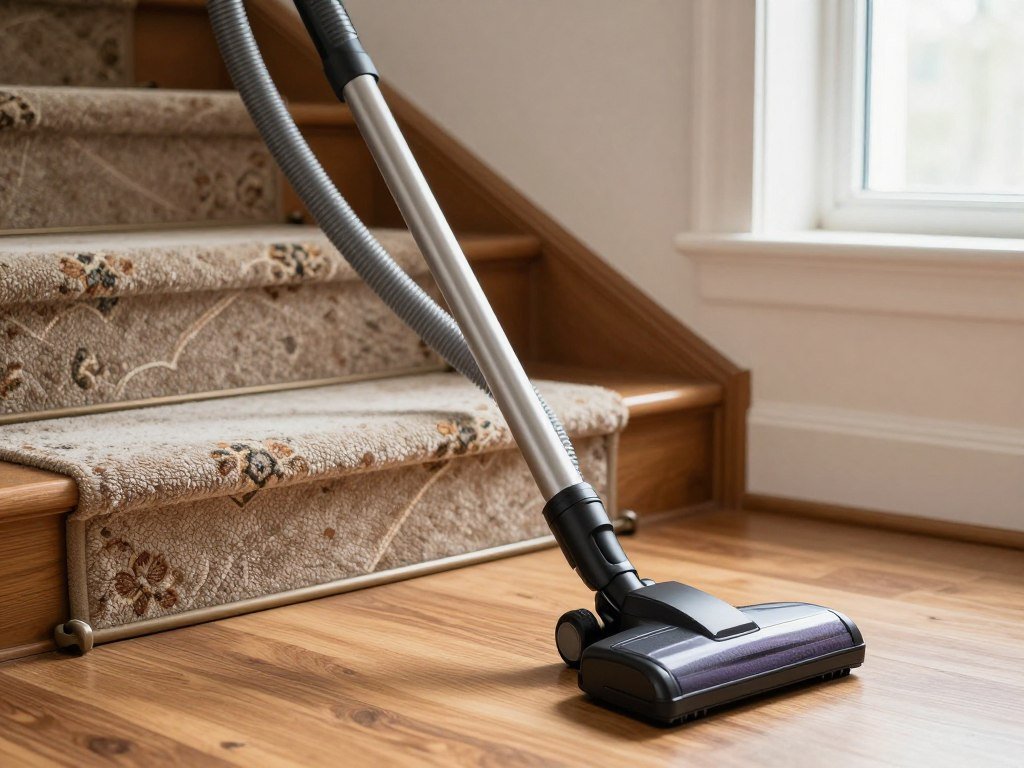
Uprights keep the motor and floorhead together, which can make repeated carpet cleaning direct and simple. A canister vacuum pulls a separate body behind its wand, a layout that can be practical around furniture and stairs. The hose can reach a stair tread without lifting the whole machine onto each step.
Stick and cordless vacuums are usually lighter to grab for crumbs or a quick pass through a room. Their smaller bodies can help with above-floor jobs, though battery runtime matters when you plan to clean several rooms. Handheld vacuums can tackle a seat or stair corner, but they are not a full replacement for a floor vacuum.
Robots can collect everyday dust and hair from open floor areas while you handle other tasks. They cannot clean stairs, and tight corners may still need a hand tool. Choose the category that handles the hardest regular job in your home, then consider convenience features.
Which Is the Best Vacuum for Carpet for Your Home?
For most carpet-heavy homes, start with a corded upright, then choose a lighter or lower-cost alternative if stairs, storage, or budget matters more. The right match depends on which room gets cleaned most. A motorized head helps lift debris from carpet fibers.
Choose the Shark Stratos Upright for carpet-heavy homes that also need mixed-floor versatility. It performs well on bare floors and low-, medium-, and high-pile carpet, has sealed HEPA filtration, and converts to a handheld canister.

For three common needs, these best vacuums make a useful shortlist:
- Carpet and mixed floors: Shark Stratos Upright.
- Lower price: Bissell CleanView Compact Turbo 3437F, a budget upright to compare.
- Cordless deep-pile cleaning: Shark PowerDetect Cordless.
Consumer Reports names the Kenmore BU1018 its bagged upright pick and the Shark PowerDetect AZ4002 its bagless upright pick. It also names the Samsung Bespoke AI Jet Lite VS80F28DMP/AA its cordless stick pick. That model is decent on carpet and strong on pet hair.
The best vacuum for carpet and hair depends on which kind of pickup matters most. Loose hair on the surface can be easier to collect than hair and grit lodged deep in the pile. The Samsung suits homes where pet hair matters, but its carpet performance is described as decent rather than exceptional.
Think about how often you clean carpet, whether the machine must cross bare floors, and where you will store it. A long feature list cannot make a heavy vacuum easier to carry or a small bin less often full. Match the pick to the room you clean most often, not to the longest feature list.
Which Budget Upright Handles Carpet and Hard Floors?
The Bissell CleanView Compact Turbo 3437F is a compelling low-cost pick because its carpet result is close to the budget-upright average while its hard-floor result is stronger. Low price does not always mean weak pickup. In 2026, the Bissell and Eureka Airspeed E4 each reached 98% carpet deep-clean pickup, versus a 97.5% average for tested budget uprights.
The Bissell is the low-cost pick for hardwood and carpet, while the Eureka Airspeed models weigh less. Hard-floor pickup scores show why you should check performance on both surfaces before choosing an upright vacuum.
| Model | Weight | Hard-floor pickup | Floorhead squeegee |
|---|---|---|---|
| Bissell CleanView Compact Turbo | 8.4 pounds | 3.5/4 | Yes |
| Eureka Airspeed E4 | 7.7 pounds | 3.5/4 | Yes |
| Eureka Airspeed E5 | 7.7 pounds | 3.5/4 | Yes |
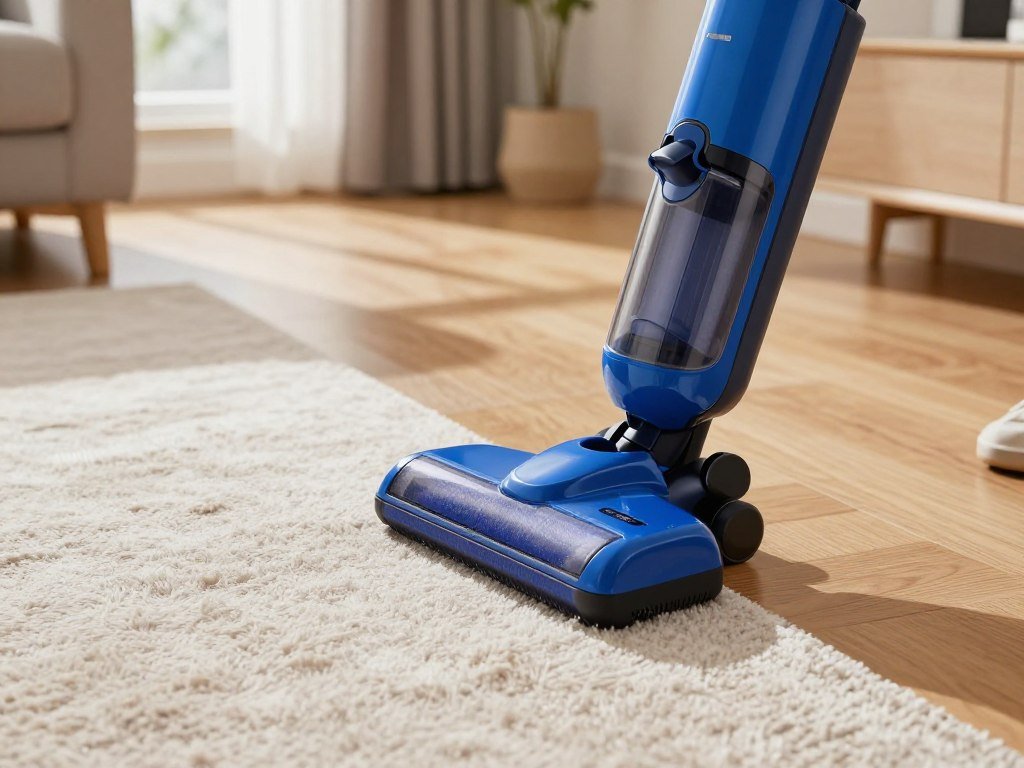
The Bissell and Eureka E4 tie at 98% carpet deep-clean pickup. Their hard-floor scores are also above the 2.7 average for tested budget uprights. Both Eureka models and the Bissell have floorhead squeegees, which help keep debris in the pickup path.
Not every budget model handles bare floors well. The Amazon Basics budget upright scored 0/4 on hard-floor pickup, a reminder that a low price alone says little about where a vacuum works. The Bissell had usable floorhead suction of 0.67 kPa, compared with a 0.45 kPa average among tested budget uprights.
At $79.96, the Bissell has a 25-foot cord, a 5-foot hose, a 1-liter dirt tank, and a 10-inch cleaning path. It weighs 8.4 pounds, far below the roughly 15-pound average for tested upright vacuums. The Bissell PowerForce Helix weighs 12 pounds, while the Eureka E4 and E5 weigh 7.7 pounds each.
If light carrying matters most, compare the Eureka models’ 7.7-pound weight with the Bissell’s 8.4 pounds.
Which Cordless Vacuum Can Clean Deep-Pile Carpet?
Thick carpet can make a powerful cordless vacuum hard to push, so deep-pile results should include both pickup and handling. The best cordless choice here is the Shark PowerDetect Cordless, based on its strong pickup across several debris types. Its Auto mode also keeps pushing manageable during the test.
Shark PowerDetect Cordless is the strongest deep-pile cordless option among these models. It scored 5/5 on chunky particles and 4/5 on fine particles, while its tested combination also included pet hair and ease of movement.
Shark PowerDetect Cordless on thick carpet
The PowerDetect Cordless offers a useful balance for carpet where larger crumbs, fine dust, and hair can settle together. Its deep-pile results matter because a vacuum may collect one kind of debris well but struggle with another. Auto mode helps avoid the heavy push that can make thick carpet tiring.

That balance can suit homes that want a cordless vacuum for more than quick surface passes. Still, carpet density changes how a floorhead feels. A machine that moves easily on one rug may drag on a denser carpet in another room.
When Dyson or Dreame may fit better
The Dyson Gen5detect has strong power, but thick carpet can be hard to cross. It required Eco mode and an open air-intake slider to push over the pile. The Dyson V8 Cyclone scored 4/5 across deep-pile tests, but it is not currently available in the US.
The Dreame R20 handled deep-pile particles well, yet its pet-hair pickup was weaker. That makes it a less even choice if shedding is a major part of your cleaning. Fine dust, chunky debris, and hair can each lead to a different result.
Your answer to cordless deep-pile cleaning depends on whether you prioritize hair, fine dust, or ease of pushing. Try the floorhead on your own carpet if possible, because pile density can change how much suction feels manageable.
What Works Best on Carpet, Hardwood, Pets, and Stairs?
Mixed floors and shedding pets call for a vacuum that changes surfaces cleanly and has a practical way to reach stairs or upholstery. The Shark PowerDetect AZ4002 is a strong mixed-floor upright choice. Stair access can favor a canister with a long hose and useful tools.
The best vacuum for hardwood and carpet with pets should combine a motorized carpet head with a tool for upholstery hair. The AZ4002 performs exceptionally on bare floors and near the top on carpet, making it a strong option for homes with both surfaces.
The Kenmore BU1018 performs well on bare floors, embedded carpet dirt, and pet hair. It weighs 21 pounds, so its floor cleaning strength comes with a carrying tradeoff. Consumer Reports describes the Miele Guard L1 as strong on bare floors, embedded pet hair, and carpet debris.
A canister can be easier to position for stairs and above-floor work. The Kenmore Pet Friendly Pop-N-Go is a bagged canister with a sealed system, pet-hair attachment, and telescoping wand. The Kenmore 22614 also handles pet hair, bare-floor debris, and carpet cleaning, and includes a HEPA filter.
For carpet, hardwood, and stairs, the main compromise is floorhead performance versus carrying weight. A strong upright may clean large carpet areas well, but lifting it between floors can be awkward. A canister separates the hose and wand from its body, though you still move the machine as you work.
If you carry the machine between floors, weigh that routine more heavily than a small difference in pickup scores.
When Do You Need a Carpet Cleaner Instead of a Vacuum?
A vacuum cannot wash out a dried stain because it does not apply and extract cleaning liquid. A carpet cleaner uses water or cleaning solution, brush agitation, and suction to remove dirty water. A vacuum picks up dry debris, such as dust, crumbs, and loose hair.
Choose a carpet cleaner for stains or room-scale washing, not everyday dry pickup. Carpet cleaners need setup and leave carpet damp while it dries, so the job takes more time than a quick vacuum pass.
Full-room washing versus spot treatment
Full-size machines suit repeated washing across a room or larger carpeted areas. Portable spot cleaners are easier to position for isolated spills, upholstery, and stairs. A hose can reach a small mess without moving a large floorhead over the whole room.
The two formats solve different jobs. Full-room washing uses more water and takes longer to set up, while a portable cleaner works on a smaller patch. Either way, plan for damp carpet and enough time for it to dry before regular use.
How stain results and machine size differ
Stain-test results show how well a model removes a set stain; tank size and hose reach show how much work it can do between refills or moves. The Shark CarpetXpert EX304 had the highest stain reduction. The EX151 had near-top grape juice stain removal.
| Model | Weight | Tank | Cord | Hose |
|---|---|---|---|---|
| Shark CarpetXpert EX151 | 15.9 pounds | 0.6 gallon | 25 feet | 5 feet |
| Bissell ProHeat 2X Revolution Pet Pro Plus | 17.5 pounds | 1.0 gallon | 35 feet | 8 feet |
| Bissell Revolution HydroSteam 4123 | Not stated | 1 gallon clean water | 20 feet | 7 feet |
| Shark CarpetXpert EX304 | 18.8 pounds | 0.6 gallon | 20 feet | 6.5 feet |
| Shark CarpetXpert EX201 | 18 pounds | 0.53 gallon | 20 feet | 5.1 feet |
The HydroSteam 4123 scored 89.2 on dried grape juice, above the 83.5 evaluation average. It has a 1-gallon clean-water tank, a 7-foot hose, and a 20-foot cord. For more background, CNET explains the difference in its vacuum and carpet cleaner comparison.
Choose a full-size carpet cleaner for repeated room-scale washing and a portable spot cleaner for isolated stains.
How Do Filtration, Dust, and Noise Affect the Choice?
If allergies or dust are a concern, filtration design matters alongside carpet pickup. A sealed system helps keep fine dust inside the vacuum rather than letting it escape around the body. A HEPA filter label alone does not tell you whether the whole machine is sealed.
A washable filter is not the same as a sealed filtration system. In 2026, the Bissell CleanView Compact Turbo had a washable foam filter, but none of the five budget uprights evaluated had a sealed system.
Use this checklist to compare dust and noise details before you buy:
- Look for a sealed filtration system.
- Check whether the filter is washable or replaceable.
- Consider whether bagless emptying may release dust.
- Compare noise in the rooms where you will use the vacuum.
Bagless bins can send dust back into the air when you empty them, especially if the bin is overfilled. A bagged model may keep collected debris contained during disposal, though filter and bag care still matter. Read the handling directions for the design you choose.
Noise can affect when you feel comfortable cleaning. Eureka budget upright models reached 92 dB in noise tests, while the upright vacuum average was 82 dB. That gap may matter in a small home, around sleeping children, or during early cleaning.
Check the filter-care instructions before buying so ongoing cleaning is realistic for your household.
Which Vacuum Features Matter for Carpet Pile and Reach?
A useful feature is one that solves a real reach or carpet-contact problem in your rooms. For carpet, a motorized brush roll helps agitate fibers and lift embedded debris. Height adjustment lets the head match different pile levels.
A floorhead that is too hard to push may be poorly matched to thick carpet. Good Housekeeping testing uses standards set by ASTM International’s F11 Vacuum Cleaner Committee, which helps give product tests a shared basis.
Match the floorhead to carpet pile
Look for a motorized power nozzle if deep carpet cleaning is a regular job. A height setting can help the floorhead work across rugs and different carpet piles. If the head drags or stalls, the setting or head design may not suit the carpet.
Some vacuums let you adjust suction or airflow as well as floorhead height. Those controls can change how easily the machine moves, but the floorhead still needs to pick up debris. A test on the carpet you use most gives a better sense of handling than a feature list.
Check cord, hose, and tool reach
Check cord length before planning a route through rooms, then check hose and wand reach for stairs or furniture. The Kenmore 22614 telescoping wand extends an extra 9 inches. The Bissell CleanView Bagless Vacuum has an 8-foot hose and five height settings.
A crevice tool can reach along stair edges and between cushions. A mini motorized upholstery tool can help lift pet hair from chairs and sofas. These attachments are useful only if they stay easy to access and connect without a fuss.
Check the storage and attachment setup in person if those tools will be part of regular stair or upholstery cleaning.
How Can You Keep Carpet Clean Between Deep Cleans?
Regular dry vacuuming removes the soil and loose hair that build up between deeper carpet cleanings. Once a week is a practical baseline for most homes. Carpet and Rug Institute carpet-care guidance emphasizes routine vacuuming to remove dry soil.
High-traffic areas and homes with shedding pets often need two or more passes per week. Make the routine fit the way your rooms are used, rather than waiting until carpet looks visibly dirty.
A short routine helps keep everyday debris from settling in:
- Vacuum carpet regularly, using a weekly schedule as your baseline.
- Make extra passes through high-traffic lanes.
- Clear hair from the brush roll.
- Empty the bin before it is packed.
- Treat spills promptly instead of expecting dry pickup to remove stains.
Hair can wrap around the brush roll and reduce its contact with carpet. Clearing it helps the floorhead keep moving debris toward the intake. Check the machine’s care directions before cutting tangled hair away.
Keep dry pickup and stain care separate in your routine. A vacuum can collect crumbs and loose soil, but it cannot wash liquid into a stain or extract it afterward. Prompt spill care gives you a better chance of limiting a mark.
Set a repeating weekly schedule, then add passes where foot traffic or pet shedding makes carpet look dirty sooner.
Conclusion
The best choice is the one that fits your carpet, your cleaning routine, and the parts of your home you need to reach. Prioritize a powered upright for deep, frequent carpet cleaning. Choose cordless for easier handling and quick whole-home jobs.
A carpet cleaner is the right tool for liquid-based stain or room washing, not routine dry debris pickup. Keeping those jobs separate helps you avoid expecting one machine to do two different kinds of cleaning.
Measure the rooms and stairs you clean most, then compare the finalists’ floorhead, weight, and reach before buying.
FAQ
How often should you vacuum carpet in a home with pets?
Vacuum carpet about once a week as a useful baseline, then add passes for pet hair and busy areas. High-traffic rooms and shedding pets often call for two or more passes per week. A quick pass through the main walking lanes can help remove loose hair before it settles into the pile. Adjust your schedule when carpet starts looking dirty sooner.
Can a cordless vacuum clean thick carpet?
Yes, a cordless vacuum can clean thick carpet if its floorhead moves across the pile while lifting embedded debris. Strong suction may make some models hard to push, so pickup alone does not tell the whole story. If you can, test the floorhead on your own carpet. Dense pile can feel much harder to cross than a low rug.
Should you turn off the brush roll on hardwood?
If your vacuum allows it, switching off the rotating brush can help avoid scattering debris on bare floors. Follow the floorhead setting recommended for that surface, since designs vary. A brush roll that works well on carpet may flick small crumbs across a smooth floor. Check the result on a small area before cleaning the whole room.
Is a carpet cleaner the same as a vacuum?
No. A vacuum picks up dry debris, while a carpet cleaner applies liquid and extracts dirty water. Use the vacuum for dust, crumbs, and loose hair, then use a carpet cleaner when you need to wash a stain or carpeted area. Carpet cleaners leave the surface damp, so allow drying time before walking over it again.
Does a HEPA filter mean a vacuum is fully sealed?
No. A HEPA filter does not prove that the whole vacuum is sealed against dust leaks. Check for both a HEPA filter and a sealed filtration system if containing fine dust is a priority. Also read how the filter needs to be cleaned or replaced. Bagless emptying can release dust even when the vacuum has a good filter.
What kind of vacuum is easiest to use on carpeted stairs?
A lighter machine or one with a detachable pod, hose, and stair tool is usually easier to position than a full upright. A canister can also reach stair treads with its hose, though you still need to move the canister body. Check how the vacuum balances in your hand and where its attachments sit before relying on them.