
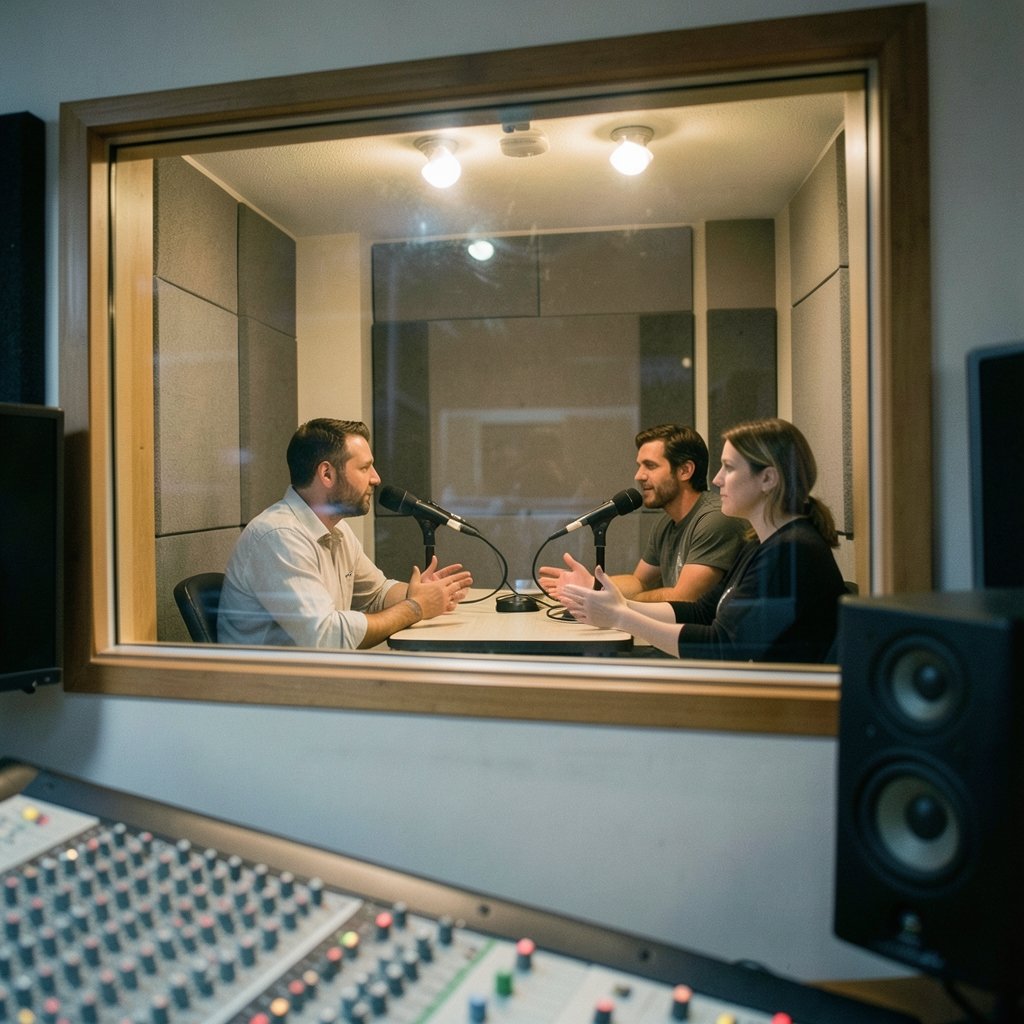
What would it feel like to talk with an AI that actually waits its turn, interrupts politely, and reacts to your tone in real time? That is the promise behind Block Dessa, a conversation-focused speech model that has drawn attention for its full-duplex design. Full duplex means the system can listen and speak at the same time, much like people do, instead of taking rigid turns. The idea sounds simple. Building it is not.
The premise of a full duplex speech model is easy to state and hard to deliver. Most voice assistants today run on a relay race: you speak, the system waits for you to stop, it transcribes, it thinks, and then it answers. That pipeline creates the awkward pause everyone recognizes. A model trained on conversation tries to collapse that gap by learning the rhythm of human dialogue itself, including the messy parts like backchannels (“mm-hmm”), false starts, and overlap.
This article explains what a full duplex speech model is, why training on conversation data matters, what “trained on conversation” implies in engineering terms, and how to evaluate claims in a crowded 2026 market. It avoids speculation about specifics that cannot be verified and focuses on the concepts needed to judge any announcement about these models.
What Is a Full Duplex Speech Model?
A full duplex speech model processes incoming audio and generates outgoing audio simultaneously. Traditional voice systems are half duplex: one direction at a time. Think of a walkie-talkie, where someone must release the button before the other person can talk. Full duplex is closer to a phone call, where both sides can speak, pause, and overlap. (Full-duplex communication)
Engineers describe this in terms of latency and turn-taking. A half-duplex assistant must detect an end-of-turn, which typically requires silence detection. That detection adds delay, and the delay grows in noisy rooms or when a speaker trails off. A full-duplex model can begin responding before silence is confirmed, because it has learned to predict when a turn is likely ending.
The concept borrows from telecommunications, where duplex communication has been standard for decades. You can read a general overview of duplex communication on Wikipedia) to see how the same principle applies to data channels and, by analogy, to speech systems.
Why Training on Conversation Data Matters
Speech models are shaped by their training data. A model trained mostly on read-aloud audiobooks learns clean, complete sentences. A model trained on conversation learns something different: interruptions, filler words, overlapping speech, rising intonation, and the subtle cues people use to signal “I’m done” or “keep going.”
This is not a minor detail. Conversational speech has properties that clean speech lacks:
- Overlap. People talk at the same time, especially in agreement or excitement.
- Backchannels. Short utterances like “right” or “uh-huh” signal attention without claiming a turn.
- Repairs. Speakers restart, correct themselves, and abandon sentences.
- Prosody. Pitch and pacing carry meaning that transcripts lose.
A model trained on this kind of data can learn turn-taking prediction as a task in itself. That is the core of the full-duplex promise. For a broader grounding in how training data choices shape model behavior, the guide on how to train an AI model walks through the pipeline from data collection to evaluation.
The Data Pipeline Behind Conversational Speech
Practical teams building conversational speech systems usually face the same bottlenecks. First, consent and licensing. Conversational audio often comes from call centers or user recordings, and rights matter. Second, labeling. You need annotations for who spoke when, sometimes at the frame level. Third, alignment. Overlapping speech is hard to transcribe, so pipelines often use diarization to separate speakers before training.
A common mistake is to assume more data always helps. In practice, a smaller, well-annotated conversational set often beats a huge set of noisy, poorly labeled audio. Quality of turn-boundary labels matters more than raw hours.
How Full Duplex Changes the User Experience
The user-facing difference is easiest to feel. A half-duplex assistant feels like a form submission. A full-duplex system feels like a conversation. It can acknowledge with a quick “got it” while you are still talking, pause when you pause, and recover gracefully when you interrupt.
This matters most in three settings:
| Setting | Half-Duplex Behavior | Full-Duplex Behavior |
|---|---|---|
| Customer support | Waits for silence, then replies | Acknowledges mid-sentence, handles interruptions |
| Hands-free use | Struggles with background noise | Uses overlap cues to filter and respond |
| Tutoring or coaching | Rigid turn-taking | Natural back-and-forth with quick feedback |
The trade-off is complexity. Full-duplex systems must avoid self-interruption, where the model talks over the user because it misread a pause. They also need echo cancellation so the model does not hear its own voice as input. These are engineering problems, not marketing ones.
The 2026 Context: A Crowded Field of Models
The speech-model space in 2026 is crowded, and announcements often blend research, product, and hype. Readers evaluating any claim about a conversational speech model should compare it against adjacent releases. For example, multimodal decision models and large speech-capable systems are appearing from many vendors. A useful comparison point is the AI model comparison of GPT 6.1 Sol, Sonnet 5.5, and Gemini 4 Argon, which shows how quickly the baseline shifts. (SpeechGPT: Empowering LLMs with speech capabilities)
Hardware and platform moves shape this too. Cloudflare’s Clef Omni 30B multimodal decision model illustrates how inference infrastructure is being packaged for real-time applications, which directly affects whether full-duplex latency targets are achievable in production. Meanwhile, consumer hardware cycles influence what devices can run speech models locally, as seen in rumors around the Nintendo Switch 2 Lite and Samsung 8LPU Plus chip.
The lesson for readers is to separate capability claims from deployment reality. A model can be full duplex in a demo and still be impractical at scale if latency, cost, or privacy constraints are not addressed.
What “Trained on Conversation” Really Implies
The phrase “trained on conversation” is doing a lot of work in any announcement. It can mean several different things, and the differences matter:
- Fine-tuned on conversational audio. A base model is adapted with a smaller conversational dataset.
- Pre-trained from scratch on conversational data. The model’s core representations are shaped by dialogue.
- Trained with a turn-taking objective. The model is explicitly optimized to predict turn boundaries.
- Trained on synthetic dialogue. Generated conversations supplement real data, with quality risks.
Each approach has trade-offs. Fine-tuning is cheaper but may not change the model’s fundamental turn-taking instincts. Pre-training from scratch is expensive but can yield better overlap handling. A turn-taking objective is often the most direct path to natural timing, but it requires high-quality boundary labels.
A practical rule: ask what the evaluation measures. If a model reports word error rate only, it says little about conversational quality. Look for metrics on interruption handling, response latency, and backchannel appropriateness.
Common Mistakes When Evaluating Speech Models
People evaluating conversational speech systems tend to repeat the same errors. Here are the ones that matter most, with what to do instead.
Mistake one: judging by demo clips. Demos are curated. Instead, test with your own messy audio, including background noise and interruptions.
Mistake two: ignoring latency budgets. A model that sounds natural but takes two seconds to respond will feel broken. Measure end-to-end latency, not model inference time alone.
Mistake three: conflating transcription with conversation. High transcription accuracy does not guarantee good turn-taking. These are separate skills.
Mistake four: skipping privacy review. Conversational audio is sensitive. Check where processing happens and what is stored.
Mistake five: assuming full duplex is always better. For some tasks, like dictation, half duplex is simpler and more predictable. Match the architecture to the job.
What Actually Works in Practice
Teams that ship conversational voice features successfully tend to follow a few patterns. They start with a narrow domain, like appointment scheduling, where turn-taking is predictable. They instrument latency from day one. They build a fallback to half duplex when the model is uncertain. And they collect real conversation logs (with consent) to keep improving turn prediction.
They also set realistic expectations. Full duplex is not a magic switch. It is a set of design choices about how audio flows, how turns are predicted, and how errors are recovered. The best systems combine a strong speech model with careful product design.
For readers tracking the broader platform shifts that affect voice products, the analysis of the Apple Supreme Court case on the 27 percent App Store fee and the breakdown of Tesla’s robotaxi, Semi, and Roadster hardware bets show how distribution and hardware decisions ripple into what developers can build.
How to Test a Full Duplex Model Yourself
If you want to evaluate a conversational speech model without a lab, you can run a simple protocol. It will not replace formal benchmarks, but it surfaces real problems fast.
- Record three conversations with different noise levels: quiet room, cafe, and street.
- Interrupt deliberately mid-sentence and note whether the model stops, continues, or talks over you.
- Use backchannels like “mm-hmm” and see whether the model treats them as turns.
- Measure response delay with a stopwatch across ten exchanges.
- Test recovery by changing topic abruptly and checking whether context holds.
Document what you observe. Patterns emerge quickly, and they tell you more than a spec sheet.
Conclusion
Block Dessa and the broader wave of full duplex speech models point to a real shift: voice AI is moving from command-and-response toward something closer to conversation. The technical core is turn-taking, and the training data is conversation itself. That combination is what makes natural timing possible.
But the field rewards skepticism. Claims about being “trained on conversation” need specifics about data, objectives, and evaluation. Demos need to survive messy audio. Latency needs to be measured, not assumed. Readers who ask those questions will separate durable products from short-lived announcements. The direction is clear, and the practical work is in the details.
Frequently Asked Questions
What does full duplex mean in a speech model?
Full duplex means the model can listen and speak at the same time, rather than taking strict turns. This allows it to react to pauses, interruptions, and backchannels in real time, closer to how people converse.
Why is training on conversation data important?
Conversational audio contains overlap, filler words, repairs, and prosody that clean read-aloud data lacks. Training on it helps a model learn turn-taking cues, which are central to natural timing.
Is full duplex always better than half duplex?
No. Full duplex improves natural conversation but adds complexity, cost, and risk of self-interruption. For tasks like dictation, half duplex is often simpler and more reliable.
How can I tell if a speech model is genuinely conversational?
Look beyond word error rate. Check for metrics on interruption handling, response latency, and backchannel behavior, and test the model yourself with noisy, overlapping audio.
What are the main engineering challenges in full duplex speech?
Echo cancellation, turn-boundary prediction, self-interruption avoidance, and end-to-end latency are the biggest hurdles. Each requires careful design beyond the model itself.
Should I trust demo videos of conversational speech models?
Treat demos as marketing, not evidence. Curated clips hide failure modes. Run your own tests with realistic noise and interruptions before drawing conclusions.
The FAQ above covers the questions readers ask most often, but one more deserves a direct answer: does the “2026” label in these announcements signal a new architecture or just a new dataset? Usually the latter. Most releases described as trained on conversation in 2026 combine an existing speech backbone with a conversational fine-tuning stage and a turn-taking objective layered on top. That is a meaningful improvement, but it is incremental rather than a reinvention of speech modeling. Readers should treat year-stamped model names as version markers, not as proof of a breakthrough. The durable signal is whether the team publishes data provenance, turn-boundary labeling methods, and latency measurements alongside the demo. Those three disclosures separate serious work from promotional noise, and they are the quickest way to judge any conversational speech model you encounter next.



