

What if the plant everyone calls “lucky” is quietly dying on a windowsill because of one easy mistake? The Chinese money plant (Pilea peperomioides) has become one of the most recognizable houseplants in the world, thanks to its coin-shaped leaves and its reputation for being easy to share. Yet plenty of people bring one home, watch the leaves curl or drop, and assume they simply have bad luck with plants. Usually, the plant is fine. The setup around it is not.
This guide covers what the plant actually is, how it grows in the wild, and the practical care steps that work in real homes. It also clears up the naming confusion that trips up new owners and explains why this plant spreads so easily from one friend to another.
What Is a Chinese Money Plant, Really?
Pilea peperomioides is a member of the nettle family, Urticaceae, and it is native to southern China, including Yunnan and neighboring regions. The species was described scientifically by botanist Friedrich Ludwig Diels, and the name was published in 1912. It is an evergreen perennial with a somewhat succulent stem and distinctive peltate leaves — round, shield-shaped leaves where the stalk attaches to the underside rather than the edge.
That leaf shape is the giveaway. Hold a leaf up to the light and you will see the stem meeting the leaf in the middle, like a mushroom cap on a stalk. Few common houseplants share this look, which makes the species hard to confuse once you know it.
The plant is not related to the plants most people call “money plants.” It is not the ZZ plant, and it is not pothos. If you are trying to identify a plant from a photo, a quick visual comparison tool can help narrow things down before you commit to a care routine, much like the approach in this guide on how to find the name of a plant from a picture. Getting the name right matters, because the care advice for a ZZ plant and a Pilea is quite different.
Why It’s Called the Friendship Plant
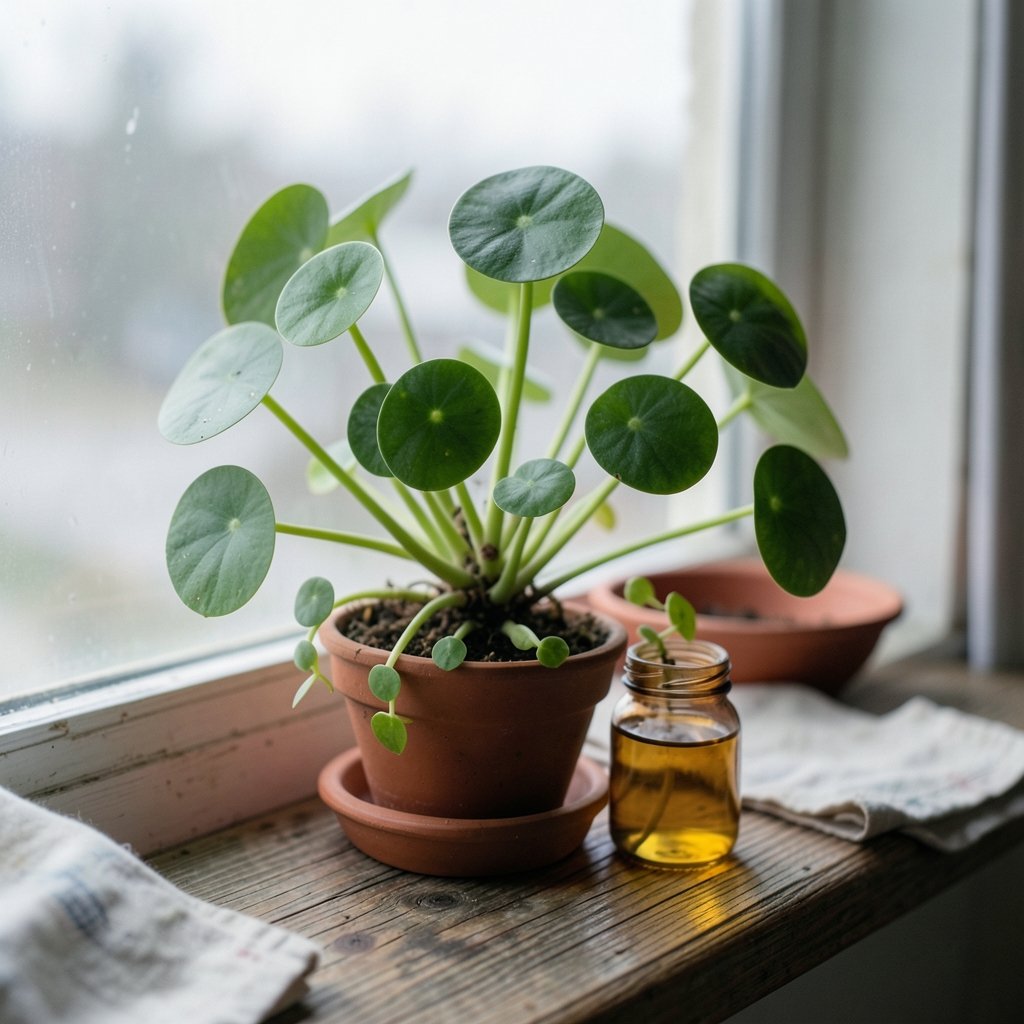
The common name “Chinese money plant” comes from the round, coin-like leaves. The nickname friendship plant comes from how it spreads. This species produces pups — small offsets that grow from the base or from underground runners — and those pups are easy to separate and give away.
From the mid-20th century onward, the plant moved through hobbyist networks, especially in Scandinavia, largely as shared cuttings rather than through commercial nurseries. The exact route and dates are poorly documented and often repeated without primary sources, so treat dramatic origin stories with some caution. What is clear is that the plant’s popularity surged in the 2010s, helped along by social media and interior design trends.
That sharing habit has a practical upside. If a pup takes root, you have a backup plant. If the mother plant struggles, you can start over from an offset instead of buying a replacement.
Light: Bright but Never Harsh
The single most common mistake is putting this plant in direct midday sun. The leaves are thin and broad, and they scorch easily. Strong afternoon light through glass can bleach leaves to a pale, washed-out color or leave brown crispy patches.
What works in practice:
- Place the plant near an east- or west-facing window where it gets a few hours of gentle direct light.
- If the only option is a south-facing window, pull the plant back a meter or two, or filter the light with a sheer curtain.
- Rotate the pot a quarter turn every week or two so the plant grows evenly instead of leaning.
- In a dim room, expect slower growth and longer gaps between leaves on the stem.
A plant that is stretching, with wide spaces between leaves, is telling you it wants more light. A plant with flat, pale leaves in a bright spot is telling you it wants less.
Watering and Soil: The Real Cause of Most Failures
Most Pilea deaths trace back to the roots, not the leaves. The plant grows in well-draining soil and dislikes sitting in wet compost. The standard advice — let the top of the soil dry between waterings — is correct, but the detail people miss is drainage.
A pot without a drainage hole is the most frequent problem. Water pools at the bottom, roots suffocate, and the plant collapses over a few weeks. Stem rot often shows up as soft, dark patches near the soil line, and by then it is usually too late to save the main plant.
Practical rules that hold up:
- Use a pot with at least one drainage hole, and empty the saucer after watering.
- Choose a light, airy mix — ordinary potting compost cut with perlite or bark works well.
- Water thoroughly, then wait. Check the top two to three centimeters of soil with a finger before watering again.
- Reduce watering in winter, when growth slows and soil dries more slowly.
- Never let the pot stand in a puddle for days.
Overwatering and underwatering can look similar at first, because both cause drooping. The difference is in the soil and the leaves. Dry soil plus limp, thin leaves means the plant needs water. Wet soil plus yellowing lower leaves means the roots are struggling.
Temperature, Humidity and Everyday Conditions
This is a forgiving plant on temperature as long as it stays out of extremes. Normal room temperatures suit it well. Cold draughts in winter and hot radiators can both cause leaf drop, so keep the pot away from both.
Humidity is less critical than many care guides suggest. Average home humidity is usually fine. Very dry air in heated rooms may cause brown leaf edges, but this is cosmetic rather than fatal. A pebble tray or grouping plants together helps without much effort.
Dust is an underrated issue. Broad leaves collect a film that reduces light reaching the leaf surface. Wiping them with a soft damp cloth every few weeks keeps the plant working efficiently and lets you spot pests early. (Pachira aquatica)
Propagation: How One Plant Becomes Ten
Propagation is where this plant rewards you. Pups appear at the base or push up through the soil on thin runners. The reliable method is simple:
- Wait until a pup has at least three or four leaves and a few small roots of its own.
- Lift the mother plant gently or dig the pup out with a small knife, keeping as much root as possible.
- Pot the pup in the same light mix used for the parent and water lightly.
- Keep it warm and bright, out of direct sun, until new growth appears.
Leaf and stem cuttings can work too, but they are slower and less certain than offsets. Pups are the path of least resistance.
There is a nice side effect here. Sharing pups is how this plant became common in the first place, and it is how many people get their first one for free. That culture of passing plants along is part of the appeal, and it echoes the way other things of value get handed between people — sometimes generously, sometimes with strings attached, as in the mechanics of a gift card scam where victims rarely get their money back. With plants, at least, the exchange is straightforward.
Pet Safety and Household Concerns
For households with animals, this is one of the friendlier choices. The plant is generally considered non-toxic to cats and dogs, though it is always worth confirming the current listing yourself rather than relying on a single source. Chewing on any houseplant can cause mild stomach upset, so keep pots out of reach of determined pets anyway.
The bigger household risk is placement. A plant on a high shelf avoids curious mouths but may sit in dim light. A spot near a window is better for the plant but may need a barrier. A simple solution is a hanging planter or a shelf the animal cannot reach.
Common Problems and What They Mean
| Symptom | Likely cause | What to do |
|---|---|---|
| Yellow lower leaves, wet soil | Overwatering or poor drainage | Check the pot, reduce watering, repot if roots are rotting |
| Curled, crispy leaf edges | Dry air or underwatering | Water more evenly, raise humidity slightly |
| Pale, bleached patches | Direct sun scorch | Move back from the window or filter the light |
| Long gaps between leaves | Too little light | Move closer to a bright window |
| Leggy stem, plant leaning | Uneven light | Rotate the pot weekly |
| Tiny webs or sticky residue | Spider mites or other pests | Wipe leaves, isolate the plant, treat promptly |
Pests are usually a sign of stress rather than bad luck. A plant in the right light and the right soil resists them far better than one that is struggling.
Buying and Choosing a Healthy Plant
When choosing one, look at the base rather than the top. A healthy plant has a firm stem, no soft dark patches, and pups emerging from the soil. Avoid plants with yellowing lower leaves or a sour smell from the compost, both of which suggest root trouble.
Check the pot too. A plant sold in a decorative container with no drainage hole will need repotting almost immediately. That is a small cost now and a much bigger one later.
It also helps to know what you are paying for. A large, mature specimen costs more than a small pup, but the small one will catch up within a season or two. If budget matters, start small and propagate. The same logic of understanding where value sits applies to plenty of purchases, from plants to bigger financial decisions like the shift toward a CBDC digital currency where central bank money goes digital. With houseplants, the cheapest route is usually a friend with a spare pup.
Conclusion
The Chinese money plant earns its popularity. It is compact, distinctive, easy to propagate, and forgiving once its basic needs are met. The failures people report almost always come down to three things: too much water, too little drainage, or too much direct sun. Fix those and the plant does the rest, producing pups you can pass on to someone else.
Start with a pot that drains, a light airy mix, and a bright spot out of harsh midday sun. Water when the top of the soil is dry. Rotate the pot. Wipe the leaves. That is most of the job. Everything else — the sharing, the pups, the coin-shaped leaves catching the light — is the reward for getting the basics right.
Frequently Asked Questions
How often should I water a Chinese money plant?
Water when the top two to three centimeters of soil feel dry, which is usually every one to two weeks in summer and less often in winter. Always check the soil rather than following a fixed calendar. A pot with drainage and a light mix matters more than the exact schedule.
Is the Chinese money plant toxic to cats and dogs?
It is generally considered non-toxic to cats and dogs, though chewing on any plant can cause mild stomach upset. Confirm the current pet-safety listing yourself before relying on it, and keep pots out of reach of animals that like to nibble.
Why are the leaves on my Pilea curling?
Curling usually points to moisture stress. Crispy, curled edges often mean dry air or inconsistent watering, while soft, limp leaves in wet soil suggest overwatering. Check the soil first, then adjust light and humidity.
Can I grow a Chinese money plant in low light?
It will survive in lower light but will grow slowly and develop long gaps between leaves. Bright, indirect light produces the compact, rounded shape most people want. A spot a meter or two back from a bright window is a good compromise.
How do I propagate a Chinese money plant?
Separate a pup that has at least three or four leaves and some roots of its own, pot it in a light mix, and keep it warm and bright until new growth appears. Pups are far more reliable than leaf cuttings.
Is the Chinese money plant the same as a money tree or ZZ plant?
No. It is a distinct species in the nettle family. The “money plant” name is also used for pothos, and “money tree” usually refers to a different plant entirely. Check the botanical name, Pilea peperomioides, to be sure you have the right plant.



