

What plant comes to mind when someone says “money plant“? If you pictured a trailing vine with heart-shaped leaves spilling off a bookshelf, you are probably thinking of one plant. If you pictured a small tree with a braided trunk and a red ribbon, you are thinking of a completely different one. And if you live in Britain, you might be picturing a dried stem hung with papery, coin-like seed pods.
That confusion is not a small detail. It is the single most important thing to understand before you buy, water, or rescue a “money plant.” Three unrelated species share the name, they need different care, and one of them is toxic to pets. This guide sorts out which is which, explains where the “money” idea came from, and gives practical care advice that actually works. (Toxic and Non-Toxic Plants)
One Name, Three Very Different Plants
The common name “money plant” is applied to at least three plants depending on where you live:
| Common name | Scientific name | What it is | Where the name is common |
|---|---|---|---|
| Money plant, pothos, devil’s ivy | Epipremnum aureum | Trailing tropical vine | South Asia, parts of Europe |
| Money tree, sometimes money plant | Pachira aquatica | Small wetland tree, often braided | East Asia, North America |
| Money plant, honesty, silver dollar plant | Lunaria annua | Biennial flower with coin-like seed pods | Britain, parts of North America |
This matters for a practical reason. Search “money plant care” and you may land on instructions for the wrong species. A pothos that gets watered like a Pachira will rot. A Lunaria grown indoors will sulk. Before anything else, identify your plant.
How to tell them apart in ten seconds
Look at the growth habit. A vine with waxy, heart-shaped leaves that trails or climbs is Epipremnum aureum. A woody stem, often with a plaited trunk and palmate leaves arranged like a hand, is Pachira aquatica. If you are looking at a dried stem with flat, translucent, round pods that look like silver coins, that is Lunaria annua, usually grown outdoors.
The Trailing Houseplant: Epipremnum aureum
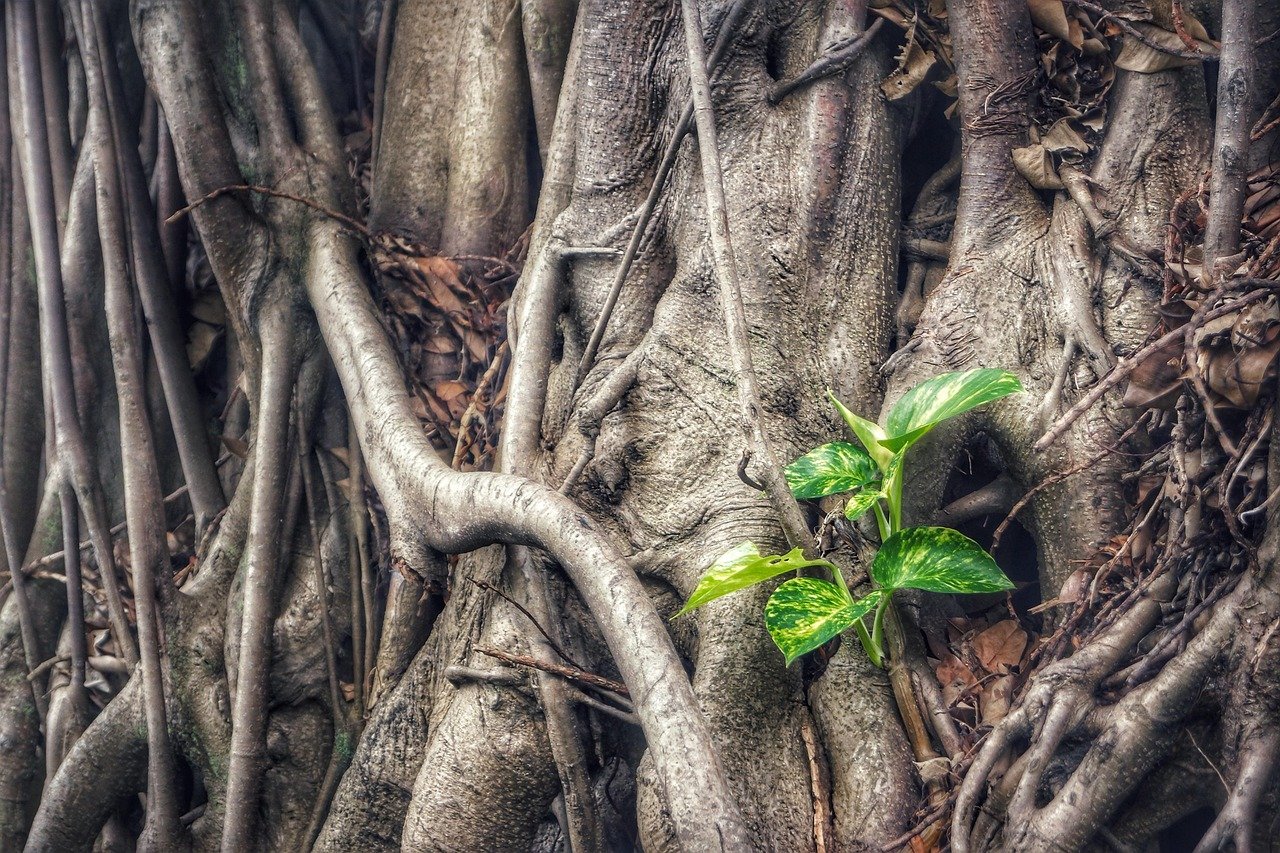
This is the plant most people mean. It is a climbing member of the arum family, native to Mo’orea in French Polynesia, and it has been cultivated indoors so widely that it now outnumbers many plants in their native ranges. It goes by pothos, golden pothos, and devil’s ivy, a nickname earned by its near-indestructibility.
Light and water
Pothos tolerates low light, which is why it survives in dim offices. But tolerating and thriving are different things. It grows best in bright, indirect light. In practice, that means a spot near a window where the sun never lands directly on the leaves. Direct summer sun scorches the foliage, and the burnt patches do not heal.
For watering, let the top inch or two of soil dry before watering again. The most common mistake is overwatering, not underwatering. Yellow leaves that feel soft and limp usually mean soggy roots. Brown, crispy leaf tips usually mean dry air or inconsistent watering. When in doubt, wait a day.
Temperature and humidity
Keep it above roughly 10 to 13 °C (50 to 55 °F). Cold drafts from a winter window can damage leaves even in a warm room. Standard household humidity is fine, though the plant grows larger leaves in more humid air.
Toxicity: the part people skip
All parts of Epipremnum aureum contain calcium oxalate crystals, and chewing them causes oral irritation, drooling, vomiting, and difficulty swallowing in both people and pets. This is not a rare reaction; it is the plant’s defense mechanism. Keep it out of reach of cats, dogs, and toddlers, and do not assume a “low-maintenance” label means “safe.”
Propagation
The plant almost never flowers in cultivation, so it is grown from stem cuttings. Cut a piece with at least one node, the small bump where roots emerge, and place it in water or damp soil. Roots usually appear within a few weeks. A cutting with no node will sit in water forever and never root, which is one of the most common beginner mistakes.
The Braided Tree: Pachira aquatica
The money tree sold in shops is Pachira aquatica, a wetland tree from Central and South America in the mallow family. In the wild it grows in swamps and can reach considerable size. The braided trunk you see on a shop shelf is a commercial styling, not a botanical feature; growers train young stems together.
Care that keeps it alive
Money trees fail for two reasons: too much water and too little light. They want bright, indirect light and soil that drains fast. Water when the top few inches are dry, and never let the pot sit in a saucer of water. The braided trunk can trap moisture, so water the soil, not the stem.
Yellowing leaves that drop off are usually a sign of overwatering. Crisp leaf edges often point to dry air. The plant is listed as toxic to cats and dogs, reportedly causing vomiting and diarrhea, so placement matters in pet households.
The folklore behind the name
The “money” association is folkloric, not botanical. In East Asian and diaspora traditions, the braided money tree is kept indoors for luck and prosperity, often with a red ribbon tied around the trunk. There is no scientific evidence that any plant attracts wealth. Treat the tradition as cultural practice and enjoy it as such; the plant is a pleasant houseplant regardless of what your bank balance does.
The Coin-Pod Plant: Lunaria annua
In Britain, “money plant” often means Lunaria annua, also called honesty. It is a European biennial in the cabbage family. It grows, flowers, and dies within two years, but its seed pods are the point. Once the outer covers fall away, flat translucent discs remain on the dried stem, looking exactly like silver coins.
Gardeners dry the stems and bring them indoors for arrangements. The plant is easy from seed, prefers partial shade, and self-seeds freely once established. If you want it for dried decoration, cut the stems when the pods are fully formed but before they shatter, and hang them upside down in a dry, airy place.
Why the Name Traveled So Far
Common names travel with people, not with taxonomy. A plant carried from one region to another keeps the name its growers gave it, even when that name collides with an existing one. The result is a name that means three things at once.
There is a practical lesson here that goes beyond plants. When a label is ambiguous, the description matters more than the label. That is true of houseplants, and it is true of the digital world too. The same ambiguity shows up in how people talk about online money schemes, where a friendly name can hide very different mechanics. Anyone comparing offers should look past the label, whether they are reading about how identity threat detection really costs, where the money goes, or checking how to make money with AI before signing up for anything.
Practical Buying Advice
If you are shopping for a money plant, do these things before you pay:
- Read the scientific name on the tag. If there is no tag, ask. “Money plant” alone tells you nothing.
- Check the soil. Soggy soil in the shop means root rot is already starting.
- Look under the leaves for pests. Sticky residue or fine webbing means trouble.
- Match the plant to your light. A dark hallway suits a pothos better than a Pachira.
- Check toxicity if you have pets or small children.
That last point is not paranoia. Plant poisonings are common, and the symptoms of oxalate exposure can be distressing. If you want a broader sense of how small oversights turn into real costs, the same principle applies to everyday scams: understanding how a gift card scam works and why victims rarely get their money back is a reminder that prevention beats recovery every time.
Common Mistakes and What Actually Works
Most money plant failures come down to a handful of habits. Overwatering is the big one. People water on a schedule instead of checking the soil, and roots drown in a pot that never dries. The fix is simple: stick a finger into the soil before watering. If it is damp, wait.
The second mistake is buying a plant for a spot with the wrong light. A pothos in a bright window burns. A Pachira in a dark corner weakens and drops leaves. Move the plant, not the furniture.
The third is repotting too eagerly. New plants often need time to adjust. Wait a few weeks, then move up only one pot size. A plant in an oversized pot sits in wet soil for too long.
The fourth is ignoring drainage. A decorative pot with no hole is a slow death sentence. Keep the nursery pot inside it and empty the water that collects.
Money Plant Care at a Glance
| Factor | Epipremnum aureum | Pachira aquatica | Lunaria annua |
|---|---|---|---|
| Light | Bright, indirect | Bright, indirect | Partial shade |
| Water | Let top inch dry | Let top few inches dry | Keep evenly moist |
| Temperature | Above 10–13 °C | Warm room temperature | Hardy outdoors |
| Toxicity | Toxic to pets and people | Toxic to pets | Not the same concern |
| Grown for | Foliage | Braided trunk, folklore | Dried seed pods |
Conclusion
The money plant is not one plant. It is a name that has attached itself to a trailing vine, a braided tree, and a dried seed pod, and knowing which one you have is the difference between a thriving houseplant and a soggy mess. Identify the species first, then follow its care rules rather than a generic label. The folklore is charming, the plants are genuinely rewarding, and neither depends on the other. Keep the soil honest, the light right, and the pets out of reach, and the plant will do the rest.
What is a money plant?
“Money plant” is a common name shared by at least three unrelated plants: the trailing houseplant Epipremnum aureum (pothos), the braided tree Pachira aquatica (money tree), and the biennial flower Lunaria annua, whose translucent seed pods look like coins. The species you have depends on your region and the plant’s growth habit.
Is a money plant toxic to cats and dogs?
Epipremnum aureum and Pachira aquatica are both listed as toxic to cats and dogs. The pothos contains calcium oxalate crystals that cause oral irritation, drooling, and vomiting if chewed. Keep both out of reach, and contact a veterinarian promptly if a pet eats any part of the plant.
Does a money plant really bring wealth?
No. The association is folkloric and cultural, especially in East Asian traditions where the braided money tree is kept for luck. There is no scientific evidence that any plant attracts money. Enjoy the tradition, but treat the plant as a plant.
Why is my money plant turning yellow?
Yellow leaves usually mean overwatering, especially in pothos and Pachira. Let the soil dry between waterings and make sure the pot drains freely. Crisp brown edges point to dry air or inconsistent watering instead, so check the soil before changing anything.
Can I grow a money plant in low light?
Pothos tolerates low light but grows best in bright, indirect light. Pachira needs more light and weakens in dark corners. Neither plant wants direct summer sun, which scorches leaves. A spot near a window with filtered light suits both.
How do I propagate a money plant?
For pothos, take a stem cutting with at least one node and root it in water or damp soil. Cuttings without a node will not root. Pachira is usually grown from seed or cuttings, and Lunaria is grown from seed sown directly outdoors.



