
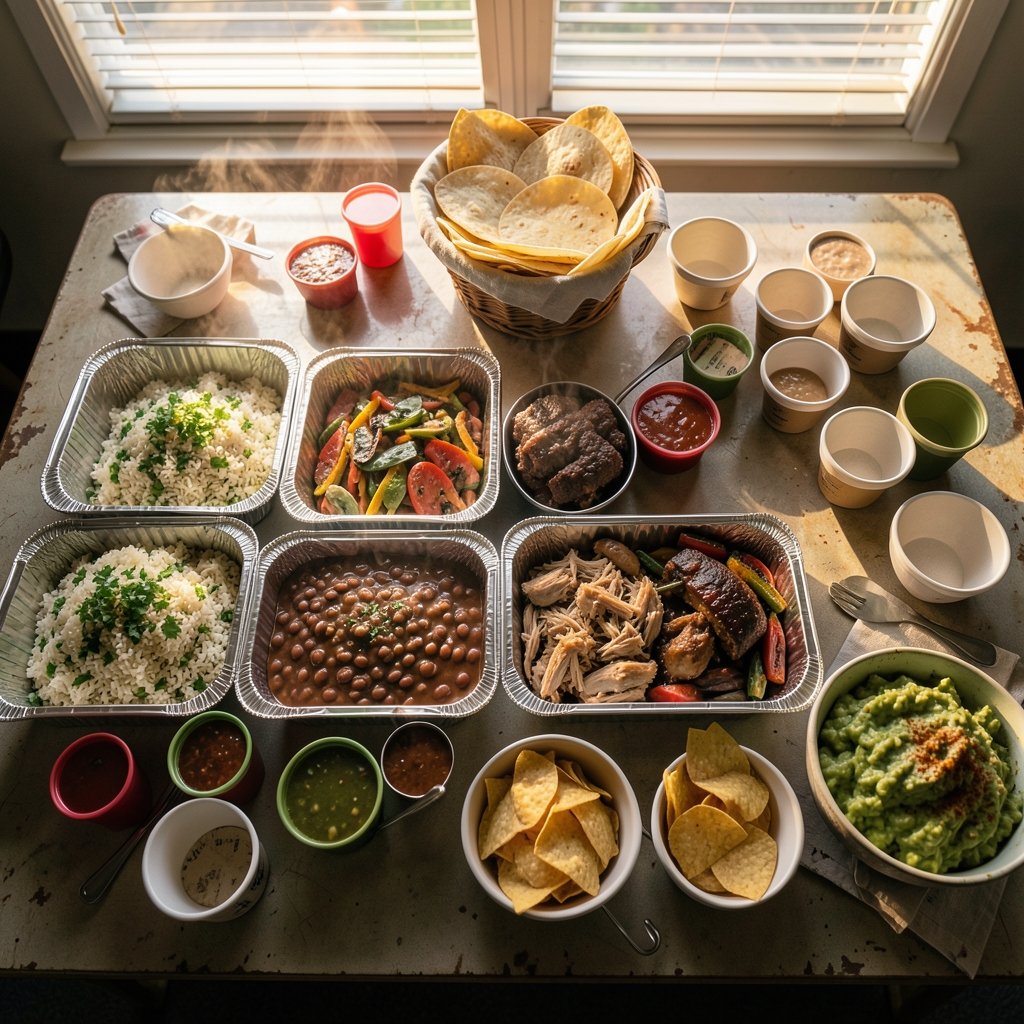
What if the hardest part of feeding a hungry office, a birthday party, or a team of volunteers wasn’t the food at all, but just figuring out how to order it? Chipotle catering turns that headache into a fairly simple task, but only if you know how the program is built. The chain doesn’t run a separate catering kitchen or farm out big orders to franchisees. Your burrito bar comes from a regular Chipotle restaurant, assembled by the same crew that slings lunch bowls every day. That single fact explains almost everything about how ordering, timing, and menu choices work. (Chipotle Mexican Grill)
What Chipotle Catering Actually Is
Chipotle catering is a group-meal format built around the same ingredients you’d find in the regular line. Instead of individual entrées, you order trays: proteins like chicken, steak, carnitas, or sofritas, plus rice, beans, fajita veggies, salsas, cheese, lettuce, chips, and tortillas. Guests build their own burritos, bowls, or tacos from the spread.
The format matters because it’s flexible. Picky eaters can skip the hot salsa. Vegetarians can load up on beans and guacamole. Someone avoiding gluten can build a bowl instead of a burrito. That self-serve structure is why the program works well for mixed groups where nobody agrees on anything.
The Ordering Channels
Chipotle takes catering orders through its website and its app, with a dedicated flow separate from the regular individual-order menu. You pick a restaurant, choose a date and time, select your tray sizes, and pay online. The order then routes to that specific location’s team, which prepares it alongside normal service.
Because the restaurant fulfills the order, your experience depends heavily on that store’s capacity. A location next to a big office park may handle a dozen catering orders a week. A smaller suburban store might do two. That’s not a flaw in the system; it’s just how a company-owned model works. Chipotle famously doesn’t franchise in the U.S., so every location answers to the same corporate playbook rather than an independent owner. You can see the same corporate structure shaping other product decisions, like the Samsung chip investment strategy that runs through the broader tech supply chain these stores rely on for their point-of-sale systems. (Nintendo switch 2 lite samsung 8lpu plus chip rumor 2026)
Minimums, Lead Times, and Why They Vary
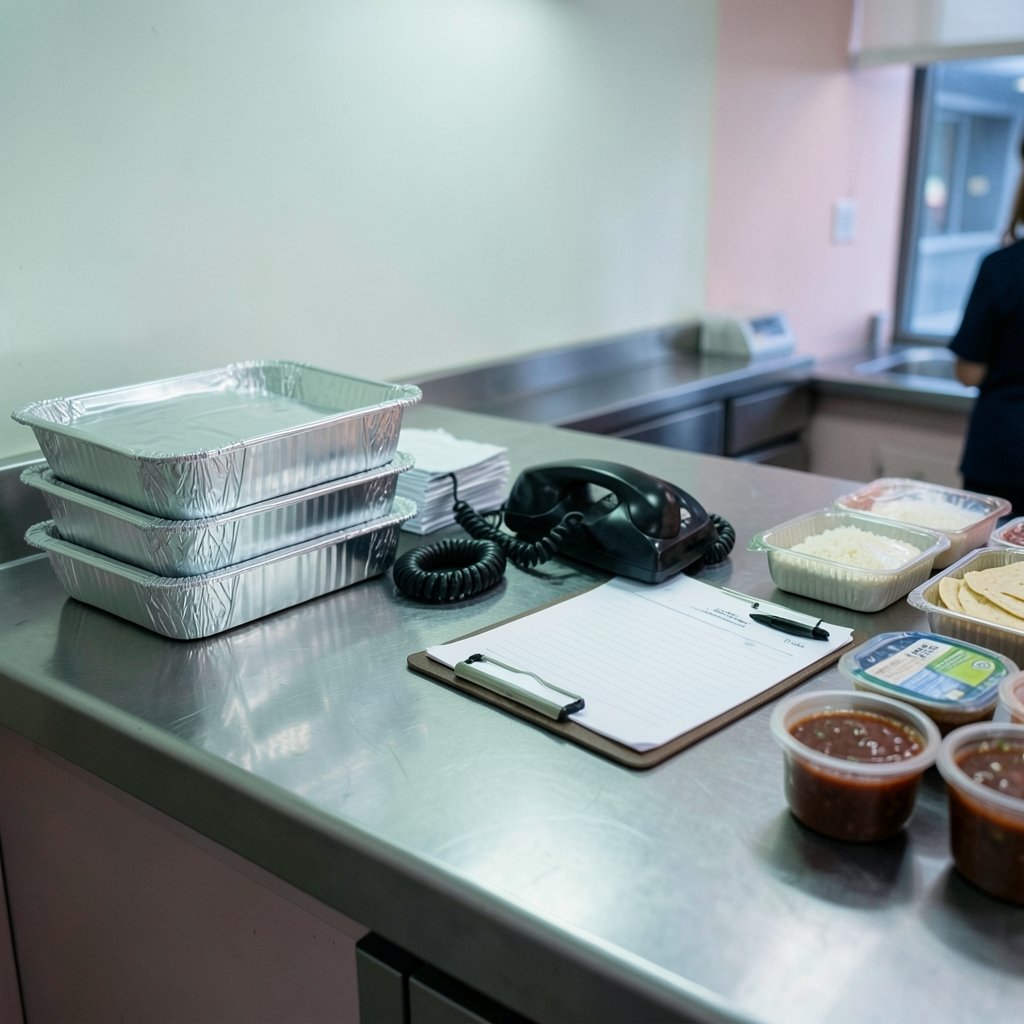
Here’s where most people get tripped up. There is no single national catering minimum or lead time. Both are set at the restaurant level and can change.
In practice, most locations have historically asked for advance notice, often around 24 hours, and a minimum guest count or spend. But those numbers shift by store, by season, and by how busy that location already is. A store in a downtown business district during a corporate event week may need more notice than a quiet location on a Tuesday.
The practical takeaway: don’t assume. Check the catering page for your chosen restaurant before you build a plan around it. And if you’re ordering for a large group, call the store directly. The person who answers the phone knows exactly what that kitchen can handle, which is information no website can fully capture.
A Realistic Timeline That Works
- Decide the headcount and the date first. Everything else follows from those two numbers.
- Check the specific restaurant’s catering availability at least three to five days out for groups over 20.
- Place the order online, then call to confirm it landed in the store’s system.
- Build in a buffer for pickup. Catering orders aren’t handed out at the register; they’re usually staged separately.
- Confirm the pickup time the day before, especially for morning or lunch events.
That fifth step is the one people skip. A quick call the day before catches problems while there’s still time to fix them.
Building a Catering Order That Feeds Everyone
The most common mistake with group orders is under-ordering protein and over-ordering rice. People eat more of the good stuff and less of the filler than planners expect. A spread that looks generous on paper can run thin by the time the last person in line reaches the trays.
A better approach is to think in terms of build-your-own logic. If guests assemble their own burritos, they’ll take roughly one tortilla, one scoop of rice, one protein, and a few toppings. Multiply that by headcount, then add a cushion of about 10 to 15 percent.
| Group Size | Protein Trays | Rice and Beans | Tortillas | Chips and Salsa |
|---|---|---|---|---|
| 10 to 15 people | 1 to 2 | 1 each | 1 pack | 1 to 2 bags |
| 20 to 30 people | 3 | 2 each | 2 packs | 3 bags |
| 40 to 50 people | 4 to 5 | 3 each | 3 to 4 packs | 4 to 5 bags |
Treat that table as a starting point, not gospel. Appetite varies wildly by crowd. A construction crew and a book club are not the same animal.
Don’t Forget Dietary Needs
Chipotle’s ingredient list is unusually transparent for a fast-casual chain. Its Food With Integrity program, which dates back to the early 2000s, centers on avoiding artificial colors and flavors and using non-GMO ingredients. For catering planners, the practical value is that the ingredient information is published and specific, so you can answer the “does this have dairy in it?” question without guessing.
Gluten is the big one to flag. Flour tortillas contain gluten, but bowls and corn tortillas don’t, which makes the self-serve format genuinely accommodating. Queso and sour cream bring dairy. Sofritas gives vegetarians a real protein option rather than an afterthought. If your group includes someone with a serious allergy, though, don’t rely on the tray setup alone. Have a direct conversation with the restaurant.
Pickup vs. Delivery: What to Expect
Chipotle catering is primarily a pickup model, though delivery availability varies by market and is often handled through third-party services. Pickup is usually the safer bet for two reasons: you control the timing, and you can check the order before you leave the store.
Delivery adds a layer of risk. Trays get jostled. Hot food cools. Timing windows get fuzzy. For a small office lunch, delivery is convenient. For a 60-person event where food safety and presentation matter, picking it up yourself is often worth the extra trip.
The Food-Safety Angle
Anyone planning a group meal should think about how long food sits out. The 2015 E. coli and norovirus outbreaks linked to Chipotle reshaped the company’s food-safety protocols significantly, and the chain has invested heavily in supplier testing and kitchen procedures since. That history is worth knowing, not because it’s a current risk, but because it explains why the company is unusually strict about handling and holding times.
For your own event, the basics apply: keep hot food hot, keep cold food cold, and don’t leave trays sitting at room temperature for hours. If your gathering runs long, plan for a way to refrigerate leftovers or skip saving them.
How Chipotle Catering Compares to Other Options
Group catering usually comes down to a few choices: a build-your-own spread, boxed individual meals, or a full-service caterer. Each has trade-offs.
| Option | Best For | Watch Out For |
|---|---|---|
| Chipotle catering trays | Mixed-diet groups, casual offices, budget-conscious planners | Location-specific minimums, limited delivery |
| Boxed individual meals | Events with fixed headcounts and no serving space | Less flexibility for dietary needs |
| Full-service caterer | Formal events, plated meals, staffing included | Much higher cost, longer booking windows |
Chipotle’s advantage is the build-your-own format combined with a known ingredient list and moderate pricing. Its limitation is that you’re working within a restaurant’s capacity, not a dedicated catering operation. If you need white-glove service, this isn’t it.
Interestingly, the same “know what you’re actually getting” principle applies to other purchases people research carefully before committing. Wearable buyers compare specs the same way, which is why guides like this comparison of Whoop, Oura, and Apple Watch focus on fit rather than hype. Catering planning rewards the same discipline.
Practical Tips From People Who Order Often
A few habits separate smooth group orders from chaotic ones.
Order slightly more than you think you need. Running out of food is a much worse outcome than having leftovers.
Ask for components separately. Trays that keep proteins, rice, and toppings distinct let guests build what they want and keep textures intact.
Skip the guesswork on condiments. Salsas and guacamole go fast. Order extra.
Confirm the pickup entrance. Some locations have a separate catering pickup spot. Knowing where to go saves ten minutes of circling.
Bring your own serving tools if you’re feeding a crowd. The restaurant provides some, but extra tongs and spoons never hurt.
Label nothing, but know everything. You don’t need signs, but you should be able to tell a guest which tray holds sofritas versus carnitas without opening lids.
Why the Program Fits the Company’s Broader Strategy
Chipotle has treated digital ordering and catering as growth channels for years. The company built a “digital make line” concept around 2019 to separate online and catering orders from the walk-in line, which sped up fulfillment and reduced mistakes. Its investor filings and earnings calls have repeatedly discussed digital sales as a meaningful share of revenue.
That context matters for anyone ordering. A company investing in catering infrastructure tends to keep improving the experience, which means the ordering flow you use today is probably better than the one from three years ago. It also means availability may expand over time. If your local store doesn’t offer catering yet, that could change.
The company-owned model reinforces this. Because there are no franchisees setting their own rules, corporate decisions about menu, packaging, and ordering flow roll out consistently. The trade-off is that local flexibility is limited; the upside is predictability.
Common Mistakes to Avoid
The single biggest error is assuming every location offers the same thing. They don’t. Minimums, lead times, delivery options, and even tray availability can differ from store to store.
The second is ordering too late. Twenty-four hours is often cited as a guideline, but for larger groups it’s cutting it close. Give the kitchen breathing room.
The third is forgetting about drinks and utensils. Catering trays don’t automatically come with plates, napkins, or cups unless you add them.
The fourth is not checking the order on pickup. Open the lids. Count the trays. It takes two minutes and prevents a very awkward event.
Conclusion
Chipotle catering works best when you treat it as what it is: a restaurant-scale group meal, not a full-service catering operation. The build-your-own format handles mixed diets gracefully, the published ingredient information makes allergy questions answerable, and the company-owned structure means a consistent experience across locations. The catch is that the details live at the store level, so a phone call and a quick check of your specific restaurant’s page will do more for your event than any general guide. Plan the headcount, order a little extra, confirm the pickup, and the food will take care of itself.
Frequently Asked Questions
How far in advance should I place a Chipotle catering order?
Most locations ask for advance notice, often around 24 hours, but the exact requirement is set by each restaurant. For groups over 20 people, aim for three to five days and call the store to confirm.
Does Chipotle catering have a minimum order size?
Minimums vary by location and can change over time. Some stores require a certain guest count or spend; others are more flexible. Check the catering page for your specific restaurant before planning.
Can I get Chipotle catering delivered?
Delivery availability depends on your market and is often handled through third-party services. Pickup is generally more reliable because you control the timing and can inspect the order before leaving.
Does Chipotle catering work for vegetarian or gluten-free guests?
Yes, the build-your-own format handles both well. Sofritas provides a vegetarian protein, and bowls or corn tortillas avoid the gluten found in flour tortillas. Guests with serious allergies should confirm details directly with the restaurant.
Do catering orders earn Chipotle Rewards points?
This is a common question, and the answer isn’t clearly published for every order type. Ask the restaurant or check the rewards terms before assuming points will apply.
What should I do if my group is larger than the trays can handle?
Call the restaurant directly. Large orders may need to be split across multiple trays or scheduled at a specific time so the kitchen can prepare properly. A phone conversation solves most capacity questions faster than any online form.



