Roughly one in three adults now wears something on their wrist or finger that tracks sleep, heart rate, or recovery, and the three names that come up most in that conversation are Whoop, Oura, and Apple. That popularity hides a real problem: these devices are not three versions of the same product. They are built on different philosophies, priced in different ways, and they reward different habits. Choosing badly usually means paying a subscription for a gadget that ends up in a drawer by March. (Whoop (company)))
This comparison walks through how each device actually works, who tends to love it, who tends to regret it, and the mistakes people make when they buy based on a spec sheet instead of their own routine.
The Core Difference in One Paragraph
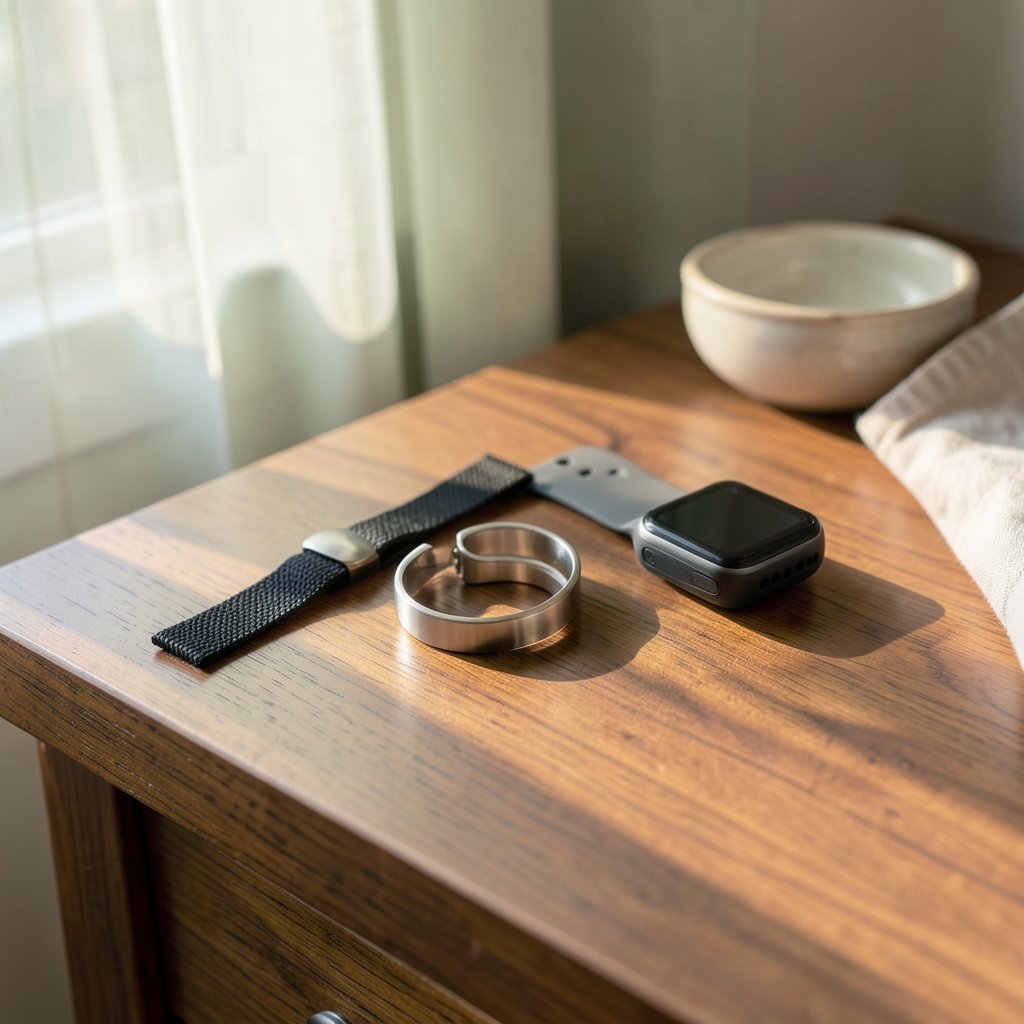
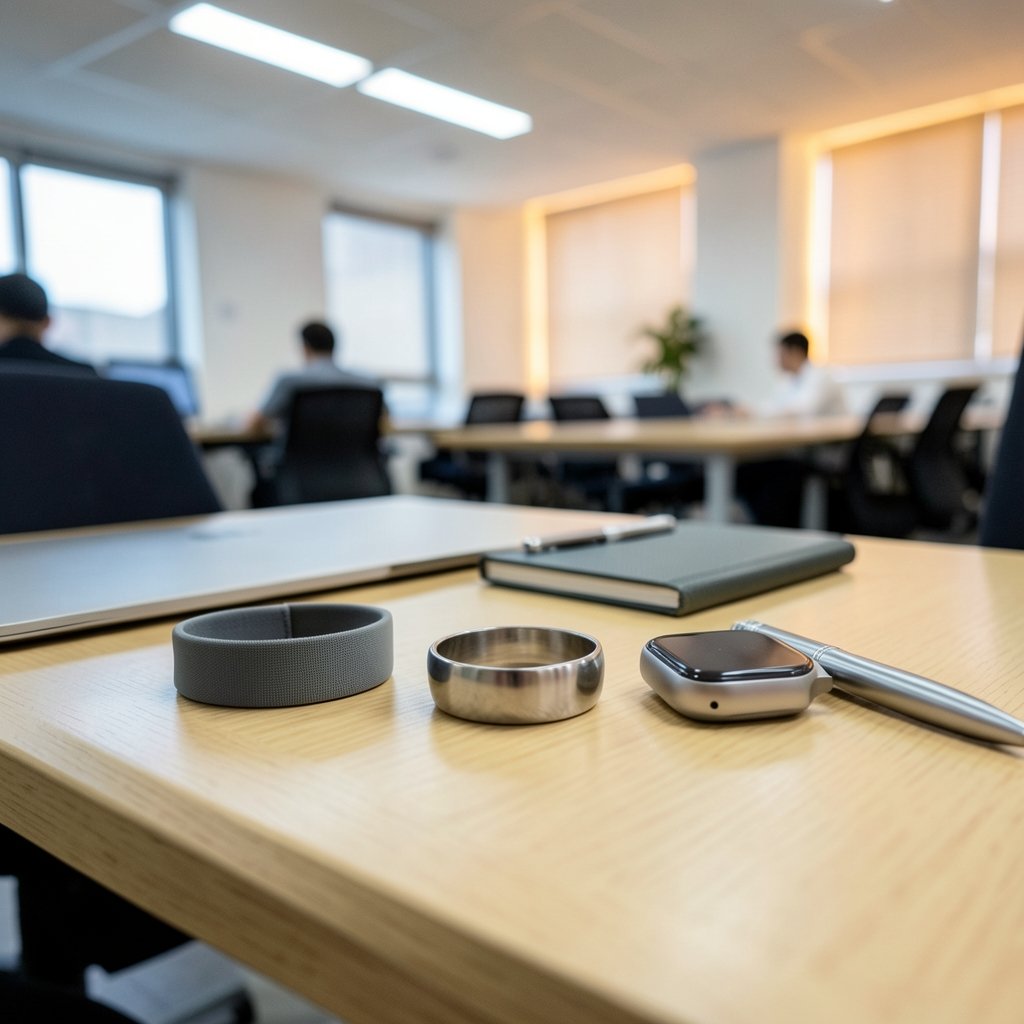
Whoop is a screenless band on a membership model. It records continuously and pushes everything into an app that scores your strain, recovery, and sleep. Oura Ring is a titanium ring that prioritizes sleep, readiness, and body temperature trends, also with a subscription for full features. Apple Watch is a full smartwatch with an FDA-cleared ECG app and irregular rhythm notifications in supported regions, plus apps, calls, and payments. One is a coach, one is a sleep analyst, one is a computer for your wrist.
Side-by-Side Comparison
| Feature | Whoop | Oura Ring | Apple Watch |
|---|---|---|---|
| Form factor | Screenless band or apparel | Ring | Smartwatch |
| Display | None | None | Full color display |
| Primary focus | Strain and recovery coaching | Sleep and readiness | General smartwatch plus health |
| Charging rhythm | Days between charges, depends on model | Days between charges | Daily charging in practice |
| Subscription | Required for full service | Required for full features | None |
| Third-party apps | Limited | Limited | Extensive |
| Contactless payment | No | No | Yes |
| ECG feature | No | No | Yes, in supported regions |
| Best for | Athletes who want training guidance | People who want sleep insight without a screen | People who want one device for everything |
The table matters less than the pattern it reveals. Whoop and Oura both ask you to give up a screen. Apple asks you to accept one.
Whoop: The Coach That Never Sleeps
Whoop’s pitch is simple. Wear it, forget it, and let the app tell you whether to push harder or back off. Because there is no display, there is no temptation to check notifications mid-workout or scroll at midnight. That single design choice changes behavior more than most people expect.
The membership model is the part that divides buyers. You are not purchasing hardware so much as subscribing to a service, and the band is the key to it. If you stop paying, the device stops being useful. That is a genuine commitment, and it is the reason Whoop tends to suit people who already train with structure, such as runners, cyclists, and lifters following a plan.
What works in practice: wearing the band in the same spot every day, ideally on the bicep during lifting so wrist motion does not distort readings. Common mistake: judging Whoop after four days. Recovery scores need a baseline, and a baseline takes a couple of weeks of consistent wear, including the nights you sleep badly.
The other honest caveat is that recovery scores are a guide, not a verdict. Treating a low score as a reason to skip a session you feel good about is how people let a wearable override their own body.
Oura Ring: Sleep Data Without a Screen
Oura takes the opposite approach to the wrist entirely. The ring sits on your finger, where the arteries are close to the surface, and it quietly collects sleep stages, resting heart rate, heart rate variability, and temperature trends. Many users report that the ring format is the first wearable they have managed to keep on overnight, simply because it feels like jewelry rather than equipment.
Oura’s standout value is trend data. A single night’s sleep score means little. Three weeks of temperature and readiness data, lined up against how you actually felt, starts to reveal patterns, such as the fact that your late evening workouts are quietly wrecking your deep sleep.
Oura also carries a subscription for the full feature set, which surprises buyers who assume the hardware price covers everything. Read the current terms before you commit, because feature gating has shifted over time.
What works in practice: sizing the ring for your dominant hand’s index or middle finger, and wearing it on the same finger every night so the data stays comparable. Common mistake: wearing the ring loose. A ring that spins gives noisy readings, and a noisy signal is worse than no signal.
Apple Watch: The Everything Device
Apple Watch is the only one of the three that does the job of a phone on your wrist. It takes calls, sends messages, runs apps, pays for coffee, and tracks workouts. It also carries health features the other two do not, including an ECG app and irregular rhythm notifications in supported regions. For anyone with a family history of heart rhythm issues, that capability alone can justify the purchase.
The trade-off is attention. A screen on your wrist is a screen on your wrist, and plenty of buyers find themselves checking it far more than they expected. Battery life is the other daily reality: charging is part of the routine, not an occasional chore.
Apple’s other devices also matter more than people admit. If you already own an iPhone and a Mac, the Watch fits in with almost no friction. If you do not, the experience is noticeably clunkier. For context on how Apple prices and positions its hardware over time, the company’s share price history is a useful reference point, and you can follow the apple share price if you want to see how the market reacts to product cycles. (Apple Watch)
What works in practice: turning off most notifications in the first week and keeping only the ones that genuinely need your wrist. Common mistake: wearing the band too loose during workouts, which produces heart rate gaps exactly when you want the data most.
Accuracy: What the Marketing Leaves Out
All three companies publish accuracy claims, and all three have an interest in those claims looking good. Independent validation studies of wrist and finger wearables generally find that heart rate during steady activity is reasonably reliable, while sleep staging and calorie estimates are much less precise. The gap between “good enough to spot a trend” and “accurate enough to diagnose” is enormous.
That is why the regulatory language matters. An FDA clearance for a specific feature, such as an ECG app, applies to that feature and that feature only. It is not a general endorsement of the device’s health data. Availability also varies by country, so a feature advertised in the United States may be absent where you live.
The practical takeaway: use these devices to spot patterns and ask better questions, not to self-diagnose. If a wearable flags something concerning, the next step is a clinician, not a forum thread.
Price and Long-Term Cost
Upfront price is the least useful number in this comparison. What matters is the total cost over two or three years.
Whoop and Oura both tie you to an ongoing subscription, so the cost compounds. Apple Watch has no subscription, but the hardware costs more upfront and the device will eventually stop receiving updates. None of the three is cheap over a multi-year horizon, and the cheapest option depends entirely on how long you keep the device and whether you actually use the features you pay for.
A useful exercise: write down what you would pay over 24 months for each option, including subscriptions, then ask which one you would still be wearing in month 18. That question tends to settle the decision faster than any spec comparison.
The Mistakes Buyers Make
Most wearable regret comes from a handful of predictable errors.
- Buying for the feature list instead of the habit. If you will not wear a ring overnight, Oura’s best features are worthless to you.
- Ignoring the subscription. A device that stops working when you stop paying is a different kind of purchase.
- Switching devices too often. Every switch resets your baseline, which means weeks of less useful data.
- Wearing it inconsistently. Two days on, three days off produces noise, not insight.
- Treating scores as instructions. A recovery score is information, not a command.
- Expecting medical-grade accuracy from a consumer gadget. The clearance on a specific feature is not a blanket guarantee.
Matching the Device to the Person
The cleanest way to decide is to start from your routine rather than the product page.
If you train with structure and want daily guidance on when to push and when to rest, Whoop fits. If you care most about sleep quality, cycle tracking, and temperature trends, and you dislike screens, Oura fits. If you want one device that covers health, communication, payments, and safety features, Apple Watch fits.
Plenty of people run two devices at once, and that is not irrational. A ring for sleep plus a watch for daytime is a common pairing, though it means paying for two ecosystems and reconciling two sets of numbers. For a sense of how Apple’s own product lineup shifts year to year, including pricing moves on new hardware, the apple iphone 18 pro max price coverage shows how the company’s pricing strategy ripples across its devices.
Conclusion
Whoop, Oura Ring, and Apple Watch are not rivals in a single race. They are answers to three different questions. Whoop asks whether you want a coach. Oura asks whether you want to understand your sleep without another screen in your life. Apple asks whether you want one device to do almost everything.
The honest answer for most buyers is that the best device is the one you will wear consistently for a year. A cheaper wearable worn every night beats an expensive one worn twice a week, every time. Pick the form factor that fits your actual routine, budget for the subscription if there is one, and give it a proper month before you judge it. And if you are weighing a wider decision about Apple devices alongside the wearable, the apple music vs spotify comparison is a useful reminder that subscription lock-in shapes long-term value as much as hardware specs do.
FAQ
Is Whoop more accurate than Oura Ring?
Neither company’s accuracy claims should be taken at face value. Independent testing generally finds that heart rate during steady activity is reasonably reliable across both wrist and finger wearables, while sleep staging is less precise on all consumer devices. The bigger variable is fit and consistency, not brand.
Can I wear Oura Ring and Apple Watch at the same time?
Yes, and many people do. The ring handles overnight sleep and recovery data while the watch covers daytime activity, notifications, and payments. The downside is two subscriptions or ecosystems to manage, plus the work of reconciling two sets of numbers that will not always agree.
Does Apple Watch require a subscription?
No. Apple Watch has no subscription for its core health and fitness features. You pay for the hardware once. Some third-party apps charge their own fees, but the built-in tracking, ECG app, and irregular rhythm notifications do not require an ongoing payment.
Which device is best for sleep tracking?
Oura Ring is the most sleep-focused of the three, and its ring format makes overnight wear comfortable for many people. Whoop also tracks sleep well and ties it to recovery and strain. Apple Watch tracks sleep too, but its daily charging routine makes overnight wear less convenient for some users.
Do I need a subscription for Whoop and Oura?
Both use subscription models for their full feature sets. Whoop’s hardware is tied to an ongoing membership, and Oura charges a subscription to access its complete feature set. Always check the current terms before buying, because pricing and feature gating have changed over time.
Is a screenless wearable better for me?
It depends on whether distraction is a problem for you. A screenless band or ring removes the temptation to check notifications constantly, which many users find improves sleep and focus. If you want calls, payments, and apps on your wrist, a smartwatch is the better fit despite the extra screen time.