Wearable tech has a new battleground, and it’s smaller than a wedding band. Smart rings jumped from niche curiosity to mainstream must-have almost overnight, and the two names that dominate every conversation are Oura and Samsung. If you’re standing in that crowded aisle of online reviews wondering which one deserves a spot on your finger, this breakdown cuts through the noise with practical, real-world guidance rather than spec-sheet worship.
The Rise of the Smart Ring
Smart rings solve a problem smartwatches created: nobody wants another screen buzzing on their wrist at dinner. A ring slips on, tracks quietly, and disappears into daily life. That low-friction design is exactly why the category exploded.
Oura Health, a Finnish company, has been refining this formula since its first-generation ring in 2015. Samsung arrived later but with enormous muscle behind it, announcing the Galaxy Ring at its January 2024 Unpacked event and putting it on sale in July 2024 in select markets. Samsung leaned hard on one message: no subscription required. (Oura Ring)
That single difference, subscription versus no subscription, has become the emotional heart of the entire Oura Ring vs Samsung Galaxy Ring debate. But it’s far from the only thing that matters.
Design, Fit, and Daily Comfort
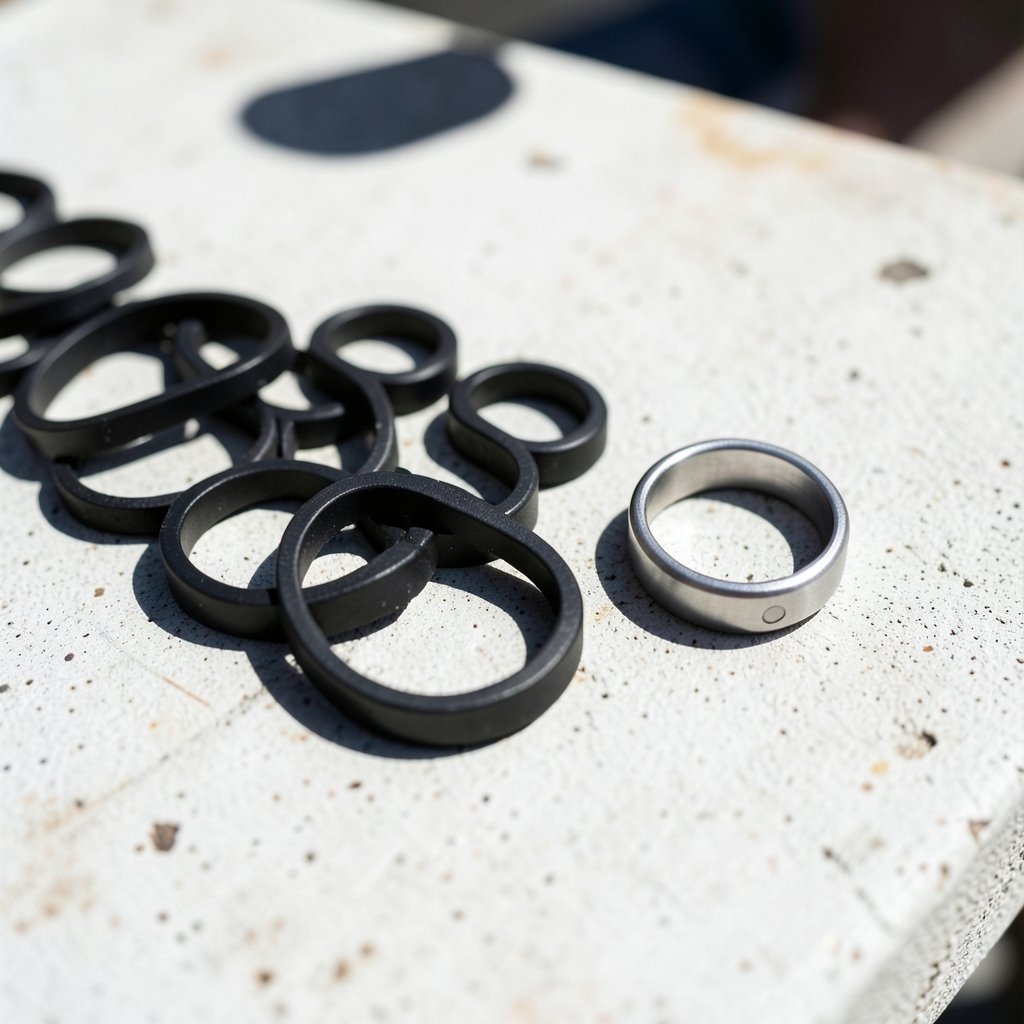
Both rings are built from titanium and both are designed to be forgotten about. The differences are subtle but real.
| Feature | Oura Ring | Samsung Galaxy Ring |
|---|---|---|
| Material | Titanium | Titanium |
| Weight | Roughly 4–6 grams | Roughly 2.3–3 grams |
| Color options | Several finishes | Several finishes |
| Charging case | Yes | Yes |
| Subscription | Paid membership for full insights | None at launch |
| Sizing approach | Free sizing kit before purchase | Sizing kit before purchase |
Samsung’s ring is noticeably lighter, which some wearers notice immediately and others never feel at all. Oura’s ring has a slightly chunkier profile that long-time users describe as reassuring rather than bulky.
Here’s a practical tip that saves people real frustration: always order the sizing kit first. Smart rings sit differently than traditional jewelry because they pack sensors on the palm side. A ring that feels perfect in the morning can feel tight after a salty meal or a long flight. Wear the plastic sizer for a full 24 hours, including overnight, before committing. Skipping this step is the single most common mistake new buyers make.
Sleep Tracking: Where the Real Battle Happens
Sleep is the reason most people buy a smart ring at all, and this is where the comparison gets genuinely interesting.
Oura has spent years building its reputation on sleep staging and readiness scores. Its algorithms draw on heart rate, heart rate variability, body temperature, and movement to estimate how rested you are. The app translates that data into plain-language guidance, which is why Oura has attracted a loyal following among people who want interpretation, not just raw numbers. (Oura)
Samsung’s Galaxy Ring tracks similar metrics, including sleep stages, heart rate, HRV, skin temperature, and movement during the night. It integrates with Samsung Health and works best inside Samsung’s ecosystem, where features like Energy Score pull multiple signals into one daily number.
The honest truth? Both devices are excellent at spotting broad patterns. Neither is a medical-grade sleep lab. If you’re chasing a precise diagnosis for insomnia or sleep apnea, a ring is a starting point, not an answer. For general habit awareness, though, both deliver. Some users pair their ring data with simple behavioral fixes, much like the practical approach in this guide on how to stop snoring at night with home remedies — the wearable flags the pattern, and the lifestyle change does the heavy lifting.
Accuracy: What Independent Testing Suggests
Oura has a longer public track record of validation work with research partners, particularly around sleep staging. Samsung’s ring is newer, and independent peer-reviewed validation data for it remains thinner. That doesn’t mean Samsung is inaccurate, but it does mean Oura currently has more third-party evidence behind its claims.
For buyers who weigh scientific backing heavily, that gap matters. For everyone else, day-to-day consistency often matters more than lab precision.
The Subscription Question That Divides Buyers
This is the topic that sparks the most heated forum threads, so let’s be direct.
Oura requires a paid membership to unlock the full experience, including detailed scores, insights, and long-term trends. The hardware works without it, but the ring feels deliberately limited. Samsung launched the Galaxy Ring with no subscription fee, positioning that as a direct swipe at Oura’s model.
Run the math over three years and the gap widens considerably. A one-time hardware cost versus hardware plus recurring monthly fees is a genuinely different purchase, and it’s worth being honest about how you feel regarding subscriptions. If recurring charges irritate you, that frustration will color every month you own the device.
The cheapest ring isn’t always the one with the lowest sticker price. Total cost of ownership is the metric that actually matters.
Ecosystem Lock-In: The Hidden Deciding Factor
Here’s where the choice often makes itself.
The Galaxy Ring is designed to shine inside Samsung’s world. Pair it with a Galaxy phone and you get the smoothest experience, the deepest integration, and the full feature set. Pair it with an iPhone and you lose meaningful functionality. That’s not a flaw so much as a strategy, but it’s a strategy you need to know about before buying.
Oura, by contrast, plays nicely with both Android and iOS. That neutrality is a genuine advantage for anyone who switches phones or lives in a mixed-device household.
If you’re already weighing a broader phone decision, the same ecosystem logic applies across the board. Readers comparing flagships often find that the Samsung Galaxy vs iPhone question and the smart ring question share the same answer: pick the ecosystem you’re already invested in, then choose the accessories that fit it. For a deeper dive into how the two phone families stack up today, this iPhone vs Samsung comparison is a useful companion read.
Battery Life and Charging Reality
Neither ring promises smartwatch-style longevity, and neither needs to. Both land in the range of several days per charge, with usage patterns shifting the number meaningfully.
What actually matters in practice:
- Charge while you shower, not while you sleep, since sleep tracking is the core feature.
- Keep the charging case near your bathroom or nightstand so charging becomes automatic.
- Expect battery capacity to fade over a couple of years, as with all tiny batteries.
- Check the app’s battery indicator weekly rather than waiting for a dead-ring surprise.
A dead ring at 2 a.m. means a lost night of data, and lost nights are the fastest way to lose trust in a wearable. Build the charging habit early.
Who Should Buy the Oura Ring?
Oura suits people who want the most mature sleep and recovery insights, value cross-platform flexibility, and don’t mind paying monthly for depth. It’s also the safer pick for anyone who wants a longer track record of independent validation behind the sensors.
It’s a strong fit for:
- iPhone users who want a capable ring without switching phones
- Data enthusiasts who enjoy trend analysis and readiness scores
- People who treat the subscription as an investment in ongoing software development
Who Should Buy the Samsung Galaxy Ring?
Samsung’s ring is the obvious choice for Galaxy phone owners who want a clean, subscription-free experience that integrates tightly with Samsung Health. It’s lighter, it’s simpler to own, and it avoids the recurring-fee sting entirely.
It’s a strong fit for:
- Galaxy phone owners already using Samsung Health
- Buyers allergic to subscriptions
- People who want a lighter-feeling ring
If you’re also shopping for a larger screen to review all that health data, it’s worth noting that display tech is moving fast, as covered in this look at the Samsung 4K 360Hz QD-OLED monitor. The same ecosystem thinking applies.
Common Mistakes Buyers Make
Even well-informed shoppers stumble in predictable ways.
Buying without a sizing kit. Covered above, but it bears repeating because it’s the number-one return reason.
Expecting medical answers. Rings reveal patterns; they don’t diagnose conditions. Treat the data as a nudge, not a verdict.
Ignoring the phone pairing. A Galaxy Ring with an iPhone is a compromised experience. Check compatibility before you fall in love with a color finish.
Chasing every metric. New owners often obsess over nightly scores. The value comes from trends across weeks, not single nights. Give it a month before judging.
Forgetting the resale and longevity picture. Smart rings have small batteries and finite lifespans. Factor that into what you’re willing to spend.
The Verdict: It Depends on Your Phone and Your Patience for Fees
There’s no universal winner, and anyone claiming otherwise is selling something. The Oura Ring wins on maturity, cross-platform freedom, and depth of sleep science. The Samsung Galaxy Ring wins on upfront simplicity, lighter hardware, and the absence of a subscription.
For a Galaxy owner who hates recurring charges, Samsung is the easy call. For an iPhone user, or anyone who wants the most proven sleep-tracking pedigree, Oura remains the safer bet.
The good news is that both devices are genuinely good. The category has matured to the point where the “wrong” choice is mostly a matter of mismatched expectations rather than bad hardware. Choose based on your phone, your budget style, and how much you value independent validation — then wear the sizing kit for a full day before you commit.
Frequently Asked Questions
Does the Samsung Galaxy Ring require a subscription?
No. Samsung launched the Galaxy Ring without a subscription fee, so the core tracking features are available after the one-time hardware purchase. Oura, by contrast, requires a paid membership for its full set of insights and scores.
Can the Galaxy Ring work with an iPhone?
It can pair, but the experience is limited. The Galaxy Ring is built for Samsung’s ecosystem, and many of its best features depend on a Galaxy phone and Samsung Health. iPhone owners generally get more complete functionality from the Oura Ring.
Which ring is more accurate for sleep tracking?
Oura has a longer public track record of validation work with research partners, especially for sleep staging. Samsung’s ring is newer, and independent peer-reviewed validation data is thinner. Both are useful for spotting patterns, but neither replaces a clinical sleep study.
Is a smart ring as accurate as a smartwatch?
For sleep and overnight metrics, rings often perform comparably because they sit snugly on the finger, where blood flow signals are strong. For workouts and GPS-based activity, watches usually win. Many people wear a ring overnight and a watch during the day.
How long does the battery last on these rings?
Both land in the range of several days per charge, depending on usage and feature settings. Battery capacity naturally declines over a couple of years, which is normal for tiny wearable batteries. Charging during your morning shower is an easy habit that keeps either ring alive.
Do I really need a sizing kit before buying?
Yes, and this is the most common buyer mistake. Smart rings fit differently than jewelry because sensors sit on the palm side, and finger size fluctuates through the day. Wear the sizer for a full 24 hours, including overnight, before ordering. It prevents the most frequent reason these devices get returned.