
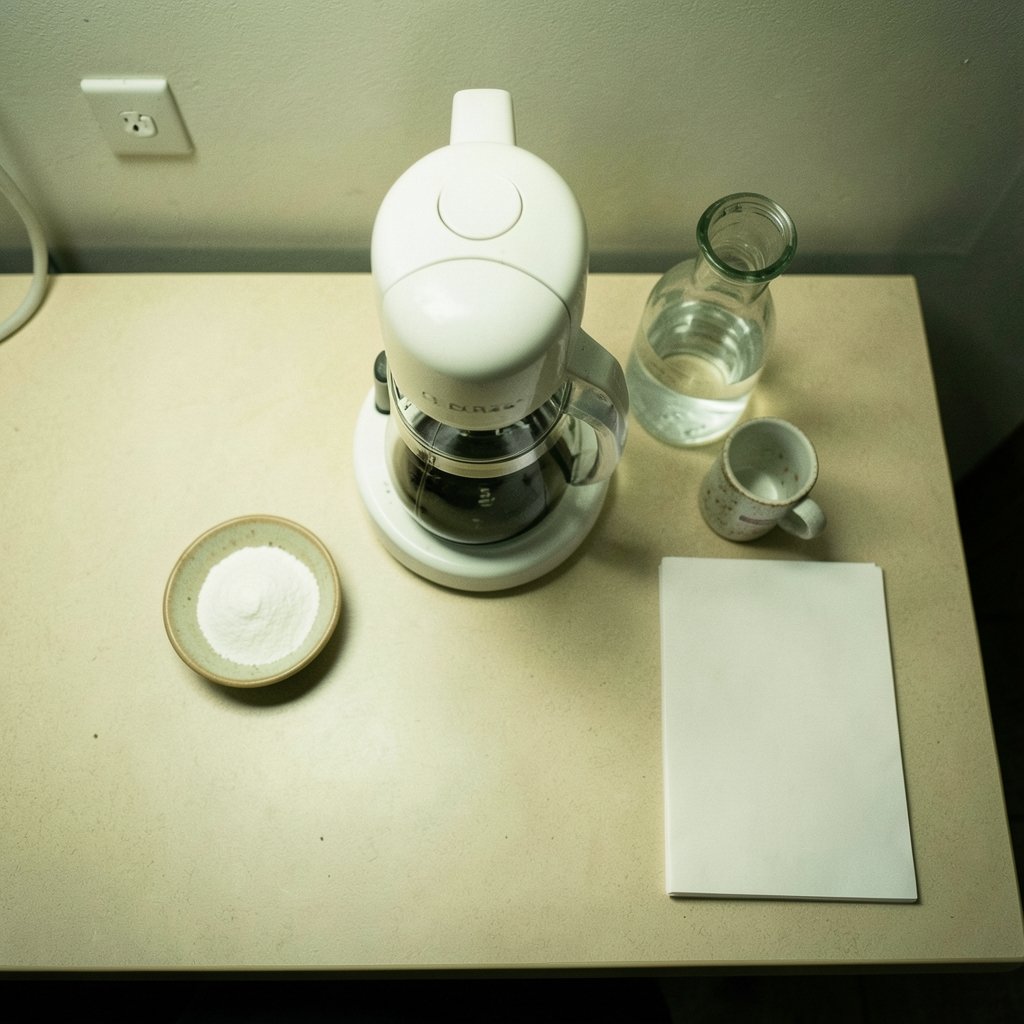
What if the reason your morning coffee tastes flat and bitter has nothing to do with your beans and everything to do with the chalky film hiding inside your machine? That film is limescale, and it builds up quietly with every pot you brew. Two kitchen-cabinet acids, citric acid and white vinegar, are the usual suspects for dissolving it. They are not interchangeable, though, and picking the wrong one for your machine can cost you flavor, time, or even a warranty. Here is how the two actually compare, what each one does well, and where each one can go wrong.
Why Coffee Makers Get Scaly in the First Place
Tap water carries dissolved minerals, mostly calcium and magnesium. When that water heats up inside your machine, those minerals settle out and cling to heating elements, tubes, and shower screens as calcium carbonate, the same stuff in kettle fur and bathroom tile. The layer starts thin and invisible. Over weeks it thickens, narrowing the flow path and insulating the heating element.
The practical fallout is easy to spot. Brews slow to a crawl. The machine sounds strained. Coffee comes out cooler and tastes dull, because scale traps heat and blocks the water from contacting grounds evenly. In espresso machines, scale can throw off pressure and temperature stability, which shows up as sour or bitter shots that no grind adjustment fixes. Descaling is the fix, and both citric acid and vinegar will dissolve calcium carbonate. The differences lie in how gently they treat your machine, how easy they are to rinse out, and how they smell while they work.
Citric Acid vs Vinegar: A Side-by-Side Comparison
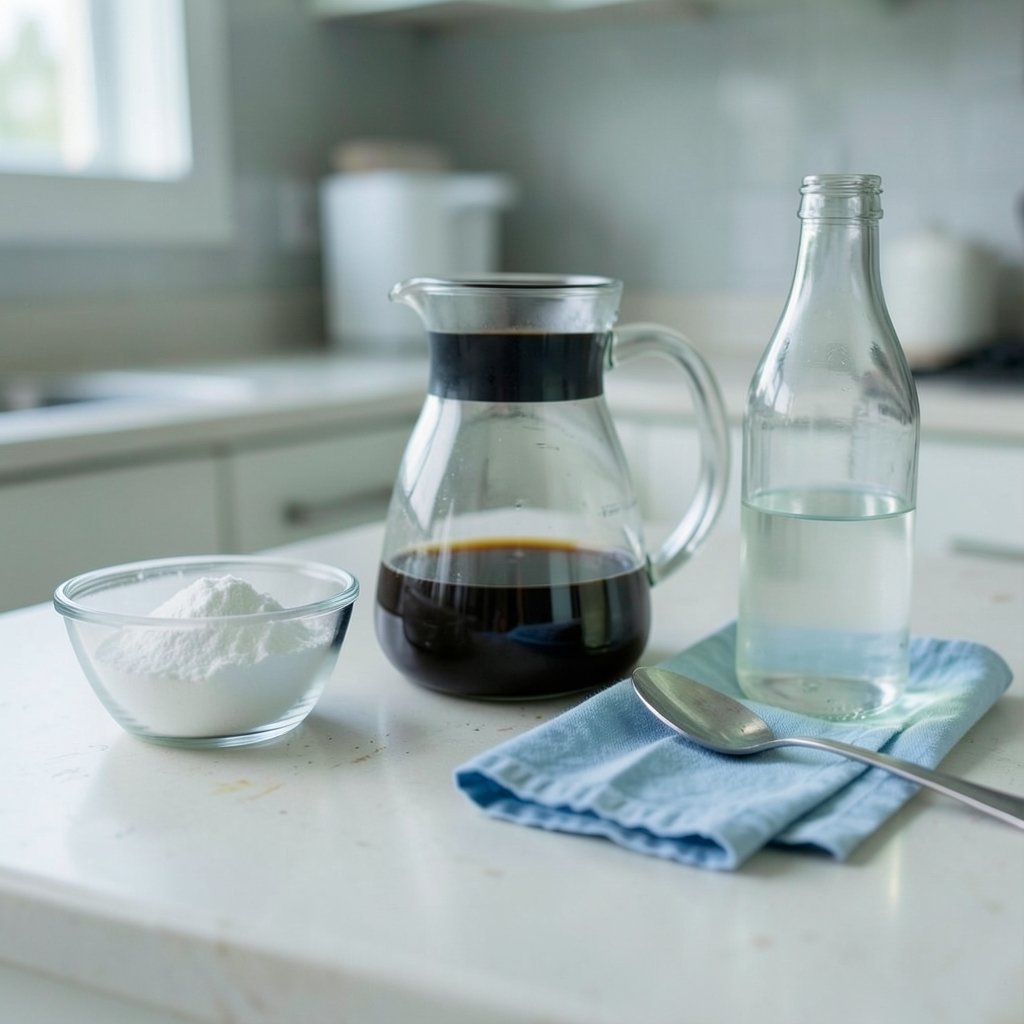
Citric acid is a weak organic acid sold as a white powder that you dissolve in water. White vinegar is dilute acetic acid, usually around 5 percent strength straight from the bottle. Both are food-safe, both are cheap, and both attack scale the same way: the acid reacts with calcium carbonate and turns it into soluble compounds that rinse away.
| Factor | Citric Acid | White Vinegar |
|---|---|---|
| Form | Powder, mixed with water | Ready-to-use liquid (about 5% acetic acid) |
| Smell | Nearly odorless | Sharp, lingering vinegar smell |
| Taste risk if under-rinsed | Low | Noticeable in the next few brews |
| Effect on metals | Generally gentle | Can attack aluminum and some metals |
| Cost per descale | Low | Very low |
| Best suited to | Espresso machines, metal-sensitive gear | Drip machines, kettles, simple brewers |
| Typical mix | 1 to 2 tablespoons per liter of water | 1:1 or 1:2 with water, per the manual |
Neither acid is a general cleaner. Descaling removes mineral scale; cleaning removes coffee oils and residue. A machine can need both, and one does not replace the other. If your basket is gummed up with old oils, an acid cycle will not fix that.
Where Citric Acid Pulls Ahead
For espresso machines and any brewer with metal internals, citric acid is usually the safer bet. Acetic acid is more aggressive toward aluminum and some softer metals, and repeated vinegar cycles can dull finishes and stress seals over time. Citric acid, being a weaker acid on metal, tends to be kinder to the inside of a machine while still making short work of scale.
The smell is the other big advantage. Vinegar’s odor hangs around, and if you do not rinse thoroughly, it can taint the first pot or two. Citric acid leaves almost no trace once flushed, which matters if you brew a delicate light roast and do not want to taste the descaler. A common working mix is roughly 1 to 2 tablespoons of citric acid powder per liter of water, though the exact ratio depends on scale thickness and the machine. If you are dialing in an espresso setup and want the gear to last, pairing a careful descale schedule with a quality coffee grinder for espresso and fresh coffee beans for espresso keeps the whole chain in shape.
One caution: citric acid is gentle, not magic. At high concentration or with very long contact time, it can still affect some materials. Follow the dose, do not leave it sitting in the machine overnight, and always finish with clean-water rinse cycles.
Where Vinegar Still Makes Sense
Vinegar earns its reputation for a reason. It is in almost every kitchen, it is ready to pour, and it costs pennies. For a basic drip coffee maker with plastic and stainless internals, a white vinegar cycle is a perfectly reasonable descale, and many manufacturers describe exactly that method in their manuals. The standard approach is a mix of white vinegar and water, run through a brew cycle, followed by one or two full cycles of plain water to flush the acid and odor out.
The catch is that dilution ratios vary by brand. Some manuals call for equal parts vinegar and water; others want one part vinegar to two parts water. Guessing wrong means either a weak descale that leaves scale behind or a strong one that lingers in the machine. Vinegar is also a poor fit for machines with aluminum parts, and it is the wrong tool if you own a high-end espresso machine with a manufacturer-specific descaling program.
How to Descale With Citric Acid
- Empty the water reservoir and remove the filter if your machine uses one.
- Dissolve roughly 1 to 2 tablespoons of citric acid powder in a liter of warm water, stirring until it is clear.
- Pour the citric acid liquid into the reservoir and run a brew cycle, or start the machine’s descale mode if it has one.
- Let the liquid sit in the machine for 10 to 20 minutes to soften stubborn scale, then run the rest through.
- Fill the reservoir with clean water and run two or three full rinse cycles.
- Brew one throwaway pot and taste it. If any tang remains, rinse once more.
How to Descale With White Vinegar
- Check the manual for the brand’s recommended vinegar-to-water ratio before you start.
- Mix white vinegar and water in the reservoir, typically 1:1 or 1:2.
- Run a brew cycle, then pause partway if your machine allows it so the vinegar mix sits on the heating element for 15 to 30 minutes.
- Finish the cycle and dump the used vinegar mix.
- Run at least two full reservoirs of plain water through the machine to flush the acid and smell.
- Brew and discard one pot before drinking, then taste the next one to confirm the vinegar is gone.
Mistakes People Make With Both Acids
The biggest error is skipping the rinse. Acid left in the machine taints coffee and keeps working on internal parts longer than it should. The second is using either acid as a stand-in for regular cleaning, which leaves coffee oils to go rancid in the brew path. The third is ignoring the manual. Some manufacturers require their own descaling product, and using a home mix can void a warranty. The fourth is descaling too rarely, then overcorrecting with a double-strength batch that sits too long. Scale builds on a schedule tied to your water hardness, so a soft-water household might descale every few months while a hard-water one needs it monthly.
If you are choosing a machine and want one with an easy descale routine, it helps to read up on the best pour over coffee maker options, which are simple to clean, or compare pod machines in a guide to the best keurig coffee maker and the best k cup coffee maker before you commit. Whatever you brew on, the best coffee in the world will taste muddy through a scaled machine.
So Which Should You Use?
For most espresso machines and metal-heavy brewers, citric acid is the better default: it descales thoroughly, rinses clean, and is gentle on parts. For a simple drip machine with plastic and stainless internals, white vinegar is a fine, cheap choice as long as you follow the manual’s ratio and rinse well. If your machine’s manual names a specific descaler, that instruction outranks both. The honest answer is that the best acid is the one your machine was designed for, used at the right strength, with a proper rinse at the end.
Frequently Asked Questions
Can I use citric acid and vinegar together?
There is no benefit to mixing them. Both are acids that dissolve scale, and combining them just makes the mix harder to dose and rinse. Pick one, use it at the right strength, and flush thoroughly.
How often should I descale my coffee maker?
It depends on water hardness and how much you brew. A hard-water household that brews daily may need a descale every month, while soft water might stretch to every three months. Slow brewing and a chalky film are signs it is overdue.
Will vinegar damage my espresso machine?
It can. Acetic acid is harsher on aluminum and some metals and seals than citric acid, and the smell lingers. For espresso machines, citric acid or the manufacturer’s own descaler is the safer choice, and the manual should settle it.
Does citric acid leave a taste in the coffee?
Not if you rinse properly. Citric acid is nearly odorless and flushes out easily with two or three clean-water cycles. If a faint tang remains, run one more rinse and brew a throwaway pot.
Can I descale with lemon juice instead?
Lemon juice contains citric acid, so it can work in a pinch, but it also carries sugars and pulp that can gum up a machine. Powdered citric acid is cleaner, easier to dose, and leaves nothing behind.
Is descaling the same as cleaning my coffee maker?
No. Descaling removes mineral scale with an acid, while cleaning removes coffee oils and residue, usually with a detergent or cleaning tablet. A machine needs both on separate schedules, and one does not substitute for the other.
Conclusion
Citric acid and vinegar both dissolve the limescale that quietly ruins coffee, but they are not equals. Citric acid is the gentler, cleaner-rinsing option and the smarter pick for espresso machines and metal-sensitive gear. White vinegar is cheap, convenient, and perfectly adequate for a basic drip brewer, provided you follow the manual’s ratio and rinse until the smell is gone. Whichever you choose, dose it correctly, let it sit long enough to work, and flush it out completely. Your machine will run quieter, heat better, and pour coffee that finally tastes like the beans you paid for.
Final tip on storage and safety: Keep citric acid powder sealed in a dry container, away from moisture, since it clumps easily and a caked jar makes dosing unreliable. Label any pre-mixed descaling liquid and never store it in an unmarked bottle or a drinks container. Keep both acids out of reach of children and pets, and never mix either with bleach or other cleaners, since combining acids with chlorine products can release harmful fumes. Wear gloves if you have sensitive skin, and ventilate the room while descaling. When in doubt about a machine’s internals, contact the manufacturer before you pour anything in. A two-minute question can save an expensive repair, and the answer usually settles the citric acid versus vinegar debate for your specific model. With the right acid, the right dose, and a thorough rinse, descaling becomes a quick routine rather than a gamble, and your coffee maker keeps delivering the cup you expect for years.



