

Amazon Redshift arrived in 2012, and it broke a decades-old assumption: that a serious data warehouse had to live in a locked room full of expensive hardware. Within a few years, the cloud warehouse went from novelty to default. Today, a mid-sized company can spin up analytical capacity in minutes, query billions of rows, and shut it all down before lunch.
That speed is real, but so is the confusion. Vendors use the same words to mean different things, pricing models resist easy comparison, and “lakehouse” has blurred a boundary that used to be clean. This guide cuts through it: what a cloud data warehouse is, how its architecture differs from the old on-premises model, where costs hide, and how to choose between the big three platforms.
What a Cloud Data Warehouse Actually Is
A cloud data warehouse is a data warehouse delivered as a managed service. The provider runs the servers, storage, networking, and tuning; the customer loads data and writes queries. Compute and storage are provisioned and scaled by the provider rather than on customer hardware.
That last point matters more than it sounds. In a traditional warehouse, storage and compute were welded together, so you bought both whenever you needed either. A cloud warehouse decouples them. Need more horsepower for a Monday morning reporting crunch? Scale compute up, then back down. Your data sits untouched.
Columnar storage and MPP: the engine room
Two design choices do most of the heavy lifting.
Columnar storage keeps values from the same column together on disk rather than storing whole rows. Analytical queries typically scan a few columns across millions of rows, so columnar layout means reading far less data. Massively parallel processing (MPP) splits a query across many machines working simultaneously. Put them together and you get the defining trait of modern analytics: scanning huge datasets in seconds rather than hours.
Neither idea is new. Academic work on column-oriented databases, including the C-Store paper by Stonebraker and colleagues in 2005, laid much of the groundwork. The cloud made these engines cheap enough to rent by the second.
How the Architecture Fits Together
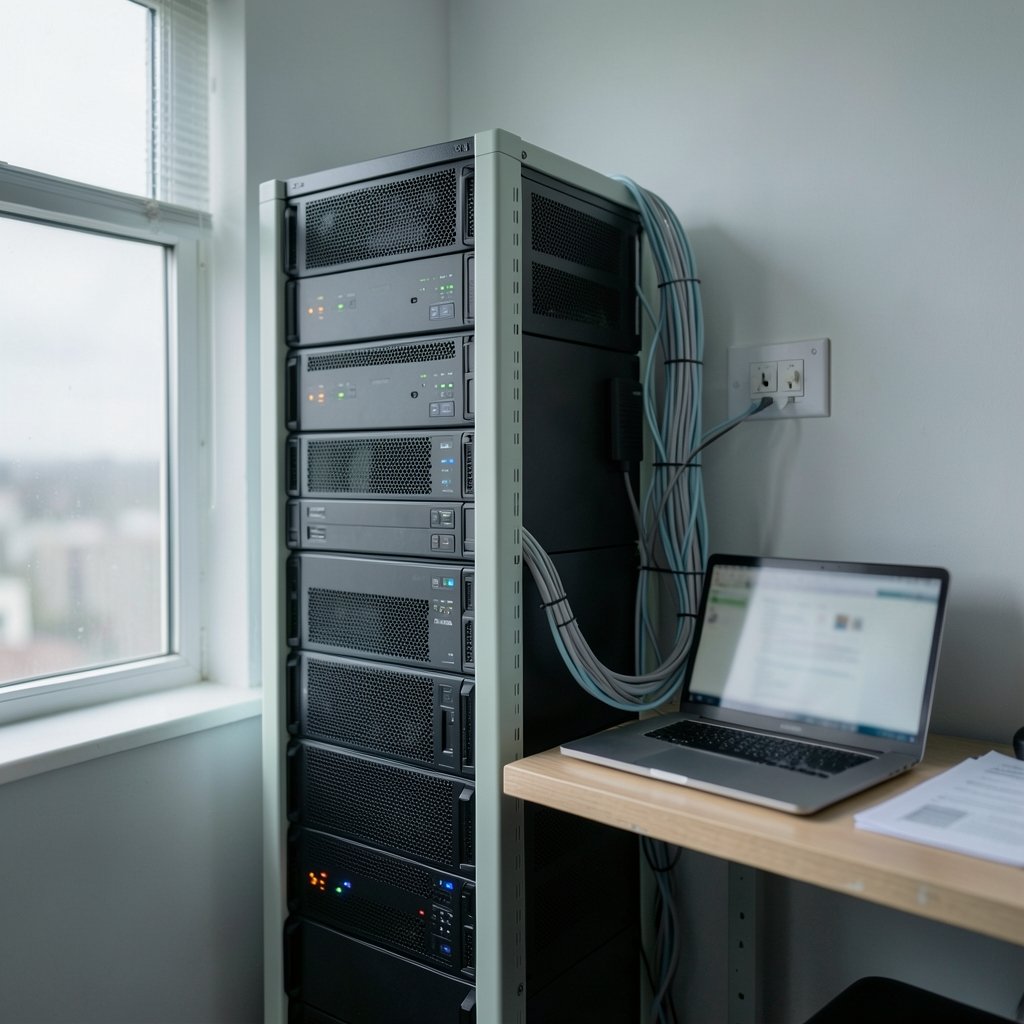
Most cloud warehouses share a common shape, even when the marketing language differs.
- Ingestion layer. Data lands from transactional databases, event streams, SaaS tools, and flat files. Batch loads still dominate, but streaming ingestion is increasingly standard.
- Storage layer. Data sits in a proprietary format or in cheap object storage such as S3 or Google Cloud Storage. Storage is usually the least expensive line item.
- Compute layer. Independent clusters or warehouses run queries. This is where money is spent and where tuning pays off.
- Services layer. Metadata, access control, query optimization, and workload management sit around the core engine.
- Consumption layer. BI tools, notebooks, and applications query the warehouse through SQL.
The separation of storage and compute is the architectural shift that separates cloud warehouses from on-premises MPP systems. It enables independent scaling and pay-per-query economics, which in turn changed how teams budget for analytics.
That shift also reshaped the wider market. The same elastic infrastructure now underpins everything from BI dashboards to machine learning pipelines, and the AWS vs Azure vs Google Cloud 2026 comparison shows how aggressively the three hyperscalers compete on exactly this layer.
The Big Three, Side by Side
Snowflake launched publicly in 2014 and popularized separating storage and compute with per-second, workload-isolated billing. Redshift and BigQuery followed different paths to similar destinations. Here is an honest comparison of how they differ in practice.
| Dimension | Amazon Redshift | Google BigQuery | Snowflake |
|---|---|---|---|
| Billing model | Node or cluster hours; serverless option | On-demand per TB scanned or slot reservations | Per-second compute plus storage |
| Scaling style | Resize clusters, concurrency scaling | Automatic, serverless by default | Resize warehouses, multi-cluster |
| Concurrency handling | Concurrency scaling queues | Slot reservations | Multi-cluster warehouses |
| Semi-structured data | SUPER type for JSON | Native nested and repeated fields | VARIANT type |
| Multi-cloud | AWS-centric | Google Cloud | Runs on AWS, Azure, Google Cloud |
| Best fit | Teams already deep in AWS | Spiky, unpredictable query volumes | Multi-cloud and workload isolation |
A word of caution: feature sets and prices change quarterly. Any comparison table is a snapshot, not a verdict. Check current documentation before committing.
Vendor documentation is the only reliable source for specifics. AWS publishes “What is Amazon Redshift?” in its docs, Google Cloud maintains “Introduction to BigQuery,” and Snowflake documents its “Key Concepts & Architecture.” Read those pages before signing anything.
What These Platforms Cost, and Why Bills Surprise People
Pricing models vary in ways that make apples-to-apples comparison genuinely hard:
- Per-second compute plus storage (Snowflake). You pay for warehouse uptime, so a warehouse left running idle still bills.
- Slot or on-demand (BigQuery). On-demand charges by data scanned, which rewards tight queries and punishes `SELECT *`.
- Node or cluster hours (Redshift). Predictable for steady workloads, less so for spiky ones.
The most common mistake is treating the warehouse like a database server that stays on. A warehouse left running overnight because someone forgot to suspend it is the cloud equivalent of leaving the lights on in an empty office. Set auto-suspend aggressively, size warehouses to the workload rather than to ambition, and review query patterns monthly.
A second trap: scanning more data than necessary. Partitioning tables by date, clustering on frequently filtered columns, and avoiding wildcard queries can cut scanned bytes dramatically. On scan-based pricing, that discipline translates directly into money.
A third, subtler issue is concurrency. Ten analysts running dashboards simultaneously can queue behind each other on a fixed-size cluster. Cloud platforms solve this differently, but every solution costs something. Budget for peak concurrency, not average usage.
Cloud Warehouse vs. Data Lake vs. Lakehouse
The line between warehouses and lakes has blurred, and that is mostly good news for buyers.
A data lake stores raw files cheaply in object storage with schema applied at read time. It is flexible and inexpensive, but without governance it becomes a swamp. A data warehouse enforces schema and delivers fast, governed SQL. A lakehouse tries to combine both: open file formats with warehouse-style management layered on top.
In practice, most organizations end up with a hybrid. The warehouse handles governed reporting; the lake handles raw and semi-structured data; external tables bridge the two. If you are weighing where to keep your data more broadly, the cloud storage vs local storage key differences are worth understanding first, because storage economics drive most architecture decisions downstream.
Practical Steps to Get Started Without Regret
Experience from teams that have done this well suggests a sequence.
- Start with one use case. Pick a reporting pain point with clear owners. Do not migrate everything at once.
- Model before you load. Define facts, dimensions, and grain. Kimball and Inmon remain the canonical references for warehouse modeling, and their principles survive the move to cloud.
- Load a real slice of data. Synthetic data hides performance problems. Load a representative month and run your actual queries.
- Set guardrails early. Row-level security, cost alerts, and query timeouts are far easier to add before fifty users arrive.
- Measure cost per query, not total spend. Total spend grows with adoption. Cost per query tells you whether the platform is getting more or less efficient.
A frequent mistake is skipping step two. Teams lift raw tables into the warehouse, point BI tools at them, and wonder why every dashboard tells a different story. The cloud removes infrastructure work, not modeling work.
Where AI Fits In
Cloud warehouses have become the default substrate for analytics and machine learning alike, because models need clean, governed, columnar data at scale. Modern platforms increasingly support natural-language querying and automated optimization, which lowers the barrier for non-specialists.
That said, the fundamentals still decide outcomes. A model trained on messy tables produces confident nonsense. Teams that invest in data quality and clear definitions get more from AI features than teams that bolt them on top of chaos. For a practical walkthrough of the analytical side, see how to use AI for data analysis. The infrastructure underneath matters too, and the economics of what an AI data center actually contains explain why compute capacity keeps shaping platform roadmaps. (What is a Data Warehouse?)
Common Mistakes That Cost Real Money
A short list, drawn from patterns that recur across organizations:
- Leaving warehouses running. Auto-suspend is not optional.
- Over-partitioning. Too many small partitions slow queries instead of speeding them up.
- Ignoring workload isolation. ETL jobs and analyst queries should not compete for the same compute.
- Skipping cost monitoring. Untagged resources are invisible resources.
- Treating the warehouse as a transaction database. It is built for analytical reads, not high-frequency single-row writes.
None of these are exotic. They are the ordinary slips that separate a well-run warehouse from an expensive one.
Conclusion
The cloud data warehouse is less a product category than a set of architectural decisions: separate storage from compute, store data by column, parallelize aggressively, and pay for what you use. Redshift, BigQuery, and Snowflake each interpret those decisions differently, and the right choice depends on your existing cloud, your query patterns, and your tolerance for billing surprises.
What has genuinely changed is the barrier to entry. A team that once needed a six-month hardware procurement cycle can now test a hypothesis in an afternoon. The disciplines that made warehouses valuable in the first place, careful modeling, clear definitions, and governance, have not gone anywhere. They have simply become the differentiator, because the infrastructure no longer is.
Frequently Asked Questions
What is a cloud data warehouse in simple terms?
It is a data warehouse that runs as a managed cloud service. The provider handles servers, storage, and tuning, while your team loads data and writes SQL queries. You pay for usage rather than owning hardware.
Is a cloud data warehouse the same as a database?
No. A standard database is optimized for many small reads and writes, such as processing an order. A warehouse is optimized for large analytical scans across millions of rows. They serve different jobs and are usually run side by side.
Which is better, Redshift, BigQuery, or Snowflake?
There is no universal winner. Redshift suits teams already invested in AWS. BigQuery handles spiky, unpredictable query volumes well. Snowflake appeals to multi-cloud organizations that want strict workload isolation. Match the platform to your existing cloud and query patterns.
How much does a cloud data warehouse cost?
Costs vary widely by platform, data volume, and query habits. Pricing models differ enough that direct comparison is difficult: some charge per second of compute, others per terabyte scanned. The biggest cost lever is usually discipline, not the vendor.
Do I still need a data lake if I have a warehouse?
Often yes. Lakes store raw and semi-structured data cheaply, while warehouses deliver fast governed SQL. Many organizations run both and bridge them with external tables, an arrangement sometimes called a lakehouse.
Can a cloud data warehouse handle real-time data?
Increasingly, yes. Streaming ingestion is now common, though “real-time” usually means seconds to minutes rather than instant. For true sub-second needs, teams typically pair the warehouse with a specialized serving layer.
The pattern holds across the industry: managed services absorb operational complexity, and the competitive pressure moves to governance, cost control, and data quality. Whichever platform you choose, treat the decision as reversible. Start small, measure honestly, and let workload evidence rather than vendor promises guide the next step. The warehouse is a means to better decisions, not an end in itself, and the teams that remember this consistently get more value from whichever platform they pick.



