

In September 2011, a two-page document from the U.S. National Institute of Standards and Technology quietly became the most cited definition in cloud computing. NIST Special Publication 800-145 described cloud computing through five essential characteristics, three service models, and four deployment models. Fifteen years later, that framework still shapes how architects design systems, even though serverless computing, edge nodes, and multi-cloud deployments barely existed when it was written.
That gap between a stable definition and a fast-moving reality is the heart of cloud infrastructure architecture. The fundamentals have not changed. The trade-offs have multiplied.
What Cloud Infrastructure Architecture Actually Means
Cloud infrastructure architecture is the arrangement of compute, storage, networking, and identity resources across a cloud environment, plus the rules that govern how those resources talk to each other. It covers the physical layer the provider manages and the logical layer the customer controls.
The NIST model remains the clearest starting point. It splits cloud services into IaaS (raw virtual machines and networks), PaaS (managed runtimes), and SaaS (finished applications). It also defines four deployment models: public, private, hybrid, and community cloud.
What NIST did not anticipate is how blurry those lines would become. A modern serverless function is arguably neither pure PaaS nor IaaS. A managed Kubernetes cluster sits somewhere in between. Architects now spend more time on boundaries than on categories.
For a broader grounding in the discipline itself, it helps to understand what software architecture covers before layering cloud specifics on top. Infrastructure architecture is a subset of that larger practice, not a replacement for it.
The Three Layers Every Cloud Architecture Must Get Right
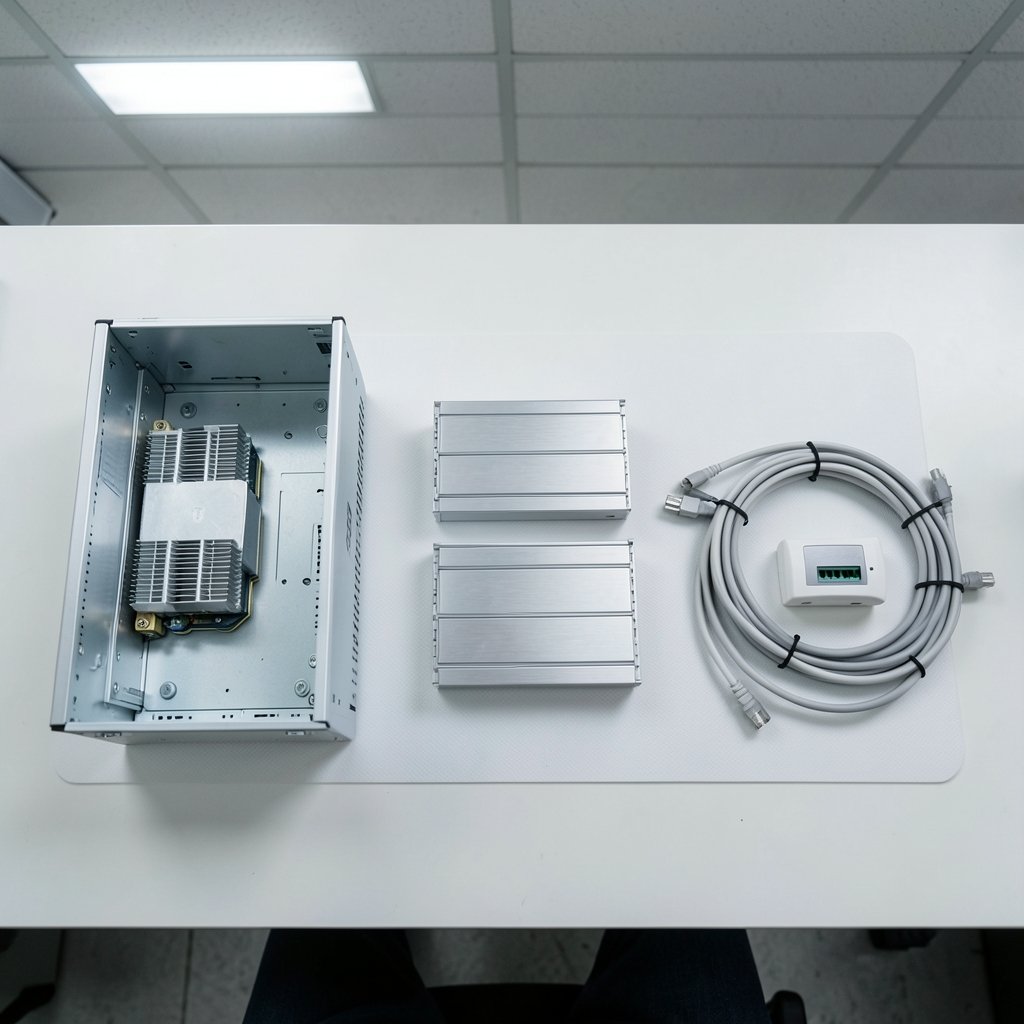
Most cloud failures trace back to one of three layers. Get them right and the rest becomes manageable.
The Compute Layer
Compute decisions drive cost more than any other choice. Virtual machines offer predictability. Containers offer density. Serverless offers near-zero idle cost but introduces cold starts and execution time limits.
The practical mistake here is choosing compute by hype rather than workload shape. A batch job that runs twice a day does not need a always-on cluster. A latency-sensitive API does not belong on cold-start-prone functions without careful tuning. Architects who profile their workloads first almost always land on cheaper, simpler designs.
The Storage and Data Layer
Storage looks simple until egress fees, consistency models, and durability guarantees enter the picture. Object storage behaves differently from block storage, and both differ from managed databases. The key differences between cloud storage and local storage matter enormously here, because teams routinely misjudge latency and cost when they migrate workloads without rethinking data access patterns.
Before designing anything, it is worth reviewing what cloud storage is and how it works at a mechanical level. Durability, replication, and access tiers are architectural decisions, not procurement details.
The Network and Identity Layer
Networking is where cloud architecture gets genuinely hard. VPC design, subnet segmentation, private endpoints, and cross-region peering all compound. Identity sits alongside it: every service-to-service call needs authentication, and overly permissive roles are the single most common security finding in cloud audits.
A useful rule of thumb from practice: design the network before the application. Teams that sketch compute first and retrofit networking later almost always rebuild within eighteen months.
Service and Deployment Models Compared
Choosing a model is a trade-off exercise, not a ranking exercise. The table below reflects how these options typically behave in production.
| Model | Control | Operational Burden | Best Fit |
|---|---|---|---|
| IaaS | High | High | Legacy lift-and-shift, custom kernels |
| PaaS | Medium | Medium | Standard web apps, rapid delivery |
| Serverless | Low | Low | Event-driven, spiky, or intermittent workloads |
| Containers (managed) | Medium-high | Medium | Microservices, portability requirements |
Deployment model matters just as much. Public cloud wins on elasticity and speed. Private cloud wins on regulatory control. Hybrid attempts both and usually succeeds only when the tooling is consistent across environments. Multi-cloud adds negotiating power and resilience but multiplies operational complexity, which is why many organizations adopt it for a handful of workloads rather than everything. (What is Cloud Computing?)
Why Provider Choice Shapes the Architecture
The three major providers are not interchangeable, and pretending otherwise causes real pain. A comparison of AWS vs Azure vs Google Cloud shows meaningful differences in networking models, identity systems, and managed service depth. Azure leans heavily on enterprise directory integration. AWS offers the broadest service catalog. Google Cloud tends to emphasize data analytics and Kubernetes-native tooling.
Architects should pick based on three questions: Where does the existing identity live? Which managed services match the workload? What does the team already know? Skills gaps cost more than list-price differences, and migration costs dwarf both.
There is also a growing privacy dimension. Designs that route sensitive computation through third-party infrastructure now attract scrutiny, and the debate around Apple private cloud compute and Google cloud illustrates how confidential computing and attestation are moving from niche to mainstream architectural concerns. (Cloud computing)
Design Principles That Hold Up in Production
Provider frameworks converge on similar advice, even when the pillar counts differ. AWS publishes six pillars in its Well-Architected Framework, including sustainability. Azure and Google each publish five. The overlap is where the durable lessons live.
Design for failure, not against it. Every component will fail. The architecture question is what happens next. Redundancy across availability zones, health checks, and automated failover turn outages into blips.
Decouple everything you can. Synchronous chains amplify latency and multiply blast radius. Queues, event buses, and asynchronous workflows let components fail independently.
Make cost a first-class metric. Tagging, budgets, and regular rightsizing reviews prevent the slow creep that turns a lean deployment into an expensive one. Cost anomalies are often the first signal of an architectural problem.
Automate the boring parts. Infrastructure as code makes environments reproducible. Manual console changes are the leading cause of configuration drift, and drift is the leading cause of “it works in staging” mysteries.
Assume breach. Least-privilege identity, encryption at rest and in transit, and segmented networks limit damage when something goes wrong. Security designed in later costs several times more to retrofit.
Common Mistakes That Sink Cloud Projects
Experience across many migrations surfaces the same failure patterns again and again.
- Lifting and shifting without redesign. Moving a monolith to a VM captures none of the cloud’s elasticity and all of its cost.
- Ignoring egress and inter-zone traffic. Data transfer quietly becomes a top-three line item.
- Over-engineering for scale that never arrives. Premature multi-region complexity slows delivery and adds failure modes.
- Skipping the landing zone. Accounts, guardrails, and logging should exist before the first workload, not after the tenth.
- Treating disaster recovery as a checkbox. Untested backups are not backups.
The pattern behind all five is the same: teams optimize for the migration deadline instead of the system’s next three years.
Building a Reference Architecture That Scales
A workable approach follows a predictable sequence.
- Map the workload. Identify traffic patterns, data sensitivity, latency budgets, and compliance constraints.
- Define the landing zone. Set up accounts or subscriptions, identity federation, logging, and network topology first.
- Choose compute and data services against the workload profile, not against vendor marketing.
- Design for observability. Metrics, logs, and traces should exist from day one; retrofitting them is painful.
- Codify everything. Infrastructure as code, automated pipelines, and repeatable environments.
- Test failure deliberately. Run game days, kill instances, simulate zone outages.
- Review quarterly. Architecture decisions age; the review cadence keeps them honest.
For teams comparing storage and service options during step three, a structured look at the best cloud storage services compared can shortcut the evaluation.
Where Cloud Architecture Is Heading
Several shifts are reshaping the discipline right now. FinOps has moved from finance curiosity to engineering requirement, with cost ownership pushed to the teams that provision resources. Platform engineering is absorbing much of what used to be called DevOps, giving developers self-service infrastructure through internal portals. Confidential computing is making encrypted-in-use workloads practical. And edge architecture is pushing compute closer to users for latency-sensitive applications.
None of these invalidate the fundamentals. They simply add new constraints to the same trade-off space NIST described in 2011.
Conclusion
Cloud infrastructure architecture rewards discipline more than cleverness. The teams that succeed are rarely the ones with the most sophisticated designs; they are the ones that matched compute to workload, designed networking before applications, automated relentlessly, and reviewed their assumptions on a schedule. The NIST definition still holds because the underlying questions have not changed: what runs where, who can reach it, what happens when it breaks, and what it costs. Answer those four questions honestly, and the architecture tends to take care of itself.
Frequently Asked Questions
What is cloud infrastructure architecture in simple terms?
It is the blueprint for how computing resources are organized in the cloud. That includes servers, storage, networks, and security controls, plus the rules connecting them. Think of it as the floor plan rather than the furniture.
What are the main cloud service models?
The three standard models are IaaS, PaaS, and SaaS. Infrastructure as a service gives raw machines and networks. Platform as a service provides managed runtimes. Software as a service delivers finished applications. Most real environments mix all three.
How is cloud architecture different from traditional IT architecture?
Traditional architecture assumes fixed capacity and long procurement cycles. Cloud architecture assumes elastic capacity, API-driven provisioning, and pay-per-use pricing. That changes design priorities: failure handling, cost control, and automation matter far more.
Do I need multi-cloud architecture?
Usually not at first. Multi-cloud adds resilience and negotiating power but multiplies tooling complexity and skills requirements. Most organizations do better learning one provider thoroughly, then adding a second only for specific regulatory or resilience needs.
What are the biggest mistakes in cloud architecture?
Lift-and-shift migrations without redesign, ignoring data egress costs, skipping the landing zone, and leaving disaster recovery untested. All four share a root cause: optimizing for launch date instead of long-term operability.
How often should cloud architecture be reviewed?
Quarterly works for most organizations. Workloads change, pricing changes, and new services appear constantly. A regular review catches drift, rightsizes resources, and retires decisions that no longer fit the business.
The FAQ above covers the questions that surface most often, but two deserve a closing note. First, cost visibility is an architectural feature, not an accounting afterthought. Teams that tag resources consistently and review spend weekly catch misconfigurations while they are still cheap to fix. Second, documentation decays faster than infrastructure. A short architecture decision record for each significant choice, kept alongside the code, preserves the reasoning that future engineers will otherwise have to reconstruct from console history.
Finally, treat the reference architecture as a starting point rather than a destination. The sequence outlined earlier — map the workload, define the landing zone, choose services against the profile, instrument, codify, test failure, review — is deliberately cyclical. Each quarter’s review feeds the next round of mapping, and the loop tightens as the team learns where its real bottlenecks live. Organizations that run this loop consistently report fewer surprises: fewer surprise bills, fewer surprise outages, fewer surprise rebuilds.
The discipline is unglamorous, but it compounds. A landing zone set up correctly in week one saves months of retrofitting in year two. A network sketched before the first application saves a migration in year three. A cost tag applied at provisioning saves an audit in year four. None of these decisions are technically difficult in isolation; the difficulty lies in making them early, consistently, and before deadline pressure pushes them aside. That, more than any provider feature or service catalog, is what separates cloud architectures that age well from those that get rebuilt.



