
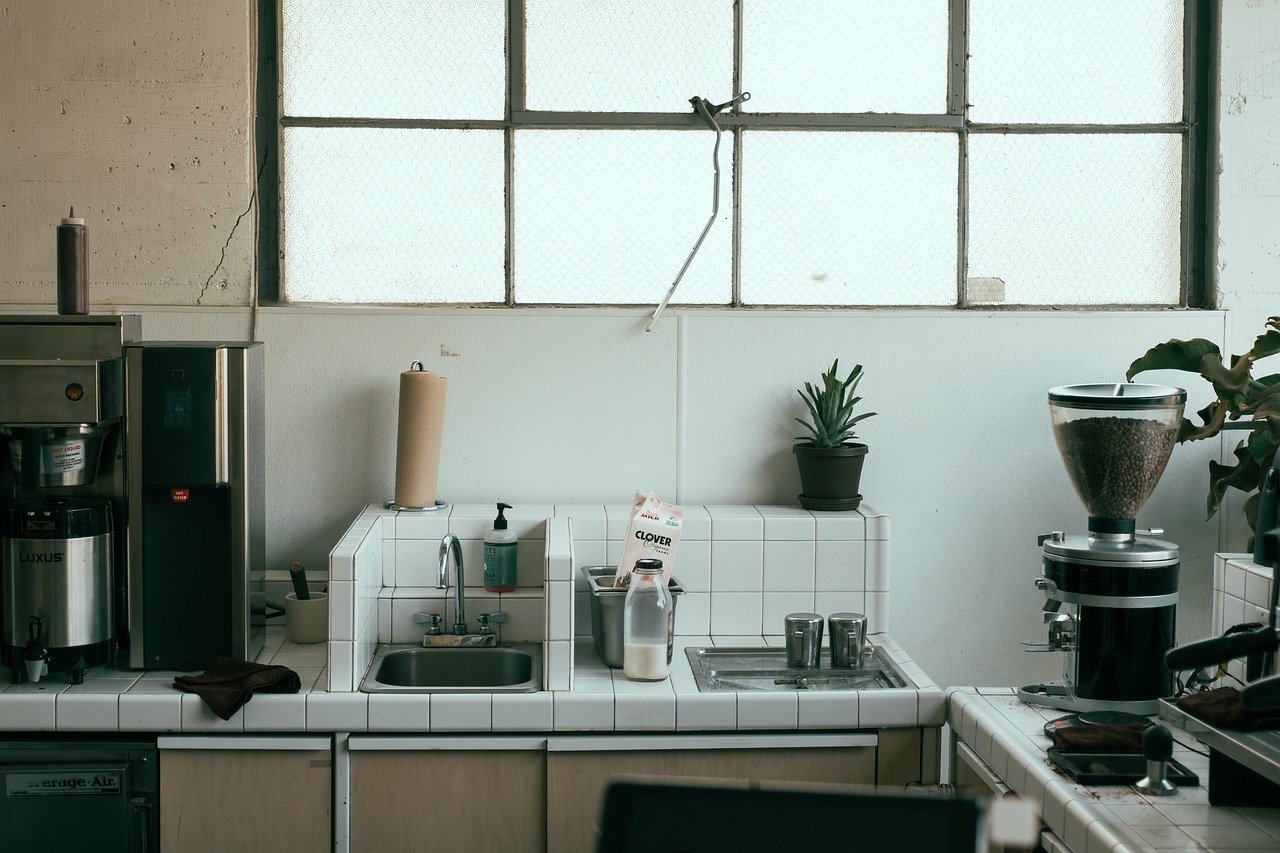
How much counter space does a coffee maker really need? Ask anyone who has squeezed a full-size drip machine between a toaster and a utensil crock, and the answer is usually “more than I have.” Small kitchens force a trade-off that big-kitchen reviews rarely address: when you buy a brewer, you also commit to a footprint, a height clearance, and a daily routine that has to survive a cramped counter.
This guide looks at what actually works when space is tight. It covers the real dimensions you should measure, the trade-offs between machine types, the mistakes people make before the box is even open, and the practical habits that keep a tiny coffee setup from turning into clutter. The goal is simple: a machine that fits, brews well, and does not make you resent your kitchen every morning.
Measure Three Things Before You Shop
Most coffee maker listings lead with cup capacity and features. Almost none lead with the number that matters most in a small kitchen: the footprint. Before comparing models, measure three things.
First, the counter depth and width you can dedicate. Standard U.S. kitchen counters run about 24 to 25 inches deep, but usable space disappears fast once appliances, a dish rack, and a knife block claim their territory. A machine that is 8 inches wide and 12 inches deep sounds small until you realize it needs clearance behind it for the cord and above it for the lid.
Second, the under-cabinet height. This is the number people forget. Upper cabinets typically sit around 18 inches above the counter, but the practical clearance is often less once you account for the cabinet door swing and any under-cabinet lighting. Many compact brewers clear this easily; taller machines with a raised water reservoir or a swing-top lid do not.
Third, the clearance for operation, rather than storage alone. A machine with a top-loading water tank needs room to open. A pod machine needs room to lift the handle. A drip machine with a front-loading basket needs room to slide the carafe out. Measure the working zone as well as the resting zone.
A simple test: cut a piece of cardboard to the exact footprint of a machine you are considering and set it on your counter for a day. If it crowds your prep space or blocks a drawer, you have your answer before you spend money.
Match the Machine Type to Your Space and Habits

Not all brewers use space the same way. A machine that is narrow but tall behaves very differently from one that is wide but short. Here is how the main categories compare for small kitchens.
| Machine type | Typical footprint | Height profile | Best for | Main trade-off |
|---|---|---|---|---|
| Single-serve pod machine | Very small, often under 6 inches wide | Low to moderate | One or two drinkers, speed | Higher cost per cup, pod waste |
| Compact drip (4–5 cup) | Small to moderate | Moderate | Small households, batch brewing | Smaller carafe, fewer features |
| Pour-over cone and kettle | Minimal, stores away | None when stored | Control, low cost, tiny spaces | Hands-on brewing, one cup at a time |
| Stovetop moka pot | Minimal, stores away | None when stored | Strong coffee, no electricity | Requires a stove and attention |
| Full-size drip (10–12 cup) | Large | Tall | Families, entertaining | Dominates a small counter |
The pattern is clear: the smaller the machine, the more you trade in capacity or convenience. The trick is deciding which trade-off you can live with daily. (Coffeemaker)
For people who want a compact brewer without giving up control over the brew, a best pour over coffee maker setup is worth a serious look. A cone and a small kettle take up almost nothing when stored, and they leave your counter clear the rest of the day. The catch is that pour-over is a hands-on method. If your mornings are a rush, that ritual becomes a chore fast.
If speed and a tiny footprint matter more than per-cup cost, pod machines win on space. A best keurig coffee maker style brewer can sit in a corner and be ready in under a minute, which is hard to beat in a cramped kitchen. Just be honest about the ongoing cost of pods and the counter space the machine still occupies even when idle.
For households that brew several cups at once but cannot spare a full-size machine, a compact drip brewer is the middle path. A best k cup coffee maker that also accepts ground coffee in a reusable filter gives you flexibility without adding a second appliance, which matters when every inch is contested.
The Mistakes That Waste Space and Money
Most small-kitchen coffee problems are not caused by bad machines. They are caused by decisions made before and after the purchase. These are the ones that come up again and again.
Buying for guests instead of daily life. A 12-cup brewer for two people who each drink one mug is a space hog with a job it rarely does. Match capacity to your actual routine, not to the two times a year you host brunch.
Ignoring the height dimension. A machine can have a tiny footprint and still not fit under your cabinets. Check the height with the lid open rather than closed. This single mistake sends more brewers back to the store than any other.
Forgetting the cord and the clearance behind the machine. Many brewers need a few inches behind them for the plug and ventilation. Pushing a machine flush against the wall can block airflow and make the reservoir hard to remove.
Skipping the water source. A machine with a removable reservoir you can carry to the sink is far easier in a small kitchen than one you have to fill with a pitcher at an awkward angle. This sounds minor until you do it every morning.
Overlooking cleanup space. A brewer that drips or needs a bulky carafe washed in a small sink creates a second bottleneck. Consider where the carafe, filter basket, and pods will actually be cleaned and stored.
Chasing features over fit. Timers, grinders, and milk frothers add bulk. In a small kitchen, a simpler machine that fits usually beats a feature-rich one that crowds you out.
Practical Tips That Make a Difference
Once you have measured and chosen a category, a few habits keep a small coffee setup working smoothly.
Use vertical space where it is safe. A small shelf or a wall-mounted bracket can lift a lightweight pour-over setup off the counter entirely. Keep heavier machines on the counter; do not mount anything that holds water or gets hot above head height.
Choose a machine with a low-profile carafe. Tall carafes need more vertical clearance to slide out. A shorter carafe can tuck under a cabinet and still pour cleanly.
Keep the footprint clear of clutter. The biggest space thief in a small kitchen is not the coffee maker; it is the collection of mugs, pods, and accessories that grows around it. Store pods in a drawer or a small caddy, and keep only the daily-use items on the counter.
Pick a machine with auto shutoff. A brewer that turns itself off saves energy and removes one thing to remember on a rushed morning. Machines without an always-on hot plate also tend to run cooler and use less standby power, though the savings depend heavily on how often you brew.
Test the refill routine. Before you commit, think through the full loop: fill, brew, pour, clean, store. If any step requires moving the machine or reaching awkwardly, it will annoy you every single day.
When a Tiny Footprint Beats a Big Feature List
There is a point in small-kitchen shopping where the best machine is the one that disappears. A pour-over cone, a moka pot, or a compact single-serve brewer that lives in a corner can outperform a larger machine simply because it does not create friction. The best coffee maker for a small kitchen is not the most capable one; it is the one you will actually use without dreading the setup.
That said, do not confuse small with flimsy. Look for a machine with a stable base, a reservoir that seals properly, and a carafe that pours without dripping. A wobbly brewer on a crowded counter is a spill waiting to happen, and spills are worse in a small kitchen where there is no room to recover.
If you also care about what goes in the cup, the machine is only half the equation. Fresh beans and a consistent grind matter as much as the brewer, and a best coffee guide can help you pick a roast that suits your method. For espresso drinkers squeezing a setup into a tight space, choosing the right best coffee beans for espresso matters more than adding another appliance to the counter.
A Simple Decision Path
If you are still deciding, work through this sequence in order. It takes about ten minutes and saves a return shipping label. (Harvard University)
- Measure usable counter width, depth, and under-cabinet height. Write the numbers down.
- Decide how many cups you brew on a typical morning, not on a holiday.
- Pick a machine category that fits those numbers, not the other way around.
- Check the height with the lid open and the clearance behind the machine.
- Confirm the reservoir is removable and the carafe fits under your cabinets.
- Read the cleaning instructions and confirm you have space to do it.
If a machine fails step four or five, cross it off. No feature list is worth a brewer that does not fit.
Conclusion
A coffee maker for a small kitchen is a fit problem before it is a brewing problem. Measure the footprint, the height clearance, and the operating space, then choose a machine category that matches how you actually drink coffee. A compact drip brewer suits households that want a few cups at once, a pod machine wins on speed and footprint, and a pour-over or moka pot disappears entirely when stored. The right answer is the one that keeps your counter usable and your morning routine friction-free. Get the measurements right, and the rest of the decision becomes much easier.
Frequently Asked Questions
What is the smallest type of coffee maker for a small kitchen?
Pour-over cones and stovetop moka pots take up the least space because they store away when not in use. Among electric machines, single-serve pod brewers are typically the most compact, often under 6 inches wide, though exact dimensions vary by model.
How much counter space does a coffee maker really need?
Plan for the machine’s footprint plus a few inches behind it for the cord and a clear working zone in front for the carafe. A compact brewer may need only about 6 to 8 inches of width, but the operating clearance matters as much as the resting footprint.
Will a coffee maker fit under kitchen cabinets?
Many compact brewers will, but you must measure the height with the lid open rather than closed. Upper cabinets typically leave around 18 inches of clearance, and machines with top-loading reservoirs or swing-top lids need more room than their closed height suggests.
Is a pod machine or a drip machine better for a tiny kitchen?
Pod machines generally win on footprint and speed, while drip machines win on cost per cup and batch capacity. In a very small kitchen, the deciding factor is usually whether you brew one cup at a time or several, since a full-size drip machine can dominate the counter.
Can I use a full-size coffee maker in a small kitchen?
Yes, if you have the counter depth and height clearance for it, but it will likely crowd your prep space. Many small-kitchen owners downsize to a 4- or 5-cup drip brewer or a single-serve machine to keep the counter usable.
How do I keep my coffee setup from cluttering a small counter?
Store pods, filters, and extra mugs away from the machine, keep only daily-use items on the counter, and choose a brewer with a removable reservoir so you can fill it at the sink. A small shelf can lift a lightweight pour-over setup off the counter entirely.



