What if the most interesting desktop PC launch of the season wasn’t a tower stuffed with fans, but a box small enough to sit under a monitor and still run a 120-billion-parameter AI model without a cloud bill? That’s the story coming out of the November 2026 wave of announcements. Nvidia and Microsoft have pushed their RTX Spark platform from laptops into compact desktops, HP has shipped a tiny business machine on Intel’s Wildcat Lake, MSI has squeezed a 1.3-litre AI workstation onto a desk, and System76 has retooled its Linux desktop line. The launches point in one direction: the desktop is being redefined as a local compute hub rather than a big box under the desk.
Why desktop PC launches suddenly look different
For years, desktop launches followed a predictable script. New CPU generation, new GPU generation, bigger cases, more RGB. The November 2026 announcements break that pattern in two ways.
First, the headline machines are small. MSI’s EdgeMesa N AI+ Series is a 1.3-litre system. HP’s ProDesk 2 Mini G2i measures 181 x 177 x 34 mm and weighs around 940 grams. System76’s Thelio Prime is described as a small-form-factor machine that fits on a desk, a shelf, or an entertainment centre.
Second, the pitch is no longer just about frame rates. It’s about running AI models locally, keeping agents running around the clock, and avoiding per-token cloud costs. That shift changes what buyers should look at when a new desktop lands.
The RTX Spark compact desktops, explained
The biggest launch is the RTX Spark line of compact Windows desktops. Nvidia and Microsoft expanded the platform from laptops to small-form-factor PCs, and systems went on sale with builds from Acer, Asus, Dell, Gigabyte, HP, Lenovo, and MSI. Microsoft’s Surface RTX Spark Dev Box is also part of the rollout.
What is inside the N1X superchip?
The machines are built around the RTX Spark N1X Superchip. It pairs a 6,144-core Blackwell RTX GPU with a 20-core Grace CPU. Nvidia designed the chip and had it custom-built with MediaTek.
The headline numbers:
| Specification | Detail |
|---|---|
| AI compute | Up to 1 Petaflop of FP4 performance |
| Unified memory | Up to 128GB |
| CPU | 20-core Nvidia Grace |
| GPU | 6,144-core Blackwell RTX |
| Chip interconnect | NVLink-C2C at up to 600 GB/s |
| Operating system | Windows 11 (Windows on Arm) |
Nvidia says the memory ceiling is enough to run models with 120 billion parameters on the device. The platform also supports CUDA, TensorRT, RTX ray tracing, DLSS, and Reflex.
Why a desktop instead of a laptop?
This is the part that matters for anyone comparing form factors. A laptop has to balance thickness, weight, and battery life. A desktop has more room for airflow and cooling hardware. According to reporting on the launch, the compact desktops can sustain higher power output and better efficiency during long local model inference or 3D rendering jobs than the equivalent laptops.
MSI’s implementation shows what that looks like in practice. Its aluminium chassis uses a vapour chamber and dual turbo fans to support up to 140W thermal design power for continuous workloads. It also includes 10Gb LAN, Wi-Fi 7, 20Gbps USB-C, and support for up to four displays.
If you are weighing a small Windows machine against Apple’s small machines, the comparison logic is similar: thermals and ports decide more than the spec sheet. A guide to choosing between the Mac mini vs Mac Studio for 2026 covers how that trade-off plays out on the other side of the fence.
The price reality check
Compact does not mean cheap. Early prices for RTX Spark mini PCs start at $4,399, which is well above the RTX Spark laptops launched a few weeks earlier. That figure sets expectations: these are professional machines aimed at developers, creative professionals, and people doing design, graphics, or video editing work locally.
HP’s ProDesk 2 Mini G2i: the quiet business launch
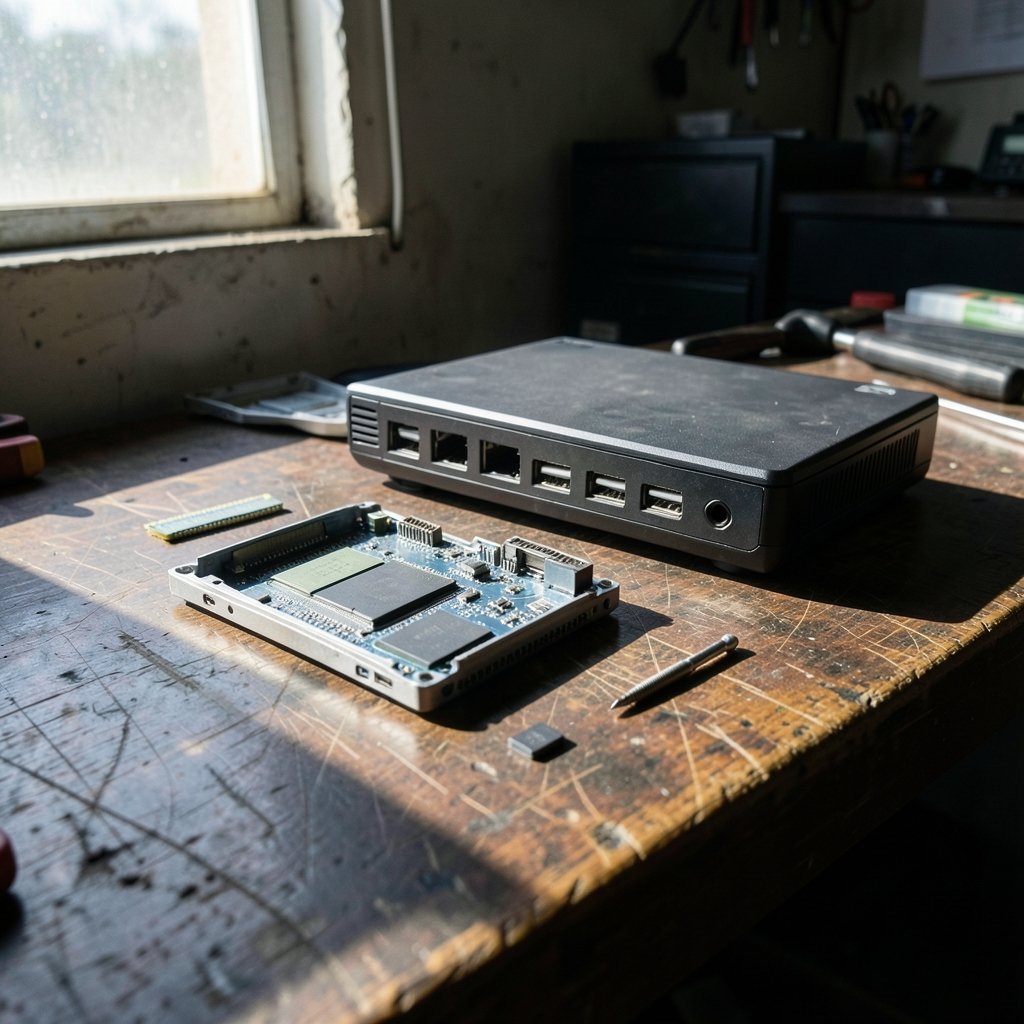
Not every launch is an AI statement. HP has started selling the ProDesk 2 Mini G2i, a compact desktop built on Intel’s Wildcat Lake architecture. Wildcat Lake chips have typically appeared in budget laptops, so putting one in a desktop is an unusual move.
The spec sheet is pragmatic:
- One SODIMM slot for DDR5-5600 memory
- Socketed M.2 2280 storage plus an M.2 2230 modem slot
- Six USB Type-A ports and one Type-C port
- Gigabit Ethernet
- Two flexi ports for expansion options
- Memory configurations of 12GB, 16GB, and 24GB
- Processor options including Core 3 304, Core 5 315, Core 5 320, and Core 7 350
Pricing is where buyers need to pay attention. Listings show wide spreads for what looks like similar hardware. One UK listing prices a Core 5 320 configuration with 16GB of memory and a 512GB SSD at £779 including VAT. A US retailer lists a Core 5 315 build with 16GB and 512GB from $900.70, while the same configuration on HP’s own site is listed at $2,687. HP’s direct starting price is $2,086 for a Core 3 304 with 12GB and a 256GB SSD, and a Core 7 350 with 24GB and 512GB reaches $3,100.
The practical lesson: check the exact configuration and the seller before assuming a mini PC is a bargain. The same model name can carry very different prices depending on channel and memory tier.
MSI’s 1.3-litre AI desktop: small box, big ambitions
MSI’s EdgeMesa N AI+ Series deserves its own section because it shows how far the small-form-factor idea can be pushed. It runs Windows 11, uses the RTX Spark N1X platform, and is explicitly designed for local AI development without relying on cloud computing.
The 1.3-litre chassis is the interesting engineering story. Fitting a 20-core Grace CPU, a 6,144-core Blackwell GPU, up to 128GB of LPDDR5X unified memory, and a 140W sustained cooling envelope into that volume is not trivial. The vapour chamber and dual turbo fan setup is doing real work.
For buyers, the question is whether they need that density. A 1.3-litre box with four display outputs and 10Gb LAN is a natural fit for a desk where space is tight but local inference matters. It is less obviously a fit for someone who mainly writes documents and browses.
System76’s Thelio Prime: the Linux option
System76 announced a new Thelio Prime, a small-form-factor Linux desktop built from aluminium and steel. It uses a desktop-class AMD Ryzen CPU, NVIDIA or AMD graphics, and up to 96GB of memory. The company positions it for everything from everyday work to 4K gaming, and the size suits a desk, a shelf, or an entertainment centre.
This launch matters because it keeps a genuine alternative in the market. Buyers who want Linux preinstalled and a desktop-class CPU in a small chassis have a current option, and 96GB of memory is a serious ceiling for local workloads.
What actually works when you buy one of these
Launch coverage tells you what a machine can do. It rarely tells you what trips people up. Here is what tends to matter in practice.
- Check the memory configuration alongside the model name. HP’s listings show how far apart prices can land for the same chassis. Confirm the CPU, RAM, and SSD tier before comparing.
- Plan for unified memory on AI machines. On RTX Spark systems, the 128GB ceiling is shared between CPU and GPU. The model you can run depends on that pool, not on a separate VRAM figure.
- Think about sustained load, not peak benchmarks. A compact desktop with a 140W thermal envelope is built for continuous work. If your workload is bursty, you may be paying for cooling you rarely use.
- Match the display plan to the ports. MSI’s four-display support is useful only if your desk setup can use it. A monitor guide such as this look at monitors that match a Mac mini desk workflow shows how quickly display choices reshape the rest of a setup.
- Decide whether you need local AI at all. A $4,399 machine makes sense if you are running agents or large models constantly. If you occasionally test a model, a cheaper box plus cloud access may be the better buy.
- Check the software stack. RTX Spark desktops run Windows on Arm. Confirm that your tools, drivers, and workflows support that before ordering.
How the launches compare at a glance
| Machine | Platform | Memory ceiling | Standout trait | Best fit |
|---|---|---|---|---|
| RTX Spark compact desktops (Acer, Asus, Dell, Gigabyte, HP, Lenovo, MSI) | N1X superchip, Windows on Arm | 128GB unified | 1 Petaflop FP4, local 120B-parameter models | AI developers, creators, gaming |
| MSI EdgeMesa N AI+ | RTX Spark N1X | 128GB LPDDR5X | 1.3-litre chassis, 140W sustained | Desk-constrained AI work |
| HP ProDesk 2 Mini G2i | Intel Wildcat Lake | 24GB DDR5 | Tiny footprint, flexible pricing | Business and general office work |
| System76 Thelio Prime | AMD Ryzen, NVIDIA or AMD graphics | 96GB | Linux preinstalled, aluminium and steel build | Linux users, 4K gaming |
The software side: remote access and virtual desktops
A compact desktop is often a hub rather than a single-user machine. That makes remote access part of the launch story, even if it doesn’t appear in the press release.
Windows 11 Pro and Enterprise include Remote Desktop, and setting it up properly matters if you plan to reach a desk-bound AI machine from elsewhere. A walkthrough on how to enable remote desktop on Windows 11 Pro and Enterprise covers the steps and the common pitfalls.
There is also a broader question about what “desktop” means now. Virtual desktop services and remote desktop tools have improved enough that some teams never touch the physical machine. If that is your model, this explainer on virtual desktops and whether remote desktops actually work is worth reading before you commit to hardware.
For mixed teams, the everyday tools matter too. A practical guide to WhatsApp video calls on desktop is the kind of small setup detail that decides whether a new machine feels finished or half-done on day one.
What to watch next
Three threads are worth tracking after this launch wave.
The first is pricing. RTX Spark desktops starting at $4,399 sit far above the laptop equivalents. Whether that gap narrows as more OEMs ship is an open question.
The second is the Arm software story. Windows on Arm has matured, but professional workflows still hit compatibility edges. Buyers should verify their specific tools rather than assume.
The third is the mini PC squeeze. HP’s ProDesk shows that tiny business desktops are alive and well, but the pricing spread between retailers and the manufacturer’s own store is a warning. Launch coverage rarely captures that, and it is where real buying decisions get made.
Conclusion
The November 2026 desktop PC launches tell a consistent story. Nvidia and Microsoft moved RTX Spark from laptops into compact desktops with up to 128GB of unified memory and 1 Petaflop of FP4 compute. MSI proved the formula fits in 1.3 litres. HP shipped a genuinely small business box on Intel Wildcat Lake. System76 kept the Linux small-form-factor option current with the Thelio Prime.
For buyers, the lesson is to read past the headline. Check the memory tier, confirm the software stack, compare prices across sellers, and decide whether local AI is a daily need or an occasional experiment. The desktop is not disappearing. It is getting smaller, quieter, and considerably more ambitious about what it does while sitting on your desk.
FAQ
What is the RTX Spark N1X superchip?
It is the chip inside Nvidia’s new compact desktops. It combines a 20-core Nvidia Grace CPU with a 6,144-core Blackwell RTX GPU, custom-built with MediaTek, and delivers up to 1 Petaflop of FP4 AI compute with up to 128GB of unified memory.
How much do the new RTX Spark compact desktops cost?
Early prices start at $4,399, according to launch coverage. That is well above the RTX Spark laptops released a few weeks earlier, so buyers should treat these as professional machines rather than budget desktops.
Can these desktops really run large AI models locally?
Nvidia says the 128GB memory ceiling is enough to run models with 120 billion parameters on the device, with no cloud bill for those tasks. The practical limit depends on the specific model and how much memory it needs at runtime.
What is the difference between the HP ProDesk 2 Mini G2i and the RTX Spark machines?
They target different buyers. The ProDesk 2 Mini G2i uses Intel Wildcat Lake, tops out at 24GB of DDR5 memory, and is built for business and office work in a 181 x 177 x 34 mm chassis. RTX Spark desktops are far more powerful and far more expensive, aimed at local AI and creative workloads.
Why are so many new desktops so small?
Cooling and placement. A compact chassis with a vapour chamber and dual fans can sustain a 140W thermal envelope, which suits always-on AI work. Small machines also fit on a desk, a shelf, or under a monitor, which is where most buyers actually put them.
Is the System76 Thelio Prime a good option for Linux users?
It is the most direct current option in this launch wave. It ships with a desktop-class AMD Ryzen CPU, NVIDIA or AMD graphics, up to 96GB of memory, and a chassis built from aluminium and steel, sized for a desk or entertainment centre.