
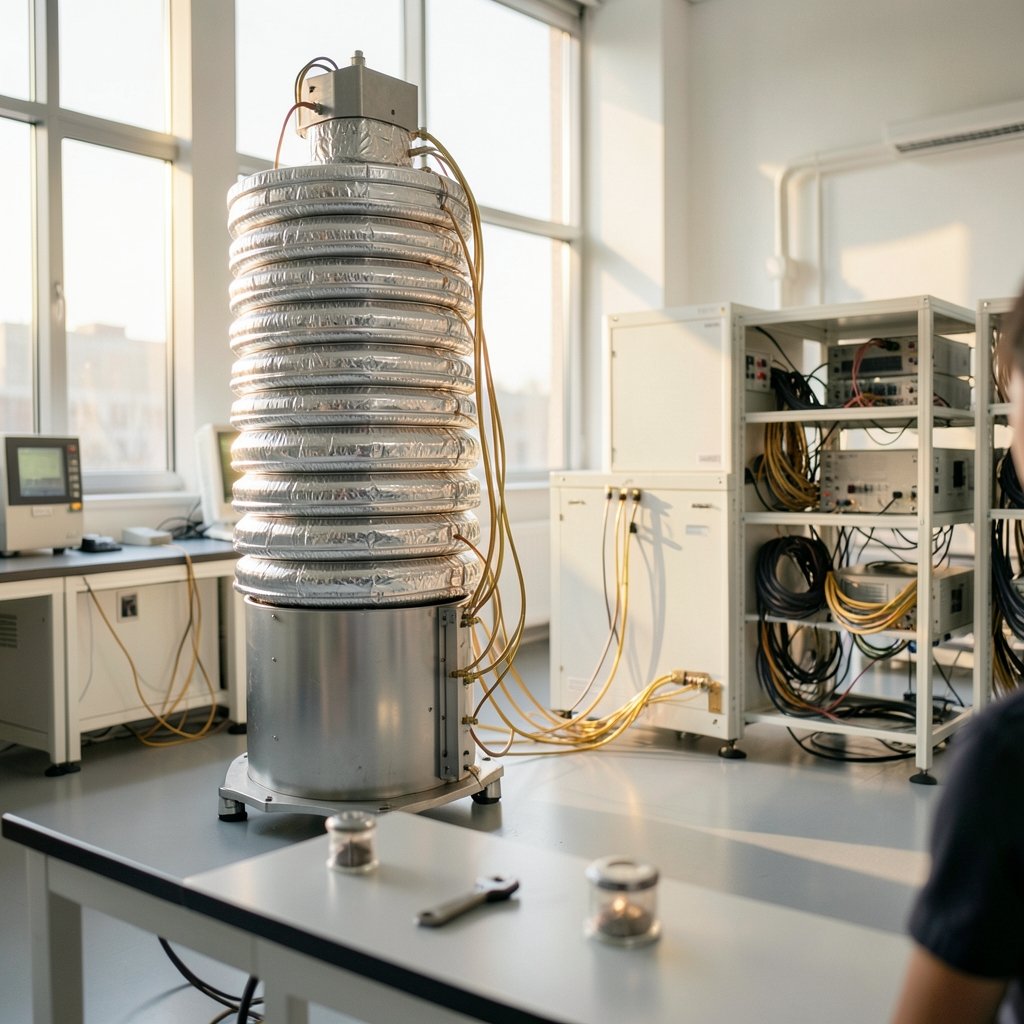
Quick Answer: How does quantum computing work step by step for beginners?
Quantum computing works by encoding information in qubits, which can hold a blend of 0 and 1 at the same time, then linking them through entanglement and steering them with interference so that wrong answers cancel out and right answers reinforce before a final measurement. In practice, a beginner follows a repeatable pipeline: initialize the qubits, apply single-qubit gates, apply entangling gates, repeat the pattern, then measure the result.
That sequence is the circuit model, and it is the framework almost every vendor and course teaches first. Other approaches exist, such as annealing systems built for optimization problems, but they solve a narrower class of tasks and use different programming habits.
Before going further, a reader should get comfortable with a handful of ideas: bits versus qubits, superposition, entanglement, interference, gates, decoherence, error correction, and what current hardware can realistically do.
A Statistic That Resets Your Intuition
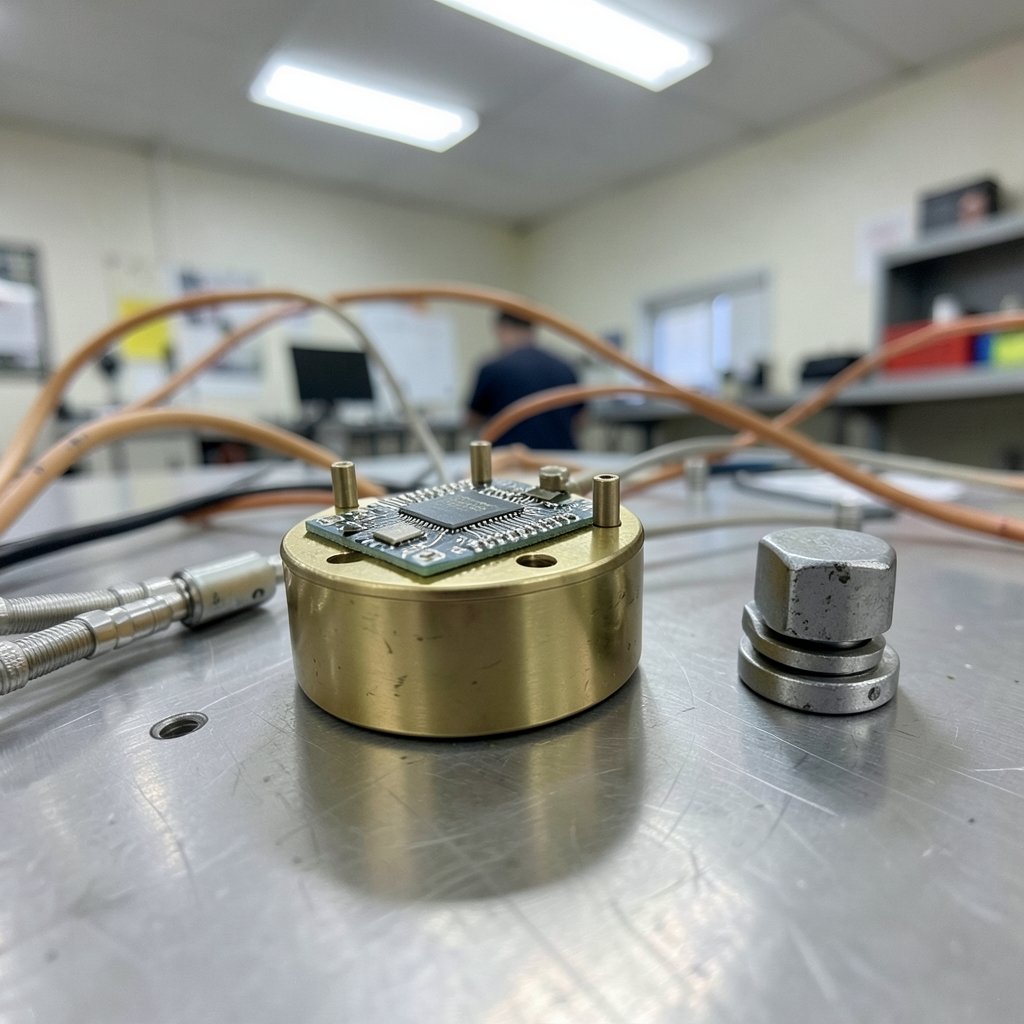
Here is a fact that surprises almost everyone: a classical bit holds exactly one value, 0 or 1, while a single qubit is described by two complex numbers called amplitudes, and those amplitudes must satisfy one rule. The squared magnitudes of the amplitudes add up to exactly 1. That constraint is the whole ballgame. It means a qubit is not secretly storing “both answers.” It is storing a probability structure that changes every time you touch it with a gate.
That distinction matters because most beginner explanations stop at “a qubit is 0 and 1 at once” and move on. That line is a simplification, not a definition. Once someone understands that amplitudes are the real object being manipulated, the rest of quantum computing becomes far less mysterious. It is less about parallel universes and more about carefully engineered bookkeeping.
Step 1: Start With Bits, Then Break the Rules
Classical computers are built on bits. A bit is a switch: on or off, 1 or 0. String eight of them together and you get 256 possible patterns, but the machine only ever holds one pattern at a time.
A qubit generalizes that switch. Physically it might be a superconducting circuit cooled to near absolute zero, a trapped ion, or a photon. Logically, it is a two-state quantum system. When you measure it, you get a plain 0 or a plain 1. Before measurement, its state is a weighted blend described by those amplitudes.
The key insight for beginners: the interesting work happens before measurement, not during it. Measurement destroys the blend and hands you one ordinary bit. Everything clever in quantum computing is arranged so that the single bit you get back is the one you wanted.
Step 2: Build Superposition
Superposition is what you get when a qubit’s state is a genuine mix of |0⟩ and |1⟩. A common gate called the Hadamard gate takes a qubit sitting cleanly at |0⟩ and spreads it into an even blend.
Why bother? Because a register of n qubits in superposition can represent 2ⁿ amplitudes at once. Thirty qubits carry over a billion amplitudes. That number sounds like free computing power, and it is not. You still only get one measurement outcome. The amplitudes are a resource for computation, not a shortcut around it.
This is the first place beginners go wrong. They assume more amplitudes means more answers. In reality, more amplitudes means more room to design interference, and interference is the actual engine.
Step 3: Entangle the Qubits
Entanglement links qubits so that their combined state cannot be split into independent pieces. The classic example is the Bell state, where two qubits are in a joint superposition of |00⟩ and |11⟩. Measure one and you instantly know the other, no matter the distance.
Entanglement is not a communication channel. You cannot use it to send a message faster than light. What it does provide is correlation that algorithms exploit. Entangling gates are the expensive, error-prone part of real hardware, and the quality of those gates, not raw qubit count, is what separates serious machines from demo machines.
If you want the deeper physical picture, a good primer on what quantum computing is and how it works walks through the hardware side without the hype. (What is quantum computing?)
Step 4: Use Interference to Cancel Wrong Answers
This is the step most tutorials bury, and it is the one that actually explains the power. Interference is the process of arranging amplitudes so that paths leading to wrong answers cancel each other out while paths leading to the right answer reinforce.
Think of it as noise-canceling headphones for probability. Two waves out of phase annihilate; two waves in phase amplify. A quantum algorithm is, at heart, a recipe for phase engineering.
Two landmark results show what this buys you. Shor’s algorithm, published in 1994, factors integers in polynomial time, which threatens widely used public-key cryptography. Grover’s algorithm, from 1996, speeds up unstructured search quadratically. Both are interference tricks dressed in mathematics.
Step 5: Apply Gates in a Circuit
A quantum circuit is the program. It reads left to right, like sheet music. The standard pipeline looks like this:
- Initialize the qubits into a known state, usually all |0⟩.
- Apply single-qubit gates to create superposition and set phases.
- Apply two-qubit entangling gates to build correlations.
- Repeat steps 2 and 3 in layers, often called depth.
- Measure the qubits and record classical bits.
Each gate is a physical operation: a microwave pulse, a laser hit, a magnetic field. The set of gates a machine supports is called its gate set, and a universal gate set can approximate any valid operation.
Depth is the quiet killer. Every layer adds a chance for noise to creep in, so a shallow circuit that solves the problem beats a deep one every time. Practitioners spend real effort on transpilation, the art of rewriting a circuit to fit a specific machine’s connectivity.
Step 6: Measure, Then Repeat
Measurement collapses the state. You get one bit string per shot, and one shot proves nothing. Real workflows run thousands of shots and build up statistics, then compare the distribution against what the algorithm predicted.
This is where beginners hit a wall. They expect a single dramatic answer and instead get a histogram. Reading that histogram correctly, and knowing how many shots you need for a given confidence level, is a practical skill that separates people who finish projects from people who abandon them.
The classical computer stays in the loop the whole time. It compiles the circuit, schedules the pulses, collects results, and often post-processes them. Hybrid quantum-classical loops are the norm, not the exception.
Step 7: Fight Decoherence and Errors
Qubits are fragile. Interaction with the environment destroys superposition in a process called decoherence, and the window before that happens is the coherence time. Everything useful must finish inside that window.
Error correction is the long-term fix. The idea is to spread one logical qubit across many physical qubits so that errors can be detected and fixed without measuring the data itself. The catch is overhead: fault-tolerant schemes need many physical qubits per logical qubit, and the exact ratio depends on error rates.
For beginners, the practical takeaway is this: ignore qubit-count headlines. A 100-qubit machine with noisy gates can underperform a smaller, cleaner one. Compare gate fidelity, connectivity, coherence time, and readout error instead. For a side-by-side breakdown, see quantum computing vs classical computing. (Quantum computing)
A Comparison Worth Memorizing
| Feature | Classical Bit | Qubit |
|---|---|---|
| States before readout | One: 0 or 1 | Blend of 0 and 1 via amplitudes |
| Readout | Read anytime, non-destructive | Measurement collapses the state |
| Scaling lever | More transistors | More qubits and better fidelity |
| Error handling | Copy and compare | Cannot copy (no-cloning); needs codes |
| Core trick | Boolean logic | Interference and entanglement |
That no-cloning rule deserves a flag. You cannot back up an unknown quantum state, which is why error correction is so much harder than in classical systems and why “just add redundancy” does not work the obvious way.
What Beginners Should Actually Do First
Theory alone stalls fast. The fastest route is to run a circuit. Free cloud access to real hardware and simulators exists, and a two-qubit Bell state takes about ten lines of code. Build it, run it, look at the histogram, then break it on purpose by adding gates and watch the results smear.
Common mistakes, in order of frequency: assuming superposition equals parallel computation, ignoring noise when interpreting results, writing circuits that are far too deep, and treating vendor benchmarks as comparable. A fifth one bites experienced people too: forgetting that the classical post-processing step is where most of the real engineering lives.
Curiosity about adjacent fields pays off. The same amplitude reasoning shows up in how quantum computing could change artificial intelligence, where hybrid models are already being tested on small problems.
Where the Field Actually Stands
Claims of “quantum supremacy” from 2019 and 2020 were followed by classical simulation work that narrowed the gap, so treat those milestones as contested rather than settled. Qubit counts across vendors are not apples-to-apples because fidelity, connectivity, and gate speed all differ. As of early 2025, there is no single authoritative benchmark that ranks machines fairly.
The defensive side is moving faster than the offensive side. In August 2024, standards bodies finalized the first post-quantum encryption standards, a direct response to the possibility that a large enough quantum computer could break RSA and elliptic-curve cryptography. That work matters to anyone building systems today, because encrypted data captured now could be decrypted later.
Conclusion
Quantum computing is not magic and it is not a faster classical computer. It is a different machine that computes by shaping amplitudes, entangling qubits, and letting interference do the sorting. The step-by-step path is genuinely learnable: understand bits and qubits, build superposition, entangle, engineer interference, run circuits, measure and repeat, then respect decoherence and error correction. Beginners who internalize the interference step early avoid months of confusion, and beginners who respect noise avoid months of disappointment. Start with a Bell state on a simulator, read the histogram honestly, and let the mathematics do the persuading.
Frequently Asked Questions
Can a qubit really be 0 and 1 at the same time?
Not in the way the phrase suggests. A qubit holds a pair of complex amplitudes whose squared magnitudes sum to 1, and measurement always returns a single plain 0 or 1. Saying “both at once” is shorthand that hides the probability structure doing the real work. The precise statement is that the qubit is in a superposition of the two basis states.
Do I need a physics degree to learn quantum computing?
No. The working prerequisites are linear algebra, complex numbers, and comfort with probability. Most beginner courses teach the necessary math alongside the gates. What you genuinely need is patience with notation and willingness to run circuits rather than only read about them.
Why can’t I just copy a qubit to check for errors?
Because of the no-cloning theorem, an unknown quantum state cannot be duplicated exactly. That single rule is why classical error correction techniques do not transfer directly. Instead, quantum error correction spreads one logical qubit across many physical qubits and measures parity information without reading the encoded data.
How many qubits do I need to see a real advantage?
There is no clean number, and anyone quoting one is oversimplifying. Advantage depends on gate fidelity, circuit depth, connectivity, and the problem itself. A noisy machine with many qubits can lose to a smaller, cleaner one. Focus on error rates and algorithm fit rather than a headline count.
What is the difference between a simulator and real quantum hardware?
A simulator runs on a classical computer and can model ideal, noise-free qubits, which makes it perfect for learning. Real hardware has decoherence, gate errors, and limited connectivity, so results come back smeared. The recommended path is to prototype on a simulator, then validate on real hardware to see how noise reshapes the output.
Will quantum computers replace my laptop?
Not for everyday tasks. Quantum machines are specialized accelerators for particular problem classes such as factoring, certain simulations, and some optimization and chemistry workloads. Classical computers will keep handling email, spreadsheets, and video, and they will stay in the loop as controllers for quantum processors.



