
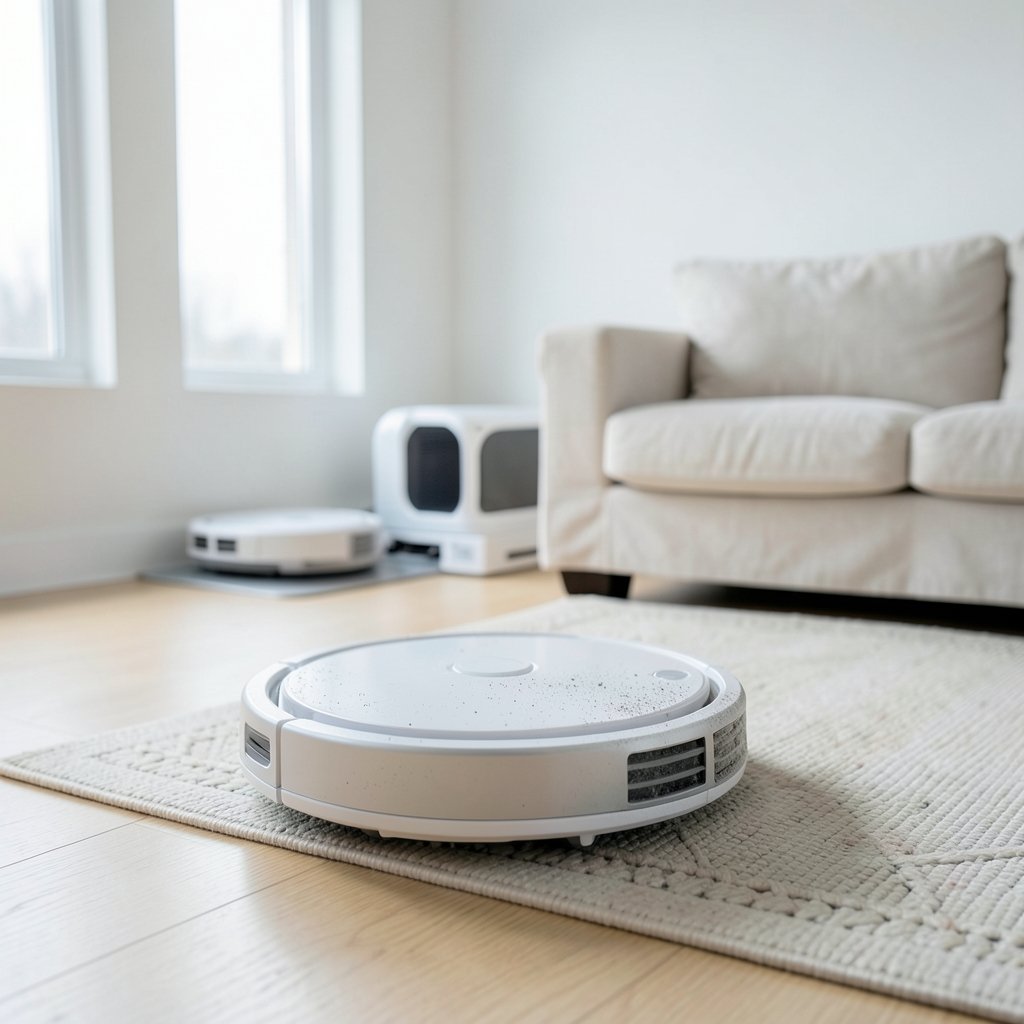
Quick Answer: What are the benefits and limitations of physical ai for everyday users?
Physical AI gives everyday users real, practical help in narrow tasks: robot vacuums that map a home, cars that brake before a driver reacts, and smart devices that automate small routines. The catch is that these systems work best in predictable settings, so benefits shrink when environments get messy or unpredictable.
The term itself is loose. It overlaps with embodied AI, robotics, and automation, and different sources define it differently, so comparisons across products can be misleading. A robot vacuum and a self-driving car both qualify, yet they carry very different risks.
Before buying or relying on any physical AI product, check its safety record, privacy terms, cost of ownership, how it handles failure, accessibility features, and what support exists when something breaks.
A robot vacuum sold in the millions each year is the closest most households get to physical AI, yet few owners could explain how it decides where to go. That gap between everyday use and real understanding is where most of the confusion about this technology lives. Physical AI describes machines that sense the world, process what they find, and act on it without a human steering every move. It is not one product category. It is a spectrum running from a $200 vacuum to a warehouse arm to a car that parks itself.
That spectrum matters because the benefits and the limits change dramatically depending on where a device sits on it. A vacuum that bumps into a chair is annoying. A robot that misjudges a staircase is dangerous. This article separates the two honestly, so readers can judge what physical AI will actually do for them, and what it will not.
What Physical AI Actually Means for a Regular Household
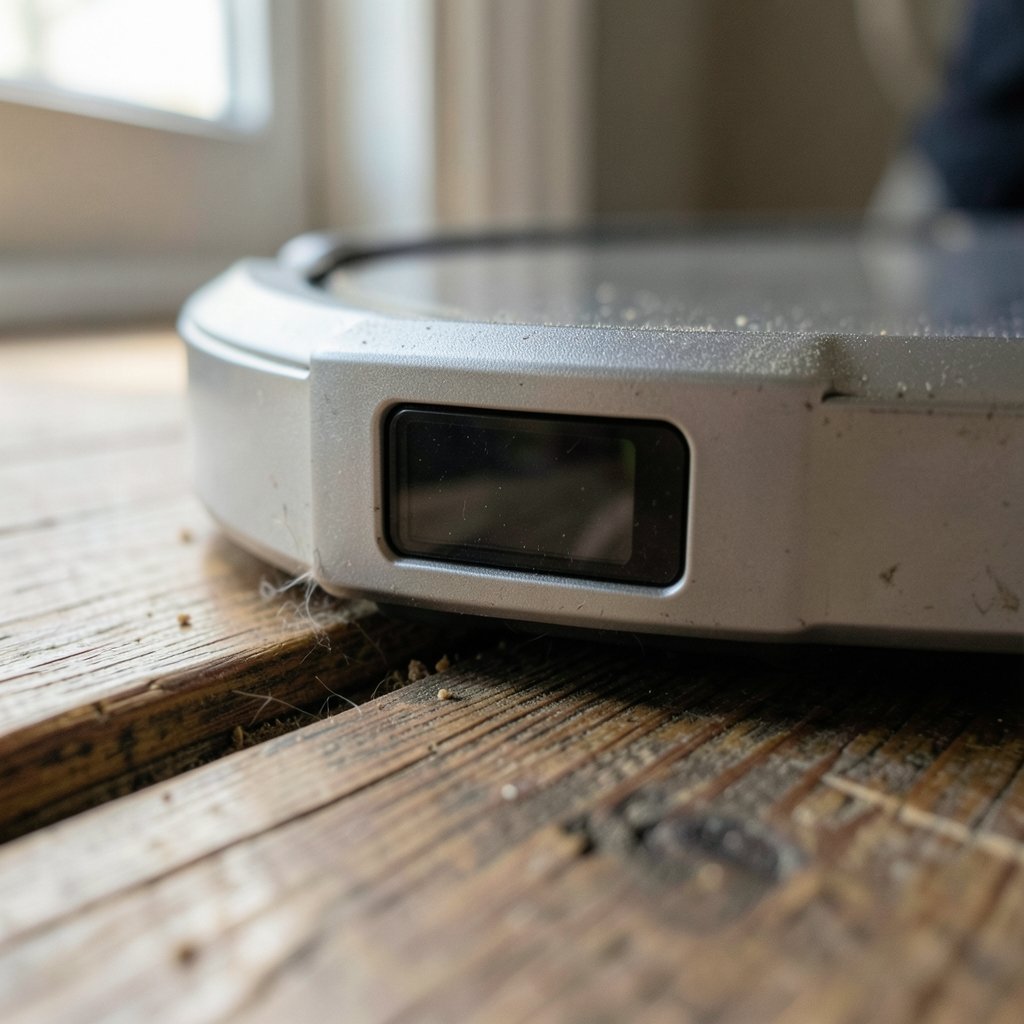
The phrase gets used loosely, and that looseness causes real problems. Some writers use it for anything with a sensor and a motor. Others reserve it for systems that learn from their environment. There is no single agreed definition, and treating any one source as authoritative is a mistake.
What the term consistently points to is embodied intelligence: software that has a body and has to deal with physics. Gravity, friction, uneven floors, pets that move without warning. A chatbot that gives bad advice wastes time. A robot that misreads a step can hurt someone. (Artificial intelligence)
For everyday users, the practical categories are narrow:
- Home robots: vacuums, mops, lawn mowers, pool cleaners
- Assistive devices: fall-detection sensors, medication reminders, mobility aids
- Vehicles: driver-assistance systems, automatic emergency braking, parking automation
- Smart home systems: cameras, thermostats, and locks that respond to patterns
Most households already own at least one of these. The question is not whether physical AI has arrived. It is whether it is doing what people think it is doing.
The Genuine Benefits Users Can Count On
Time and effort savings that hold up
Robot vacuums have been mainstream since the early 2000s, and they are the clearest proof that physical AI can deliver. They do not need to be perfect. They need to be good enough that running one beats pushing a mop. That bar has been cleared for most homes with hard floors and moderate clutter.
The same logic applies to robot mowers and pool cleaners. These are bounded tasks in bounded spaces. When a task has clear edges, physical AI tends to work.
Safety features that act faster than people
Automatic emergency braking is a quiet success story. It does not need to understand the world. It needs to detect an obstacle and apply pressure faster than a human foot can move. That narrow job is exactly what machines do well.
The pattern repeats across the category: physical AI shines when the task is specific, repetitive, and measurable. Broad judgment is where it stumbles.
Accessibility gains that are easy to overlook
For people with limited mobility or chronic conditions, a robot vacuum is not a gadget. It is independence. Fall-detection sensors and automated lighting do similar work. These benefits rarely make headlines because they are unglamorous, but they are among the most durable wins in the category.
Automation of small, boring decisions
Smart thermostats learn schedules. Smart locks respond to presence. None of this is dramatic, and none of it requires deep intelligence. It is pattern recognition applied to a house. The value is cumulative rather than spectacular. (Artificial Intelligence)
Where Physical AI Falls Short in Daily Life
Unstructured environments break the illusion
A home is not a warehouse. Warehouses have flat floors, fixed routes, and predictable layouts. Homes have socks, cables, pets, toddlers, and furniture that moves. Every one of those is an edge case, and edge cases are where physical AI struggles most.
The common mistake is buying a robot expecting it to handle chaos. It will handle most of the chaos most of the time, and then it will get stuck behind a curtain and need rescuing. Owners who expect that going in are rarely disappointed. Owners who expect magic usually are.
Safety around people remains a live concern
Industrial robots operate behind fences for a reason. Consumer robots operate next to children and pets, which is a fundamentally harder problem. Safety around humans is one of the most consistently reported limitations in the technical literature, and it does not disappear because a product is marketed for the home.
Practical rule: the more power the machine has and the less supervised its operation, the more the safety question deserves attention before purchase, not after.
Privacy costs are real and often invisible
A robot vacuum with a camera maps a home. A smart speaker listens. A connected car logs location. Each of these is a small trade of privacy for convenience, and the trade is rarely spelled out clearly at the point of sale.
The practical move is to check what data a device collects, where it goes, and whether the features that need a camera can be turned off. Many can. Few owners bother.
Cost, maintenance, and the support gap
The sticker price is not the cost of ownership. Filters, brushes, batteries, subscriptions, and replacement parts add up. So does the time spent untangling a robot from a charging cable.
Then there is the support gap. When a physical AI device fails, the failure is often hard to diagnose. Is it the sensor, the software, the map, or the Wi-Fi? Users are frequently left guessing, and support lines are frequently unhelpful. That friction is underreported and genuinely frustrating.
Energy use and environmental trade-offs
Every always-on device draws power. Individually the numbers are small. Across a house full of connected gadgets, they add up. The trade-off is rarely discussed, but it is part of the honest ledger.
How Physical AI Compares Across Common Devices
| Device type | Main benefit | Main limitation | What to check first |
|---|---|---|---|
| Robot vacuum | Saves weekly cleaning time | Gets stuck in clutter | Mapping quality, parts cost |
| Robot mower | Cuts lawn chores | Struggles with complex lawns | Boundary setup, slope limits |
| Driver assistance | Reacts faster than humans | Fails in bad weather or odd light | Owner’s manual limits |
| Smart cameras | Remote awareness | Privacy and data handling | Encryption, storage terms |
| Assistive sensors | Supports independence | False alarms | Alert response process |
The pattern in that table is consistent. The benefit is always narrow and the limitation is always about the messy real world. Products that admit their limits tend to satisfy buyers. Products that oversell them tend to generate returns.
What the Rules Say, and Why It Matters to Buyers
Regulation is catching up, and buyers benefit from knowing the broad shape of it. The European Union’s AI Act entered into force on August 1, 2024, and it treats AI embedded in products like robots and machinery through product-safety rules rather than as a standalone software problem. Separately, the EU’s Machinery Regulation (2023/1230) applies from January 20, 2027, and addresses AI-enabled machinery directly. Readers can verify both texts through EUR-Lex.
In the United States, the National Institute of Standards and Technology published its AI Risk Management Framework in January 2023, which gives organizations a structured way to think about AI risk. The framework is voluntary, but it has become a reference point for how companies describe what their systems can and cannot do. The document is available through NIST.
Why should a shopper care about any of this? Because regulation shapes disclosure. When rules require a manufacturer to state a system’s limits, buyers get better information at the point of sale. Until then, the burden falls on the buyer to read the manual, and most people do not.
Practical Advice That Actually Works
Match the device to a bounded task
The single most useful habit is to ask whether the task has clear edges. Vacuuming a hallway does. Supervising a toddler does not. Physical AI is a tool for the first kind of problem and a poor fit for the second.
Test the failure mode before you trust the feature
Every device fails eventually. The question is how. Turn off the Wi-Fi and see what the robot does. Read what the car manual says about rain and direct sunlight. A device that fails safely is worth more than one that fails impressively.
Budget for the boring costs
Filters, batteries, and subscriptions are part of the price. So is the time spent on maintenance. A cheap device with expensive consumables is not cheap.
Read the privacy settings like they matter
They do. Turn off cloud features that are not needed. Check whether video is stored locally or remotely. This takes ten minutes and prevents years of vague unease.
Keep expectations calibrated
The gap between marketing and reality is the main source of disappointment in this category. Buyers who expect a helpful assistant are usually satisfied. Buyers who expect a replacement for human judgment usually are not.
Common Mistakes That Lead to Disappointment
The first mistake is buying for the demo rather than the daily use. A robot that performs beautifully in a showroom video may struggle in a home with rugs and pet hair. The second is ignoring the setup burden. Mapping runs, boundary wires, and app configuration take real time, and skipping them produces poor results.
The third mistake is trusting a feature name over a manual. “Automatic” rarely means unsupervised. It usually means assisted. The fourth is forgetting that physical AI devices are networked devices, which means they inherit every security problem that comes with a connection.
A related trap appears in adjacent tech categories. Tools that look effortless often carry hidden constraints, which is true of AI article generators and their real limitations and equally true of AI voice cloning tools and their limits. The pattern is the same across software and hardware: the demo shows the best case, and the buyer lives with the average case.
Where Physical AI Is Heading Next
The direction of travel is toward narrower, better-instrumented tasks rather than general-purpose helpers. Expect more devices that do one thing reliably and fewer that claim to do everything. Expect more regulation-driven disclosure, which will make comparisons easier. Expect the privacy conversation to intensify as cameras and microphones spread into more rooms.
There is also a broader lesson in how quickly a technology can become invisible. Consider how thoroughly the word game format spread after one browser puzzle went viral, a phenomenon explored in this look at puzzles like Wordle and why they spread. Physical AI is on a similar path. The novelty fades, the device becomes furniture, and the limits stop being discussed. That is precisely when they matter most.
Conclusion
Physical AI delivers real value to everyday users, but only within boundaries. It saves time on repetitive chores, reacts faster than people in narrow safety tasks, and quietly improves independence for some users. It also struggles with clutter, raises genuine privacy questions, costs more to own than to buy, and fails in ways that are hard to diagnose.
The practical takeaway is calibration. Match the device to a bounded task, test how it fails, budget for maintenance, and read the privacy terms. Treat physical AI as a capable assistant with a narrow brief rather than a replacement for judgment. Buyers who do that tend to be satisfied. Buyers who expect more tend to return the product and write a one-star review. The technology is neither the miracle nor the menace the headlines suggest. It is a tool, and like most tools, it works best when the person holding it knows what it can do.
Frequently Asked Questions
Is physical AI the same thing as robotics?
Not exactly. Robotics is the hardware and control side. Physical AI emphasizes the sensing and decision-making layer that lets a machine act in the real world. The terms overlap heavily, and many products qualify as both. The distinction matters mainly when comparing marketing claims, since a product may be called physical AI without doing much learning at all.
Do I need physical AI devices in my home?
No. Nothing in this category is essential. The honest case for buying is time saved on a specific chore or a safety feature that works in a narrow condition. If a device does not clearly solve a problem someone has, it is a novelty, and novelties lose their appeal quickly.
Are home robots safe around children and pets?
Most consumer robots are designed with basic safeguards, but supervision still matters. Pets can be startled, and small children can interfere with a moving machine. Check the manufacturer’s guidance on operation around children and animals, and treat any moving device with a high-power motor with the same caution as a power tool.
Why do robot vacuums get stuck so often?
Because homes are unstructured environments full of objects that move. A vacuum builds a map and follows it, but a cable or a sock is an edge case the map did not anticipate. Better sensors reduce the problem. They do not eliminate it. Clearing floors before a run remains the most effective fix.
How do I check what data a device collects?
Start with the privacy policy and the app’s permission settings. Look for whether video or audio leaves the home, whether it is stored in the cloud, and whether features can run locally. If the answers are unclear, that is itself useful information about the product.
Will physical AI replace human workers in these tasks?
For narrow, repetitive physical tasks, automation has already displaced some work and will likely continue to. For tasks requiring judgment in messy environments, the limits described above suggest replacement is far from complete. The realistic near-term picture is assistance rather than substitution, with the balance shifting task by task.



