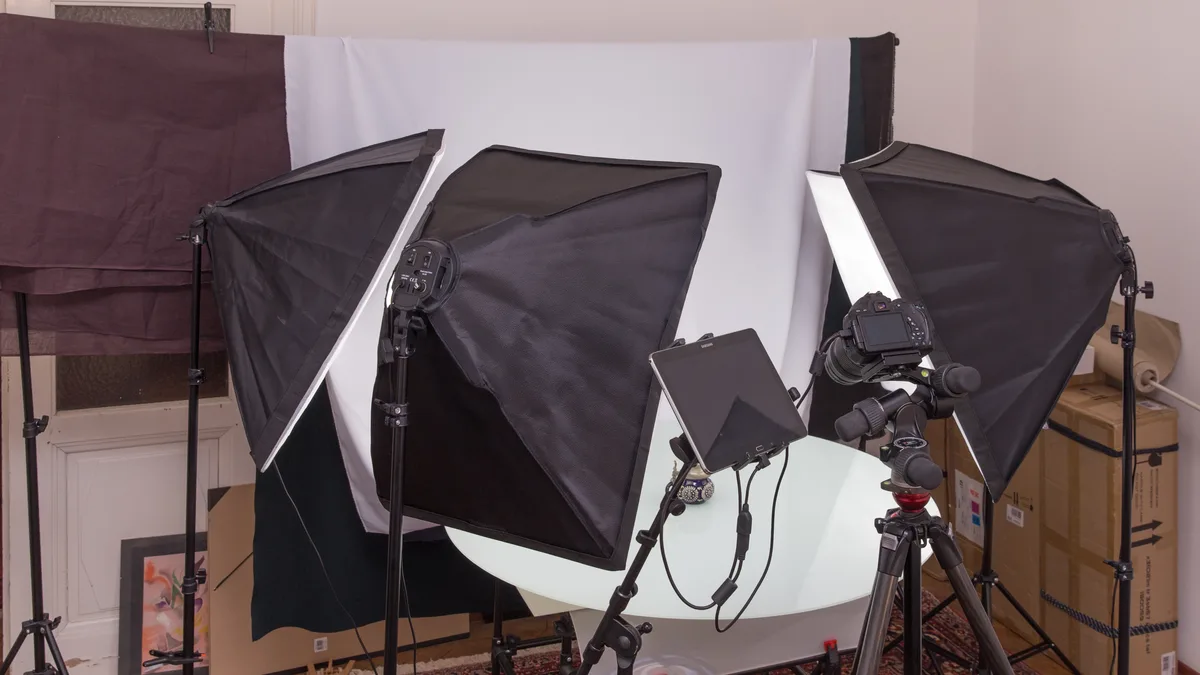
DSLR vs smartphone camera for product photos in 2027 is a closer contest than it was five years ago, and the right answer depends on what you sell and how many photos you need. A dedicated camera still wins on pure image quality, lens choice, and control, but the phone in your pocket now shoots sharp, well-lit product shots, edits them on the spot, and uploads them to your store before a DSLR has left its bag. For a small business, that speed is worth real money.
The gap has narrowed because phones got better at the exact things product photos need: computational photography that cleans up shadows, portrait modes that fake background blur, and raw capture for serious editing. What phones still cannot do is change lenses, control depth of field the way a large sensor does, or match a DSLR for fine detail on close-ups of jewellery, fabric, and small parts.
This comparison tests both sides on the four things that decide a product shoot: image quality, speed, cost, and editing workflow. The short version is that a smartphone wins for fast, everyday listings, while a DSLR wins when the photo itself sells the product. Most small sellers end up using both, and this guide shows where each one earns its keep.
Key takeaways
- A DSLR still wins on image quality: bigger sensor, real lenses, and true depth of field that phones can only imitate.
- A smartphone wins on speed: shoot, edit, and list a product in minutes, with no memory cards or transfers.
- A phone setup costs far less to start, but a DSLR pays for itself when photos directly drive sales.
- Lighting and a clean background matter more than the camera for most everyday product shots.
- Use the phone for volume listings and the DSLR for hero shots, bestsellers, and close-up detail.
DSLR vs smartphone camera at a glance
| Factor | DSLR | Smartphone |
|---|---|---|
| Image quality | Best detail, colour, and depth of field | Very good in bright light, weaker close-ups |
| Speed | Slower: setup, transfer, then edit | Fastest: shoot, edit, and list in minutes |
| Starting cost | From around $600 with a kit lens | From $0 if you already own a phone |
| Lenses | Interchangeable: macro, portrait, zoom | Fixed lenses, digital zoom only |
| Editing workflow | Raw files, full control, more steps | Built-in editing and instant sharing |
| Best for | Hero shots and high-value products | Everyday listings and social posts |
The DSLR side

A DSLR earns its place with physics. Its sensor is many times larger than a phone sensor, so it captures more light, cleaner shadows, and finer detail, and its interchangeable lenses let you pick the right tool: a macro lens for jewellery and small parts, a 50mm lens for natural-looking product shots, or a zoom for larger items you cannot move. Depth of field is real, not computed, so the product stays sharp while the background melts away smoothly.
The price is time and money. A usable DSLR setup starts from around $600 with a kit lens, and a macro lens adds several hundred more. Shooting takes longer too: set up the tripod, check the light, shoot raw, then move the files to a computer for editing. For a shop listing twenty products a week, that time adds up, which is why many sellers reserve the DSLR for the shots that matter most.
Pros: Best image quality and detail; real lenses for every product type; true depth of field; full manual control.
Cons: Costs from around $600 to start; slower workflow; heavier kit to carry and set up.
The smartphone side
A modern smartphone is a product studio that fits in a pocket. Its main camera shoots sharp, well-exposed photos in good light, computational photography lifts shadows and tames bright highlights, and portrait mode adds background blur that looks convincing at listing size. Many phones now shoot raw files too, which gives you real editing headroom when a shot needs it.
Speed is the real advantage. You can photograph a product on a white background, crop and brighten it in the phone’s own editor, and list it in minutes, with no cables, cards, or computer. The limits show up on close-ups and tricky products: digital zoom softens detail, portrait mode can blur edges it should keep, and small sensors struggle with dark, glossy, or very small items. For everyday listings, though, those limits rarely matter.
Pros: Fastest shoot-to-list workflow; no extra cost if you own a phone; built-in editing and sharing; always with you.
Cons: Weaker close-up detail; fake blur can glitch on edges; fixed lenses and digital zoom; struggles in low light.
Image quality, head to head
Put the two side by side on a white background in good light, and at listing size the difference is smaller than camera fans admit. A phone shot looks clean and sharp on a store page or a social feed, and most buyers cannot tell which camera took it. The DSLR pulls ahead when you look closer: fine texture on fabric, engraving on metal, the edge of a gemstone, or a label printed in small type. Its larger sensor also holds up better when you crop in tight or print large.
Colour is the quieter difference. A DSLR shooting raw gives you the full colour data to correct white balance and match a product’s true shade, which matters when a buyer complains that the blue dress arrived purple. A phone’s processing often warms or saturates colours to look pleasing, which is fine for social posts but risky for products where the exact shade is the selling point. If colour accuracy decides returns, shoot those products on the DSLR.
Speed and workflow
Speed is where the phone wins outright. A typical phone listing takes minutes: place the product, shoot five angles, pick the best, brighten, crop, and upload. A DSLR listing takes longer at every step, from tripod setup to moving raw files onto a computer and editing them one by one. For a seller adding dozens of products a week, the phone can save hours, and hours are the one cost a small business cannot get back.
The DSLR workflow has its own strengths once you set it up properly. Tethered shooting shows each shot on a big screen as you take it, batch editing applies the same corrections to a whole set, and dedicated studio software keeps everything organised. The best software for photography studios covers the tools that make a repeatable studio workflow possible, and for high-volume sellers that structure pays off. Phones are catching up here too: AI tools can now handle the repetitive parts of listing, and our guide to what AI browser automation is explains how the upload and listing steps themselves can be automated once the photos are ready.
Cost, honestly counted
Count the whole cost, not just the camera. A phone setup can start at nothing if you already own a decent phone, plus a small lightbox and a white background for under $50. A DSLR setup starts from around $600 with a kit lens, plus a tripod, lights, and editing software, and a macro lens for close-ups adds several hundred more. Check current pricing before buying, because camera prices move with new models and sales.
The honest question is what the photos earn. If better photos lift conversion on high-value products, a DSLR pays for itself quickly, and the editing computer matters too: a fast, colour-accurate laptop makes the DSLR workflow far less painful, and the best ultrabooks are a good place to start if you edit on the go. If you sell low-cost items in volume, the phone wins, because the DSLR’s quality edge rarely changes the sale and its time cost eats the margin.
The verdict
For most small sellers, the smartphone is the right default: it is fast, cheap, and good enough for everyday listings, social posts, and anything where volume matters more than perfection. The DSLR is the right tool for the shots that sell the business: hero images, bestsellers, jewellery, and any product where fine detail or exact colour decides the purchase.
The practical answer is both. Shoot the bulk of your catalogue on the phone, and keep the DSLR for the twenty products that earn most of your revenue. That split gives you the phone’s speed where it counts and the DSLR’s quality where it pays, without buying a camera you use once a month or struggling with a phone on shots it cannot do well.
Checklist: before you buy
- Count how many products you photograph each week, and how many are high-value hero shots.
- Test your phone on your hardest product: a close-up, a glossy surface, or a dark item.
- Budget for light and background first: a $50 lightbox improves phone shots more than a new camera.
- Check whether your phone shoots raw, and whether your store needs it.
- Add up the full DSLR cost: body, lens, tripod, lights, and editing software.
- Try both on the same product and compare the results at listing size, not zoomed in.
Frequently asked questions
Can a smartphone replace a DSLR for product photos?
For everyday listings, yes. A modern phone shoots sharp, well-lit product photos that look great at listing size. For hero shots, jewellery, and close-up detail, a DSLR still wins on quality, and most sellers use both.
Do I need a macro lens for product photography?
Only for very small products such as jewellery, coins, or small parts. A macro lens captures fine detail a phone’s digital zoom cannot match. For clothes, homeware, and larger items, a standard 50mm lens is enough.
What lighting do I need for product photos?
Soft, even light from two sides, either from a window on a bright day or from two small LED panels. Lighting matters more than the camera: a phone shot in good light beats a DSLR shot in bad light almost every time.
Should I shoot in raw?
Shoot raw for hero shots and products where colour accuracy matters, because raw files give you far more room to correct exposure and white balance. For everyday listings, your phone’s processed JPEG or HEIC files are fine and much faster to handle.
How do I get a clean white background?
Use a white sweep of paper or a small lightbox, keep the product well away from the background, and light the background separately if you can. Both phones and DSLRs handle a clean white background well when the light is even.
Is a DSLR worth it for a small online shop?
It is worth it when photos directly drive sales: high-value products, bestsellers, and items where detail or colour decides the purchase. If you sell low-cost items in volume, a phone and good lighting will serve you better for far less money.
The bottom line
DSLR vs smartphone camera for product photos in 2027 is not a contest with one winner. The phone wins on speed and cost, the DSLR wins on quality and control, and the sellers who do best use each where it earns its keep: phone for volume, DSLR for the shots that sell.
Start with what you have. If you own a recent phone, add a lightbox and a white background, and you can list professional-looking products today. Add a DSLR when your bestsellers deserve better photos than a phone can give, and when the extra sales cover the cost. That is the order that wastes the least money and the least time.