
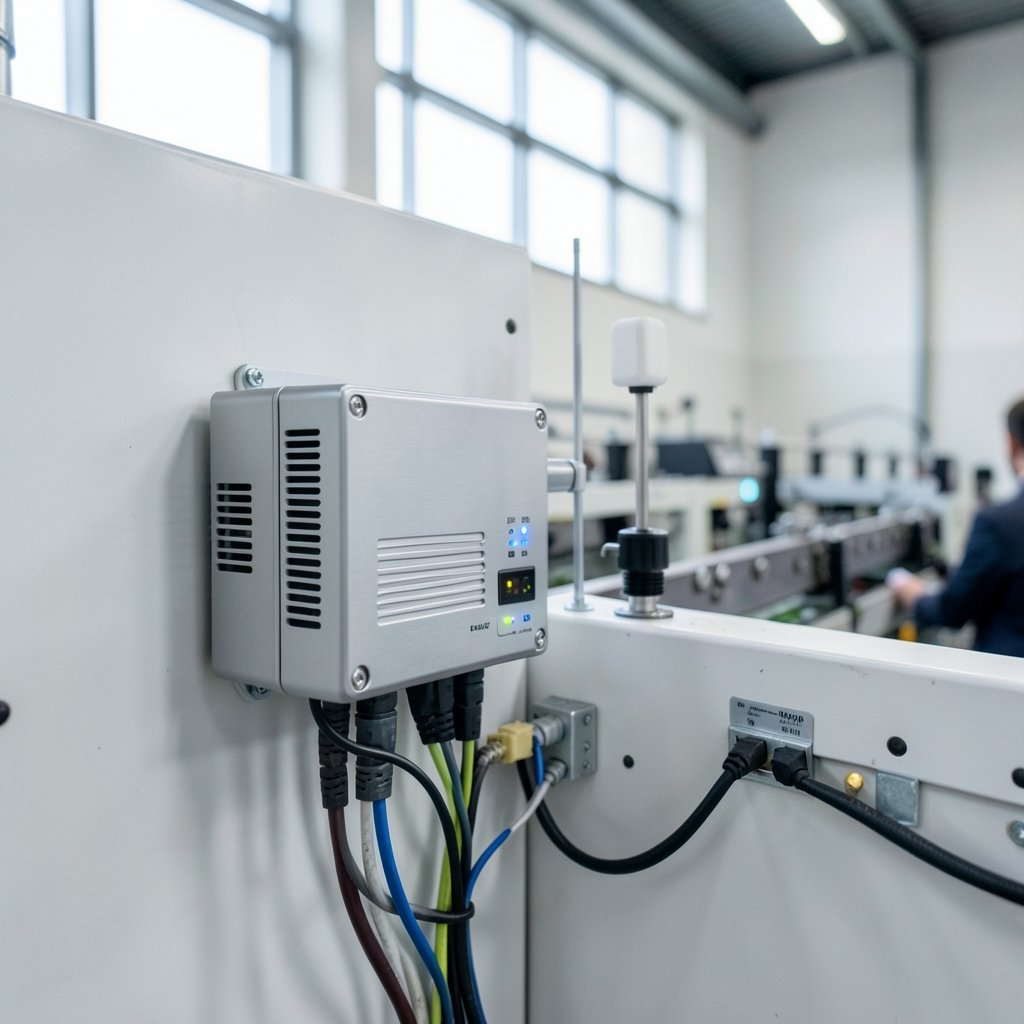
In 2023, a survey of enterprise technology leaders found that while most organizations were running edge pilots, only a small fraction had moved those projects into full production. That gap between experimentation and deployment is the single most important fact about the edge computing roadmap today. The technology works. The planning is where things fall apart.
This article lays out a practical, stage-by-stage roadmap for edge computing, from the first feasibility study to running a fleet of distributed nodes at scale. It covers the standards that matter, the mistakes that stall rollouts, and the decisions that separate a working deployment from an expensive science project.
What an edge computing roadmap actually is
An edge computing roadmap is a phased plan for moving compute, storage, and networking closer to where data is generated, whether that is a factory floor, a retail store, a cell tower, or a vehicle. It is not a single product purchase. It is a sequence of architectural, organizational, and operational decisions spread over months or years.
The reason a roadmap is necessary rather than optional comes down to physics and economics. Sending every sensor reading to a distant data center costs bandwidth, adds latency, and creates a single point of failure. Processing data locally cuts response times from hundreds of milliseconds to single digits, which matters enormously for anything involving safety, machinery, or real-time user experience. If you want the underlying mechanics, this explainer on what edge AI is and how it works covers the fundamentals well.
A roadmap differs from a strategy document in one key way: it has dates, owners, and exit criteria. Strategy says “we will process data at the edge.” A roadmap says “by Q3, we will run inference on 40 production-line cameras with a 50ms response budget, owned by the plant operations team, verified by a two-week pilot.”
Stage 1: Define the workload before the hardware

The most common failure pattern in edge projects is buying hardware first and finding a use case second. Successful programs invert this.
Start by inventorying candidate workloads and scoring them on four dimensions:
| Dimension | What to measure | Why it matters |
|---|---|---|
| Latency sensitivity | Required response time in milliseconds | Determines whether edge is even necessary |
| Data volume | GB per hour generated at the site | Drives bandwidth and storage costs |
| Connectivity risk | Cost and consequence of a network outage | Justifies local autonomy |
| Regulatory constraint | Data residency or privacy requirements | Can mandate local processing |
A workload that tolerates 500ms of latency and generates a few megabytes a day probably belongs in the cloud. A workload that controls a robotic arm, inspects products at line speed, or handles personal data under strict residency rules is a genuine edge candidate. Be honest in this scoring. The fastest way to kill an edge program is to force a cloud workload onto edge hardware and then wonder why it underperforms. (What is edge computing?)
Practical tip: pick one high-value, well-bounded workload for the first phase. Vision-based quality inspection and predictive maintenance on rotating equipment are the two most proven starting points across manufacturing. Both have measurable outcomes, which matters when you need to justify phase two.
Stage 2: Choose your architecture pattern
Edge architectures are not one thing. There are at least four patterns, and picking the wrong one creates technical debt that is painful to unwind.
Device edge runs compute directly on the sensor or machine. It is cheap and ultra-low-latency but constrained in memory and compute. Gateway edge puts a small server on-site to aggregate and preprocess data from many devices. Far edge places nodes at a telecom or regional facility, typically within 10 to 50 kilometers of the site. Cloud edge extends a provider’s services to a nearby location without full on-premises infrastructure.
Most mature programs end up with a hybrid: device-level inference for the tightest loops, gateway-level aggregation for everything else, and cloud for training models and long-term analytics. That layered approach is closely related to how neuromorphic computing is being designed for ultra-low-power sensing at the device tier, though that technology is still early for most production use.
One decision that trips people up: whether to run models that were trained in the cloud but executed at the edge, or to attempt training at the edge. The former is standard practice. The latter is almost never worth it in phase one. Train centrally, deploy to the edge, and send telemetry back.
Stage 3: Get the standards and interoperability right
Edge deployments are long-lived. Hardware bought in 2025 will still be running in 2032. That makes standards adoption a roadmap item, not an afterthought.
The European Telecommunications Standards Institute began publishing Multi-access Edge Computing specifications in the mid-2010s, originally under the name Mobile Edge Computing before the rename in 2016. Those specifications define how applications are packaged, orchestrated, and exposed to network services. The Linux Foundation Edge umbrella organization, formed in 2019, hosts several open-source projects aimed at interoperability across edge platforms. Telecom standards bodies have also worked on integrating edge computing into 5G core specifications.
You do not need to implement every specification. You do need to avoid locking yourself into a proprietary orchestration layer that cannot talk to anything else. Ask vendors three questions before signing: Does your platform expose a standard application packaging format? Can workloads be migrated to another orchestrator? What happens to my deployed applications if your company is acquired?
The same discipline applies to AI workloads. If you are planning to run models at the edge, the same interoperability questions apply to model formats and runtimes. This overview of how quantum computing could change artificial intelligence is a useful long-range reference for where model architectures may be heading, even if the near-term roadmap is entirely classical.
Stage 4: Build the operational model
Here is the uncomfortable truth about edge computing: the hardware is the easy part. The hard part is operating hundreds or thousands of sites with limited or no on-site IT staff.
A realistic operational model addresses four things.
Provisioning. How does a new node get imaged, configured, and joined to the fleet? If the answer involves a technician driving to the site with a USB stick, the roadmap will not scale. Zero-touch provisioning is a phase-one requirement, not a phase-three nice-to-have.
Monitoring. Edge sites fail silently. A gateway that loses power at 2 a.m. on a Sunday should generate an alert before Monday’s shift starts. Build observability in from day one, including local buffering so that telemetry survives a network outage.
Updates. Rolling out a firmware or model update to 500 sites is a different discipline from updating a cloud service. Staged rollouts, automatic rollback, and a canary site are baseline requirements.
Security. Every edge node is a potential entry point. Physical access is often uncontrolled. Assume the device will be tampered with and design accordingly: signed updates, encrypted storage, and least-privilege network policies.
A useful sanity check: if your team cannot describe how they would recover a bricked node at a remote site without sending a person, the operational model is not finished.
Stage 5: Pilot with hard exit criteria
Pilots fail for a predictable reason: nobody defined what success looks like before the pilot started, so it runs forever and quietly dies.
Write exit criteria before the first node is installed. Good criteria are specific and falsifiable:
- Inference latency stays under the target threshold for 95% of requests over 30 days.
- Site-level uptime exceeds 99.5% including planned maintenance.
- The model’s accuracy at the edge matches its cloud benchmark within an agreed tolerance.
- Operational cost per site falls below a stated figure.
- The site’s own staff can restart the system without escalation.
If a pilot clears all five, it graduates. If it clears three, you learn something and iterate. If it clears none, you have saved yourself a very expensive mistake. Either way, the decision is made by evidence rather than by whoever has the loudest opinion in the steering committee.
Resist the temptation to expand scope mid-pilot. The pilot’s job is to prove the pattern, not to solve every adjacent problem.
Stage 6: Scale with a repeatable deployment factory
Scaling edge is a logistics problem dressed up as a technology problem. The organizations that succeed treat deployment as a factory process with standardized bills of materials, pre-configured images, and a documented installation runbook that a local contractor can follow.
Three practices separate smooth scale-ups from chaotic ones.
First, standardize ruthlessly. Every deviation in hardware or configuration multiplies your support burden. Two node types is a fleet. Ten node types is a nightmare.
Second, invest in a staging environment that mirrors production edge conditions, including constrained bandwidth and intermittent connectivity. Testing on a fast office network tells you nothing about behavior on a factory floor with flaky Wi-Fi.
Third, track total cost of ownership honestly. Edge economics are frequently misjudged because teams compare hardware cost against cloud compute cost and ignore installation labor, connectivity, maintenance visits, and the engineering time to build the orchestration layer. The full picture is usually still favorable for latency-critical workloads, but only when the numbers are complete.
If you want to understand where the broader hardware landscape is heading, the roundup of latest breakthroughs in quantum computing is worth reading for context, though quantum hardware is not part of a realistic edge roadmap in the near term.
Common mistakes that derail edge rollouts
A few patterns show up again and again across industries.
Treating edge as a data center in miniature. Edge sites have no cooling redundancy, no raised floors, and no on-site engineers. Designs that assume otherwise fail in the field.
Underestimating the network. Many edge deployments are bottlenecked not by compute but by the link back to the core. Size it properly and plan for its failure.
Skipping the business case refresh. Costs and benefits shift as the fleet grows. A roadmap that is reviewed once a year will drift out of alignment with reality.
Ignoring the people. Site staff who were not consulted during design become the biggest obstacle during rollout. Bring them in early and give them a reason to want the system to work.
Conclusion
An edge computing roadmap succeeds when it is treated as a sequence of bounded, evidence-gated phases rather than a single grand transformation. Define the workload before the hardware. Pick an architecture pattern deliberately. Adopt standards that preserve your ability to change vendors. Build the operational model before you scale it. And give every pilot hard exit criteria so decisions get made on data.
The organizations pulling ahead are not the ones with the most ambitious edge vision. They are the ones that shipped one boring, well-instrumented pilot, learned from it, and then repeated the pattern 200 times.
FAQ
What is the first step in an edge computing roadmap?
Inventory and score candidate workloads on latency sensitivity, data volume, connectivity risk, and regulatory constraints. This determines whether edge processing is genuinely required before any hardware is purchased.
How long does a typical edge rollout take?
A single-site pilot usually runs three to six months. Scaling to a full fleet typically takes 12 to 24 months, depending on site count and how much standardization was built into the pilot.
Is edge computing cheaper than cloud computing?
Not automatically. Edge can reduce bandwidth and latency costs, but adds installation labor, maintenance visits, and orchestration engineering. A complete total-cost-of-ownership comparison is essential before committing.
Do I need 5G for edge computing?
No. Many production edge deployments run on wired Ethernet, Wi-Fi, or private LTE. 5G helps in mobile and wide-area scenarios, but it is not a prerequisite for edge computing.
What standards should an edge roadmap reference?
The Multi-access Edge Computing specifications from ETSI and the open-source projects under the Linux Foundation Edge umbrella are the most widely referenced starting points for interoperability.
How do I measure whether an edge deployment is working?
Track latency against target for at least 95% of requests, site uptime, model accuracy versus cloud benchmarks, cost per site, and whether local staff can operate the system without escalation.



