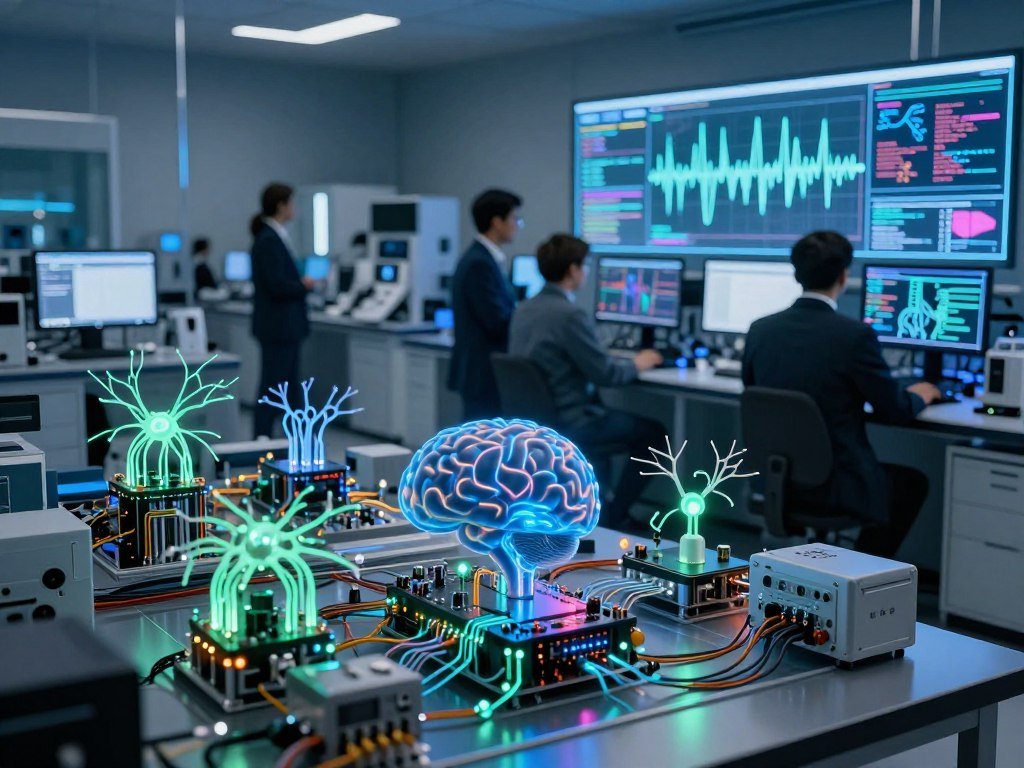
As AI workloads grow, engineers are exploring ways to process information without keeping every computing unit busy all the time. Neuromorphic computing is one approach. It borrows ideas from the brain to handle data, especially when signals change over time. That could help limit wasted activity, though the gains depend on the task and the hardware.
For people building artificial intelligence systems, the question is practical: can a different design process some information with less energy consumption or delay? Neuromorphic systems are one answer researchers are testing. They do not rebuild a biological brain, and they are not a simple replacement for today’s computers. They use select brain-inspired ideas in specialized hardware and software. This article explains how those ideas work, where they may help, and what still makes them hard to use. A useful first distinction is that these systems borrow operating principles from the brain, not its full biological complexity.
Key Takeaways
- Neuromorphic computing uses artificial neurons and synapses to process information.
- Many designs send signals only when activity reaches a set level.
- Some sensory and edge AI tasks may suit this event-based approach.
- Energy and speed gains depend on the workload and test method.
- Neuromorphic systems complement conventional computers rather than replace them everywhere.
What Is Neuromorphic Computing? How Does It Work?
Neuromorphic computing uses brain-inspired hardware and software to process information through networks of artificial neurons and synapses. A spike is a brief electrical signal an artificial neuron sends when its activity reaches a threshold. Spiking neural networks process signals as events that arrive over time.
Unlike a full biological simulation, a neuromorphic system copies selected principles, not every feature of a living brain. Its parts may represent connected processing units, and their activity can depend on incoming signals. For more background on how neural networks process data, the same basic idea applies: connected units transform information through weighted links.
Artificial neurons and synapses
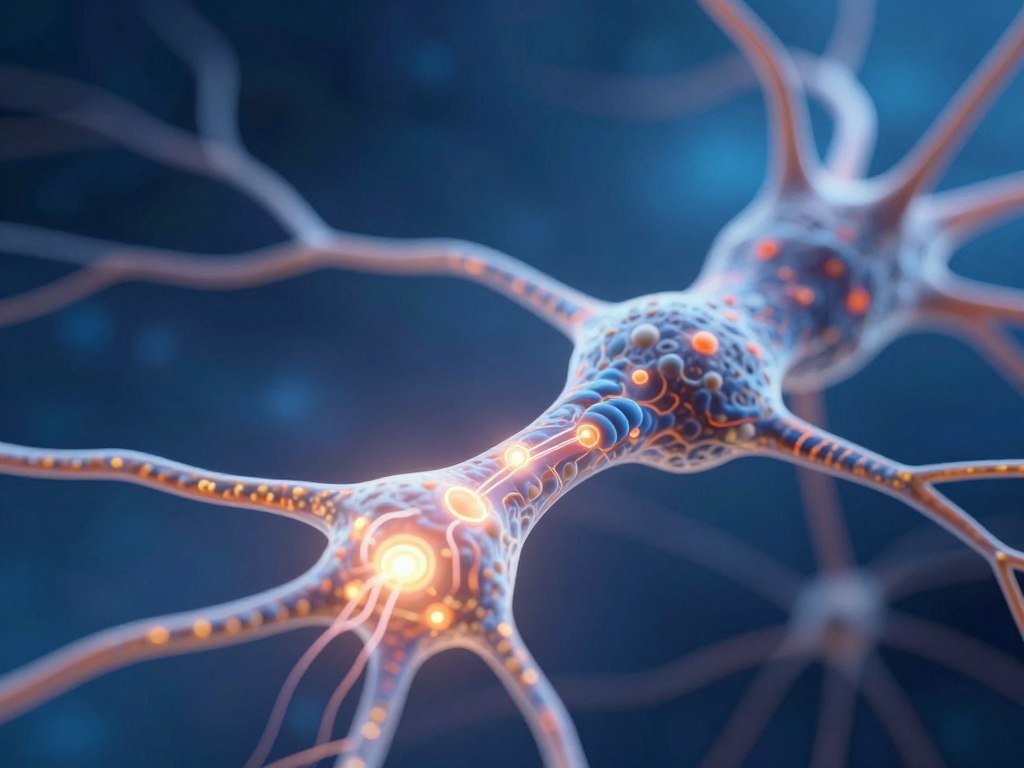
Spiking neural networks, or SNNs, link artificial neurons through synapses. Each neuron collects activity from its connections. When that activity crosses a threshold, the neuron sends a spike to other units.
A synapse carries a weight that affects how strongly one neuron influences another. Learning can change those weights, allowing a network to respond differently after experience. The details depend on the model and learning method.
These networks still use mathematical rules. They are not tiny copies of biological cells, and they do not need to match every chemical process in the brain. If you want a broader introduction to AI models, see how artificial intelligence works.
Events, timing, and adaptation
In an SNN, spike timing matters because it helps determine when connected units respond. A signal can pass through a network as a sequence of events rather than as a constant stream of values.
That event-based design can let inactive parts of a network remain idle. When a sensor’s input has not changed, the system may have little new activity to process. The network can become active again when a useful event arrives.
A spike is a signal event, not a claim that a chip reproduces every detail of a biological neuron.
Learning rules can also adjust synaptic weights as the network adapts. This gives researchers ways to study changing patterns without copying biological learning in full.
A spike carries information between connected units, while its timing helps shape the network’s response. That simple model supports many different hardware and software designs.
How Does Neuromorphic Hardware Differ From Von Neumann Architecture?
A conventional computer commonly moves instructions and data between memory and a processor, while neuromorphic designs distribute computation across connected units. Memory placement is a key difference. Less data movement may help some workloads, but it does not make neuromorphic systems universally faster.
John von Neumann is associated with foundational principles for the EDVAC computer in the 1940s. Those principles became known as the von Neumann architecture. It stores program instructions and data in shared memory.
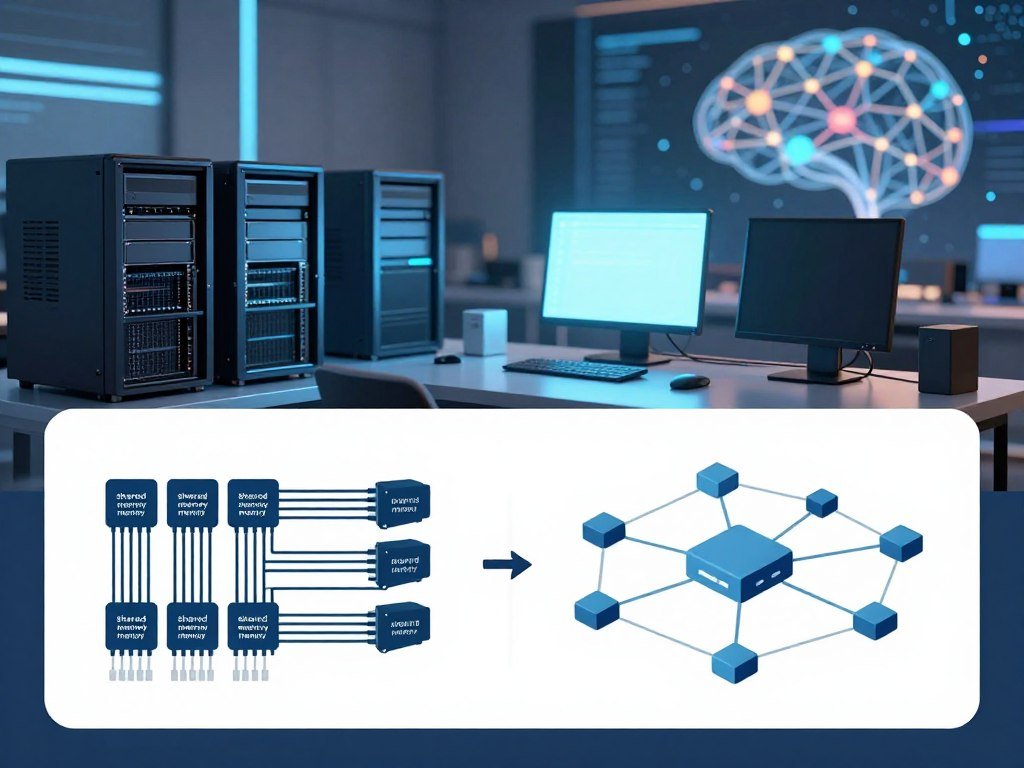
Harvard architecture uses separate storage and signal paths for instructions and data. That can allow distinct access, though the design still depends on its parts and workload. The table shows the basic contrast.
| Architecture | Memory arrangement | Instruction and data paths | Typical role |
|---|---|---|---|
| von Neumann | Shared memory | Shared path | Common general-purpose computers |
| Harvard | Separate instruction and data storage | Separate paths | Designs needing distinct instruction and data access |
| Neuromorphic | Memory and computation distributed or colocated around artificial neurons and synapses | Event-based signal exchange | Brain-inspired workloads |
Most personal computers and laptops use a shared-memory model. Intel Core i7 and AMD Ryzen processors are examples of processors found in this broad category.
That architecture remains useful because it supports many kinds of software. A neuromorphic design may reduce movement between memory and processing for a suitable task, but performance still depends on the workload.
For a wider look at processor choices, this guide to AI accelerators explains how GPUs, NPUs, FPGAs, and ASICs handle different jobs. Intel and Apple processors also take different design paths, as explained in this Intel versus Apple Silicon comparison.
Harvard designs can support separate instruction and data access, but whether that improves speed depends on the design and workload.
What Falls Within the Scope of Neuromorphic Research?
The scope of neuromorphic research spans both the algorithms that model neural activity and the hardware that implements it. Both sides matter: a model may work well in software but need different circuits to run efficiently. Not every project uses the same biological or engineering approach.
Researchers study spiking neural networks, neuron dynamics, plastic synapses, and mixed network designs. They also build circuits that process events or store computation close to data. The field covers abstract models as well as physical devices.

Neural models and learning
Some work focuses on how artificial neurons respond to input and how synapses change. Learning rules can set how and when those connections adapt. Researchers may also combine different types of units in one network.
These are not all attempts to recreate a biological brain. Some projects borrow only the idea of sparse signals, while others test models that represent more neural behavior. A system can use brain-inspired ideas without copying human biology.
Hardware and circuit approaches
Hardware research includes analog neuron emulation, event-based computation, non-von-Neumann architectures, and in-memory processing. Analog circuits represent values through changing electrical signals. In-memory designs aim to keep some processing near stored information.
Other systems use digital circuits to exchange events. Their choices affect how a model maps to a chip, how signals move, and how easily developers can program the device.
- Spiking neural networks and neuron dynamics
- Plastic synapses and learning rules
- Heterogeneous network architectures
- Analog, event-based, non-von-Neumann, and in-memory hardware
The field’s range is clear in work on event-based perception and neuromorphic hardware. Research spans models, learning, and ways to deploy sensory systems.
A system can be neuromorphic in its event-based architecture without reproducing the full biology of the brain.
What Benefits Can Neuromorphic Systems Offer?
If a sensor produces only occasional meaningful changes, an event-driven system can avoid repeatedly processing an unchanged signal. Sparse activity may cut needless computation. Any energy savings depend on the task, the hardware, and the comparison method.
The human brain has about 100 trillion synaptic connections and is often described as using roughly 20 watts of power. That figure offers a point of comparison, not a power target already reached by neuromorphic computers.
Lower activity and energy use
A conventional system may keep checking a signal even when it has not changed. An event-based design can focus work on new input. That approach may help a device with a sensor that sends occasional updates.
The result depends on what the task requires. A workload that generates constant activity may not gain much from event-driven processing. A different processor may also spend energy on data movement, memory, or other parts of the system.
For edge AI, local processing can reduce reliance on a remote computer. A small device may respond near the sensor instead of sending every signal elsewhere. That can be useful when a quick response matters.
Parallel responses and adaptation
Neuromorphic networks can use many connected units at once. Parallel processing may let several parts respond to separate events at the same time. This could reduce delay for some sensory tasks, though measured latency still depends on the full system.
Adaptive synapses may help a network adjust when inputs change. That can be useful for signals that shift over time, such as sound or movement. The system still needs a learning method suited to the task.
The brain is a striking example of distributed processing, but its power use cannot be compared directly with a computer without matching the work being done. A 20-watt figure does not mean a neuromorphic chip can deliver human-level ability at the same power.
When comparing options, count the energy used by the whole task, not just the processor. Include the sensor, memory, and any computer that handles the rest of the work.
Treat energy savings as workload-dependent, especially when comparing a specialized neuromorphic task with a general-purpose computer.
What Limits Neuromorphic Computing Today?
Neuromorphic systems still face practical barriers, including accuracy tradeoffs, fragmented tools, and inconsistent ways to compare results. Hardware limits can shape what a network can represent. A strong result on one device does not prove the same model will work as well elsewhere.
Some deep neural networks lose accuracy or precision when converted to SNNs. The conversion may also change how much time or hardware the network needs. These tradeoffs can make a promising model harder to deploy.
- Some converted deep neural networks lose accuracy or precision.
- Device variation and limited synaptic weight precision can affect results.
- Programming tools and hardware conventions are not consistent across systems.
- Results are hard to compare without shared benchmarks.
Device variation matters because circuits may not behave exactly alike. Limited weight precision can also restrict how accurately a synapse represents a value. Both issues can affect model performance.
Programming differences create another barrier. A model designed for one system may need changes before it can run on another. Developers must learn each tool’s rules and limits.
NeuroBench is a benchmark framework for neuromorphic algorithms and systems. It was introduced in a 2025 Nature Communications paper to address a lack of standard comparisons with conventional methods. Its two evaluation tracks separate hardware-independent and hardware-dependent tests.
The hardware-independent track helps assess algorithm performance without tying the result to one device. The hardware-dependent track measures performance on a particular implementation. Together, the tracks can make a result easier to interpret.
Research into shared tests includes a Lava-Loihi micro-benchmark suite that examines message passing, compilation, and hardware behavior. Such work can help developers compare pieces of the software path.
A benchmark result is most useful when its track makes clear whether it measures an algorithm or a particular hardware implementation.
Which Applications Fit Neuromorphic Computing?
Tasks built around changing sensory signals are natural candidates for neuromorphic research because their inputs arrive as events over time. Changing inputs can suit event-based processing. Research applications do not prove that neuromorphic systems are best for every production deployment.
Work on Intel Loihi 2 has included optical-flow estimation, sound processing, speech recognition, and satellite radio-resource management. Other teams explore robotics and edge AI, where local responses may matter.
- Event-based vision and optical flow
- Auditory signal processing
- Speech recognition
- Robotics and real-time sensing
- Satellite radio-resource management
Optical flow tracks how objects move across a visual scene. An event-based camera can report changes rather than repeatedly sending full images. That makes it a natural subject for research into sparse vision systems.
Sound and speech tasks also involve signals that change over time. Researchers can test whether a network responds to useful audio patterns with suitable accuracy and delay.
Robots may need to react to sensor input close to the moment it arrives. Edge AI can support local decisions in devices that cannot rely on a constant connection to a remote computer.
Satellite radio-resource management is a different kind of task. It concerns assigning communication resources as conditions change, rather than sensing a scene with a camera or microphone.
These examples are research directions, not a universal list of tasks ready for commercial use. A workload that needs precise, general-purpose calculations may fit conventional hardware better.
Some teams combine processor types so each handles work suited to its design. For practical edge deployments, AI automation systems can also connect model outputs to configured actions.
For a mixed workload, keep conventional processors available for the parts that need general-purpose or precise computation.
How Does Intel Loihi 2 Work in Practice?
Loihi 2 combines asynchronous neuron cores with embedded x86 cores on one research chip. Two core types serve different roles. The 128 neuron cores handle neuromorphic processing, while six embedded Lakemont x86 cores support other computing tasks.
One chip supports up to 1 million neurons and 120 million synapses. It is built using Intel 4 process technology. Those figures describe a single chip, not a larger multi-chip system.
Cores, neurons, and learning features
The asynchronous neuron cores process spikes without relying on a fixed clock step for every event. The embedded x86 cores are general-purpose processors on the chip. They can support tasks that do not fit the neuron cores’ role.
Loihi 2 supports custom neuron models, so researchers can define how artificial neurons respond. It also supports graded spikes with payloads up to 32 bits. A graded spike can carry more than a simple yes-or-no event.
Three-factor learning rules give researchers another way to update network connections. These rules use three signals in learning, allowing the system to adjust synapses under defined conditions.
Faster spikes and example workloads
Redesigned asynchronous circuits process spikes up to 10 times faster than the original Loihi. That is a chip-level comparison, not a claim that every application runs ten times faster.
An audio-processing approach encoded a short-time Fourier spectrum with sparse spike outputs. In that comparison, it used over 47 times less energy than the approach it was compared with.
A Loihi 2 optical-flow approach reduced computation by over 90 times compared with deep neural networks while improving accuracy. That result applies to the tested optical-flow approach, not every vision task.
Software and research access
Intel’s open-source Lava framework gives developers Python APIs for describing neural networks. Lava can compile them to run on CPUs or Loihi 2. A CPU target makes it possible to test software without the neuromorphic chip.
The official Lava framework documentation describes its Python interface and software design. A model that runs on a CPU may still behave differently on Loihi 2 because the hardware targets differ.
Loihi 2 is not widely available for purchase. It is a research chip, so ordinary retail access is not the path for most users.
Researchers seeking Loihi hardware can apply to Intel’s Neuromorphic Research Community rather than assume the chip is broadly available to buy.
What Other Neuromorphic Chips and Platforms Are Available?
NorthPole, Akida, and Loihi 2 represent different approaches to neuromorphic inference and research access. Their roles differ, so their reported results should not be read as a direct contest. Compare each platform under the workload and test conditions that produced its result.
IBM NorthPole is a 256-core, SRAM-based chip designed to avoid off-chip memory access during inference. BrainChip markets Akida as a commercial neuromorphic AI platform for edge sensing and inference.
| Platform | Architecture or stated scale | Stated use or access | Primary setting |
|---|---|---|---|
| IBM NorthPole | 256-core SRAM-based chip | Inference without off-chip memory access | Inference |
| BrainChip Akida | Commercial neuromorphic AI platform | Edge sensing and inference | Edge deployments |
| Intel Loihi 2 | Asynchronous neuron cores and embedded Lakemont x86 cores | Research access through Intel’s Neuromorphic Research Community | Research |
NorthPole has been reported to run ResNet-50 at 800 frames per second at 74 milliwatts. That result was reported as 25 times better energy efficiency than comparable inference.
The figure describes a specific model and comparison. It cannot be directly ranked against results from a different chip running another task or test setup.
Akida is aimed at edge deployments, including low-power sensing and inference. Loihi 2 is oriented toward research access, while NorthPole’s stated result concerns inference performance.
Those distinctions matter when choosing hardware. A lab exploring learning methods has different needs from a company adding local sensing to an edge device.
Compare platforms by workload and measurement conditions, not by treating one reported result as a universal ranking.
How Are Large Neuromorphic Systems Built?
Neuromorphic scale can come from connecting many specialized processors into a larger system. System scale is different from one chip’s capacity. Hala Point is a multi-processor system, not a single chip.
Large research systems combine processors, communication links, and software to support bigger networks. Their designs vary: some focus on analog models, while others use digital chips that exchange packets.
| System | Building blocks | Stated scale or operating approach | Distinguishing design |
|---|---|---|---|
| Hala Point | Loihi 2 processors | 1,152 processors; 1.15 billion neurons and 128 billion synapses | Deployed at Sandia National Laboratories in 2024 |
| Neurogrid | Mixed analog-digital multichip system | Simulates a million neurons with billions of synaptic connections in real time | Large-scale neural simulation |
| SpiNNaker | Digital multicore chips | Real-time operation with packet-based spike exchange | Optimized spike communication |
| BrainScaleS | Analog electronic neuron and synapse models | Accelerated operation | Analog emulation |
Hala Point was deployed at Sandia National Laboratories in 2024. It uses 1,152 Loihi 2 processors and supports 1.15 billion neurons and 128 billion synapses.
Neurogrid takes a mixed analog-digital approach. It can simulate a million neurons with billions of synaptic connections in real time.
SpiNNaker uses digital multicore chips and packet-based spike exchange. BrainScaleS instead uses analog electronic models of neurons and synapses, with accelerated operation.
These systems show that “large” can mean different things. A design may target real-time simulation, faster-than-real-time operation, or communication across many processors.
A Nature study of neuromorphic systems at scale discusses the software and architecture challenges that come with larger designs. More processors do not remove the need to move and coordinate data.
Keep chip capacity and whole-system capacity separate when comparing published neuron and synapse counts.
How Do Developers Program Neuromorphic Systems?
Developers can describe neuromorphic networks in software, then map or compile them to supported computing hardware. Software tools make the model easier to express. Compiling the same model for different targets does not mean those targets perform identically.
Programming involves both describing a network and choosing how it learns. Those are related tasks, but a framework for building a model is not itself a learning method.
Describing networks and running them
Intel’s open-source Lava framework uses Python APIs to describe neural networks. Developers can compile a network to run on CPUs or Loihi 2. This gives teams a software route to test models on different supported hardware.
Lava organizes applications as processes that can exchange data. Developers can prototype parts of an application on conventional computing hardware, then map supported work to a neuromorphic system.
A compiled model may run on more than one target, but execution time and energy use can differ. Hardware features, software support, and the way a model is mapped all affect the result.
A comparison of Apple Silicon and Intel systems also shows why software compatibility and hardware design matter when programs move between platforms.
Training and adaptation methods
One route converts a deep learning model into an SNN. This can reuse a network that was trained with standard deep-learning tools, though conversion may change accuracy or operation.
Evolutionary algorithms search across possible network settings. They can test many candidates and keep those that perform better on a chosen goal.
Spike-timing-dependent plasticity changes connection weights based on the timing of activity. Reservoir computing uses a fixed or lightly trained network to transform input, then trains a simpler output layer.
Each method suits different problems and requires its own tests. A learning rule that works for one signal may not suit another network or chip.
Test the compiled model on its intended target, since software portability alone does not guarantee equivalent performance.
Who Is Building Neuromorphic Systems?
Neuromorphic development is distributed across research groups, national laboratories, and chip companies working on different parts of the field. Different roles matter more than a single ranking. Research chips, large research systems, and commercial edge platforms serve distinct needs.
Academic teams study models and build experimental systems. Public research labs can assemble larger systems for testing. Companies develop chips and software for research or commercial use.
Academic and public research
Misha Mahowald and Carver Mead developed early silicon retina and cochlea systems, along with silicon neurons and synapses, in the 1980s. Their work helped establish early hardware research inspired by neural systems.
Stanford’s Neurogrid is one academic example. Sandia National Laboratories deployed Hala Point in 2024 as a large research system.
The European Union’s Human Brain Project ran for 10 years and ended in 2023. Its work formed part of a wider public research effort around brain science and computing.
Chip developers and edge platforms
Intel builds Loihi chips and supports research access through its community program. IBM developed NorthPole, while BrainChip markets Akida for edge AI uses.
These efforts do not all compete in the same way. Some focus on research tools or large systems, while others target hardware that can support edge sensing and inference.
Universities and public labs contribute models, prototypes, and system tests. Chip companies bring processor designs and software environments. Those roles can overlap, but one measure cannot capture them all.
A useful comparison starts by asking whether a group is advancing neural models, building research systems, or developing deployable hardware.
When Is Neuromorphic Computing the Right Fit?
A neuromorphic system is most promising when a workload is driven by sparse events, fast local responses, or tight energy constraints. Workload fit matters more than the label on a chip. Neuromorphic computing is specialized, not a general-purpose replacement for CPUs.
Edge AI and sensory tasks are common targets because they can process signals near a device. A system that combines neuromorphic and conventional processors may suit work with both event-based signals and precise calculations.
- Are the inputs sparse or event-driven?
- Does the task need fast local responses?
- Is low power a priority?
- Can conventional computing handle general-purpose or precise calculations?
An edge AI sensor or robotics workload may be a better fit than a task dominated by conventional exact calculations. The sensor may produce occasional changes, while a robot may need a local response.
Hybrid systems can divide work between processor types. A neuromorphic unit may handle sensory events, while a conventional CPU manages other calculations and software.
For broader processor choices, this article on Apple Silicon and Intel describes differences in conventional platforms. The right comparison depends on the work each system must run.
Start with one representative workload and compare its accuracy, latency, and energy use against the conventional system it would complement.
Keep the test close to the real task. A small change in input patterns or timing can affect a system’s response.
Start with one representative workload and compare its accuracy, latency, and energy use against the conventional system it would complement.
Conclusion
Neuromorphic computing offers a different way to build systems for selected AI and sensory workloads. Its brain-inspired, event-driven processing is most relevant when sparse activity or fast local responses suit the task.
These systems can complement conventional computing, but they do not replace it for every kind of work. Their value depends on measured results, not the brain-inspired label alone.
Choose one event-driven task and measure its accuracy, latency, and energy use before deciding whether a neuromorphic system belongs in the design.
FAQ
What is neuromorphic computing and examples?
Neuromorphic computing is a brain-inspired approach that uses artificial neurons and synapses to process information. Some systems exchange signals as events rather than continuously updating every unit. Examples include Intel Loihi 2, IBM NorthPole, and BrainChip Akida. They differ in design and purpose: Loihi 2 is research-focused, while Akida is marketed for edge uses.
What is the scope of neurocomputing?
Neurocomputing can refer broadly to computing methods based on neural models and networks. Neuromorphic research, the focus here, spans neural models, learning algorithms, circuits, hardware, and sensory applications. Some projects study how networks learn; others build chips that process events. The word can cover more than brain-inspired hardware, so the exact meaning depends on the context.
Who is leading in neuromorphic computing?
Intel, IBM, and BrainChip are active alongside universities and national laboratories, but they play different roles. Intel’s Loihi chips support research, IBM’s NorthPole focuses on inference, and BrainChip markets an edge platform. Stanford and Sandia have built research systems. These efforts cannot be ranked fairly on one measure because they target different tasks and users.
What are the key differences between neuromorphic computing and the Von Neumann architecture?
Neuromorphic systems distribute or colocate processing and memory around connected units, then exchange event-based signals. A von Neumann computer stores instructions and data in shared memory and moves them between memory and a processor. The first design may suit some event-driven workloads. The second remains a flexible choice for general-purpose computing.
What is the most powerful neuromorphic computer in the world?
Hala Point is a major large-scale neuromorphic system, with 1,152 processors, 1.15 billion neurons, and 128 billion synapses. It was deployed at Sandia National Laboratories in 2024. Calling it the most powerful in the world would require a shared benchmark against other systems. Neuron counts alone do not show speed, accuracy, or energy use.
Is Harvard architecture faster than Von Neumann?
Harvard architecture can allow separate instruction and data access because it uses distinct storage and paths. That may help when a design needs both at once. It does not guarantee higher speed in every case. Processor design, memory behavior, and the workload all affect performance, so the architecture name alone cannot pick a faster computer.
Do computers still use Von Neumann architecture?
Yes, most personal computers and laptops use a shared-memory model associated with von Neumann architecture. Intel Core i7 and AMD Ryzen processors are examples found in this broad category. Modern computers can add features that change how parts work, but shared instruction and data memory remains common for general-purpose machines.
Which is the best CPU architecture?
For general-purpose personal computers, shared-memory von Neumann designs remain the practical default. They support a wide range of programs and everyday tasks. Neuromorphic processors suit more specialized work, especially event-driven sensory tasks. The best choice depends on what the computer must do, and a mixed system can use each processor type where it fits.