
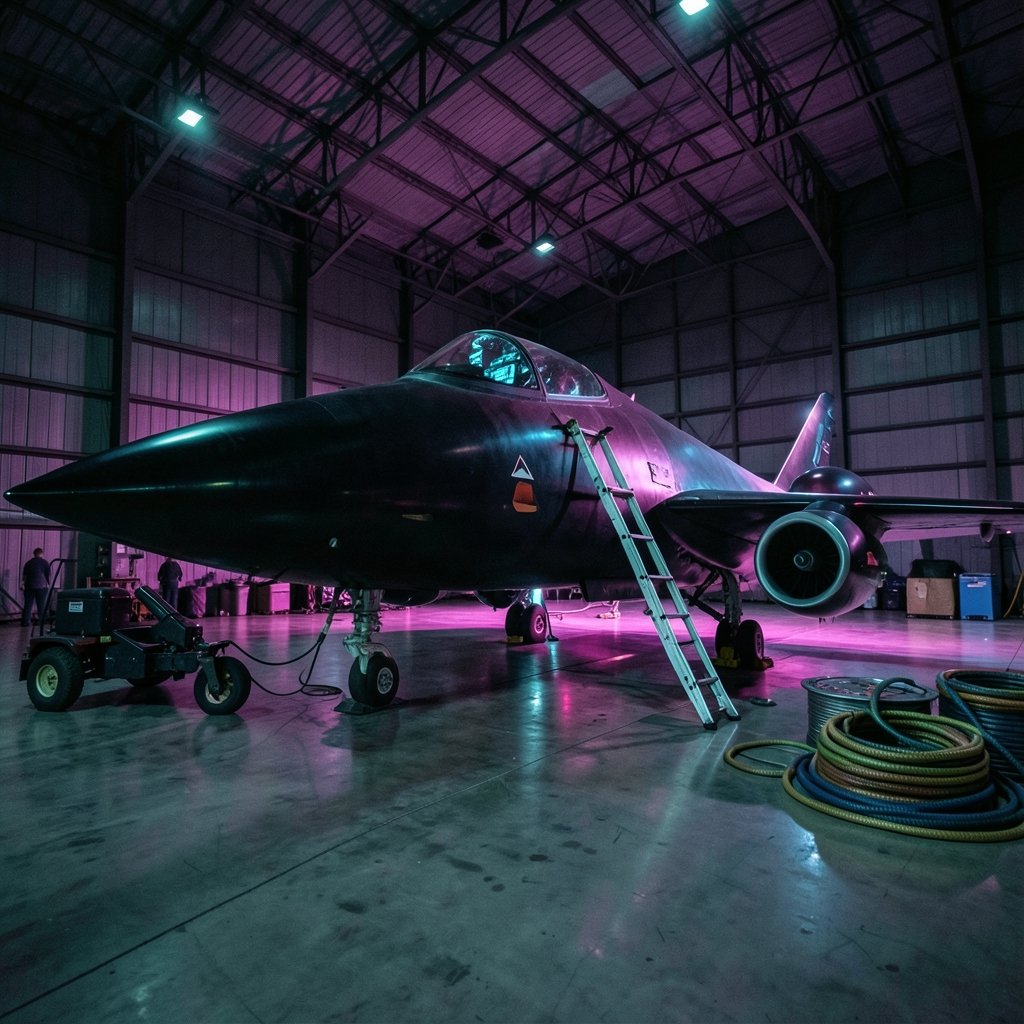
What if the fastest jet ever built flew its record-setting run before most of today’s pilots were born, and nobody has beaten it since? That is exactly the situation with the Lockheed SR-71 Blackbird, the plane that still owns the official speed record for a crewed, air-breathing jet. The number is 3,529.56 km/h, or Mach 3.3, set on 28 July 1976. Nearly fifty years later, it stands.
But “fastest jet in the world” is a slippery phrase. It can mean the absolute record holder, the fastest fighter in service, the fastest passenger jet, or even a rocket plane that people mistakenly call a jet. Each answer is different, and each one comes with caveats worth knowing before you quote a number at a dinner party. (AMD World Labs Deal vs Xilinx & ZT Systems: 2027 Workflows)
The Record Holder: SR-71 Blackbird
The SR-71A with tail number 61-7958 flew a 25-kilometer straight course on 28 July 1976 and averaged 3,529.56 km/h (2,193.2 mph). That run is the recognized world absolute speed record for crewed jet aircraft. The same aircraft also set an altitude record of 25,929 meters (85,069 feet) on the same day, which tells you something about what kind of machine this was.
The Blackbird was not a fighter. It was a strategic reconnaissance aircraft, designed to fly so high and so fast that surface-to-air missiles could not touch it. Its titanium skin, specially tuned engines, and bizarre fuel system (it leaked fuel on the ground because the panels expanded at speed) made it a maintenance nightmare and an engineering legend at the same time.
The U.S. Air Force retired the SR-71 in 1990, brought it back briefly from 1995 to 1998, and retired it for good in 1998. NASA flew variants into 1999. No crewed jet has officially surpassed its record since.
Why the record has lasted so long
Building a jet that sustains Mach 3+ is brutally expensive and offers little practical payoff in an era of satellites, drones, and stealth. Speed stopped being the main currency of military aviation. Stealth, sensors, and networking matter more now. That is why the record sits untouched: not because engineers cannot go faster, but because nobody has a mission that justifies the cost of certifying a faster crewed jet.
The Rocket Plane People Confuse With a Jet
The North American X-15 reached Mach 6.72 (about 7,274 km/h) on 3 October 1967. That is roughly twice the SR-71’s speed, so why is it not the fastest jet? Because it was rocket-powered, not air-breathing. A jet engine takes in air; a rocket carries its own oxidizer. The X-15 was dropped from a carrier aircraft and burned rocket fuel for a few minutes. It is the fastest crewed aircraft of any kind in level flight, but it is not a jet.
This distinction trips people up constantly. If someone tells you the fastest jet hit Mach 6.7, they are almost certainly thinking of the X-15. It is a fair mistake, but it is still a mistake.
Fastest Fighter Jets: A Contested Crown
Among operational fighters, the picture gets murky fast. The MiG-25 Foxbat is usually credited with Mach 2.83 to Mach 3.0, and the MiG-31 with roughly Mach 2.83. The catch is that these figures often come from manufacturer or Soviet-era claims rather than independently certified records. Treat them as approximate.
| Aircraft | Claimed top speed | Status of the figure |
|---|---|---|
| Lockheed SR-71 | Mach 3.3 | Certified world record (1976) |
| MiG-25 Foxbat | Mach 2.83–3.0 | Manufacturer/Soviet claim |
| MiG-31 | Mach 2.83 | Approximate, not certified |
| F-15 Eagle | Mach 2.5+ | Widely cited, not certified |
| F-22 Raptor | “Mach 2 class” | Exact figure classified |
| Concorde | Mach 2.04 | Passenger jet, not military |
The F-22 Raptor is officially described as “Mach 2 class,” with exact performance classified. The same goes for newer fighters. When a specification is classified, every number you see online is an estimate, sometimes a very good one and sometimes pure guesswork.
So who holds the “fastest fighter” title today? It depends who you ask. The MiG-31 and the F-15EX get named often, but no new official absolute record has been certified since 1976. Anyone claiming a definitive answer is overselling their certainty.
The Fastest Passenger Jet Ever Flown
The Concorde cruised at Mach 2.04, roughly 2,180 km/h, and carried paying passengers between 1976 and 2003. That makes it the fastest passenger jet in history, and nothing has replaced it. Flying London to New York in under three and a half hours was a genuine marvel, but fuel costs, noise restrictions, and a limited route network killed the economics.
For context, a typical modern airliner cruises around Mach 0.78 to Mach 0.85. Concorde was more than twice as fast, and it did it with passengers sipping champagne. No commercial aircraft since has come close.
Why “Fastest” Depends on What You Measure
Here is where a lot of articles go wrong. Speed records are not one thing. They depend on the course, the altitude, the payload, and who is doing the certifying.
- Absolute speed record for a jet: SR-71, Mach 3.3, certified.
- Absolute speed record for any crewed aircraft: X-15, Mach 6.72, rocket-powered.
- Fastest operational fighter: contested, no certified record.
- Fastest passenger jet: Concorde, Mach 2.04.
- Fastest currently flying military jet: disputed and often classified.
The body that certifies aviation records is the Fédération Aéronautique Internationale, usually called the FAI. Its record database is the authoritative source, and it defines the classes that separate jets from rockets and crewed from uncrewed flights. If a speed claim has not been through that process, it is a claim, not a record. This matters in the same way that verified security benchmarks matter in other technical fields: the difference between a marketing number and an audited one is everything. The same discipline shows up in how teams approach vulnerability scanning across real-world tools, where documented findings beat vague assurances every time.
Practical Tips for Reading Speed Claims
If you want to evaluate a “fastest jet” claim without getting fooled, a few habits help.
- Check whether the aircraft is a jet or a rocket. Air-breathing versus rocket-powered changes the category entirely.
- Ask who certified the number. An FAI record is verified. A manufacturer brochure is not.
- Look at the conditions. Speed depends on altitude, temperature, payload, and course length. A short dash is not the same as sustained cruise.
- Beware of “class” language. Phrases like “Mach 2 class” usually mean the exact figure is classified or unimpressive.
- Distinguish prototype from production. A testbed that flew once is not an operational aircraft.
The most common mistake people make is comparing a certified record against an uncertified claim and treating them as equals. They are not the same kind of number. A second common error is forgetting that altitude records and speed records are separate achievements, even when the same aircraft set both on the same day.
What Actually Works in Practice
For anyone trying to settle a debate about the fastest jet, the reliable approach is to anchor on the SR-71 record and then explain the categories. That framing handles almost every argument. If someone brings up the X-15, you can acknowledge it as the fastest crewed aircraft while noting it was rocket-powered. If someone cites a fighter’s top speed, you can point out that most fighter figures are uncertified.
This kind of category discipline is useful well beyond aviation. It is the same reason security teams separate verified findings from vendor claims when they document multi-factor authentication setups: the specific, verified detail is what holds up under scrutiny. Good analysis is mostly about knowing what kind of claim you are looking at.
It also helps to remember that speed is not the same as capability. A Mach 3 reconnaissance plane from the 1960s would be nearly useless in a modern contested airspace full of long-range missiles and networked sensors. The SR-71 was a product of its era, and its record survives partly because the era that demanded such speed has passed.
The Future of Fast Crewed Flight
Will anything beat the Blackbird? Possibly, but not soon in a way that counts as a certified jet record. Hypersonic research is advancing quickly, and uncrewed test vehicles regularly exceed Mach 5. But those are not crewed jets, and they are not certified in the same class. A crewed, air-breathing aircraft that officially surpasses Mach 3.3 would need a mission, a budget, and a certification run. None of those appear imminent.
The more realistic near-term question is whether any new fighter will post a certified speed record at all. Modern air forces care about stealth and sensor fusion, not top-end speed. That makes a new record unlikely, which is exactly why the 1976 mark may stand for decades more.
For readers who enjoy comparing verified specifications against real-world performance, the same mindset applies to tracking down which quarters are actually worth money in a real-world value guide: the documented, checkable detail is what separates a real find from a hopeful guess. Aviation records work the same way. The certified number is the one that counts. (Multi factor authentication examples 12 real world setups)
Conclusion
The fastest jet in the world is the Lockheed SR-71 Blackbird, and its 1976 record of Mach 3.3 has never been officially beaten. The fastest crewed aircraft of any kind is the rocket-powered X-15, which is not a jet. The fastest passenger jet was Concorde. The fastest fighter is a genuinely open question, because the numbers are either uncertified or classified. Once you separate those categories, the debate gets much clearer, and the Blackbird’s half-century reign looks less like a fluke and more like a monument to a very specific moment in aviation history.
Frequently Asked Questions
What is the fastest jet in the world?
The Lockheed SR-71 Blackbird holds the official record for a crewed, air-breathing jet at 3,529.56 km/h (Mach 3.3), set on 28 July 1976. No crewed jet has officially surpassed it since.
Is the SR-71 still the fastest jet in 2026?
Yes, as far as certified records go. The SR-71’s record has stood for nearly fifty years, and no crewed jet has been officially certified at a higher speed. Uncrewed hypersonic vehicles fly faster, but they are a different category.
Was the X-15 faster than the SR-71?
Yes. The X-15 reached Mach 6.72 (about 7,274 km/h) on 3 October 1967, roughly twice the SR-71’s speed. However, the X-15 was rocket-powered, not a jet, so it does not compete for the jet speed record.
What is the fastest fighter jet ever built?
It is contested. The MiG-25 and MiG-31 are often cited at around Mach 2.8 to Mach 3.0, and the F-15 at Mach 2.5 or more, but most of these figures are manufacturer or military claims rather than certified records. Modern fighters like the F-22 have classified top speeds.
What was the fastest passenger jet ever?
The Concorde, which cruised at Mach 2.04 (about 2,180 km/h) and carried passengers from 1976 to 2003. No commercial aircraft since has matched it.
Who certifies aviation speed records?
The Fédération Aéronautique Internationale (FAI) is the body that certifies aviation speed and altitude records. Its record database is the authoritative source, and it defines the classes that separate jet aircraft from rocket-powered vehicles.
One final point worth keeping in mind: the SR-71’s record was set over a measured course with FAI observers present, which is why it has survived every challenge. Claims that circulate without that scrutiny, however dramatic, remain claims. If you ever need to settle the question definitively, consult the FAI database first and read the class definitions carefully. That single habit will keep you right far more often than any list of top speeds.



