
What happens when a single AI campus asks for as much electricity as a mid-sized city, and the regional grid operator has to decide who pays for the wires? That question sits at the center of the Federal Energy Regulatory Commission‘s work on large loads in 2026. The short version: FERC has not handed down one sweeping “AI data center order” that rewires everything overnight. Instead, the commission has been building a record, weighing competing proposals from grid operators like PJM, and signaling that the status quo for co-located load is not sustainable. Anyone planning capacity, siting, or interconnection timelines needs to understand what is settled, what is still open, and where the real risk sits.
Why FERC suddenly cares about AI data centers
FERC regulates the wholesale transmission and sale of electricity across state lines. It does not regulate data centers directly. But when a hyperscaler wants to plug a gigawatt-scale campus into a nuclear plant’s switchyard, or asks a regional transmission organization for a fast-track connection, that touches FERC-jurisdictional rates, tariffs, and reliability rules.
The pressure is real. AI training and inference loads are dense, they ramp fast, and they cluster in places where the grid is already tight. The result is a collision between three things FERC guards closely: cost allocation (who pays for upgrades), reliability (keeping the lights on during emergencies), and open access (not letting incumbents block newcomers).
A useful primer on the scale involved is what an AI data center actually is and why its power profile differs from a traditional server farm.
The co-location fight, explained without jargon
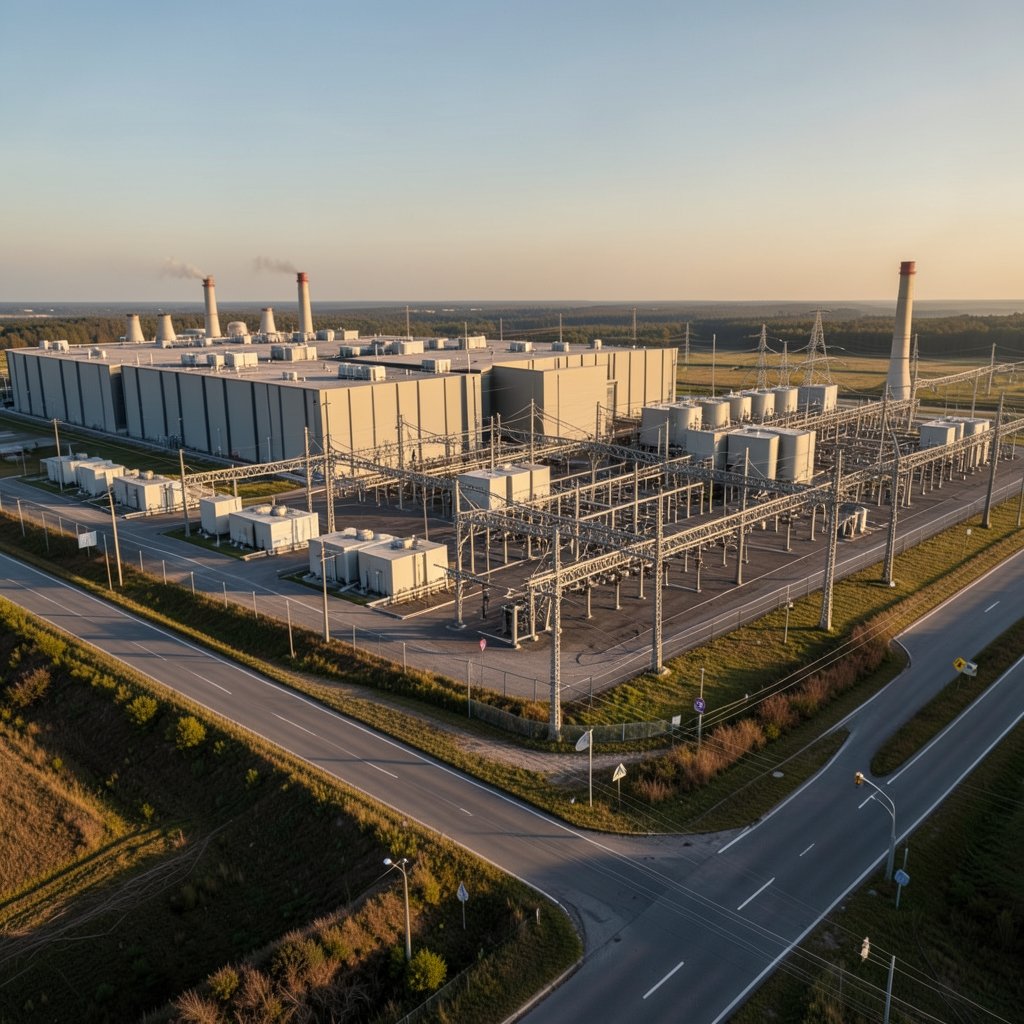
“Co-location” means a large load sits physically behind the meter at a power plant, drawing electricity directly rather than through the broader transmission network. Nuclear plants are the prize because they run around the clock with carbon-free output.
The appeal for a data center operator is speed and price. The appeal for the plant owner is a steady, creditworthy customer. The problem is everyone else on the grid.
When a huge load connects behind the meter but still relies on the shared network for backup and reliability services, other customers can end up subsidizing infrastructure that mainly serves one company. That is the core tension FERC has been wrestling with. In 2025 the commission opened a proceeding and held a technical conference on large loads co-locating at generating facilities, taking testimony from utilities, grid operators, consumer advocates, and developers. The exact docket number and procedural dates are worth confirming directly on FERC’s own site, because the record has been moving.
What the commission has signaled
Reading between the lines of the record, a few themes keep surfacing:
- No free riding. Loads that lean on the network for reliability should carry a fair share of its cost.
- Tariff clarity over ad hoc deals. FERC prefers transparent, filed rules to one-off arrangements negotiated in private.
- Reliability first. Grid operators need clear authority to curtail large loads during emergencies rather than discovering a surprise surge.
None of that is a final rule. It is direction of travel.
PJM is the live test case
If you want to know how this plays out in practice, watch PJM Interconnection, the grid operator serving roughly 65 million people across thirteen states and the District of Columbia. PJM runs capacity auctions that pay generators to be available, and data center demand has helped push clearing prices to record highs in recent auctions. (The precise per-megawatt-day figure has been widely reported; verify the number on PJM’s auction results pages before quoting it in a filing.)
High capacity prices are the mechanism doing the talking. When demand outruns supply, the auction price spikes, and suddenly every customer in the region feels data center growth on their bill. That is politically combustible, and it is exactly why FERC is under pressure to act.
PJM has also proposed rules requiring large loads, data centers included, to meet capacity obligations or face curtailment during emergencies. FERC’s response to those filings is the regulatory event to track. A decision that forces large loads to procure capacity like everyone else would change the economics of siting in the region. A decision that lets them slide would invite challenges from state regulators and consumer advocates.
For a broader look at how these power demands ripple through the equipment supply chain, see why the Tesla Megapack is nearly sold out through 2027 for AI data centers.
The backdrop: Orders 2023 and 192
Two earlier FERC orders frame everything happening now, even though neither was written with AI in mind.
| Order | Year | What it does | Relevance to AI load |
|---|---|---|---|
| Order No. 2023 | 2023 | Overhauls interconnection queue processes, including cluster studies and readiness deposits | Speeds up and disciplines how new generation and some loads get studied |
| Order No. 192 | 2024 | Requires long-term regional transmission planning | Creates a path to build wires for forecasted load growth |
| Large-load proceeding | 2025–2026 | Examines co-location and large-load rules | Directly targets data center connection terms |
The honest read: interconnection reform and transmission planning help at the margins, but they were designed before anyone expected a single customer to request a gigawatt on a short timeline. The large-load proceeding is FERC’s attempt to catch up.
What a 2026 order could realistically contain
Nobody outside the commission knows the final text. But based on the record and the proposals on the table, a plausible package would include several moving parts. Treat this as a checklist of what to watch, not a prediction.
- A cost-allocation framework for co-located load, defining which network upgrades the load pays for and which get spread across all customers.
- Reliability obligations requiring large loads to register as capacity resources, procure capacity, or accept curtailment terms.
- Tariff filing requirements so that co-location arrangements go through a transparent process rather than side deals.
- Study process reforms so grid operators can evaluate very large requests without stalling the queue for everyone else.
- Deference to regional variation, letting RTOs tailor rules to local conditions while meeting federal minimum standards.
What it probably will not do
It will not ban co-location. It will not set a national cap on data center electricity use. It will not directly regulate hyperscalers. FERC’s lever is the wholesale market and the tariff, not the server rack.
Practical tips for developers and utilities
Having watched how these proceedings actually bite, here is what tends to work and what trips people up.
Do engage in the docket early. Comments filed at the technical conference stage carry more weight than protests filed after a rule is drafted. Consumer advocates and industrials show up; developers often do not, and then complain about the outcome.
Do model curtailment as a real cost. If rules require large loads to curtail during emergencies, that is a revenue risk for the operator and a design constraint for the facility. Build it into the financial model now.
Do not assume a behind-the-meter deal is private. FERC-jurisdictional rates and reliability obligations can reach arrangements that look purely bilateral. Get counsel involved before signing.
Do not treat the capacity auction as background noise. A record clearing price is a signal that the region is short. If your project adds load without adding supply, expect scrutiny.
Common mistake: assuming “co-location” and “behind the meter” are legally identical. They are related but not the same, and the distinction matters for which rules apply.
The environmental angle also draws scrutiny that feeds back into siting politics. For context on that debate, see whether AI data centers are bad for the environment.
How this compares with what’s happening abroad
The United States is not alone in this squeeze, and watching other markets helps calibrate what “normal” looks like. In India, Google’s data center buildout has run into local backlash over water and power, a dynamic covered in this look at the Google data center India backlash in 2026. In Finland, Google’s operations near Muhos and Otanmäki have drawn attention over wildlife and land use, detailed in this report on Google’s Finland data centers and the wolves question.
The pattern is consistent: the binding constraint is rarely the chip. It is the interconnection, the water, the land, and the politics of who absorbs the cost. FERC’s proceeding is the American version of that same negotiation, conducted through tariffs instead of planning commissions.
Data protection is part of the power story
One underappreciated link: the more compute a company deploys, the more data it moves, and the more regulators care about how that data is handled. Google’s 2026 changes to Gmail, Photos, and ad safeguards around personal intelligence show how AI features and privacy obligations now travel together, as outlined in this analysis of Google’s Gmail and Photos AI data ad safeguards. Power policy and data policy are becoming the same conversation at the board level.
Security risk compounds the picture. High-profile breaches, such as the EY breach affecting Goldman Sachs and Man Group data in 2026, remind operators that a data center is both an energy asset and a target. Grid-facing control systems deserve the same scrutiny as customer records. (U.S. Department of Energy)
What to watch in the months ahead
Three concrete markers will tell you where this lands:
- The final text of any FERC order on large-load co-location, including whether it mandates capacity procurement or leaves it to RTOs.
- PJM’s next capacity auction clearing price, which will show whether high prices are persistent or a one-off spike.
- State-level pushback, since state utility commissions and governors bear the political cost of higher bills and will file comments accordingly.
Hardware supply is a parallel variable. The ASUS RTX Spark reorder and OEM lineup shift in Q4 2026 is a reminder that compute supply chains and power supply chains move on different clocks, and mismatches between them create their own planning headaches.
Conclusion
FERC’s 2026 work on AI data center power is best understood as a slow, deliberate attempt to answer one question: when a single customer can move a region’s electricity prices, who decides the terms? The commission has built a substantial record, signaled that free riding on the network is unacceptable, and left the hardest calls, especially on co-location cost allocation and curtailment obligations, to be resolved through filed tariffs and regional proposals. For developers, the practical takeaway is to engage early, model reliability obligations as real costs, and stop assuming that a behind-the-meter deal sits outside federal reach. For everyone else, the bill arrives through the capacity auction, and the next few auctions will say more about the outcome than any press release.
Frequently asked questions
Has FERC issued a final order on AI data center power in 2026?
Not a single sweeping order as of the latest available information. FERC opened a proceeding on large loads co-locating at generating facilities and has been weighing proposals from grid operators. The final text and timing should be confirmed directly with FERC, since the record has been active.
What is co-location, and why does it matter for data centers?
Co-location means a large electricity user sits behind the meter at a power plant and draws power directly. It matters because it can speed up connections and lower costs for the operator, while potentially shifting network costs onto other customers if not properly structured.
Why is PJM central to this debate?
PJM is the largest U.S. regional grid operator and runs capacity auctions that have seen record-high clearing prices, with data center demand cited as a driver. Its proposals on large-load obligations, and FERC’s response to them, will shape connection terms across a huge swath of the country.
Will FERC force data centers to curtail during emergencies?
That is one of the options on the table. Grid operators have proposed requiring large loads to meet capacity obligations or accept curtailment. Whether FERC mandates it, leaves it to regional operators, or does something in between is the key open question.
Do FERC’s 2023 and 2024 orders help AI data centers connect faster?
They help at the margins. Order No. 2023 reformed interconnection queues, and Order No. 192 pushed long-term transmission planning. Neither was designed for gigawatt-scale loads arriving on short timelines, which is why the large-load proceeding exists.
What should a developer do right now?
Engage in the docket early, model curtailment and capacity costs as real expenses, and get legal review before signing any behind-the-meter arrangement. Assuming a private deal stays outside federal rules is the most common and costly mistake.