Fincher has put a sequel to one of Quentin Tarantino’s most loved films into cinemas in the most Fincher way possible: shot on digital cameras, finished with artificial intelligence, and shown only on giant IMAX screens. The Further Mis-Adventures of Cliff Booth, directed by David Fincher from a screenplay by Tarantino, opened in a limited IMAX-only run on Wednesday 25 November 2026, with Brad Pitt returning as stuntman Cliff Booth eight years after the events of Once Upon a Time in Hollywood.
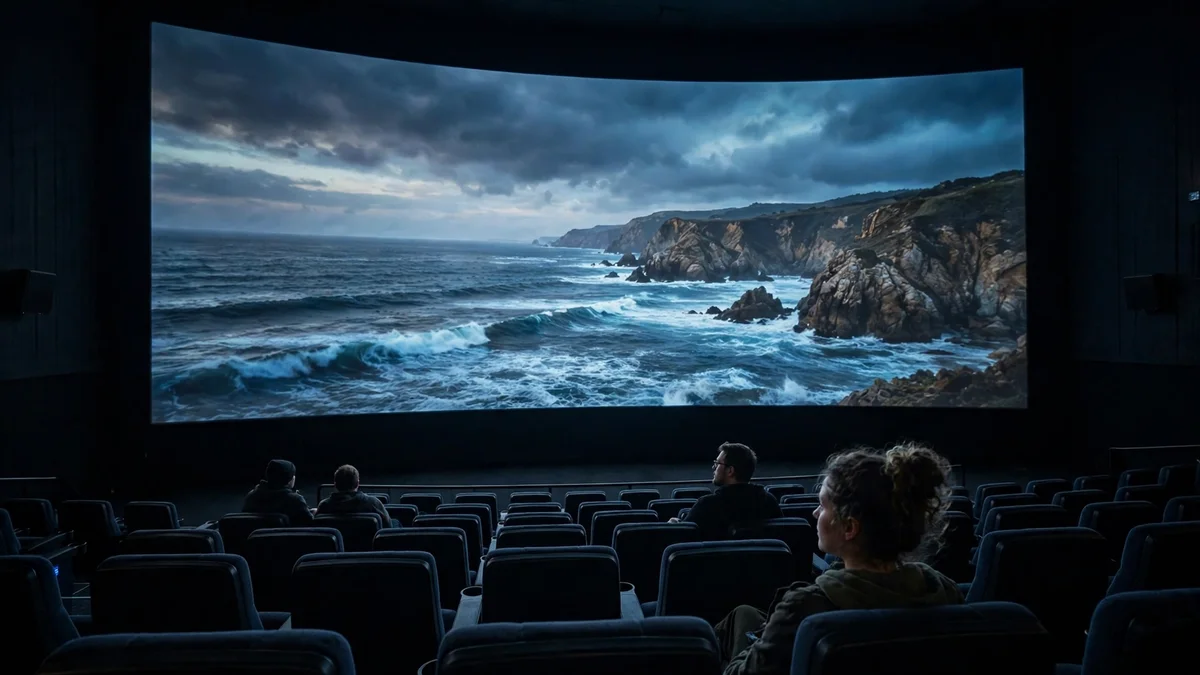
The release itself is unusual. There is no standard cinema rollout and no 35mm print to hunt down, which is a deliberate break from the first film. Instead the movie is playing on 550 IMAX screens around the world, 250 of them in North America and 20 to 25 in the UK and Ireland, before it arrives on Netflix on 23 December 2026.
What has drawn the most attention, though, is not the release pattern but what Fincher has said about how the film was made. In interviews and on a podcast, he explained that he shot the film digitally, cut it digitally, and then printed it to film and scanned it back to fake the look of celluloid, while also using generative AI tools in post-production to fix dialogue and sync performances. He has refused to go back to shooting on film, and he has refused to apologise for using AI.
Key takeaways
- The Further Mis-Adventures of Cliff Booth is a sequel to Tarantino’s 2019 Once Upon a Time in Hollywood, written by Tarantino and directed by David Fincher.
- Brad Pitt returns as stuntman Cliff Booth, eight years on, doing dirty odd jobs for celebrities in 1970s Los Angeles.
- The film is playing only in IMAX, on 550 screens worldwide, before streaming on Netflix on 23 December 2026.
- Fincher shot on RED Raptor-V digital cameras, then scanned the finished film to celluloid and back to add grain, gate weave and corner softness.
- Fincher has confirmed using generative AI in post-production to re-record and sync dialogue, saying a small share of the film involved automated fixes.
| Detail | What is known |
|---|---|
| Title | The Further Mis-Adventures of Cliff Booth |
| Director | David Fincher |
| Writer | Quentin Tarantino |
| Star | Brad Pitt as Cliff Booth |
| IMAX screens | 550 worldwide, 250 in North America |
| IMAX run ends | 10 December 2026 |
| Netflix release | 23 December 2026 |
A Sequel Eight Years Later
The new film picks up the story of Cliff Booth eight years after Once Upon a Time in Hollywood, which was released in 2019. Rick Dalton, the actor he worked for, has moved out of the country, and Booth is left in 1970s Los Angeles performing dirty odd jobs for celebrities to keep himself afloat. His life, by the accounts of early viewers, is just as eventful as it was before.
The authorship of the film is the first thing that makes it unusual. Tarantino wrote the screenplay but decided not to direct it, because he wants his tenth and reportedly final film to be something bigger. He handed the script to Fincher, known for Se7en, Fight Club and Gone Girl, and the swap has given the material a different texture, with one reviewer noting a moody, noir-ish score.
An IMAX-Only Release
For audiences, the most immediate question is a practical one: where can you see it? The answer is IMAX or not at all, for now. As a limited IMAX-only release, there is no need to deliberate about which format to choose, because the choice is IMAX Digital or nothing, and not even every IMAX location is showing it. London’s BFI IMAX, the UK’s largest cinema screen at 20 metres high, is one of roughly 25 venues in the UK and Ireland carrying the film.
Early box-office estimates put the film’s debut at about one million dollars, with industry projections near five million dollars for the Thanksgiving frame from the small IMAX footprint and two-week theatrical window. Early critical reaction has been generally positive, with an aggregate score near 81 percent on Rotten Tomatoes.
Filming Digital and Faking Celluloid
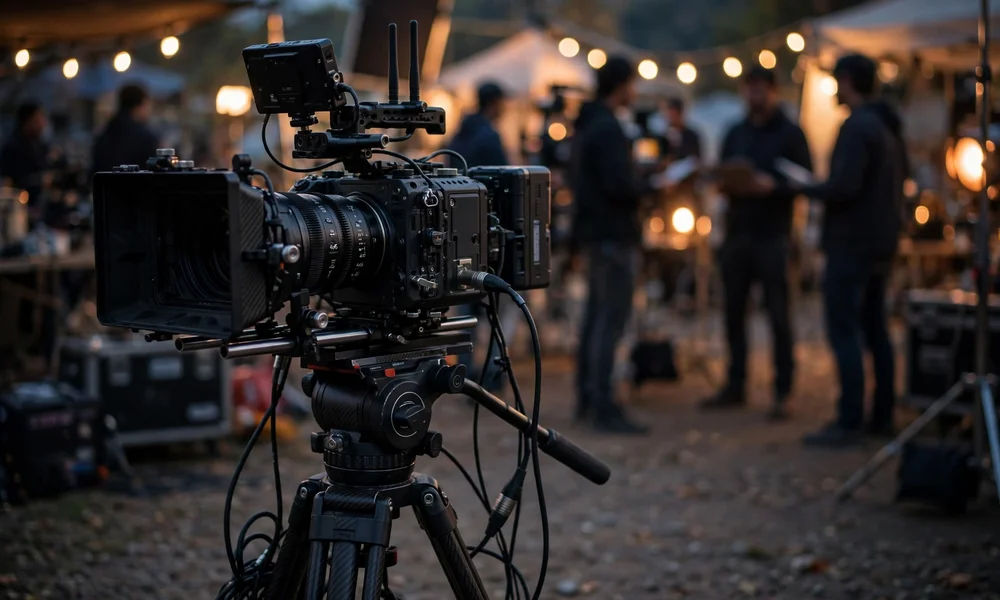
The path from camera to screen is where Fincher’s approach becomes most distinctive, and it does involve film, just not in the way Tarantino would use it. In a recent interview, Fincher explained that the film was shot on digital, cut on digital, stabilised on digital and colour corrected on digital, then scanned to film, and that print was reimported back into the digital workflow.
The point of that round trip was to borrow film’s imperfections. Fincher said the print was allowed to carry gate weave and grain and serious loss of resolution, especially in the corners of the frame, and that those qualities were then brought back into the finished movie. In his words, the result is everything people love about film without having to endure everything he hates about film.
The AI Admission
It is not just the ease and efficiency of digital that Fincher now fully embraces. He is also happy to embrace AI, which has already caused much consternation among many in the industry. Speaking on The Ringer’s Big Picture podcast, Fincher admitted to relying on generative AI tools in the post-production of the Cliff Booth sequel, and he explained the reasoning in practical terms rather than philosophical ones.
In previous films, Fincher, a known perfectionist, would make actors shoot scenes more than 50 times. AI, he said, helps him achieve creative focus and address imperfections without having to reshoot a scene. For this film, he kept actors for only an additional four to five days to re-record lines, and afterwards he was able to sync up the best image with the best sound and create the perfect take. Reports put the share of the film involving automated dialogue replacement and other algorithmic fixes at about five percent.
Fincher framed the change as a reduction in drudgery rather than a replacement of performance. He said the result would still be based on real human beings: the way humans move, how they traverse a set, how they pull up their trousers before they sit down or take their coat off. All of that, he said, would still be there, and people would only have to do it 15 times instead of 50.
Where the Debate Comes In
The debate intensified after early screenings, when viewers and critics flagged what they described as more conspicuous AI artefacts in some shots. The most widely discussed example was a carriage scene in which a horse appeared to be on the wrong side, an error that looked like the product of a generative tool rather than a continuity slip.
What he did say is relevant to the question of whether the film audiences see in IMAX is the final version. In the Big Picture interview, he admitted that a couple of shots did not work and implied that these are likely to be updated by the time the movie reaches Netflix on 23 December. He did not comment directly on the carriage-scene error reported from the film’s trailer, so his general position on AI should be distinguished from the allegations about how individual scenes were made.
What It Means for Cinema
For the film industry, the Cliff Booth sequel is a test case in several arguments at once. The first is about format: a major director’s film is being given a two-week IMAX-only window before streaming, and its box-office performance will be read as evidence about whether prestige films still need a traditional theatrical run. The second is about craft: Fincher’s digital-to-film-to-digital pipeline shows that the look of celluloid can now be simulated with precision.
Fincher and Pitt are already discussing future collaborations, including a highly stylised animated project in which Pitt would provide the voice and a performance-capture model, with animation layered on top. Fincher has described it as less about rigorous motion capture and more about using the performance as a model for stylised animation. He has also said Pitt declined a separate, darker horror pitch. Whatever comes next, the Cliff Booth sequel has already made its point: Fincher is not going backwards, and he expects the rest of cinema to come with him.
How to Watch the Cliff Booth Sequel
- Check IMAX listings first: the film is playing only on IMAX screens, and not every IMAX venue is carrying it.
- Expect a 2.39 aspect ratio, so there will be black bars above and below the image even on the largest screens.
- Remember the IMAX run ends on 10 December 2026, after a two-week window.
- The film arrives on Netflix on 23 December 2026, and some shots may be updated by then.
- Watch for the film-like texture: grain, gate weave and corner softness were added deliberately in post-production.
- Listen for the dialogue sync: Fincher used AI tools to match the best image with the best sound in about five percent of the film.
Frequently Asked Questions
What is The Further Mis-Adventures of Cliff Booth?
It is the sequel to Quentin Tarantino’s 2019 film Once Upon a Time in Hollywood, written by Tarantino and directed by David Fincher, with Brad Pitt returning as stuntman Cliff Booth eight years after the first film.
When does the Cliff Booth sequel come to Netflix?
The film streams globally on Netflix on 23 December 2026, after a limited two-week IMAX-only theatrical run that ends on 10 December 2026.
How many IMAX screens is it playing on?
The film is showing on 550 IMAX screens globally, including 250 in North America and 20 to 25 in the UK and Ireland. London’s BFI IMAX is among the UK venues.
Did David Fincher use AI in the film?
Yes. Fincher confirmed on The Ringer’s Big Picture podcast that he used generative AI tools in post-production to re-record and sync dialogue, matching the best image with the best sound, in about five percent of the film.
Why did Fincher not shoot on film like Tarantino?
Fincher is vocal about preferring digital and has said he is not going backwards. He shot on digital cameras, then scanned the finished film to celluloid and reimported it to add grain, gate weave and corner softness.
Is the version in cinemas the final version?
Possibly not. Fincher has said a couple of shots did not work and implied they are likely to be updated by the time the movie reaches Netflix on 23 December 2026.
The Bottom Line
The Further Mis-Adventures of Cliff Booth is a sequel that carries two directors’ fingerprints at once: Tarantino’s story and characters, and Fincher’s uncompromisingly digital way of making a film. It is shot on digital cameras, finished with a fake film look, polished with AI, and shown only on the biggest screens available before it moves to streaming.
The longer argument is about the AI. Fincher has made his position plain: the tools exist, they save actors from endless retakes, and the performances remain human. Critics who spotted apparent AI errors in early screenings will keep watching, and the version that arrives on Netflix may already be different from the one in cinemas. What is not in doubt is that one of cinema’s most exacting directors has chosen to move forward with digital and AI rather than back to film, and he has done it in public. Readers can follow related coverage in the best new Netflix movie with 90 percent on Rotten Tomatoes, the wider use of AI in screen work in the AI filmmaker and the next breakout video game from Take-Two, and how to get the most from a big-screen setup at home in the best TVs for movies in 2027.