
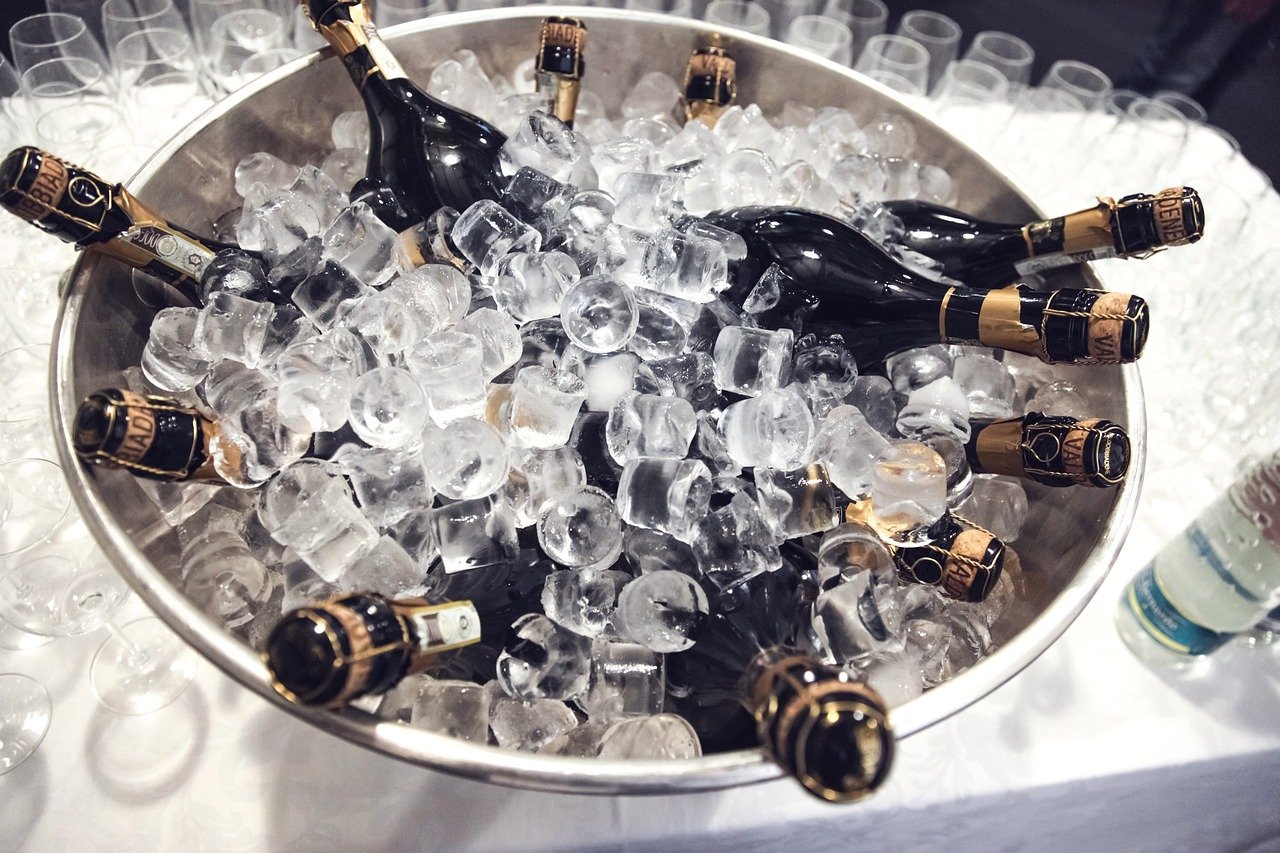
Walk into any wine shop and you’ll see them lined up like a row of mismatched siblings: tall Champagne bottles with their foil collars, squat Crémant bottles with sloping shoulders, and a few odd-shaped curiosities from the Loire or the Rhône. They all bubble. They all come from France. So why does one cost eight dollars and another costs eighty?
The answer is a mix of law, geography, grape choice, and the stubborn fact that how you get bubbles into wine changes everything about how it tastes. This guide walks through what French fizzy wine actually is, how the categories differ, and what to look for so you spend your money well.
What Counts as French Fizzy Wine?
“Fizzy wine” isn’t a legal term. In French law, the closest word is vin mousseux — sparkling wine made effervescent by fermentation, held to minimum pressure and ageing rules. There’s also pétillant, which means lightly sparkling, a gentler fizz with lower pressure. Both fall under the European wine framework set out in Regulation (EU) No 1308/2013, which took effect on 1 January 2014 and defines wine categories across the whole EU.
Here’s the practical part: mousseux is the category most consumers mean when they say sparkling wine. Pétillant is a lighter style, often lower in alcohol, and frequently sold cheap and cheerful. If you see “pétillant” on a label, expect a softer, more casual bubble rather than a full-throttle sparkler.
The category matters because it sets the floor. Above that floor sit the protected appellations — Champagne, the Crémants, Vouvray, Gaillac, Limoux — each with its own rulebook. Those rules are where the real differences live.
Champagne: The Benchmark, and Why It Costs What It Does
Champagne is sparkling wine from a delimited area in northeastern France, made under the Champagne appellation rules. Nothing else may legally carry the name in the EU and in many other markets. The rules are codified in the appellation’s cahier des charges, administered in France by INAO, the national institute for origins and quality, with the industry body Comité Champagne representing growers and houses.
Two things drive the price. First, land: the delimited zone is fixed, and demand is global. Second, time: Champagne must spend a minimum period ageing on its lees before release, which ties up capital in every bottle sitting in a cellar.
Scale puts this in perspective. Champagne ships roughly 300 million bottles a year, with 2023 shipments reported near 299 million. That sounds enormous until you divide it across the planet.
The Méthode Traditionnelle Difference
Champagne is made by a second fermentation inside the bottle. Yeast eats sugar, produces alcohol and carbon dioxide, and dies. The dead yeast cells — the lees — sit in contact with the wine for months or years, releasing compounds that create the bready, biscuity, creamy character Champagne is known for. Then the yeast is gradually coaxed into the neck and disgorged, the bottle is topped up with a small dose of wine and sugar, and it’s corked.
That same process, used outside Champagne, is called méthode traditionnelle. You may still see the old phrase “méthode champenoise” on very old labels, but since a labelling change in the 1990s that term has been reserved for Champagne itself. Any French producer outside the region using it today is running a risk.
The alternative is the tank method, also called cuve close or Charmat. The second fermentation happens in a large pressurised tank, and the wine is filtered and bottled under pressure. It’s faster, cheaper, and preserves primary fruit aromas. It’s not inferior — it’s just a different tool. Prosecco is made this way, and so are many fresh, affordable French sparklers.
| Feature | Méthode traditionnelle | Tank method (cuve close) |
|---|---|---|
| Second fermentation | In the bottle | In a pressurised tank |
| Lees contact | Long, in bottle | Short, in tank |
| Typical flavours | Bready, nutty, creamy | Fresh, fruity, floral |
| Time to market | Months to years | Weeks |
| Typical price | Mid to high | Low to mid |
The Crémant Family: France’s Best-Kept Bubbly Secret
Crémant is a protected term for French sparkling wine made by the traditional method outside Champagne, under specific appellation rules. Several appellations require hand harvesting and set minimum ageing on lees, though the exact numbers vary by region and are worth checking per appellation.
The main ones you’ll meet:
- Crémant d’Alsace — usually Pinot Blanc, Riesling, or Pinot Gris; crisp and appley with a clean finish.
- Crémant de Bourgogne — Chardonnay and Pinot Noir, structurally the closest cousin to Champagne, often at a third of the price.
- Crémant de Loire — Chenin Blanc and Cabernet Franc; more texture, sometimes a hint of honey.
- Crémant de Limoux — from the Languedoc; Mauzac, Chardonnay, and Chenin; bright and slightly exotic.
- Blanquette de Limoux — mostly Mauzac, and a separate appellation from Crémant de Limoux.
Crémant is where most drinkers should start. The gap in quality between a good Crémant de Bourgogne and an entry-level Champagne is far smaller than the gap in price. If you want to learn how traditional-method wine tastes without paying for the Champagne name, this is the lane.
One word of warning: Crémant is a crowded shelf, and quality varies widely. Look for a named producer rather than a supermarket own-brand with no backstory, and check the disgorgement date if it’s printed.
Limoux and the Contested Birthplace of Bubbles
Limoux, in the Languedoc, is often credited with producing sparkling wine in the 17th century, before Champagne’s houses became famous. The claim is genuinely debated among wine historians, and it’s worth treating as contested rather than settled. What’s not in doubt is that Limoux has been making sparkling wine for a very long time and remains one of France’s most interesting sparkling regions.
The practical takeaway: if someone tells you Limoux invented champagne, nod politely and change the subject to what’s in the glass.
Reading the Sweetness Scale
Most French sparkling wine is labelled by dosage — the sugar added after disgorgement. The commonly cited bands, used by Champagne and widely adopted elsewhere, run like this:
| Label | Sugar (g/L) | What it tastes like |
|---|---|---|
| Brut nature | 3 or less | Bone dry, no added sugar |
| Extra brut | 0–6 | Very dry |
| Brut | under 12 | Dry, the default style |
| Extra dry | 12–17 | Oddly named; slightly sweeter than brut |
| Sec | 17–32 | Noticeably sweet |
| Demi-sec | 32–50 | Sweet, dessert-leaning |
| Doux | 50+ | Very sweet |
The naming trap here is real. Extra dry is sweeter than brut. People buy “extra dry” expecting the driest wine on the shelf and get the opposite. If you want maximum dryness, look for brut nature or extra brut.
Practical Tips That Actually Work
A few things learned from watching people buy, open, and drink a lot of French sparkling wine:
Serve it colder than you think, then let it warm. Straight from the fridge is fine for cheap tank-method fizz, but a good traditional-method wine shows much more at around 8–10°C. If it’s too cold, the aromas hide. Give it ten minutes in the glass.
Don’t fill the glass. A tulip-shaped glass filled to a third gives the wine room to breathe and concentrates the aroma. Flutes look festive but trap the smell. Coupes spill.
Open it properly. Chill the bottle, hold the cork, twist the bottle — not the cork. The goal is a sigh, not a pop. A warm bottle will foam over no matter what you do, so chill first.
Store it standing up, briefly. Sparkling wine doesn’t need long ageing in your cupboard. Buy it, keep it cool and dark, and drink it within a year or two unless it’s a vintage bottling from a serious producer.
Don’t save the leftovers with a spoon. A spoon in the neck does nothing. A proper stopper plus refrigeration will hold fizz for a day. After that, drink it as an aperitif or cook with it.
Watch the vintage question. Most Champagne and Crémant is non-vintage — a blend across years designed for consistency. Vintage bottlings only appear in good years and cost more. Non-vintage is not a downgrade; it’s a house style.
Common Mistakes People Make
The biggest one is assuming price equals quality across categories. A $25 Crémant de Bourgogne will often outperform a $40 Champagne from a weak producer. Category is a starting point, not a guarantee.
The second is ignoring the label’s fine print. The region, the dosage, the grape varieties, and sometimes the disgorgement date are all there. Reading them takes ten seconds and saves disappointment.
The third is treating sparkling wine as a special-occasion-only drink. French households drink it on a Tuesday. It pairs with fried food, salty snacks, roast chicken, and most things involving butter. If you’re learning the language alongside the wine, there’s a whole vocabulary of currency, slang, and ordering phrases worth picking up — see this guide to how to say money in French, with slang and currency rules for the practical side of buying a bottle in France. And if you want to follow French wine content on video, this overview of what the Dailymotion French video platform actually offers today is a useful starting point.
The fourth mistake is buying only by brand. Small growers, especially in Champagne and the Crémants, offer remarkable value and a sense of place that big blends can’t match. Ask a good independent retailer who the grower is.
How to Build a Tasting Lineup
If you want to understand French fizzy wine rather than just drink it, a structured comparison teaches more than any article. Try this sequence in one sitting, with small pours:
- A tank-method sparkling wine, such as a basic Blanquette de Limoux or a non-appellation mousseux.
- A Crémant de Bourgogne or Crémant d’Alsace, traditional method.
- A Vouvray mousseux or a Gaillac, for a different grape and a different texture.
- A non-vintage Champagne from a grower or a smaller house.
- Optionally, a rosé sparkling wine from any of the above regions.
Taste them in order and note three things: the size of the bubble, the smell (fruit versus bread), and the finish. The jump from step one to step two is usually the biggest single leap in quality. That’s the traditional method doing its work.
If you’re building language skills alongside your wine knowledge, a realistic plan helps — this roadmap for learning French from zero to conversational pairs well with a tasting notebook written in French.
What to Buy at Different Budgets
At the entry level, look for Crémant de Loire or Blanquette de Limoux. Both deliver real traditional-method character for modest money.
In the middle, Crémant de Bourgogne and Crémant d’Alsace are the sweet spot. This is where the value argument is strongest.
At the top, non-vintage Champagne from a grower-producer, or a vintage bottling from a house you trust. Buy one bottle rather than three cheap ones and pay attention to it.
For something different, seek out Vouvray mousseux (Chenin Blanc, often with a honeyed edge) or a sparkling Gaillac. These are the bottles that make dinner interesting.
Conclusion
French fizzy wine is less a single product than a family of them, bound together by fermentation and separated by geography, grape, and rulebook. Champagne sits at the top of the price ladder and earns its place, but it isn’t the only answer. Crémant delivers traditional-method quality at a fraction of the cost, tank-method sparklers offer freshness and value, and the older appellations like Limoux and Vouvray bring history and character that no marketing budget can manufacture.
The practical path is simple: learn the sweetness scale so “extra dry” never tricks you again, serve your wine cold but not frozen, read the small print on the label, and taste across categories rather than up the price ladder. Do that, and the row of mismatched bottles stops looking confusing and starts looking like what it is — a very good problem to have.
Frequently Asked Questions
Is French fizzy wine the same as Champagne?
No. Champagne is a protected appellation name for sparkling wine from a specific delimited area in northeastern France, made under strict rules. Other French sparkling wines, including the Crémants, are made in different regions and cannot legally be called Champagne.
What is the difference between mousseux and pétillant?
Mousseux is sparkling wine with fuller pressure, while pétillant means lightly sparkling with lower pressure. Pétillant styles tend to be lighter, more casual, and often lower in alcohol.
Is Crémant as good as Champagne?
It can be excellent, and often represents better value. Crémant is made by the traditional method, the same process as Champagne, but from different regions and usually with shorter ageing. Quality varies by producer, so look for named growers rather than anonymous labels.
Why is extra dry sweeter than brut?
Because the labels describe dosage, not dryness. Brut contains under 12 grams per litre of sugar, while extra dry sits at 12 to 17 grams. For the driest style, look for brut nature or extra brut.
What is méthode traditionnelle?
It’s the process where the second fermentation happens inside the bottle, creating the bubbles and leaving the wine in contact with yeast lees for ageing. Champagne uses it, and so do the Crémants and several other French appellations.
How long does opened sparkling wine stay fizzy?
A day or two at most with a proper stopper and refrigeration. Carbon dioxide escapes quickly once the bottle is open, and no spoon-in-the-neck trick will change that.



