What happens to a $1,500 headset when the company that made it stops caring about the software inside it?
That question matters more than raw specs ever will. A headset is not a phone you replace every two years without thinking. It is a heavy purchase, and its useful life is decided almost entirely by how long the maker keeps shipping updates. In 2027, three big platforms sit in the ring: Samsung’s Galaxy XR on Android XR, Meta’s Quest 3 on Horizon OS, and Apple’s Vision Pro on visionOS. On paper they compete on displays and chips. In practice, they compete on something quieter and far more important: software support.
This piece looks at what software support actually means for long-term use, where each platform stands, and what buyers should realistically expect when they hand over their money.
Why software support decides whether a headset survives
Hardware ages slowly. Software ages fast. A headset that launched with a polished interface can feel broken two years later if apps stop updating, tracking drifts, or the store stops approving new releases for the older model.
There are three separate clocks running on every headset, and buyers usually confuse them:
- The OS clock. How long the maker keeps pushing system updates, security patches, and performance fixes.
- The store clock. How long developers keep publishing compatible apps and updates for that specific device.
- The developer clock. How long the SDK and API levels stay supported, so new apps can even be built for the hardware.
A device dies when the slowest clock stops. That is the whole game. Apple, Meta, and Google each publish developer deprecation schedules that hint at these timelines, and those pages are the closest thing to a public longevity forecast anyone has. The pattern shows up across the industry, not just in VR. When platforms shift, entire tool categories get reshaped, which is why roundups like 12 AI tools that will reshape your software stack by 2027 keep circling the same theme: the platform roadmap outlives the gadget.
The three contenders at a glance
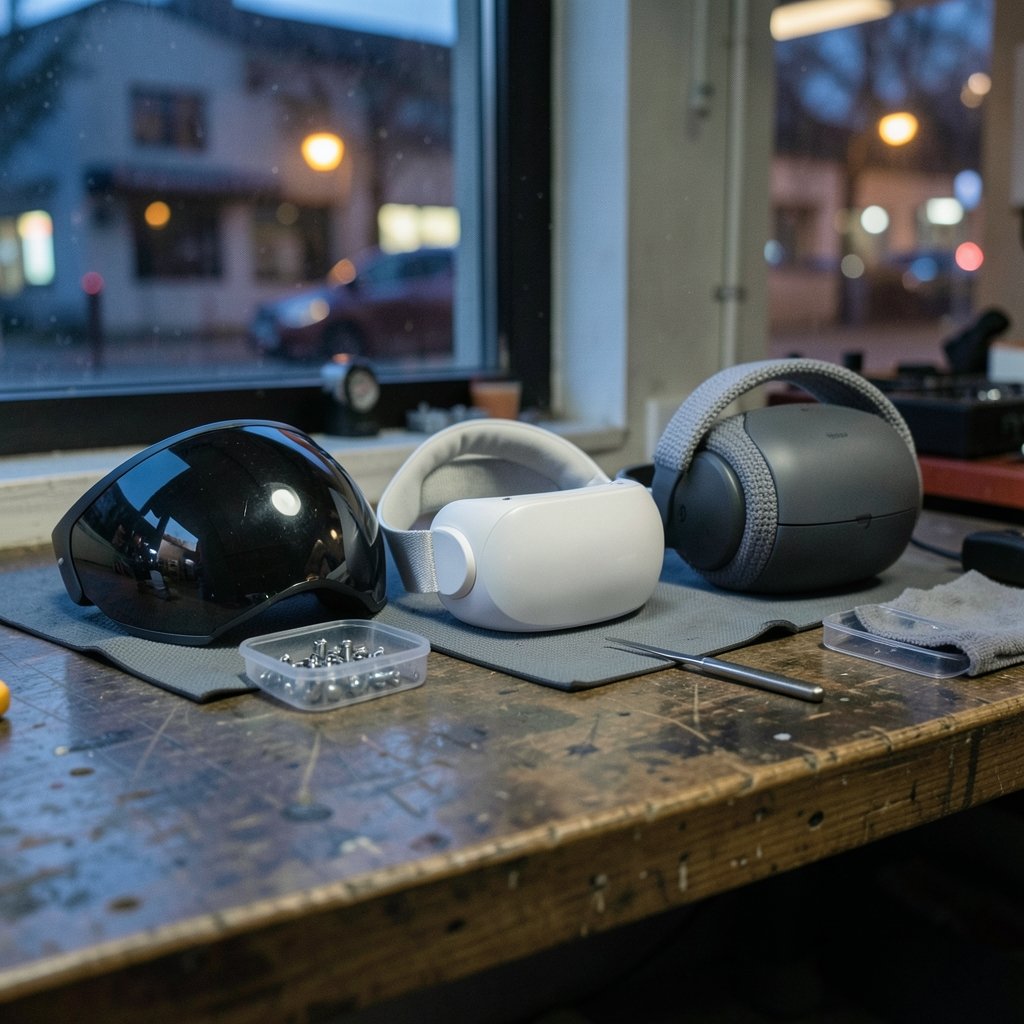
Here is how the three headsets line up on the facts that matter for longevity.
| Feature | Galaxy XR | Quest 3 | Vision Pro |
|---|---|---|---|
| Launch | October 2025 | October 2023 | February 2024 (US) |
| Operating system | Android XR | Horizon OS | visionOS |
| Chipset | Snapdragon XR2+ Gen 2 | Snapdragon XR2 Gen 2 | Apple silicon (M2 + R1) |
| App store | Google Play / Android XR ecosystem | Meta Horizon Store | App Store |
| Openness | Android-based, sideloading more feasible | Proprietary, Meta-tied | Proprietary, Apple-tied |
| Public end-of-support date | None published | None published | None published |
| Support track record | Under a year old | Multi-year (Quest 2 precedent) | Multi-year Apple pattern |
That last row is the one to stare at. None of the three companies has published a formal “supported until” date. Anyone who quotes a specific year as fact is guessing. The honest answer is that longevity has to be inferred from track record and platform structure, not from a promise on a box.
Galaxy XR: the newest platform with the least history
Samsung’s Galaxy XR arrived in October 2025, built with Google and Qualcomm, running Android XR on a Snapdragon XR2+ Gen 2. It is Samsung’s first Android XR headset, and it is a genuinely interesting device.
The catch is that Galaxy XR’s software future is not really Samsung’s to control. Android XR is Google’s platform. Google has committed to it as a long-lived ecosystem with Gemini integration, and the same OS family is expected on headsets from multiple manufacturers. That is good news for the platform’s odds of survival. It is less reassuring for any single device, because Google has not published a multi-year support commitment for Android XR comparable to the seven-year update policy it applies to its phones.
So what does that mean in practice? Two things.
First, the OS will probably keep moving. Android XR is under a year old, and platforms that young tend to change quickly. Features get added, APIs get deprecated, and early hardware sometimes gets left behind in the rush. Galaxy XR buyers are, in a real sense, early adopters of a platform still finding its shape.
Second, Android’s openness cuts both ways. Because Android XR is Android-based, sideloading and third-party distribution are more feasible than on visionOS or Horizon OS. That could extend the headset’s practical usefulness well past the point where official updates slow down. It could also mean a messier, less curated app experience. Google’s sideloading policy for Android XR headsets is not fully documented in public, so treat this as a likely advantage rather than a guaranteed one.
The honest verdict: Galaxy XR is a bet on Google’s platform roadmap. The hardware is solid. The software promise is real but unproven.
Quest 3: the proven track record
Meta’s Quest 3 launched in October 2023, and Meta has the strongest public evidence of long-term support in the category. The Quest 2, released in 2020, kept receiving OS updates for years afterward, which suggests roughly four to five years of active support is a realistic expectation for Meta hardware.
That precedent is worth more than any spec sheet. It tells buyers that Meta treats older headsets as part of the family rather than as disposable stepping stones. Horizon OS is proprietary and tied to Meta’s store, which limits flexibility, but it also means Meta controls the whole stack and has an incentive to keep existing users happy.
The counterweight is lock-in. Quest 3 apps live inside the Meta Horizon Store. If Meta’s priorities shift, or if a future hardware generation changes the store’s rules, older devices feel it first. Meta has not published a fixed end-of-support date for Quest 3, so any “supported until” claim floating around online should be treated as unconfirmed.
For most buyers, Quest 3 is the safest long-term bet simply because it is the only one of the three with a multi-year track record behind it. Safe is not the same as exciting, but in a category where software abandonment is a real risk, safe has value.
Vision Pro: Apple’s pattern, applied to a first-generation device
Apple’s Vision Pro launched in the US in February 2024 and runs visionOS. Apple’s general pattern is multi-year OS support, typically around five to seven years for its devices, and visionOS has received annual major updates. The naming jumped from visionOS 2 in 2024 to visionOS 26 in 2025, which makes year-over-year comparisons awkward but does not change the underlying rhythm.
That rhythm is the strongest argument for Vision Pro’s longevity. Apple tends to keep devices updated long after launch, and its developer deprecation policies are published and predictable. A Vision Pro buyer can reasonably expect years of system updates.
The caveat is that Vision Pro is a first-generation product. Apple has not published a formal end-of-support schedule for it, and first-gen hardware sometimes gets a shorter runway than later models as the platform matures. The App Store model also means less flexibility than Android: what Apple approves is what you get.
There is a broader lesson here about how platform shifts affect long-term value. When a company changes how its software ecosystem works, the effects ripple across every device on it. The same dynamic shows up in comparisons like Apple Vision Pro 2 vs Meta Quest 3S workflow differences, where the real question is not which device is better today but which ecosystem will still support your workflow in three years.
What “long-term use” actually looks like in 2027
By 2027, all three headsets will be running on platforms that have had time to mature, and the differences will be sharper than they are at launch. Here is what to watch.
The store decides more than the OS
A headset with a supported OS but a store that has stopped approving updates for older hardware is effectively dead. Quest 3 apps are tied to the Meta Horizon Store, Vision Pro apps to the App Store, and Galaxy XR to Google Play and the Android XR ecosystem. Software longevity in 2027 will hinge on whether each store still ships updates to older hardware. That is a store-policy question, not just an OS question, and it is the single most underrated factor in buying decisions.
Developer deprecation schedules are your best public forecast
Apple, Meta, and Google each publish developer deprecation schedules covering API levels and SDK minimums. These signal how long older headsets will keep receiving app updates. They are not consumer-friendly documents, but they are the most honest signal available. A buyer who wants to know whether a headset will still matter in 2028 should read them before purchasing.
The enterprise angle matters more than you think
Enterprise and developer support timelines are the best public proxy for consumer longevity. When a platform keeps its SDK alive for business customers, consumer devices on that platform tend to keep working longer too. This is one reason platform comparisons in other industries follow the same logic: the durability of the underlying system, not the flashiness of the device, determines value over time. The same principle drives how AI detects money laundering in 2027 and what it means for your bank, where the system behind the tool matters more than the tool itself.
Practical tips for buyers who want a headset to last
If the goal is a headset that still works well in 2028 and beyond, a few habits make a real difference.
- Check the developer deprecation pages before buying. If the SDK for a device is already flagged for retirement, the device’s app pipeline is on borrowed time.
- Buy the platform, not just the hardware. A great headset on a dying platform is a paperweight with a nice display.
- Prefer platforms with published update patterns. A company that has kept older devices updated for four or five years is a safer bet than one with no track record.
- Keep expectations realistic on first-generation hardware. Early devices on new platforms often get shorter support than the models that follow them.
- Do not assume sideloading will save you. It can extend usefulness on open platforms, but it is not a substitute for official support and it comes with security trade-offs.
The most common mistake buyers make is treating software support as an afterthought. The second most common is believing a specific end-of-support year that no company has actually published. Both mistakes cost money.
Conclusion
The Galaxy XR, Quest 3, and Vision Pro are all capable headsets, and in 2027 the gap between them will be decided less by chips and displays than by the boring, unglamorous work of software support. Quest 3 has the clearest track record, backed by Meta’s history of keeping older headsets updated for years. Vision Pro has Apple’s long pattern of multi-year OS support, though it carries first-generation uncertainty. Galaxy XR has the most open platform and the least history, which makes it a genuine bet on Google’s roadmap.
None of the three companies has published a formal end-of-support date, so any specific year quoted as fact should be treated as an estimate. What buyers can do is read the developer deprecation schedules, weigh the track records, and choose the platform most likely to still care in three years. The hardware you buy is fixed. The software support behind it is the part that decides whether the purchase was smart.
FAQ
How long will the Galaxy XR be supported?
No formal end-of-support date has been published. Android XR is Google’s platform and is under a year old, so its long-term support posture is genuinely unknown. Samsung’s device will likely follow Google’s Android XR roadmap, but Google has not published a multi-year commitment comparable to its phone update policy. Treat any specific year as an estimate.
Does the Quest 3 have a confirmed end-of-support date?
No. Meta has not published a fixed end-of-support date for Quest 3. However, Meta has a track record of multi-year OS updates, and the Quest 2 released in 2020 was still receiving updates in 2024 and 2025. That suggests roughly four to five years of active support is a realistic expectation, but it is not a formal commitment.
Will the Vision Pro still get updates in 2027?
Most likely yes. Apple’s pattern is multi-year OS support, typically around five to seven years for its devices, and visionOS has received annual major updates. That said, Vision Pro is a first-generation product, and Apple has not published a formal end-of-support schedule for it.
What is the biggest risk to a headset’s long-term use?
The store, not the operating system. A headset with a supported OS but a store that has stopped approving updates for older hardware is effectively dead. Software longevity hinges on whether each platform’s store still ships updates to older devices, which is a store-policy question rather than a purely technical one.
Can sideloading extend a headset’s life after official support ends?
It can help on open platforms. Because Android XR is Android-based, sideloading and third-party distribution are more feasible than on visionOS or Horizon OS, which may extend practical usability after official support ends. However, Google’s sideloading policy for Android XR headsets is not fully documented in public, and sideloading is not a substitute for official support.
Which headset is the safest long-term buy in 2027?
Quest 3 has the clearest public track record, backed by Meta’s history of keeping older headsets updated for years. Vision Pro has Apple’s long pattern of multi-year support but carries first-generation uncertainty. Galaxy XR is the most open platform with the least history, making it a bet on Google’s roadmap. The safest choice depends on how much you value proven support over openness and flexibility.