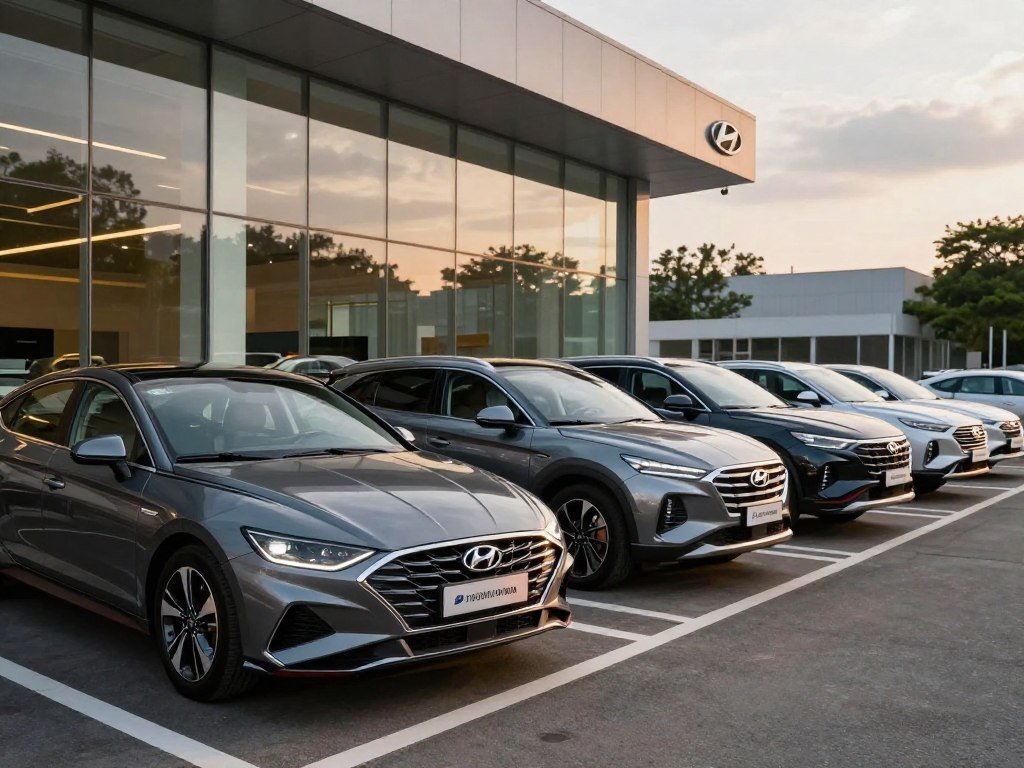
A Hyundai badge may identify the vehicle brand, but it does not by itself tell you which company owns or operates the business behind it. That difference matters when you check a warranty, compare car brands, or read who made the vehicles you see on the road today.
Familiar badge names can point to a company, a corporate group, or a vehicle brand. Those labels are connected, but they are not interchangeable. This overview gives you a clear way to tell them apart without confusing the automaker with its wider group or its related brands.
The useful starting point is to separate Hyundai Motor Company from Hyundai Motor Group. That distinction makes the ownership question much easier to follow.
Key Takeaways
- Hyundai Motor Company is the South Korean automaker.
- Hyundai Motor Group is the broader corporate group.
- Kia is a related, separate automaker with its own brand.
- Genesis is Hyundai Motor Company’s luxury vehicle division.
- Hyundai Motor America is the U.S. subsidiary.
- Hyundai Motor Finance is the U.S. financing-service name.
Hyundai Owns Who: The Direct Answer
Hyundai Motor Company belongs to Hyundai Motor Group, while Hyundai Motor Company itself is a publicly traded South Korean automaker. Its shares trade on the Korea Exchange as KRX: 005380 and on the London Stock Exchange as HYUD. No single person owns all of Hyundai Motor Company.
A shareholder is a person or organization that owns shares in a company. The public can hold shares alongside large investors and other companies, so “who owns Hyundai” depends on which legal entity and shareholding you mean.
Hyundai Motor Company is a listed automaker within Hyundai Motor Group, not a privately owned vehicle badge.
When you see Hyundai on a car, you are seeing a vehicle brand, not a complete ownership chart. The motor company makes and sells vehicles, while the group connects a wider set of businesses. Customers may use “Hyundai” for both, but the names describe different things.
The company’s listed shares let investors hold part of the automaker. That does not make every investor a manager, nor does it turn the group name into the company’s legal name. You can see the company’s Korea Exchange ticker and profile when reviewing its market listing.
When checking an ownership claim, first identify whether it names Hyundai Motor Company or Hyundai Motor Group.
Hyundai Motor Company and Hyundai Motor Group Are Different Entities
A company name and a group name can appear together without meaning they are the same legal entity. Hyundai Motor Company is the automaker, while Hyundai Motor Group is the wider parent group. The group name does not replace the company’s legal name.
That difference matters when you read a filing, a contract, or a news report. A group can include multiple firms with different roles and legal identities. A company filing identifies the entity that made that filing, not every business linked through the group.

Use this checklist to match a name to the business being discussed:
- Hyundai Motor Company: the listed automaker.
- Hyundai Motor Group: the wider parent group.
- Hyundai Motor America: the U.S. subsidiary.
- Hyundai Motor North America: regional operations.
These names can sit close together in business news, but each points to a different scope. Hyundai Motor America handles the U.S. subsidiary’s role, while Hyundai Motor North America refers to regional operations. Neither name is a replacement for Hyundai Motor Company when the question concerns the South Korean automaker itself.
When a document names Hyundai Motor Group, it may discuss group-wide activity rather than one company’s specific legal duties. The reverse is true as well: a filing by one company does not automatically describe every company in the group. Match the exact company name on a filing or contract to the entity being discussed.
Who Holds Hyundai Motor Company Shares?
Hyundai Mobis was Hyundai Motor Company’s largest shareholder, with 22.36% of its shares as of March 18, 2026. The other large disclosed shareholdings included the National Pension Service, Chung Mong-koo, and Chung Eui-sun. Each percentage identifies a stake, not sole ownership.
The figures below show the disclosed shareholding on that date. They describe shares held in the automaker, not shares in every business connected to Hyundai Motor Group.
The largest disclosed shareholdings
| Shareholder | Hyundai Motor Company shares held |
|---|---|
| Hyundai Mobis | 22.36% |
| National Pension Service | 7.76% |
| Chung Mong-koo | 5.57% |
| Chung Eui-sun | 2.73% |
These stakes are reported as of March 18, 2026. The percentages add up to less than the full company, leaving shares held by other investors. A large shareholding can give an investor influence, but the percentage alone does not tell you who runs daily operations.
What a shareholding does and does not show
A shareholding shows how much of a company’s stock a person or organization owns. It does not, by itself, show that the holder controls every decision or serves as the company’s executive leader. Those are separate questions about governance and management.
That distinction helps prevent a common mistake: treating the largest shareholder as the company’s sole owner. The largest disclosed stake is not the same as all shares, and it is not a job title. Read every ownership percentage with its reporting date, since stakes can change.
How Hyundai and Kia Are Connected
Hyundai Motor Company owns 33.88% of Kia Corporation, so Kia is related to Hyundai but is not simply another name for Hyundai. Both automakers are part of Hyundai Motor Group. Kia and Hyundai remain separate companies and vehicle brands.
The distinction is easier to see when you compare each entity’s role. Genesis also appears in Hyundai’s vehicle lineup, but its role differs from Kia’s.
Hyundai Motor Company’s stake in Kia
| Entity | What it is | Relationship to Hyundai Motor Company |
|---|---|---|
| Hyundai Motor Company | Publicly traded automaker | The company discussed in this guide |
| Kia Corporation | Automaker | 33.88% owned by Hyundai Motor Company |
| Genesis | Luxury vehicle division | A division of Hyundai Motor Company |
Hyundai Motor Company’s minority ownership interest in Kia does not make the two companies one corporation. Kia has its own name and vehicle brand, while the shareholding describes a financial connection between the automakers. Hyundai Kia may appear together in discussion of the broader group, but the phrase does not make their badges interchangeable.
Separate companies, related group
For drivers, the difference is plain on the road: a Kia badge identifies a Kia vehicle, and a Hyundai badge identifies a Hyundai vehicle. The corporate relationship sits behind those distinct brands. It does not change the name on a model or erase the separate identities customers see in showrooms.
That relationship also differs from a division inside Hyundai Motor Company. Kia is an automaker with a minority ownership link; Genesis is a luxury vehicle division. Treat Kia and Hyundai as distinct vehicle brands even when discussing their shared group connection.
Where Genesis and Ioniq Fit
Genesis and Ioniq are names within Hyundai Motor Company’s vehicle portfolio, but they do not have the same role. Genesis is the luxury division, while Ioniq is a Hyundai Motor Company division. Neither name is a separate parent company.
The names help organize the vehicles a buyer may see, but a badge does not always point to a separate automaker. Genesis has its own luxury identity and vehicles, yet a Genesis badge does not mean Genesis is an unrelated parent company.
Ioniq is tied to Hyundai electric vehicle models and related product names. A vehicle line or sub-brand can have a clear design language and distinct models without becoming an independent corporation. That is different from Kia, which is a separate automaker with a shareholding connection.
When you compare brands, look at what the name represents in the specific context. A model family labels a group of vehicles; a division describes part of a company; a corporation is a legal business entity. The term “brand” can refer to a customer-facing identity, not a separate company with its own owners.
That distinction also helps when you read Hyundai news about electric cars, commercial vehicles, or hydrogen fuel technology. A new vehicle name may describe a model, a family, or a division rather than a new corporation. Check whether a name identifies a division, a model family, or a separate corporation before describing its ownership.
Where Was Hyundai Founded?
Hyundai Motor Company was founded in South Korea in 1967 by Chung Ju-yung. The company’s early history includes a Ford Motor collaboration and the release of the Pony. Its roots are South Korean, not American or Japanese.
The early timeline shows how the automaker moved from incorporation to its own car:
- 1967: Hyundai Motor Company was incorporated by founder Chung Ju-yung.
- 1968: Hyundai developed the Cortina with Ford.
- 1975: Hyundai released the Pony, South Korea’s first car.
The Cortina project gave the new company experience in vehicle design and production. Working with Ford on a model did not make Hyundai a Ford-owned company. A partnership on a car is different from a transfer of shares or control of the automaker.
The Pony marked another step: Hyundai released a car under its own name in 1975. That milestone put the South Korean company on a path to make and sell its own cars. Hyundai’s early work with Ford was a collaboration on a model, not a transfer of company ownership.
When Did Hyundai Enter the U.S. Market?
Hyundai began selling cars in the United States in 1986, starting with the Excel. The Excel launch gives you a clear market-entry milestone, while sales that year show how quickly the model reached U.S. buyers. Hyundai Motor America sold 168,882 Excels in the United States in 1986.
Hyundai came to America in 1986 through vehicle sales, not through the later creation of its U.S. subsidiary. The Excel brought the brand into the market and made that year a useful marker in the company’s American history.
- Hyundai Motor America began U.S. sales with the Excel in 1986.
- 168,882 Excels were sold in the United States that year.
The model’s launch connected a South Korean automaker with American drivers. It also marks the start of U.S. sales, a different event from incorporating a U.S. company. A company may set up a subsidiary before it begins selling vehicles, so those dates should not be treated as the same milestone.
The distinction matters when you read a company timeline or compare sales records. One date tracks when the local business was incorporated; the other tracks when cars reached the market. Keep the 1986 market entry distinct from Hyundai Motor America’s 1985 incorporation.
Hyundai’s 168,882 Excel sales in 1986 make the opening year concrete: the model sold in large numbers during its first U.S. sales year.
Who Owns Hyundai Motor America, and Where Is It Based?
Hyundai Motor America is based in Fountain Valley, California, and its parent is Hyundai Motor Company of Korea. The U.S. business was incorporated in 1985, before Hyundai vehicles went on sale in America. Hyundai Motor America is a subsidiary, not the global automaker’s parent.
That answers both practical questions: Hyundai Motor America’s parent company is Hyundai Motor Company of Korea, and its headquarters are in Fountain Valley. Its location in California does not change the parent’s South Korean identity.
A subsidiary is a company owned or controlled by another company. In this case, the U.S. subsidiary handles business in the American market, while its parent is the South Korean automaker. That structure lets you distinguish the local company from the global business behind the Hyundai badge.
The difference can matter when you read a warranty, a corporate notice, or a vehicle sales document. A U.S. document may name Hyundai Motor America because it concerns the local subsidiary. That does not mean the South Korean parent moved its headquarters or changed its corporate identity.
Use Hyundai Motor America when referring to the U.S. subsidiary, not as a synonym for the entire global automaker.
Who Leads Hyundai in North America?
Randy Parker became CEO of Hyundai and Genesis Motor North America on January 1, 2025. He also remained CEO of Hyundai Motor America. His regional role covers named operations across the United States, Canada, and Mexico.
The leadership title refers to a regional organization, not to a change in the ownership of the automaker. Parker’s role ties together Hyundai and Genesis operations within the area described by the company.
Randy Parker’s North American role
Hyundai Motor Company appointed Parker to lead Hyundai and Genesis Motor North America effective January 1, 2025. He continued to serve as CEO of Hyundai Motor America at the same time. The titles are related, but they point to different scopes of work.
The regional responsibilities
Hyundai Motor North America oversees several operations across the region. Its remit includes:
- Hyundai operations in the United States, Canada, and Mexico.
- Genesis operations in the United States and Canada.
- Manufacturing facilities in Alabama and Georgia.
The regional organization links vehicle sales and manufacturing across several countries. Its work is not the same as the work of a single U.S. subsidiary. The named operations also do not mean every brand has the same country coverage.
Remember that the Genesis remit named here covers the United States and Canada, not Mexico. You can read the country list as a boundary for that specific regional responsibility.
Hyundai Motor Company’s January 1, 2025 appointment of Randy Parker sets the effective date for his North American role.
Where Hyundai Builds Vehicles in North America
Hyundai Motor Manufacturing Alabama opened in Montgomery in 2005 and makes both vehicles and engines. The Alabama plant gives Hyundai a U.S. production base, but it does not define where every Hyundai vehicle is built. Production location and corporate ownership are separate facts.
A local plant can build vehicles and engines without becoming the company’s global headquarters. Hyundai Motor Company remains the South Korean automaker, while a U.S. manufacturing site carries out production work in Alabama.
Hyundai Motor Manufacturing Alabama
The facility sits in Montgomery, Alabama, and opened in 2005. It manufactures both vehicles and engines, so its work reaches beyond final vehicle assembly. That makes it a key part of the company’s automotive activity in the United States.
A plant’s output can support vehicles made for different buyers, but one site does not supply every market or every model. Hyundai vehicles may come from more than one production location. A car sold in the United States may be assembled elsewhere.
What local manufacturing means
Local production means some manufacturing happens in the United States. It does not change the nationality of the company that owns or runs the facility. It also does not mean that every car with a Hyundai badge rolled off an Alabama line.
If you are comparing two cars, the plant name alone cannot tell you where each one was assembled. Model and vehicle details matter. Check the specific vehicle’s assembly information rather than assuming its location from the Hyundai badge.
Who Makes Hyundai Engines?
Hyundai Motor Manufacturing Alabama is one facility that builds Hyundai engines, with annual capacity of 700,000 engines. Its listed engine families include five Smartstream and G-series options. The 700,000 figure is the facility’s annual engine capacity.
That capacity describes what the Alabama operation can produce each year. It does not mean every Hyundai engine for every model or market comes from this one plant.
The Alabama engine operation
Hyundai Motor Manufacturing Alabama makes engines as well as vehicles. Its engine work supports the wider production effort at the Montgomery facility. For a buyer, the listed capacity is a plant-level measure, not a guarantee about the source of an engine in a specific car.
Engine families made there
The facility’s named engine families are:
- Smartstream G2.5 GDI.
- G1.6 T-GDI.
- G2.0 Atkinson.
- G2.5 GDI.
- G2.5 T-GDI.
These labels name engine families made at the Alabama facility. They do not say that every Hyundai vehicle uses one of them, or that every market receives engines from this plant. Models and vehicle versions can differ between markets.
A buyer comparing Hyundai vehicles should focus on the engine fitted to the specific model. An engine family name is more precise than a broad brand label. Match an engine family to the individual vehicle and market instead of assuming one plant supplies every Hyundai.
What Hyundai Plans for North America by 2030
Hyundai Motor’s North American roadmap sets an 80% local-parts-sourcing target by 2030. The company also plans more manufacturing capacity and a larger hybrid lineup. These are future goals, not completed results.
The targets describe planned changes to sourcing, production, and sales mix. They do not tell you that the company has already reached those levels.
Local sourcing and manufacturing capacity
| Plan | Target | Timing or production detail |
|---|---|---|
| Local-parts sourcing | 80% | By 2030 |
| Added North American manufacturing capacity | 500,000 units | By 2030 |
| Hybrid rollout | More than 10 models and a 50-percent sales mix | By 2030; production in Alabama and Georgia |
The local-parts target measures the share of parts sourced in North America. The capacity target refers to added manufacturing capacity in the region. A planned capacity increase is not the same as vehicles already built or sold.
Hyundai Motor plans to make hybrids at Hyundai Motor Manufacturing Alabama and Hyundai Motor Group Metaplant America. Its goal is to offer more than 10 hybrid models in North America, with hybrids reaching a 50-percent sales mix by 2030.
Hybrid sales and production plans
These plans connect manufacturing sites with the company’s intended mix of vehicles. They also show how production targets differ from a finished result. For a useful comparison of planned capacity and completed production milestones, see another automaker’s hardware plans.
Hyundai’s stated roadmap covers sourcing, capacity, and hybrids, but each figure remains a target. Keep the 2030 figures in the category of planned targets until they are achieved.
Hyundai Motor’s North American targets for 2030 include local sourcing, added capacity, and a broader hybrid lineup.
Is Hyundai Made by Honda?
No, Honda does not make Hyundai vehicles; Hyundai Motor Company and Honda Motor Co. are separate automakers. Hyundai is made by Hyundai Motor Company, a South Korean automaker. Honda Motor Co. is a separate Japanese automaker.
Their similar place in the auto industry does not connect their ownership. Each company makes vehicles under its own name, and a Hyundai car is not a Honda model.
Use this quick check if you are looking at a car or its paperwork:
- Read the maker shown on the vehicle badge and paperwork.
- Keep Hyundai Motor Company separate from Honda Motor Co.
- Do not mistake a past model collaboration with Ford for ownership by another automaker.
That last point matters because automakers can work together on a model without changing who owns the company. A partnership may help with vehicle development, production, or other work. It does not automatically create a new parent company or make one brand part of another.
A shared industry or a past model collaboration does not establish that one automaker owns another. Check the maker named on the vehicle rather than guessing from a familiar badge.
How Hyundai Motor America Financing Works
A shopper arranging a Hyundai vehicle loan or lease may encounter the name Hyundai Motor Finance, which is distinct from Hyundai Motor America. Hyundai Motor Finance is the U.S. vehicle-financing service name, not another name for the U.S. subsidiary. Financing and leasing are different ways to arrange vehicle use.
A loan involves financing the vehicle, while a lease sets terms for using it and returning it. The offer name alone does not tell you the full cost or conditions.
Before signing, check these parts of the agreement:
- Identify the lender named in the agreement.
- Compare the total financing obligation, not only the monthly payment.
- For a lease, review mileage and vehicle-return conditions.
A low monthly payment can leave important terms out of view. The total obligation helps you compare the full loan cost, while lease mileage and return rules shape what happens later. Rates and offers can differ, so do not assume one deal is available to every shopper.
The financing service and the automaker’s U.S. subsidiary have different names for a reason. One concerns vehicle financing; the other is the U.S. company within Hyundai’s business structure. Read the named lender and the full contract terms before deciding whether a financing or lease offer fits.
How Reliable Are Hyundai Vehicles?
The broad reliability picture for Hyundai hybrids is generally average or better, but the model matters. Consumer Reports’ latest reliability survey used reports from about 380,000 vehicles. The Hyundai Sonata Hybrid had below-average predicted reliability in that survey.
That finding calls for a model-specific view, not a promise about every car wearing the brand. Reliability can differ across models and model years, even when vehicles share a nameplate.
What the hybrid findings indicate
| Vehicle group | Finding | Important qualification |
|---|---|---|
| Hybrid models overall | Generally average or better | Survey-wide pattern |
| Hyundai hybrids | Similar to or better than gas-only versions | General finding, not a guarantee for each model |
| Hyundai Sonata Hybrid | Below-average predicted reliability | A specific exception |
The survey pattern gives you a broad comparison, while the Sonata Hybrid result shows why a brand-wide label can mislead. Hyundai hybrids generally had reliability similar to or better than gas-only versions. That does not erase the below-average prediction for this specific model.
The Sonata Hybrid exception
For a car shopper, “hybrid” is not enough detail to judge the reliability of a vehicle. Check the exact model and model year, then weigh the survey finding alongside the vehicle’s own history and condition. A good overall pattern cannot promise the same result for each car.
The survey measured predicted reliability from owner reports, so its findings describe patterns rather than a guarantee for one vehicle. A particular car’s maintenance and use also matter when you assess it. Check the exact model and model year rather than relying on a brand-wide reliability label.
How Large Is Hyundai’s Global Manufacturing Footprint?
Hyundai Motor Company produced 4,146,335 vehicles in 2024, with manufacturing extending well beyond its U.S. facilities. Its Ulsan site covers about 5,000,000 square meters and employs around 31,000 workers. Production volume, sales reach, and assembly location measure different things.
Hyundai vehicles are sold in 193 countries through 5,000 dealerships. That describes the company’s sales reach, not the number of vehicles made in each country or the origin of a car sold in America.
As of November 2024, Hyundai ranked as the world’s third-largest carmaker by production. That ranking reflects output, rather than brand count or global sales alone. The Ulsan site gives a sense of the scale behind the company’s manufacturing work.
A wide production network supports vehicles for different markets. A Hyundai sold in the United States may be built in the United States or at another plant. The badge does not identify the assembly site by itself.
Hyundai’s reach also includes new cars and commercial vehicles, along with work on electric vehicle platforms and other automotive technology. Those areas describe a broad business, but they do not change how you identify one vehicle’s production location. A global ranking cannot tell you where a particular car was assembled.
Production totals show how many vehicles a company makes; they do not identify where each vehicle was assembled.
Treat production totals, sales reach, and a vehicle’s assembly location as three different measures.
Conclusion
Hyundai’s ownership is easiest to understand when the automaker, group, and vehicle brands are kept distinct. Hyundai Motor Company is the automaker within Hyundai Motor Group, while names such as Kia and Genesis describe related but different kinds of entities.
When you compare ownership, warranties, or financing, start with the exact company named on the paperwork. A badge alone may not identify the legal business responsible for a contract or service.
For a specific vehicle question, check the maker and the named company on its paperwork before assuming which Hyundai entity is responsible.
FAQ
How many car brands are there?
Hyundai Motor Group has three core vehicle brands: Hyundai, Kia, and Genesis. That count covers the group’s core brands, not every car brand worldwide. The three names do not all describe the same kind of business: Hyundai and Kia are automakers, while Genesis is Hyundai Motor Company’s luxury vehicle division. Brand counts depend on the group or market being discussed.
Who is Hyundai Motor Company’s largest shareholder?
Hyundai Mobis was Hyundai Motor Company’s largest shareholder, with 22.36% of its shares as of March 18, 2026. That stake makes Hyundai Mobis the largest disclosed shareholder on that date, but it does not mean it owned the whole automaker. Shareholdings can change, so the date matters when you compare ownership figures or discuss who holds the largest stake.
Does Hyundai own all of Kia?
No. Hyundai Motor Company owns 33.88% of Kia Corporation, not all of it. Kia remains a separate automaker with its own vehicle brand, even though both companies are part of Hyundai Motor Group. The shareholding shows a real ownership link, but it does not make Kia another name for Hyundai or turn the two companies into one corporation.
Is Genesis part of Hyundai?
Yes. Genesis is Hyundai Motor Company’s luxury vehicle division, so it belongs within the automaker’s vehicle portfolio. Its name and badges give the vehicles a distinct luxury identity, but Genesis is not an unrelated parent company. That makes Genesis different from Kia, which is a separate automaker with a minority ownership link to Hyundai Motor Company.
Is Hyundai Motor Company the same as Hyundai Motor Group?
No. Hyundai Motor Company is the South Korean automaker, while Hyundai Motor Group is the broader corporate parent group. The names can appear together in business news, but they refer to different entities and scopes. When you read a contract or filing, use the exact legal name shown there instead of treating the group name as a substitute for the company.
Are Hyundai hybrids reliable?
Hyundai hybrids generally had average or better reliability in the latest survey, and their results were similar to or better than gas-only versions. The Hyundai Sonata Hybrid was an exception, with below-average predicted reliability. The survey used reports from about 380,000 vehicles, so its findings describe patterns, not a promise about every model, model year, or individual car.