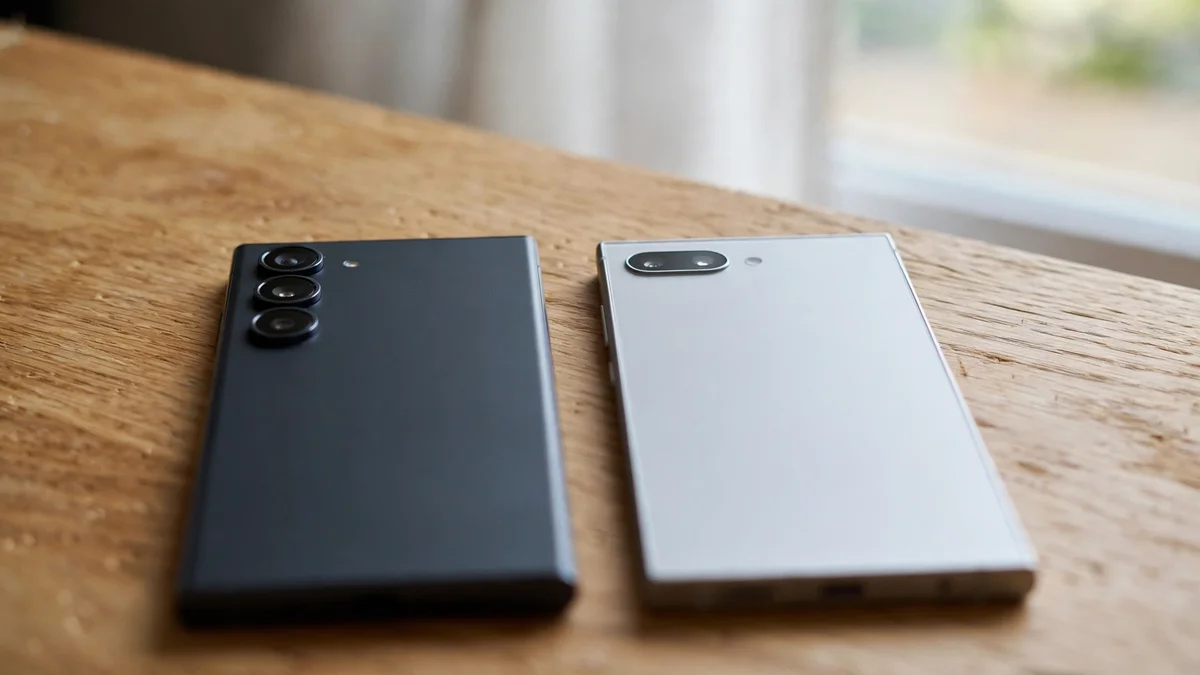
The iPhone 17 Pro vs Samsung Galaxy S26 debate is shaping up to be the flagship phone fight of the 2026-2027 season. Apple fired first, launching the iPhone 17 Pro in September 2026 with a redesigned aluminium unibody, the A19 Pro chip and a 48-megapixel telephoto camera. Samsung’s answer, the Galaxy S26, is expected in early 2027, and the leaks so far point to a slimmer design, a faster Snapdragon chip and a serious camera overhaul of its own.
On paper, these two phones are closer than ever. Both are expected to ship with large, bright 120Hz displays, multi-day-capable batteries, and AI features woven through the operating system rather than bolted on as an afterthought. The real differences are subtler: ecosystem, camera philosophy, charging speed and how each company handles AI.
This comparison puts the iPhone 17 Pro, a phone you can buy today, against the Samsung Galaxy S26, a phone still taking shape through leaks and reports. Where the S26’s details are unconfirmed, we say so plainly. By the end you should know which flagship fits your life, your other devices and your budget.
Key takeaways
- The iPhone 17 Pro is available now with the A19 Pro chip, a 48MP telephoto camera and a redesigned aluminium unibody.
- The Galaxy S26 is expected in early 2027 with a slimmer body, a next-generation Snapdragon chip and upgraded cameras, based on leaks rather than official confirmation.
- Apple still leads on video recording and ecosystem integration, while Samsung is expected to lead on charging speed, display brightness and zoom flexibility.
- Both phones are expected to offer seven or more years of software support, making either a safe long-term buy.
- Your existing devices should decide it: iPhone owners gain little by switching, and Galaxy owners gain little by leaving Android.
| Feature | iPhone 17 Pro | Samsung Galaxy S26 (expected) |
|---|---|---|
| Display | 6.3-inch LTPO OLED, 120Hz | 6.3-inch Dynamic AMOLED, 120Hz |
| Chip | Apple A19 Pro | Snapdragon 8 Elite Gen 5 (expected) |
| Rear cameras | 48MP main, 48MP ultra-wide, 48MP telephoto | 50MP main, 50MP ultra-wide, 200MP telephoto (rumoured) |
| Battery | Around 3,988mAh | Around 4,300mAh (rumoured) |
| Charging | Up to 40W wired, 25W MagSafe | Up to 60W wired (rumoured) |
| Software | iOS 26, Apple Intelligence | One UI 8.5, Galaxy AI (expected) |
| Starting price | $1,099 | Expected around $999 to $1,099 |
iPhone 17 Pro: Apple’s 2026 Flagship
The iPhone 17 Pro is the most substantial redesign of Apple’s Pro line in years. Gone is the titanium frame of the iPhone 15 Pro and 16 Pro, replaced by a single aluminium unibody that Apple says improves heat dissipation and durability.
The A19 Pro chip is the fastest silicon Apple has put in a phone. Apple pairs the chip with 12GB of RAM, a jump from the 8GB in the iPhone 16 Pro, and the extra memory matters most for Apple Intelligence features that run on-device.
The camera system is where the iPhone 17 Pro makes its biggest leap. All three rear cameras are now 48 megapixels, including a new telephoto lens with up to 8x optical-quality zoom. Video remains Apple’s strongest card, with 4K at 120 frames per second in Dolby Vision and ProRes recording.
Battery life is solid rather than spectacular, comfortably lasting a full day of heavy use and stretching to a second day with lighter use. Charging remains Apple’s weak spot relative to Samsung: wired charging tops out around 40W, and a full charge takes well over an hour. MagSafe wireless charging at 25W is convenient, and the magnetic ecosystem of wallets, stands and car mounts is still the best in the business. For a deeper look at the wider market, our guide to the best smartphones of 2026 puts the iPhone 17 Pro in context against every other flagship.
Samsung Galaxy S26: What to Expect
The Galaxy S26 is expected to launch in early 2027, and the rumour mill has been unusually consistent about its direction. The headline change is a slimmer, lighter body, with reports suggesting Samsung has shaved millimetres off the S25’s frame while keeping the same 6.3-inch display size.
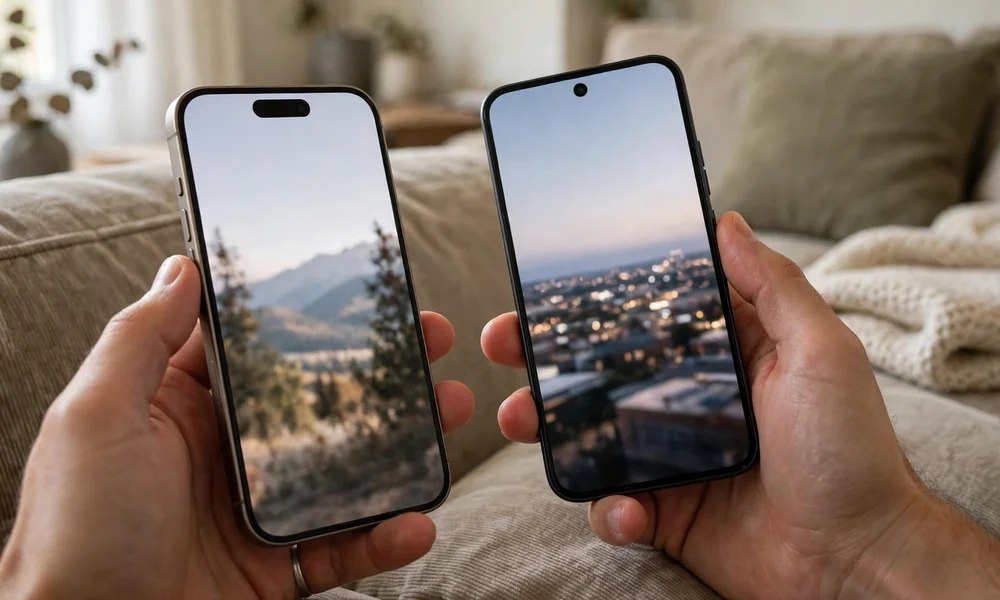
Under the hood, the S26 is expected to run Qualcomm’s Snapdragon 8 Elite Gen 5, a chip that early benchmarks suggest could close the gap with Apple’s A19 Pro in single-core performance while beating it in sustained graphics workloads. Samsung is also rumoured to be increasing the base RAM to 12GB across the range, which would put it on par with the iPhone 17 Pro for on-device AI work.
The camera is where Samsung may pull ahead. Leaks point to a 200-megapixel telephoto sensor, a first for a mainstream Galaxy S phone, alongside a 50-megapixel main sensor and a 50-megapixel ultra-wide. Samsung’s larger battery and faster charging are also expected advantages: a rumoured 4,300mAh cell with 60W wired charging would refill far faster than the iPhone.
None of this is official yet, and Samsung has a habit of saving its biggest surprises for launch day. The S26 will ship with One UI 8.5 on Android, with Galaxy AI features baked in. Android buyers weighing the wider field should also check our roundup of the best Android phones of 2026 to see how the Galaxy line stacks up against its rivals.
Design and Build
Both phones are premium slabs of glass and metal, but they feel different in the hand. The iPhone 17 Pro’s aluminium unibody is warm to the touch and, at 206 grams, reassuringly dense. The Ceramic Shield 2 front glass is Apple’s toughest yet, and the phone carries an IP68 rating.
The Galaxy S26, if the leaks are accurate, will be the thinner and lighter of the two, continuing Samsung’s recent push toward slimness. The S26 is expected to keep its IP68 rating and flat display. The iPhone’s slightly curved edges feel softer in the palm, while Samsung’s flatter sides feel more precise and grippy.
Cameras Compared
The iPhone 17 Pro’s triple 48-megapixel system is the most consistent camera setup on any phone. Daylight shots are detailed and natural, night mode is fast and reliable, and the new telephoto lens delivers clean 4x and 8x zoom images that hold up on a large screen.
Samsung’s rumoured 200-megapixel telephoto could change the zoom conversation entirely. Previous Galaxy Ultra phones have already shown what high-resolution zoom sensors can do, and bringing that technology to the standard S26 would give it a clear reach advantage over the iPhone.
For video, the iPhone is still the phone to beat. Its combination of stabilisation, colour science and ProRes support makes it the default choice for creators who shoot on a phone. Samsung has closed the gap with better stabilisation and 8K recording, but its video still falls short of Apple’s in low light and in colour consistency between lenses.
Performance and Battery
In raw benchmarks, the A19 Pro and the Snapdragon 8 Elite Gen 5 are expected to trade blows. Apple’s chip has historically led on single-core speed, which is what makes the interface feel instant, while Qualcomm’s latest chips have led on graphics and sustained performance.
Battery life is where the S26 may take a real lead. Its rumoured 4,300mAh cell is larger than the iPhone 17 Pro’s battery, and Samsung’s more efficient display and modem could stretch that advantage further. The bigger difference is charging: Samsung’s expected 60W wired charging could refill the S26 in around an hour, while the iPhone 17 Pro needs noticeably longer.
Software and AI
iOS 26 brings Apple’s Liquid Glass design language, a visual overhaul that makes the interface feel more fluid and layered. Apple Intelligence is now woven through the system: writing tools, notification summaries, visual intelligence that identifies objects through the camera, and a smarter Siri that can act across apps.
One UI 8.5 on the Galaxy S26 is expected to double down on Galaxy AI, with features like real-time call translation, generative photo editing, and an AI assistant that can complete multi-step tasks across Samsung and Google apps. Apple’s advantage is consistency and privacy, with more AI processing happening on-device and a tighter integration between the phone, Mac, iPad and Apple Watch.
Verdict: Which Is Better?
There is no single winner, because these phones serve different buyers. The iPhone 17 Pro is the better phone for most people who already live in Apple’s ecosystem, for anyone who shoots a lot of video, and for buyers who want a phone they can walk into a shop and buy today.
The Galaxy S26 is the better bet for Android loyalists, for buyers who want the fastest charging and the longest zoom reach, and for anyone who values display quality and customisation above ecosystem lock-in. The risk is that it is still unreleased, so its real-world camera quality and battery life are unproven.
If you need a phone now, buy the iPhone 17 Pro and do not look back. If you can wait until early 2027 and you prefer Android, the Galaxy S26 is worth waiting for. Before your new phone arrives, browse the best iPhone 17 Pro cases.
Frequently Asked Questions
Is the Samsung Galaxy S26 out yet?
No. As of late November 2026, the Galaxy S26 has not been officially announced. Samsung is expected to unveil it in early 2027, most likely in January or February, with sales starting a few weeks later. Everything in this comparison about the S26 is based on leaks and reports, not official specifications.
Which phone has the better camera?
It depends on what you shoot. The iPhone 17 Pro has the more consistent camera overall and the best video on any phone. The Galaxy S26 is rumoured to have a 200-megapixel telephoto sensor that would give it far more zoom reach, which would suit photographers who shoot distant subjects.
Is the iPhone 17 Pro worth it over the Galaxy S26?
If you need a phone now, yes. The iPhone 17 Pro is a finished, proven product with the fastest chip and the best video camera available. The S26 may match it in some areas when it launches, but it is not available yet and its real-world performance is unconfirmed.
Will the Galaxy S26 be more expensive than the iPhone 17 Pro?
Probably not by much. The iPhone 17 Pro starts at $1,099, and the Galaxy S26 is expected to start at around $999 to $1,099.
Which phone has better battery life?
The Galaxy S26 is expected to have the edge, thanks to a larger rumoured battery and faster charging. The iPhone 17 Pro still lasts a full day comfortably, but Samsung’s expected 60W wired charging would refill the phone much faster than Apple’s roughly 40W charging.
Should I switch from iPhone to Samsung, or vice versa?
Only if your ecosystem is pushing you that way.
Bottom Line
The iPhone 17 Pro vs Samsung Galaxy S26 matchup is a contest between a proven flagship you can buy today and a promising flagship still on the horizon. The iPhone wins on video, consistency and ecosystem, while the S26 is expected to win on charging, zoom and display brightness. Neither phone is a bad choice, and both will serve you well for years.
Buy the iPhone 17 Pro if you want the best phone available right now, especially if you already own other Apple devices. Wait for the Galaxy S26 if you prefer Android, want the fastest charging and longest zoom, and can hold out until early 2027. Whichever you choose, you are getting one of the two best phones of the season.