

What happens when a foldable phone lands in the hands of five professional reviewers at the same time? You get a mess of contradictions, a few surprising agreements, and a clearer picture than any single review could give you. That is exactly the situation with the iPhone Duo, Apple’s long-rumored entry into the foldable market, and the debate around it has become one of the most closely watched tech stories of 2026.
This roundup pulls together the most consistent threads from the critic conversation, separates the durable takeaways from the noise, and explains what buyers should actually do with the information. If you have been waiting to decide whether a foldable iPhone belongs in your pocket, the collective verdict matters more than any one headline.
Why the Five-Critic Format Tells You More Than One Review
A single review reflects one person’s habits, one person’s hand size, and one person’s tolerance for compromise. Five reviews, read side by side, expose the places where a product is genuinely strong and the places where reviewers are just being polite.
The value here is in the overlap. When five critics who test phones for a living independently flag the same weakness, that weakness is real. When they disagree sharply, the disagreement usually reveals a trade-off you need to weigh for yourself rather than a flaw in the product.
There is also a practical reason to read across outlets. Review units ship in batches, and early coverage often clusters around launch-week conditions. Later reports, especially those focused on durability, tend to surface problems the first wave missed. Anyone tracking early hardware concerns should read the iPhone Duo screen damage under 20 folds early buyer risk 2026 analysis alongside the launch reviews, because fold counts and crease behavior rarely show up in a first-week impression. (iPhone)
The Points Where All Five Critics Agree
Across the roundups, three themes recur with striking consistency.
The hinge is the headline
Every critic who spent serious time with the device came back to the hinge and crease. The consensus is not that the crease is invisible, but that it is manageable. Reviewers describe it as noticeable under angled light and largely forgotten during normal use. That is a meaningful distinction, because it moves the conversation from “is there a crease” to “does the crease change how you use the phone.”
The outer screen does most of the work
The second consistent finding is behavioral. Critics report spending the majority of their time on the cover display, opening the device mainly for reading, video, and multitasking. That pattern matters for buyers who assume they will live on the big inner screen. In practice, the outer screen becomes the daily driver and the inner screen becomes the occasional upgrade.
Battery life is a real trade-off
The third shared observation is that a larger, folding display costs power. Reviewers describe a device that gets through a normal day but does not leave much margin for heavy use. This is the kind of finding that only emerges when several testers with different routines report the same ceiling.
| What critics agree on | What it means for buyers |
|---|---|
| Crease is visible but tolerable | Not a dealbreaker for most users |
| Cover screen dominates usage | Inner screen is a bonus, not the main event |
| Battery is adequate, not generous | Heavy users should plan for a midday charge |
| Build quality feels premium | The price is easier to justify on hardware |
| Software still catching up | Expect refinement in later updates |
Where the Critics Split
The disagreements are more interesting than the agreements, because they map directly onto different kinds of buyers.
Price versus value
Some reviewers frame the device as a luxury object and judge it on those terms. Others treat the price as a practical barrier and grade it harshly for what that money could buy elsewhere. Both positions are defensible, and the split tells you that the device is not aimed at value shoppers. If you are comparing it against conventional flagships, the best iPhone 2026 breakdown is a more useful starting point than a foldable review, because it frames the comparison around standard form factors. (iPhone)
Multitasking: genuine productivity or demo-ware?
One camp argues the larger canvas changes how you work, especially for split-screen tasks and document review. The other camp argues that most people never actually multitask on a phone and that the feature is more impressive in a demo than in daily life. The honest answer is that this depends entirely on whether you already do two things at once on your phone. If you do not, the inner screen will not create the habit.
Durability confidence
The sharpest split concerns long-term durability. Some critics express confidence based on build feel and hinge engineering. Others hedge, noting that foldable hardware has a shorter track record than slab phones. That hedging is reasonable, and it is why the iPhone Duo crackgate evidence audit six hours 2026 report is worth reading before you commit. It examines what the early failure claims actually show and what they do not.
What the Roundup Means in Practice
Reading five reviews is only useful if it changes what you do. Here is the practical translation.
- Handle one before you buy. The crease debate cannot be resolved on paper. Fifteen minutes with a demo unit will tell you more than five thousand words.
- Track your own screen habits for a week. Note how often you actually want more screen. If the answer is rarely, a foldable is a want, not a need.
- Budget for a case and a charger. Heavy use drains the battery, and foldable repairs are expensive.
- Wait for the second production batch if you can. Early batches carry the highest risk of hinge and display issues, and later units usually benefit from tightened manufacturing.
- Read the durability coverage as well as launch reviews. Launch-week impressions are optimistic by design.
Common mistakes buyers make
The most frequent error is buying for the idea of a foldable rather than the reality of one. People imagine a pocket tablet and end up using the cover screen 80 percent of the time. The second common mistake is skipping insurance on a device with a moving part. The third is judging battery life from the first two days, when setup, syncing, and app installs drain the phone faster than normal use ever will.
How the Duo Fits Into the Wider 2026 Phone Market
The foldable category is no longer a novelty, but it is still a niche. The iPhone Duo enters a market where rival foldables have had several generations to refine their hinges, and where buyers have become more skeptical of first-generation hardware.
That context shapes how the five critics frame their verdicts. They are not asking “is this impressive?” They are asking “is this worth it compared to the third-generation foldable you could buy today?” That is a harder question, and it is the right one.
The surrounding software matters too. A foldable is only as good as the software that uses its screen, and app layouts and multitasking support are still uneven. For users who care about software more than hardware, the best AI chatbot app iPhone Android 2026 comparison is a useful reminder that the most valuable thing a phone does in 2026 is often software-driven, not screen-driven.
There is also a collector angle worth noting. Limited early runs of notable devices tend to hold attention, and the Dubai collector 53 iPhones two iPhone Duos Dubai Mall 2026 story shows how quickly a new model can become an object of desire rather than a tool. That enthusiasm is real, but it is not a reason to buy.
What Actually Works, According to the Testers
Stripping away the debate, the practical guidance from the collective coverage is fairly consistent.
- Use the cover screen as your default. It saves battery and matches how most people actually use a phone.
- Set up the inner screen for specific tasks. Reading, video, and split-screen work are where the larger canvas earns its keep.
- Turn off always-on display features if battery matters to you. Reviewers who did this reported noticeably better endurance.
- Test the hinge with one hand before you commit. How the device opens one-handed is a better predictor of long-term satisfaction than any spec sheet.
- Keep the software updated. Early foldable software improves quickly, and several reviewer complaints were addressed in point releases.
The Verdict the Roundup Supports
Five critics did not produce five verdicts. They produced one verdict with different emphases: the iPhone Duo is a well-built foldable with a real crease, a strong cover screen, and a battery that asks you to plan ahead. It is not a phone for everyone, and it is not pretending to be.
The buyers who will be happiest are those who already want more screen, who accept the crease as a physical reality of folding glass, and who are comfortable paying a premium for a first-generation form factor. The buyers who will be disappointed are those expecting a slab phone experience with a bonus screen. The device is a different category, and it should be judged as one.
For anyone still weighing the trade-offs, the iPhone Duo screen damage under 20 folds early buyer risk 2026 analysis remains the most useful companion to the review roundup, because it addresses the question every reviewer hedged on: how the hardware holds up after the honeymoon period ends.
Frequently Asked Questions
What is the iPhone Duo?
The iPhone Duo is Apple’s foldable phone, a device with a hinge and two display configurations: a cover screen for everyday use and a larger inner screen that unfolds for reading, video, and multitasking. It is a distinct form factor from Apple’s standard slab phones, and reviewers treat it as a separate category rather than an upgrade path.
Did all five critics agree on the crease?
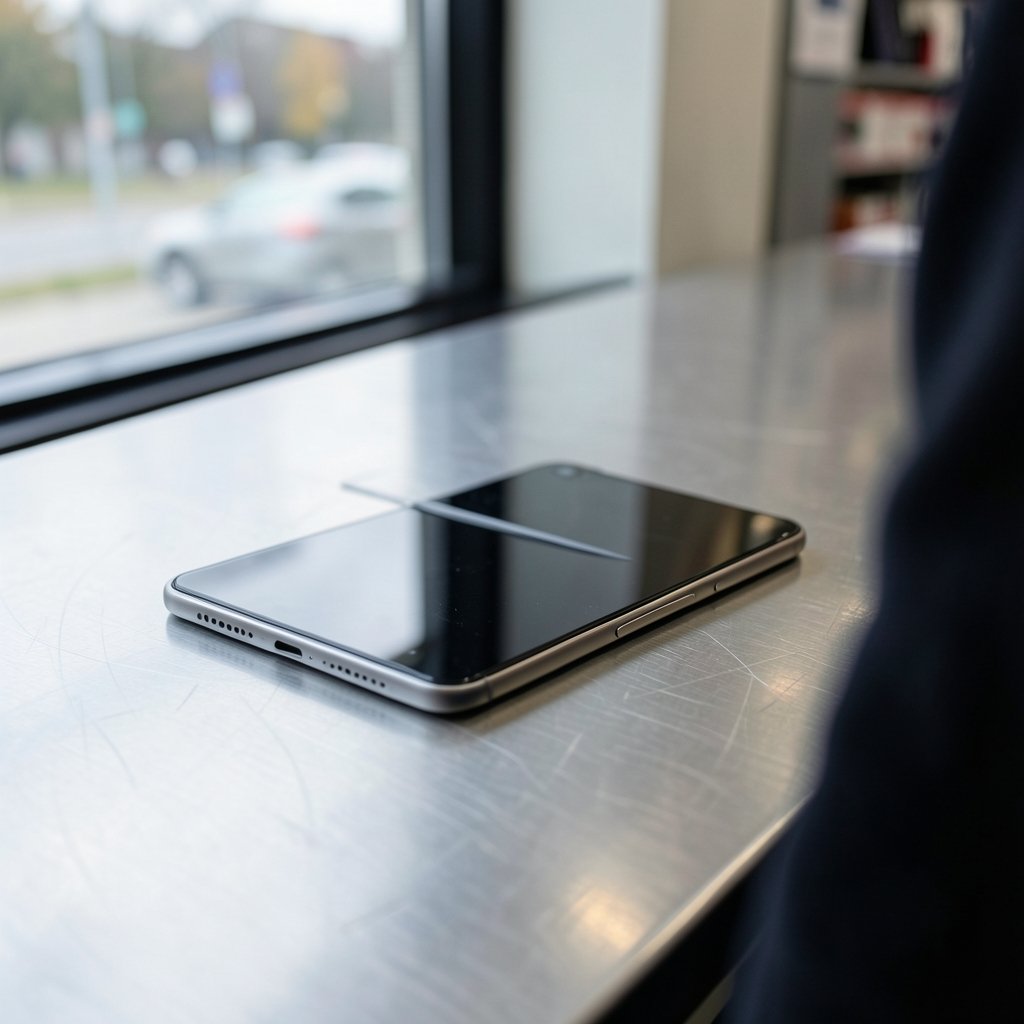
No, but they agreed on its severity. Every critic acknowledged a visible crease under angled light, and most described it as easy to ignore during normal use. The disagreement is about tolerance, not existence. Anyone sensitive to visible seams should handle a demo unit before buying.
Is the battery life a dealbreaker?
For most people, no. Reviewers describe a device that lasts a full day of moderate use but leaves little margin for heavy use. If you stream video, game, or navigate for hours daily, plan on a midday charge or carry a battery pack.
Should I buy the first generation or wait?
Waiting is the safer choice if durability is your main concern. First-generation foldables carry more risk from hinge and display wear, and later production batches typically benefit from tightened manufacturing. If you buy early, get insurance and read the durability coverage carefully.
How does the iPhone Duo compare to other foldables?
It competes on build quality and software integration rather than on price or maturity. Rival foldables have had more generations to refine their hinges, so the Duo’s advantage is how well its hardware and software work together, not first-mover experience. Compare hinge feel and app layout support side by side before deciding.
Is the inner screen worth paying for?
Only if you already want more screen. Reviewers consistently found that most usage happens on the cover display, with the inner screen reserved for reading, video, and split-screen tasks. If you rarely wish your phone were bigger, the inner screen will not change your habits.
Conclusion
The five-critic roundup lands somewhere more useful than a simple thumbs up or down. The iPhone Duo is a polished, premium foldable with a tolerable crease, a cover screen that does most of the work, and a battery that rewards planning. It earns its praise on hardware and takes its lumps on price and first-generation risk.
The smart move for buyers is to treat the collective coverage as a checklist rather than a verdict. Handle the device, audit your own screen habits, read the durability reporting, and decide whether you are buying a tool or an idea. Do that, and the noise of five competing reviews collapses into one clear answer that fits your actual life.



