
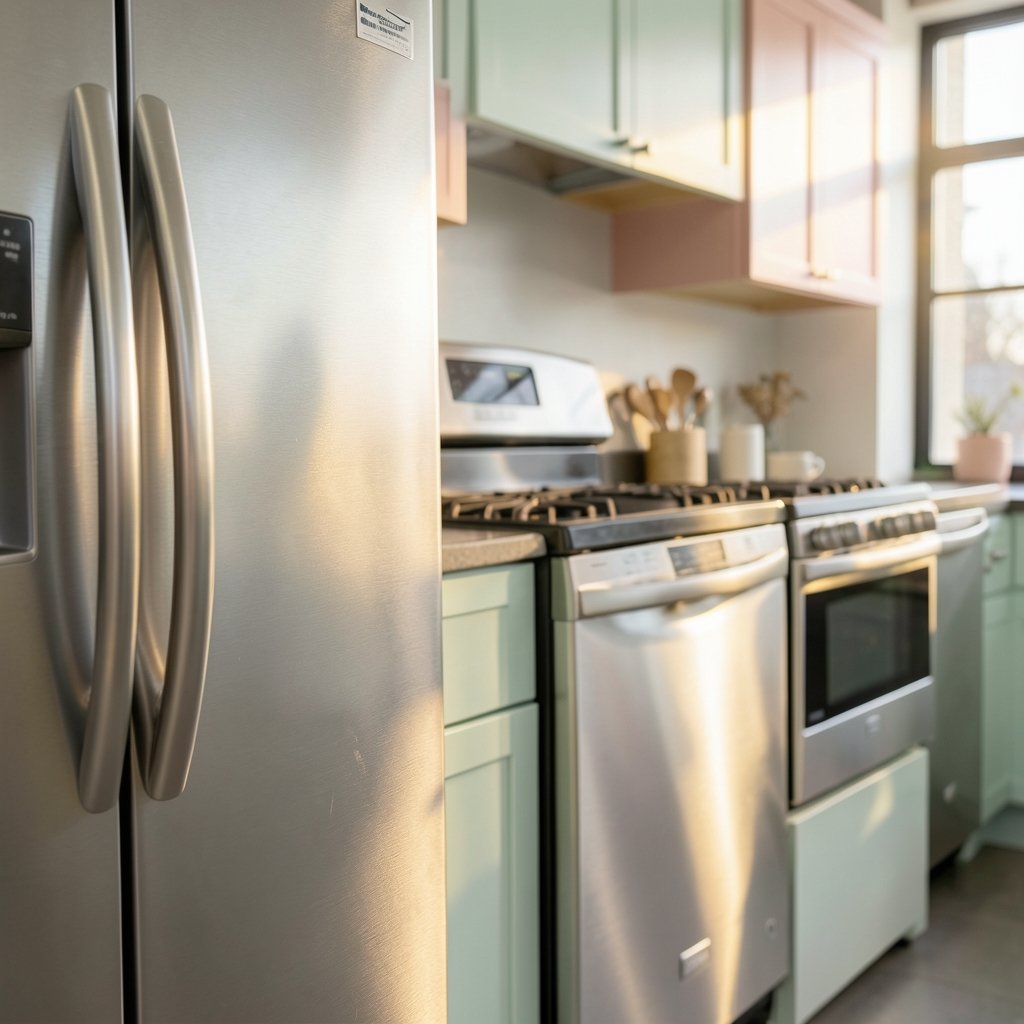
Ever noticed how a “buy three, save big” appliance package can feel like a great deal until you do the math and realize the savings are thinner than the rebate fine print? Kitchen appliance bundles are one of the most heavily marketed promotions in retail, and also one of the easiest places to overpay while feeling like you scored. The trick isn’t avoiding bundles. It’s knowing which ones are actually worth your money, which are marketing theater, and what to check before you swipe a card. (Perfume mystery box blind buy fragrance bundles really work)
This guide breaks down how bundle pricing really works, the traps that catch most buyers, and a practical checklist for walking into a sale with your eyes open.
What “Bundle on Sale” Actually Means
Start with a fact that surprises a lot of shoppers: there is no official, regulated definition of an “appliance bundle” in the United States. Retailers invent their own rules. Some require three appliances, some four, some count a microwave but not a range hood. The discount tiers are set store by store and change constantly.
That matters because the word “sale” carries legal weight even when “bundle” doesn’t. Under the FTC Act and the Guides Against Deceptive Pricing, a “former price” comparison has to be genuine. The higher price must have actually been offered for a reasonable period, not invented the week before the promotion. So when a tag says a package is marked down from $6,499 to $4,899, that original number should reflect a real prior price. If a retailer can’t back it up, the “sale” claim is legally shaky.
In practice, most bundle discounts run somewhere in the 10% to 30% range off individual unit prices, depending on the brand and how many pieces you buy. Those ranges are anecdotal and shift year to year, so treat any specific percentage as a starting point for your own math, not gospel.
The Math That Separates a Deal From a Decoy

Here’s the single most useful habit: price every appliance in the bundle separately before you look at the package total. Retailers know shoppers anchor on the big bundled number. Do the reverse.
A quick worked example helps. Say a package includes a refrigerator, range, dishwasher, and over-the-range microwave for $4,200. Individually, the same four models might list at $1,899, $1,099, $749, and $399, which totals $4,146. That “bundle discount” is actually a $54 markup dressed up as savings. Now imagine the same package at $3,600. That’s a real $546 off, roughly 13%, and worth considering.
| Check | What to do | Red flag |
|---|---|---|
| Unit prices | Price each model separately | Bundle total exceeds the sum |
| Model numbers | Confirm exact SKUs match | Vague “or similar” language |
| Delivery | Ask if all pieces arrive together | Coordinated delivery fees added later |
| Returns | Read restocking terms | Steep fees on bundled returns |
| Warranty | Confirm coverage per appliance | Claims that bundling “extends” warranty |
That last row deserves emphasis. Bundling does not automatically extend warranty coverage. Federal disclosure rules under the Magnuson-Moss Warranty Act govern how warranties must be presented, and a package deal doesn’t magically create longer protection. If a salesperson implies otherwise, ask for it in writing.
Timing: When Appliance Sales Actually Peak
Retail calendars are predictable. Late November, around Black Friday and Cyber Monday, has historically been the deepest discount window for major appliances in the US. Two secondary windows matter too: Presidents’ Day in February and Labor Day in September. These are long-standing patterns, not guarantees, but they’re a reasonable guide for planning a purchase.
The practical takeaway is patience. If you need a fridge in October, you’re often better off waiting a few weeks than accepting a mid-tier “sale.” If you can’t wait, focus on the efficiency math instead, which we’ll get to.
One more timing note: bundle promotions often stack with seasonal events, but the stacking rules are where confusion lives. A “save 20% on four appliances” offer may exclude clearance models, floor samples, or specific brands. Read the exclusions before you fall in love with a package.
Efficiency Labels Are Your Quiet Advantage
When a bundle mixes efficiency tiers, the yellow EnergyGuide label is the tool most shoppers ignore. Under the FTC’s Energy Labeling Rule, that label shows an estimated annual energy cost, which lets you compare models on more than sticker price. A bundle that saves $300 upfront but pairs a power-hungry fridge with an efficient dishwasher can cost you more over a decade.
ENERGY STAR labeling adds another layer. The program, run by the EPA and DOE, certifies appliances that meet efficiency criteria. Rebates and tax incentives for efficient appliances have shifted repeatedly since the 2022 Inflation Reduction Act, and which ones are live depends heavily on your state. Before buying, check what your state currently offers. A modest bundle discount plus a live rebate often beats a flashy headline sale.
This is also where practical experience pays off. Buyers who check efficiency labels before the sale often discover the “discounted” package includes an older, less efficient model that’s being cleared out. That’s not automatically bad, but you should know what you’re getting.
Common Mistakes That Cost Real Money
Most bundle regret comes from a handful of repeatable errors. Here’s what actually trips people up.
Measuring after you buy. Kitchen fit is unforgiving. A fridge that’s two inches too wide for the opening is a return, a restocking fee, and a delay. Measure the opening, the doorway, and the path to the kitchen before the sale ends. If you’re planning around a tight layout, small kitchen remodeling ideas on a budget can help you think through clearance and placement before you commit to appliance dimensions.
Ignoring delivery logistics. Bundles often promise coordinated delivery, meaning all appliances arrive together. That sounds convenient until one item is backordered and the whole delivery slips three weeks. Ask what happens if one piece is delayed and whether you can split the delivery.
Skipping the return policy. Bundled purchases frequently carry restocking fees that individual purchases don’t. A 15% restocking fee on a $4,000 package is $600, which can erase the entire discount.
Assuming the bundle price is the floor. It rarely is. Ask directly whether the package price can move, especially at the end of a month or quarter when sales floors are chasing targets. The worst answer is no.
Forgetting the small stuff. Cords, hoses, and installation kits sometimes aren’t included. A $40 hose kit isn’t a dealbreaker, but five of them add up. The same instinct applies to any bundled purchase: know what’s inside the box. It’s the same lesson that makes perfume mystery box blind buy fragrance bundles worth understanding, since the value depends entirely on what’s actually included rather than the marketing around it.
Where Bundles Genuinely Win
Bundles aren’t inherently bad. They shine in specific situations.
If you’re outfitting a kitchen from scratch, a matched package saves you the headache of hunting four separate sales and coordinating four deliveries. The convenience has real value, and a genuine 15% package discount on four appliances can be worth several hundred dollars. (Small kitchen remodeling ideas budget smart upgrades that)
Bundles also help when you want visual consistency. A matched suite from one brand often shares finishes and handle styles, which matters if design cohesion is a priority. And some retailers bundle installation and haul-away of old appliances, which is worth real money if you don’t want to wrestle a fridge onto a truck yourself.
The key is treating the bundle as one option among several, not the default. Sometimes buying three appliances on sale individually and skipping the fourth beats any package.
A Practical Buying Checklist
Walk into the store, or open the browser tab, with this sequence in mind.
- List the appliances you actually need, in priority order.
- Price each one separately at two or three retailers.
- Note the exact model numbers in any bundle you’re considering.
- Compare bundle total against the sum of individual sale prices.
- Check the EnergyGuide label and any current state rebates.
- Confirm delivery timing and whether split delivery is allowed.
- Read the return and restocking policy line by line.
- Ask whether the package price is negotiable.
- Verify warranty terms per appliance, in writing.
- Only then decide.
That checklist sounds tedious, but it takes about twenty minutes and routinely saves hundreds. Skipping it is how people end up paying full price for the privilege of feeling thrifty.
Reading the Fine Print Like a Skeptic
Three documents deserve a slow read: the promotion terms, the delivery agreement, and the warranty sheet.
The promotion terms tell you which models qualify and which don’t. Watch for phrases like “select models” and “while supplies last,” which give the retailer wide latitude. The delivery agreement spells out who pays for what if something goes wrong, including damage during transit. The warranty sheet tells you the actual coverage period per appliance, which is often shorter than buyers assume.
One more habit worth building: screenshot or save the sale terms at the moment of purchase. Promotions change, and having the original terms on hand makes any later dispute far simpler. (Led strip diffuser kitchen cabinets fix dots glare hotspots)
Conclusion
Kitchen appliance bundles on sale can be genuinely excellent deals, but only when you treat the headline discount as a claim to verify rather than a fact to trust. The formula is unglamorous and reliable: price each appliance separately, confirm the exact models, check efficiency labels and live rebates, read the delivery and return terms, and ask whether the package price can move. Do that, and you’ll know within minutes whether a bundle is a real saving or a cleverly framed markup. The best time to buy is usually late November, February, or early September, but the best deal is always the one you’ve done the math on.
Frequently Asked Questions
Are kitchen appliance bundles actually cheaper than buying separately?
Sometimes, but not automatically. Bundle discounts commonly land in the 10% to 30% range, yet some packages are priced above the sum of individual sale prices. Always price each model separately before trusting the package total.
What is the best time of year to buy a kitchen appliance bundle?
Late November, around Black Friday and Cyber Monday, has historically offered the deepest discounts on major appliances in the US. February around Presidents’ Day and early September around Labor Day are the two secondary windows worth watching.
Can a retailer legally call something “on sale” if the original price was never charged?
No. Under federal deceptive pricing rules, a “former price” comparison must be genuine, meaning the higher price was actually offered for a reasonable period. If a retailer can’t support the original price, the sale claim is legally questionable.
Does buying appliances as a bundle extend the warranty?
No. Bundling does not automatically extend warranty coverage. Federal warranty disclosure rules govern how coverage must be presented, and each appliance typically carries its own separate warranty terms. Get any coverage promises in writing.
How do I compare energy costs across a bundle?
Use the yellow EnergyGuide label, which shows an estimated annual energy cost for each model. Also check whether the appliances carry ENERGY STAR certification and whether your state currently offers rebates for efficient models.
What should I check before signing for a bundled delivery?
Confirm whether all appliances will arrive together, what happens if one is backordered, who covers damage in transit, and what the restocking fee is if you need to return part of the bundle. Restocking fees can quietly erase the entire discount.



