

What if the biggest obstacle to earning on Amazon isn’t finding a product to sell, but understanding what the platform actually takes from every sale? That single question separates people who build a steady side income from people who buy a thousand units of something and watch the storage fees eat their margin. Amazon offers at least seven distinct ways to earn money, and each one has a different cost structure, a different skill requirement, and a different ceiling. This guide walks through each path, the numbers behind it, and the mistakes that quietly drain new sellers’ profits. (Amazon Marketplace)
Start With the Fee Math, Not the Product Idea
Most beginners do this backward. They find a product they like, order inventory, and only then discover that Amazon’s cut plus fulfillment costs plus advertising leaves them with almost nothing. Do the math first, because the platform’s fees are not small.
For most product categories, Amazon charges a referral fee of roughly 15% of the sale price, though the rate ranges from about 8% to 45% depending on category. Consumer electronics sit near the low end; some niche categories sit much higher. On top of that, sellers choose between two subscription models: an Individual plan at $0.99 per item sold, or a Professional plan at a flat $39.99 per month in the US marketplace. The Professional tier makes sense once you sell more than about 40 items a month.
Then comes fulfillment. If you use Fulfillment by Amazon (FBA), Amazon stores your inventory, picks, packs, and ships it, and charges fulfillment and storage fees for the service. FBA items qualify for Prime, which is the main reason sellers accept the extra cost. If you ship yourself, you trade those fees for shipping labels, packaging, and your own time.
A practical rule that experienced sellers use: assume Amazon and logistics will consume 30% to 45% of your sale price before you pay for the product itself. If a $30 item costs you $12 to source and roughly $11 goes to fees and shipping, you keep about $7 before advertising. That is a workable business. A $30 item that costs $22 to source is not, no matter how good the listing looks.
Selling Physical Products: Retail and Online Arbitrage
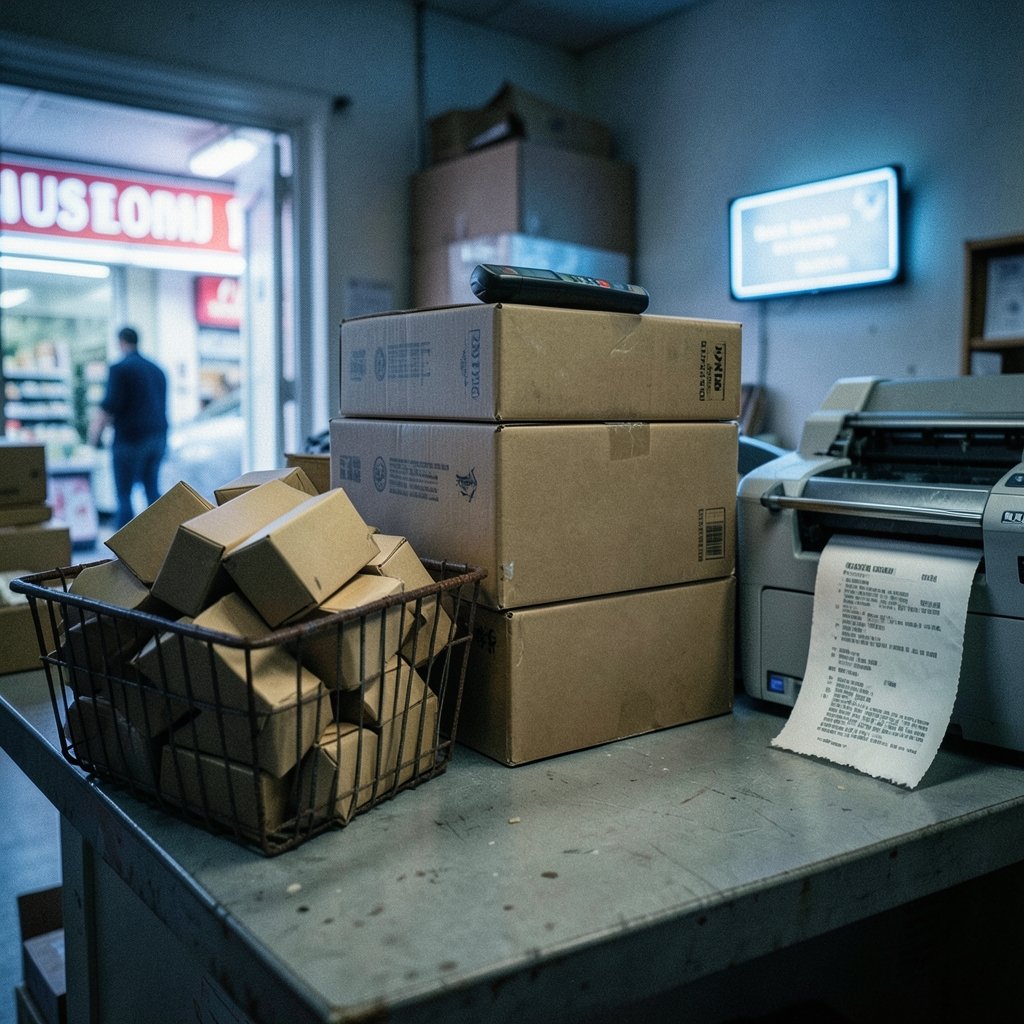
The fastest way to start selling is arbitrage: buying products at retail or from clearance sales and reselling them on Amazon for more. It requires little capital and no brand building, which is why it remains popular with beginners.
The catch is that arbitrage is a margin business with thin edges. You need to find items selling for at least three times your purchase price to leave room for fees, shipping, and returns. Practical tips that actually work:
- Check the sales rank history as well as the current rank before buying anything.
- Confirm you can list the product, since some brands are gated and require approval.
- Factor in the cost of returns, which run higher in apparel and electronics.
- Start with 10 to 20 units of a single product rather than spreading thin across many.
The common mistake is buying deep on a single clearance find without checking whether other sellers are already racing the price down. A product with 30 sellers competing on the same listing becomes a price war within days.
Private Label: Higher Ceiling, Higher Risk
Private label means sourcing a generic product, branding it as your own, and building a listing around it. This is the model most often taught in courses, and it can work, but it is also where the most money gets lost.
The realistic budget for a private label launch is rarely under $3,000 to $5,000 once you account for inventory, branding, photography, and advertising. Amazon’s ad system is pay-to-play; a new listing without ad spend usually sits invisible on page four. The sellers who succeed treat it as a product business, not a listing business: they solve a specific complaint in existing reviews, source better packaging, and price with margin left for ads.
If you are weighing cloud infrastructure or tooling costs for your operation, it helps to understand what services really cost at small scale. A realistic budget breakdown for Amazon EC2 costs for small projects and businesses shows how quickly small monthly fees compound, and the same discipline applies to seller tools and subscriptions. Similarly, knowing what Amazon S3 storage really costs for a small project or business is useful if you plan to host product images or run your own storefront.
Fulfillment by Amazon vs. Self-Fulfillment
Choosing between FBA and shipping orders yourself is one of the first real decisions a seller makes. Here is how they compare in practice.
| Factor | Fulfillment by Amazon (FBA) | Merchant-Fulfilled (FBM) |
|---|---|---|
| Prime eligibility | Yes | No, unless seller meets requirements |
| Upfront cost | Storage and fulfillment fees | Packaging, postage, storage space |
| Control over packaging | Limited | Full |
| Best for | Small, fast-moving, standard-size items | Bulky, slow-moving, or handmade items |
| Main risk | Long-term storage fees on dead stock | Late shipments hurting account health |
A hybrid approach works well for many sellers: FBA for the fast movers, self-fulfillment for oversized or seasonal items where storage fees would be punishing. The mistake is defaulting to FBA for everything and then discovering that slow inventory is accruing storage charges month after month. Inventory that does not sell is not an asset; it is a bill.
Digital Income: Kindle Direct Publishing and Amazon Handmade
Not every path requires inventory. Kindle Direct Publishing (KDP) lets authors self-publish ebooks and paperbacks, with ebook royalties commonly at 35% or 70% depending on price band and territory. The appeal is obvious: no stock, no shipping, no storage. The reality is that discoverability is the whole game. Books with no audience and no marketing plan sell a handful of copies.
What works in practice: publish in a specific niche, write a series rather than a single title, and treat covers and descriptions as seriously as the manuscript. Fiction series and practical nonfiction in narrow topics both perform better than general-interest titles from unknown authors.
Amazon Handmade is a juried program for artisans, and it has historically waived the $39.99 Professional subscription for approved sellers, with a separate fee structure applying instead. Approval requires evidence that you actually make the product. For craftspeople, it is a lower-friction entry point than standard selling, though the application process filters out resellers.
Affiliate Marketing: Amazon Associates
Amazon Associates is the affiliate program: publishers earn commissions, commonly in the range of 1% to 10% depending on product category, on qualifying purchases made through their links. No inventory, no customer service, no shipping.
The honest picture is that affiliate income is slow to build and highly dependent on traffic. A niche review site with steady organic search traffic can earn reliably. A social account with sporadic posting usually earns very little. Commission rates vary by category and are revised periodically, so no single number applies universally.
One compliance point that trips up beginners: in the US, affiliate links require clear disclosure of the material connection between the publisher and the seller. The FTC’s guidance on endorsements and testimonials explains what disclosure must look like in practice, and skipping it is a genuine legal risk, not a formality. The other common error is treating affiliate income as tax-free; it is not, and payment platforms report it.
Gig Work: Amazon Flex
Amazon Flex is a delivery program where individuals use their own vehicle to deliver packages for block-based pay. Availability varies by city, and it is genuinely gig work rather than a business: you are paid for time blocks, not for building an asset. It suits people who want flexible hours and immediate cash, not people looking for scalable income. Factor in fuel, vehicle wear, and insurance before comparing the hourly rate to a regular job.
The Scams and Cost Traps to Avoid
Wherever money changes hands on a marketplace, scams follow. Two patterns deserve specific warning.
First, gift card scams target sellers and buyers alike, often through fake “verification” requests or bogus buyer messages asking you to resolve an issue by purchasing gift cards. The gift card scam works because victims rarely get their money back once the card codes are shared, since gift cards are treated like cash. No legitimate Amazon process requires payment in gift cards.
Second, the cost of identity threat detection is worth understanding before you scale, because seller accounts hold banking details, tax information, and inventory value. Account takeovers are not rare, and recovery is slow. Two-factor authentication and separate credentials for seller tools are basic hygiene, not optional extras.
There is also a quieter trap: mystery boxes and liquidation pallets. Before buying an Amazon mystery box, it pays to know what you actually get and how to avoid a bad buy, because the contents are usually unsold or returned inventory with unpredictable resale value. Most buyers recover less than they spend.
Taxes, Reporting, and Staying Compliant
Profit on paper is not profit in the bank. Sellers owe income tax on earnings, and payment platforms issue reporting forms once thresholds are met. In the US, the rules for Form 1099-K reporting have shifted repeatedly in recent years, so the IRS page explaining Form 1099-K reporting thresholds is the place to confirm the current rule rather than relying on last year’s advice. Keep receipts for inventory, shipping, software, and home office space; the deductions are what make the difference between a hobby and a business at tax time. (IRS Self-Employed Individuals Tax Center)
A Realistic Path for a First Year
For someone starting from zero, a sensible sequence looks like this:
- Spend two weeks learning fee structures and running margin calculations on 20 real products.
- Start with arbitrage or a small private label test using $500 to $1,000, not your savings.
- Reinvest profits into inventory that sells within 60 days.
- Add a second channel, such as KDP or Associates, once the first is stable.
- Track every cost weekly; sellers who fail usually do so because they stopped measuring.
The broader question of how to make money with AI applies here too, since listing optimization, keyword research, and customer message drafting are now partly automatable, freeing time for sourcing and supplier relationships.
Conclusion
Making money on Amazon is less about finding a secret product and more about arithmetic, patience, and choosing the model that fits your capital and temperament. Selling physical products offers the highest ceiling but demands the most cash and the sharpest cost control. KDP, Handmade, and Associates require less capital but reward specific skills and consistent effort. Flex trades time for money with no asset built. Whichever path you choose, the sellers who last are the ones who know exactly what Amazon takes, what their product costs, and what they keep. Start with the numbers, keep the scope small, and let the first year be a learning year rather than a bet.
FAQ
How much money do I need to start selling on Amazon?
A realistic minimum is around $500 for arbitrage, covering a small inventory batch, the Professional subscription if you sell enough volume, and shipping supplies. Private label usually needs $3,000 to $5,000 once inventory, branding, photography, and advertising are included. Anyone claiming you can start a serious private label business for $100 is leaving out the ad spend.
Is Fulfillment by Amazon worth the fees?
For small, fast-selling, standard-size products, usually yes, because Prime eligibility drives conversion and Amazon handles the logistics. For bulky, slow-moving, or seasonal items, storage fees can exceed the benefit. Many sellers use FBA for their best performers and self-fulfill the rest.
How much does Amazon take from each sale?
For most categories, the referral fee is about 15% of the sale price, ranging roughly from 8% to 45% by category. Add fulfillment and storage fees if you use FBA, plus advertising. A safe planning assumption is that 30% to 45% of the sale price goes to Amazon and logistics before product cost.
Can I make money on Amazon without holding inventory?
Yes. Amazon Associates pays commissions on qualifying purchases made through your links, and Kindle Direct Publishing pays royalties on ebooks and paperbacks, both without inventory. Both are slower to scale than product sales and depend heavily on traffic or audience. Dropshipping exists but carries account-health risks.
Do I need to pay taxes on Amazon income?
Yes. Earnings from selling, affiliate commissions, and gig work are taxable income. Payment platforms issue reporting forms once thresholds are met, and the thresholds for Form 1099-K have changed in recent years, so confirm the current rule before filing. Track expenses year-round to claim legitimate deductions.
What is the most common mistake new Amazon sellers make?
Skipping the fee math before buying inventory. Sellers fall in love with a product, order stock, and only then calculate that referral fees, fulfillment, and ads leave no margin. Running the full cost calculation on paper first, including a returns allowance, prevents most of the losses beginners experience.



