
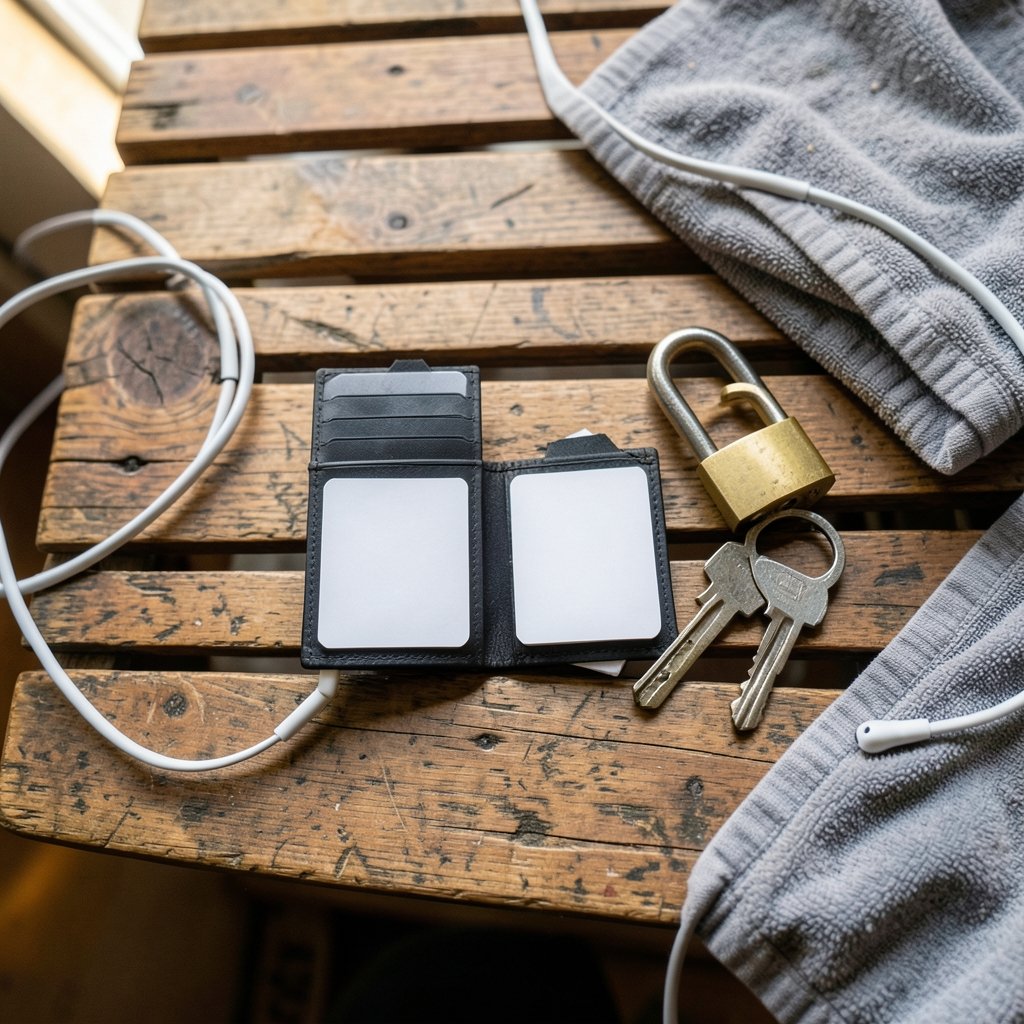
What if the wallet that finally works for you is the one that holds less? That is the odd promise of the mini bifold, a shrunken version of the classic two-panel wallet that trades capacity for a slimmer pocket profile. The phrase “almost perfect” keeps showing up in reviews of these wallets, and it is a telling choice of words. It admits that no single design nails every buyer’s needs, while still signaling that something about the format clicks.
This article breaks down what the mini bifold actually is, which features separate a near-perfect one from a frustrating one, and where the compromises hide. It also covers materials, sizing, RFID claims, and the practical mistakes that make people give up on small wallets entirely.
What Counts as a Mini Bifold?
A bifold wallet is made from a single piece of material folded once, creating two panels that close against each other. It is the most common wallet format in the United States and Europe, which is exactly why the mini version feels familiar the moment you pick it up.
The “mini” label is looser. There is no official standard, so brands apply it differently. In general, a compact bifold holds roughly 4 to 8 cards plus folded bills, and measures about 8 to 10 centimeters wide when closed. A standard bifold usually runs 11 to 12 centimeters across. That 2 to 3 centimeter difference sounds trivial on paper. In a front pocket, it is the difference between sitting comfortably and jabbing you in the hip every time you bend down.
That narrow measurement band matters because it is where the “almost” in “almost perfect” comes from. Shrink the footprint and you inevitably shrink capacity, accessibility, or both.
The Features That Separate a Near-Perfect Mini Bifold From a Compromised One
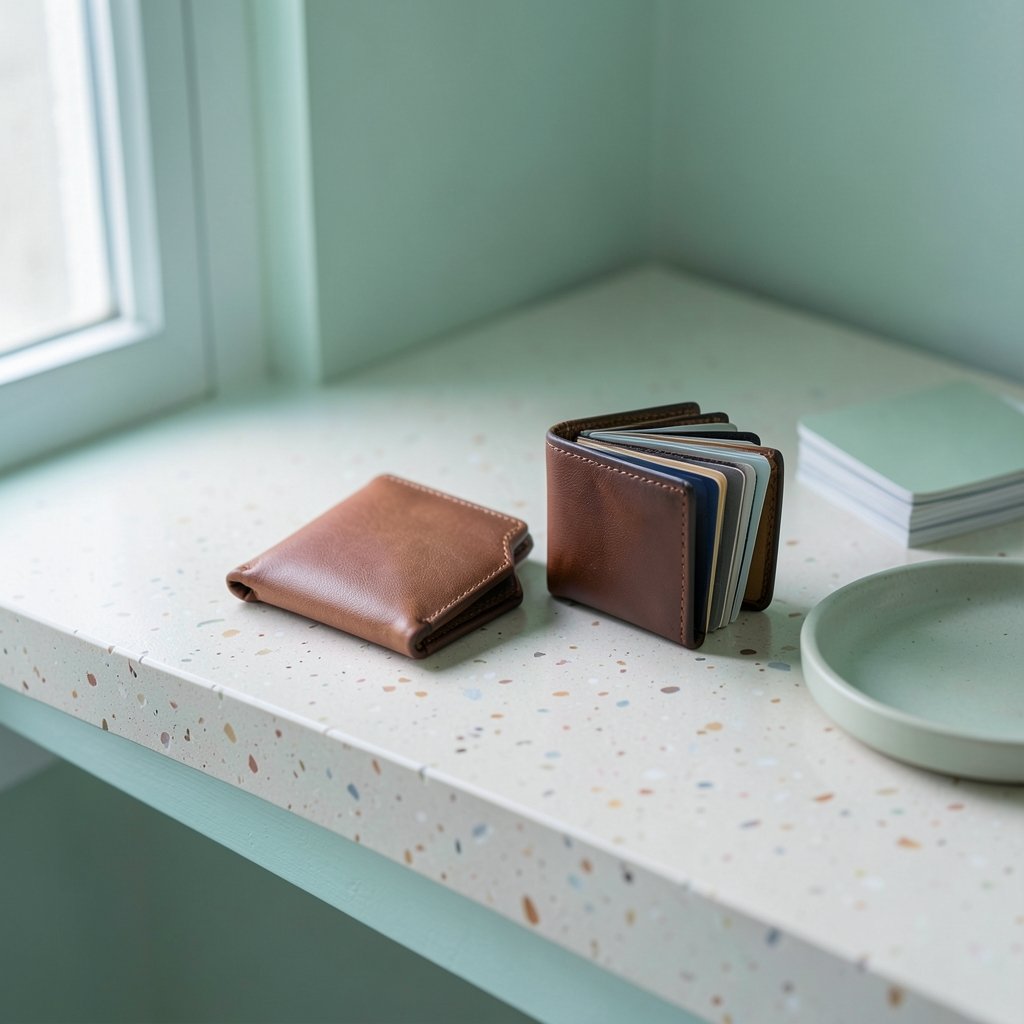
Most mini bifolds look similar in product photos. The differences show up after a few weeks of daily use. Here is what actually matters, and why.
Card capacity that matches real life
The sweet spot for most people is 4 to 6 cards. That covers a primary debit card, a credit card, a transit or access card, an ID, and one or two loyalty cards. Once you push past six, the wallet starts to bulge, and a bulging mini bifold defeats its own purpose.
The common mistake is buying for the cards you own rather than the cards you carry daily. If a wallet is rated for eight cards, test it with eight before committing. Many designs technically fit eight but become awkward to close and slow to open.
Quick-access card slots
A mini bifold that requires unfolding and digging is worse than a larger wallet that opens cleanly. Look for at least one exterior slot or a front-pocket card position you can reach with a thumb. This single feature is often what pushes a reviewer from “fine” to “almost perfect.”
Bill handling that does not require folding twice
Folded bills fit mini bifolds, but the bill compartment depth varies a lot. Some designs swallow a US bill folded once; others force a second fold, which adds bulk right where the wallet closes. If you carry cash regularly, check the bill compartment depth before anything else.
Build quality at the seams
Small wallets concentrate stress. The fold line and the card slot stitching take more punishment per square centimeter than on a full-size bifold because there is less material to distribute the load. Reinforced stitching at the fold and bound edges are worth paying for.
Thickness under load
Wallet bulk is driven mainly by card count and material thickness. A mini bifold holding 4 to 6 cards typically measures 10 to 15 millimeters thick when loaded. That is the number to compare against your pocket, not the empty-wallet spec on the product page.
Materials: Where the Money Goes
Material choice drives durability, feel, and price more than any other decision. The options fall into a few clear tiers.
| Material | Durability | Break-in | Notes |
|---|---|---|---|
| Full-grain leather | Highest leather grade | Noticeable, a few weeks | Keeps the intact outer hide surface; ages well |
| Top-grain leather | Good | Short | Sanded and corrected surface; more uniform look |
| Genuine leather | Lower, loosely defined grade | Minimal | A broad marketing term, not a quality guarantee |
| Ballistic nylon | High abrasion resistance | None | Lightweight; denier rating indicates yarn weight |
| Ripstop fabric | Good | None | Grid pattern limits tear propagation |
Full-grain leather keeps the intact outer surface of the hide, which generally makes it the most durable leather grade. It also shows wear, which some people love and others hate. Top-grain is sanded and corrected, so it looks more uniform and breaks in faster. Genuine leather is a loosely defined lower grade, and because the term is so broad, it tells you almost nothing on its own.
Synthetic options deserve more respect than they sometimes get. Ballistic nylon and ripstop fabrics are common lightweight wallet materials, and their abrasion resistance is often described using denier, the weight of the yarn. Higher denier generally means a heavier, tougher fabric. For a mini bifold that lives in a front pocket against keys, a 1000-denier nylon shell can outlast thin leather.
One practical tip: if you go leather, plan on a break-in period. New full-grain mini bifolds are stiff and hold fewer cards than their rating for the first week or two. People who judge a leather wallet in the first three days often return a good one.
Size, Bulk, and Pocket Reality
The appeal of a mini bifold is pocket fit, so it is worth being precise about what that means.
A front-pocket carry works best when the loaded wallet stays under about 15 millimeters thick and roughly 10 centimeters wide. Beyond that, the wallet starts printing through trousers and pressing against the thigh when sitting. Back-pocket carry is possible, but a small wallet in a back pocket tends to slide and tilt, which is why most mini bifold buyers switch to the front pocket anyway.
A second-order effect often gets missed: a slimmer wallet changes what else you carry. Cards move out of the wallet and into phone cases or money clips. Coins stay home. Receipts pile up in a drawer instead of a wallet. The mini bifold is a smaller container, and it nudges you to carry less; that nudge works only if the rest of your setup cooperates.
If you are building a compact everyday-carry setup around small devices and slim gear, the same logic of matching dimensions to real use applies elsewhere. The thinking behind best mini pcs 2026 actually matters before you buy 2 follows a similar path: small footprint, but only worth it if the specs fit the job. (Mini led blooming subtitles actually reduces halo)
RFID Blocking: Marketing Versus Measured Reality
RFID-blocking wallets use a conductive layer, often metal mesh or foil, to weaken the 13.56 MHz signals used by contactless cards. That frequency comes from the contactless smart-card standard behind tap-to-pay.
Here is the honest version. Independent testing has found that many RFID-blocking wallets block only some frequencies or some directions, so a “100% blocking” or “military-grade” claim should be treated as marketing rather than a measured guarantee. The practical risk of card skimming is also low, because contactless cards generate single-use transaction codes and skimming requires close proximity with specialized equipment.
That does not make blocking layers useless. It makes them a modest bonus rather than a reason to buy. If a mini bifold you otherwise love happens to include a blocking layer, fine. Do not let it override fit, capacity, or build quality.
Common Mistakes Buyers Make
A few patterns show up again and again among people who end up disappointed with a mini bifold.
- Overstuffing on day one. New wallets, especially leather ones, need time to stretch. Loading eight cards into a six-card wallet on arrival stresses the seams and shortens its life.
- Ignoring the bill fold. Buyers who carry cash discover too late that their wallet requires double-folding bills, adding bulk at the closure.
- Choosing looks over slot layout. A beautiful wallet with no quick-access slot gets annoying fast, no matter how good it looks on a desk.
- Skipping the loaded measurement. The empty thickness on a spec sheet is nearly meaningless. Compare loaded thickness instead.
- Expecting a mini to replace a full bifold entirely. Many people keep a larger wallet for travel documents and use the mini for daily carry. That is a legitimate strategy, not a failure.
Care and Longevity
Leather and fabric need different routines, and getting this wrong is a quiet cause of premature wear.
For full-grain leather, occasional conditioning keeps the material supple and resists cracking at the fold. Keep it away from prolonged soaking, which can distort the shape and weaken the stitching. Manufacturers’ care guidance varies, so follow the specific brand’s instructions rather than a generic routine.
For nylon and ripstop, the main enemies are abrasion and fraying at the edges. Check the bound edges every few months. A loose thread at a corner is easy to trim early and annoying to fix after the edge comes apart.
Repairability is worth checking before purchase. Wallet warranties and repair policies vary widely by maker, and there is no industry-wide standard. Some brands re-stitch seams for a fee; others offer nothing after 30 days. Ask before you buy, especially on a wallet you plan to keep for years.
The same principle of checking the fine print applies to just about any compact gear purchase. If you have ever compared small devices and found that the spec sheet hid the real-world catch, the approach in Evercade nexus vs retroid pocket 6 vs miyoo mini plus which will feel familiar: match the details to your actual habits, not the headline numbers.
Is “Almost Perfect” Actually the Right Standard?
For a wallet, yes. The mini bifold is a format built on trade-offs, and any design that claims to eliminate them is either exaggerating or quietly larger than it says. The realistic goal is a wallet whose compromises land in places you do not care about.
If you carry six cards, rarely use cash, and keep your wallet in a front pocket, a well-made mini bifold can genuinely feel close to perfect. If you carry a dozen cards, travel with multiple currencies, or collect receipts, the same wallet will feel cramped within a week. The format is not the problem; the mismatch is.
Reviewers who call a mini bifold “almost perfect” are usually describing exactly this: a wallet that solved the bulk problem, kept the essentials accessible, and left one small annoyance they learned to live with. That is a fair summary of the category as a whole.
Conclusion
The almost perfect mini bifold is not a myth, but it is a specific thing. It is a wallet around 8 to 10 centimeters wide that holds 4 to 6 cards, stays under roughly 15 millimeters thick when loaded, opens without a fight, and is built from a material that suits how hard you are on it. Full-grain leather rewards patience with a long life; quality nylon rewards neglect with the same. RFID blocking is a nice extra, not a deciding factor.
The buyers who end up happiest are the ones who measured their actual daily carry before shopping, checked the loaded thickness instead of the empty one, and accepted that a small wallet is a deliberate trade rather than a free upgrade. Get those three things right, and “almost perfect” stops sounding like a hedge and starts sounding like an accurate description.
FAQ
What is the difference between a mini bifold and a slim wallet?
A mini bifold is a true bifold, meaning it folds once into two panels, just at a smaller size. A slim wallet is a broader category that includes cardholders, money clips, and elastic-band designs that may not fold at all. The mini bifold keeps the familiar two-panel opening while cutting the footprint.
How many cards can a mini bifold realistically hold?
Most mini bifolds are designed for 4 to 8 cards. In practice, 4 to 6 is the comfortable range where the wallet still closes cleanly and stays slim. Pushing to the upper limit of the rating usually adds noticeable bulk and makes cards harder to remove.
Do RFID-blocking mini wallets actually work?
They work partially. The conductive layer weakens 13.56 MHz contactless signals, but independent testing has found that many wallets block only some frequencies or directions. Claims of total or military-grade blocking are not supported by that testing, and the real-world risk of card skimming is low anyway.
Is full-grain leather worth the extra cost for a small wallet?
Usually yes, if you plan to keep the wallet for years. Full-grain leather retains the intact outer hide surface, which generally makes it the most durable grade, and it develops a patina over time. The trade-off is a break-in period and more visible wear than corrected-grain leather.
How thick is a mini bifold once it is loaded?
A mini bifold holding 4 to 6 cards typically measures 10 to 15 millimeters thick when loaded. That range is the number worth comparing against your pocket and phone, since empty-wallet thickness on a spec sheet tells you very little about daily carry.
Can a mini bifold replace a full-size wallet entirely?
For many people, yes, as long as their daily carry stays small. Those who travel with multiple currencies, carry many cards, or collect receipts often keep a larger wallet for those situations and use the mini bifold for everyday carry. Treating the two as a pair is a practical approach rather than a compromise.



