
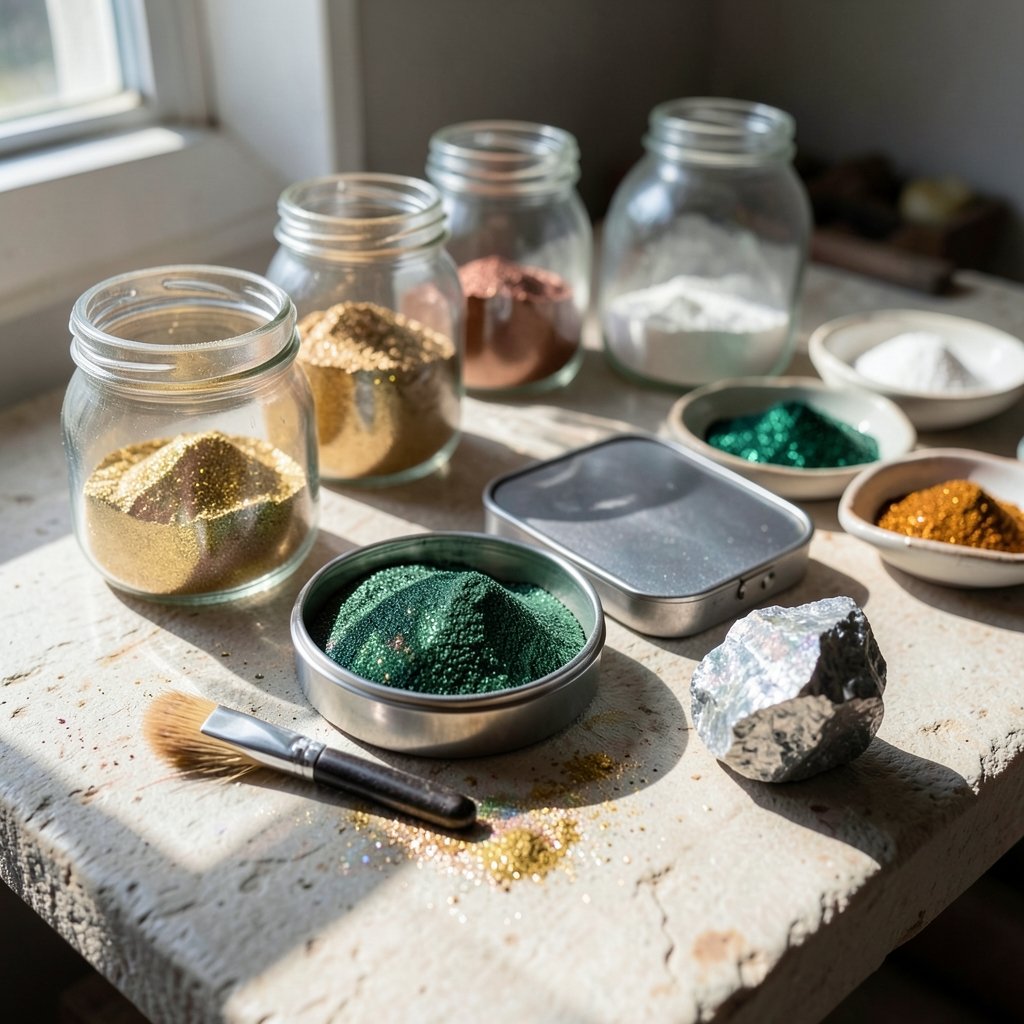
Why does the same shimmering dust end up in eyeshadow, car paint, and electrical insulation? Mica powder sits at a strange crossroads. It is a mined mineral, a cosmetic staple, an industrial filler, and a supply-chain headache all at once. Ask ten people what mica powder is and you will get ten answers, because the term covers everything from raw ground mineral to a lab-made pearlescent pigment with a titanium dioxide coating.
That ambiguity matters more than it sounds. The two products behave differently, are regulated differently, and raise different safety questions. This article sorts out what mica powder actually is, how it is used, where the health and ethical concerns lie, and what to check before buying or specifying it.
What mica powder actually is
Mica is not one mineral. It is a family of sheet silicates that split into thin, flexible, reflective flakes. The common members include muscovite, phlogopite, biotite, and lepidolite. Muscovite is the workhorse of the powder trade, prized for its light color and clean cleavage; phlogopite shows up where heat resistance matters.
Those flakes have three properties that industry loves. They reflect light, they slide against each other with very low friction, and they resist electricity. Grind the mineral fine enough and you get a powder that can make a surface sparkle, lubricate a mold, or insulate a component.
Here is the first practical trap. In commerce, “mica powder” can mean two quite different things:
- Pure ground mica, essentially the mineral milled to a particle size and sold as-is.
- Coated pearlescent pigment, where mica flakes serve as a substrate and are coated with titanium dioxide, iron oxides, or other materials to produce color and luster.
The second product is technically a pigment built on mica, not mica alone. Its regulatory identity, safety profile, and color behavior all follow the coating, not the substrate. Suppliers do not always make the distinction obvious on the label, so read the ingredient list rather than the product name.
How mica powder is used across industries
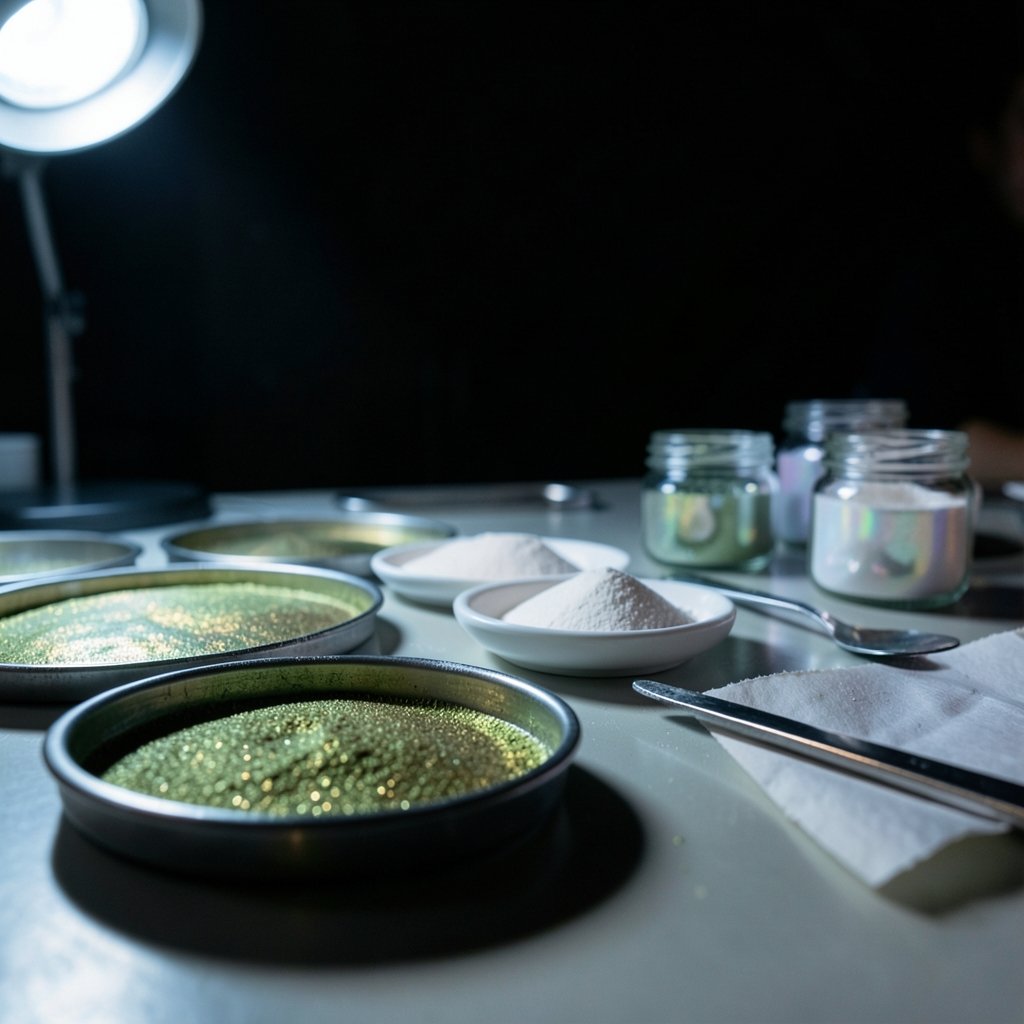
The range is genuinely wide, which is why demand is steady.
Cosmetics and personal care
Mica is a common ingredient in eyeshadows, blushes, foundations, lipsticks, and powders. It provides shimmer and “slip,” the smooth glide that makes a pressed powder feel good on the skin. Sericite, a fine-grained muscovite variant, is popular in pressed powders for its soft feel and adhesion.
In the EU, cosmetic ingredients fall under Regulation (EC) No 1223/2009, in force since 11 July 2013. In the US, the FDA regulates cosmetics under the FD&C Act. Mica itself carries the colorant designation CI 77019 in the EU inventory. Coated pearlescent pigments, however, are classified under the coating material’s CI number. That single detail trips up formulators who assume the whole pigment inherits the mica classification.
The Cosmetic Ingredient Review Expert Panel has assessed mica and related ingredients as safe under current use practices. The panel’s reports on mica date back decades, so check the current assessment rather than relying on a summary.
Paints, coatings, and plastics
In coatings, mica powder improves barrier properties, reduces settling, and adds a subtle sheen. In plastics, it acts as a filler and can improve dimensional stability. The flake shape is the point: overlapping platelets create a tortuous path that slows moisture and vapor.
Drilling and industrial applications
Mica is used in drilling muds, as a filler in various compounds, and in electrical insulation where its dielectric properties earn their keep. Ground mica also appears in joint compounds, brake linings, and foundry coatings.
The craft and DIY market
Resin art, soap making, candle making, and nail products have pushed mica powder into consumer hands. This is where confusion runs highest, because craft suppliers sell both cosmetic-grade and industrial-grade material, sometimes without clear labeling. If a product is going on skin, it needs cosmetic-grade documentation. If it is going into a floor coating, it does not.
Natural versus synthetic mica
Synthetic mica, often synthetic fluorphlogopite, has grown in use since the 2010s. It is made in a lab rather than mined, and it offers some real advantages.
| Feature | Natural mica | Synthetic mica |
|---|---|---|
| Origin | Mined mineral | Manufactured |
| Purity | Varies by deposit; may contain quartz | Highly consistent |
| Supply chain | Subject to mining and labor concerns | Not tied to mining |
| Brightness | Good, with some color cast | Often brighter and whiter |
| Cost | Generally lower | Generally higher |
| Best fit | Industrial use, value cosmetics | High-end color cosmetics |
Neither is automatically “better.” Natural mica is cheaper and perfectly suitable for many applications. Synthetic mica solves specific problems: supply-chain risk, batch variation, and the desire for a cleaner, brighter effect in premium formulas. The trade-off is cost.
The health question: dust, not the powder on your skin
The most misunderstood part of mica safety is the route of exposure. Mica in a pressed eyeshadow is not the hazard. Respirable dust in mining and processing is.
The core concern is inhalation of fine particles during extraction, milling, and handling. Mined mica can contain quartz, which means respirable crystalline silica may be present in the dust. That is the material linked to pneumoconiosis, including the condition sometimes called mica pneumoconiosis. The hazard depends on composition, not on the word “mica” alone.
Occupational limits address this. OSHA’s respirable crystalline silica standard for general industry, 29 CFR 1910.1053, took effect for most provisions on 23 June 2016. NIOSH maintains public-health guidance on respirable dust and silica. For anyone handling large quantities of mica powder, the practical controls are the familiar ones: ventilation, dust suppression, respiratory protection where needed, and air monitoring.
For consumers, the picture is calmer. A pressed powder or a resin pour releases negligible respirable dust compared with industrial handling. Loose powder cosmetics warrant a little care, especially in enclosed spaces, but the exposure is nothing like a processing plant. The people who need to think hardest about dust are the ones who work with it daily.
The supply-chain problem nobody wanted
Natural mica has an uncomfortable origin story. A significant share comes from India, particularly Jharkhand and Bihar, where reporting by NGOs and journalists around 2016 documented child labor in illegal mica mining. The practice fed into supply chains that reached global cosmetics and automotive brands.
The response has been a wave of responsible-sourcing initiatives, audits, and traceability programs. Progress is real but uneven. Estimates of how many children are involved vary widely and are contested, which makes the problem hard to measure and harder to solve.
For buyers, the practical takeaway is to ask for provenance documentation. Reputable suppliers can tell you where the mineral came from and what due diligence applies. If a supplier cannot answer, that silence is information. Synthetic mica exists partly because some brands decided the sourcing risk was not worth managing.
What actually works in practice
A few habits separate smooth results from frustrating ones, whether you are formulating a product or mixing resin.
Match grade to purpose. Cosmetic-grade material for skin contact, industrial grade for everything else. Never assume a bargain jar from a craft store is cosmetic grade.
Check the particle size. Coarse flakes give sparkle and texture; fine powder gives opacity and smoothness. The same supplier may offer both under similar names.
Test for color shift. Pearlescent pigments look different depending on the base, the light angle, and the binder. A swatch on white tells you almost nothing about how it will look in a dark resin or a tinted cream.
Watch the dust when handling loose powder. Work with ventilation, keep lids on, and avoid dry sweeping. This is basic housekeeping, not alarmism.
Verify the coating. If the product is a pearlescent pigment, the safety and regulatory profile follows the coating material. Ask for the full composition.
Common mistakes repeat. People buy “mica powder” expecting a pigment and get raw mineral with no color payoff. Others use industrial mica in a lip balm because the label said “mica.” Some assume synthetic means safer in every respect, when the real advantage is consistency and supply-chain distance. And plenty of buyers never ask where the mineral came from, which is exactly how the sourcing problem persists.
If you are comparing how different regulatory frameworks treat ingredients and workflows, the Genius Act vs MICA workflow differences that matter 2027 breakdown is a useful reference for how compliance paths diverge. And if your interest runs toward the plant-based side of the pigment world, this piece on matcha inside shade grown powder behind green latte covers how shade-grown processing shapes a very different kind of powder.
Buying mica powder without getting burned
The market is crowded and labeling is loose. A sensible checklist:
- Confirm whether the product is pure mica or a coated pearlescent pigment.
- For skin contact, request cosmetic-grade documentation and the full INCI listing.
- Ask about mineral origin and any responsible-sourcing program.
- Check particle size and test a small sample before committing to bulk.
- Store it sealed and dry; fine powder migrates everywhere and clumps in humidity.
None of this is exotic. It is the same diligence you would apply to any raw material. The difference is that mica’s dual identity as cosmetic ingredient and industrial mineral makes the stakes a little higher than the jar suggests.
Conclusion
Mica powder is a mineral family, a cosmetic workhorse, an industrial filler, and a supply-chain test case rolled into one shiny package. Its reflective flakes earn a place in eyeshadow and car paint alike, and its low friction and electrical resistance keep it in demand far beyond the beauty aisle. The real story is in the details: pure mineral versus coated pigment, natural versus synthetic, cosmetic grade versus industrial grade, and the dust hazards that matter in a plant but barely register at a makeup counter.
Get those distinctions right and mica powder is a reliable, versatile material. Get them wrong and you end up with a product that does not perform, a label that does not comply, or a supply chain you cannot defend. The powder itself has not changed much in decades. The scrutiny around it has, and that is probably for the better.
Frequently asked questions
Is mica powder safe to use on skin?
Cosmetic-grade mica is assessed as safe for use in cosmetics under current practices, and it appears in countless eyeshadows and powders. The key word is cosmetic grade. Industrial mica may contain impurities and is not intended for skin contact. Check the grade and the full ingredient list before use.
What is the difference between mica powder and pearlescent pigment?
Pure mica powder is ground mineral. Pearlescent pigment uses mica flakes as a substrate coated with titanium dioxide, iron oxides, or similar materials to create color and luster. The coating determines the pigment’s regulatory classification and safety profile, so the two are not interchangeable.
Is synthetic mica better than natural mica?
Not universally. Synthetic mica, such as synthetic fluorphlogopite, offers greater consistency, brighter effects, and freedom from mining-related supply-chain concerns, but it costs more. Natural mica is cheaper and works well for many applications. The right choice depends on your performance needs, budget, and sourcing priorities.
Why is there concern about mica mining?
A significant share of natural mica comes from regions of India where reporting around 2016 documented child labor in illegal mining. The industry has responded with responsible-sourcing and traceability programs, but progress varies. Buyers should ask suppliers for provenance documentation and due diligence details.
Is mica powder dangerous to breathe?
Fine dust from mining and processing mica can be a hazard, especially if the mineral contains quartz, which means respirable crystalline silica may be present. Occupational standards such as OSHA’s 29 CFR 1910.1053 address these limits. For consumers using pressed cosmetics, exposure is negligible; industrial handlers need ventilation and dust controls.
What does CI 77019 mean on a label?
CI 77019 is the EU colorant designation for mica itself. Coated pearlescent pigments are classified under the coating material’s CI number instead. Seeing CI 77019 tells you mica is present as a colorant, but it does not tell you whether the product is pure mica or a coated pigment.



