
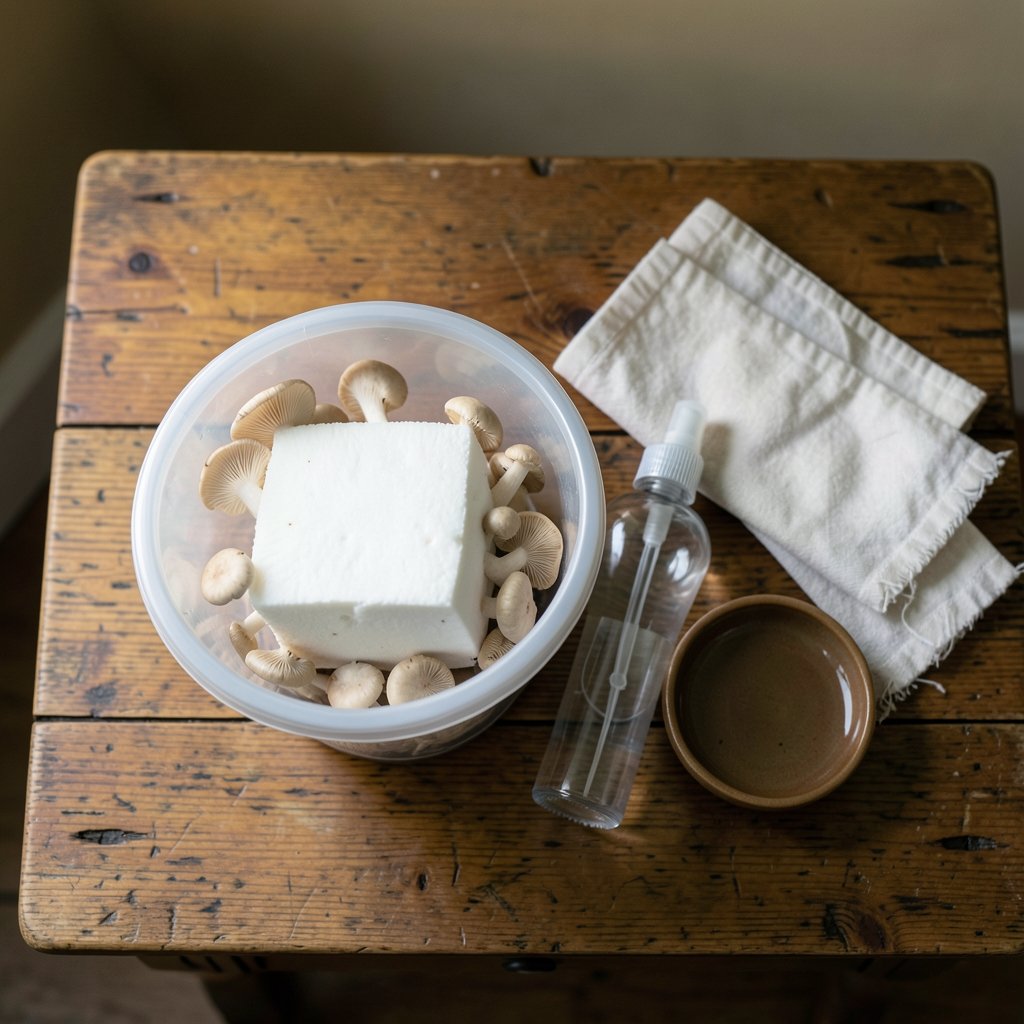
People buy a box that promises fresh mushrooms in two weeks and end up with a fuzzy brick and fruit flies. Mushroom growing kits are among the most popular indoor gardening products on the market and among the most misunderstood. They look simple. They are not complicated, but they are particular. A kit is a living block of mycelium, and mycelium has opinions.
This guide walks through what a kit really is, how to make one fruit properly, where beginners go wrong, and how to judge whether the box in front of you is worth the money. No hype, no mystical claims about brain power, just the practical picture.
What Is a Mushroom Growing Kit, Exactly?
A mushroom growing kit is a ready-to-fruit substrate block that has already been colonised by mushroom mycelium. The substrate is usually supplemented hardwood sawdust, straw, or a mix of both. Because the mycelium has already run through the block before it ships, the customer’s only job is to trigger fruiting.
That last point matters more than most buyers realise. The hardest part of mushroom cultivation is the colonisation phase, when a sterile substrate is vulnerable to moulds and bacteria. Kits remove that risk by doing it in a clean facility. What is left is the fruiting phase, which is mostly about air, humidity, light, and temperature.
Most kits on the market are for two species:
- Oyster mushrooms (Pleurotus), which fruit fast, tolerate a wide temperature range, and grow in dramatic clusters.
- Lion’s mane (Hericium erinaceus), which is slower, fussier about humidity, and produces a strange, beautiful pom-pom shape.
Some kits offer shiitake, pioppino, or chestnut mushrooms, but these are less forgiving for first-timers. If a seller offers a “beginner bundle,” oyster is almost always the sensible starting point.
How Fruiting Actually Gets Triggered
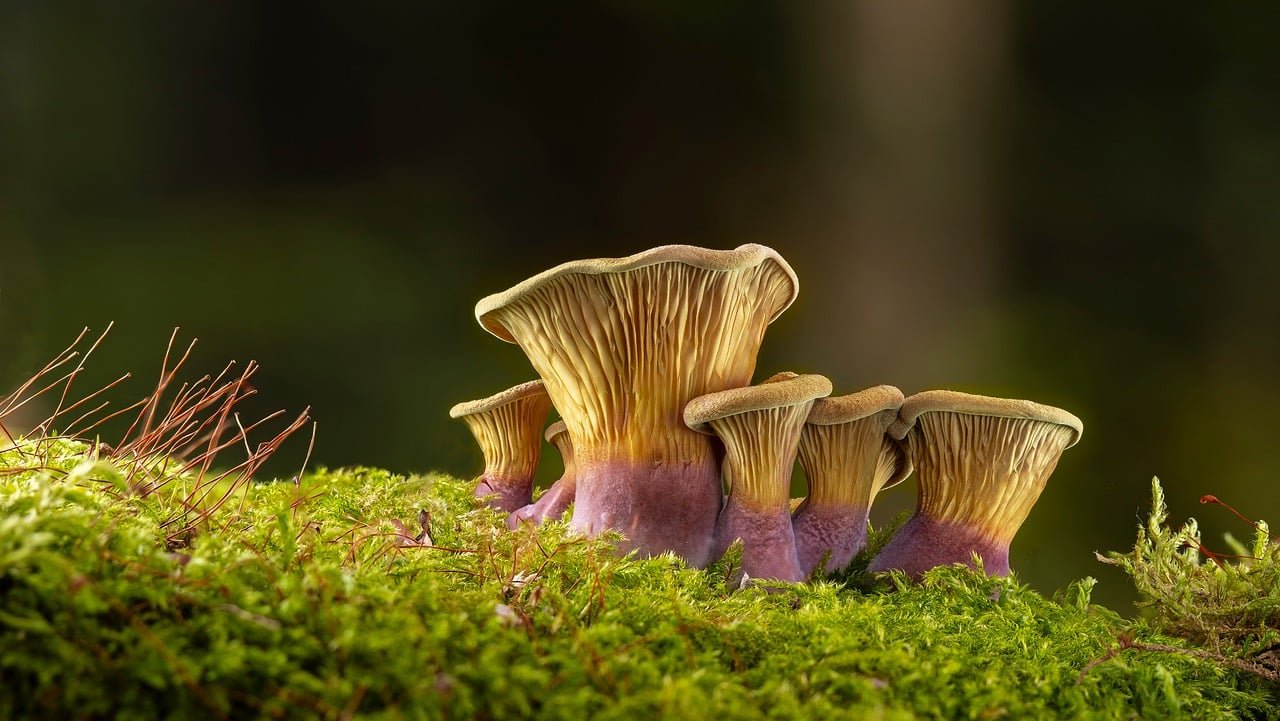
Here is the single most useful piece of knowledge for anyone with a kit: oyster mushrooms fruit in response to fresh air exchange and a drop in carbon dioxide. This is standard cultivation guidance found in grower references such as Paul Stamets’ Growing Gourmet and Medicinal Mushrooms, and it explains nearly every failure mode.
When CO₂ stays high, the mushroom produces long, thin stems and tiny caps. Growers call this “stretching.” The block is telling you it is searching for air. Open the box, cut a larger opening, move it somewhere with real airflow, and the next flush usually corrects itself.
The practical triggers are:
| Trigger | What It Does | Common Mistake |
|---|---|---|
| Fresh air exchange | Lowers CO₂, drives cap formation | Keeping the box sealed in a cupboard |
| High humidity (roughly 80–95%) | Prevents pins from drying out | Misting the block directly instead of the air |
| Cool-to-moderate temperature | Signals the season has changed | Placing it next to a radiator |
| Indirect light | Gives pins a direction to grow | Assuming mushrooms need total darkness |
That last row surprises people. Mushrooms do not photosynthesise, but light still acts as a directional cue. A few hours of indirect daylight from a window is plenty. Total darkness produces pale, leggy, disorganised growth.
The Setup That Works in a Normal Home
You do not need a grow tent, a humidifier, or a lab. You need a spot that is bright, moderately cool, and not sealed shut. A kitchen counter away from the stove works. So does a bathroom with a window, provided it is not the dampest corner of the house.
A simple routine that consistently produces results:
- Unbox and read the specific instructions. Cut openings vary by species and block size. A lion’s mane block wants a small opening near the top; an oyster block often wants a larger X-shaped cut on the side.
- Place the block in a shallow tray or on a saucer. Water will drip, and you do not want it soaking into a shelf.
- Mist the air around the block, not the block itself. Two or three light passes a day is usually enough. Direct heavy misting on pins causes them to rot or develop bacterial blotch.
- Keep a small gap of airflow. A cracked window, a nearby fan on low, or simply an open room is fine. Stagnant air is the enemy.
- Harvest on time. Oyster caps should still be slightly curled at the edges. Wait until they flatten and release spores and you have waited too long.
Common mistakes, in rough order of frequency: over-misting, sealing the box in a dark closet, keeping it too warm, and cutting the opening too small. A fifth one deserves its own paragraph.
The contamination trap
Green mould, usually a Trichoderma species, is the classic kit killer. It shows up as a powdery green patch on the substrate or near the cut. Once it appears on the block surface, that block is generally finished. The mould outcompetes the mycelium and releases spores that spread to everything nearby.
The frustrating part is that contamination is usually caused by the grower’s own kindness. Over-misting, warm temperatures, and poor airflow all favour mould over mushrooms. If a block goes green, do not try to salvage it. Bag it, remove it from the growing area, and start again with better airflow and less water.
What Kits Cost and What You Actually Get
Prices vary widely, but the pattern is consistent: you pay for convenience and for a guaranteed clean block. A small oyster kit might cost roughly the price of two or three supermarket punnets, and it will typically produce two to three flushes over several weeks. The first flush is usually the largest, the second is respectable, and the third is a bonus.
Manufacturer yield claims are not standardised, which is worth knowing before you compare boxes. There is no independent test method that lets you line up “produces 1.5 kg” against “produces 3 lbs” and trust the comparison. Block weight is the more honest number to look at.
A few buying signals that separate a decent kit from a disappointing one:
- A visible, fully white block. Patchy or brown-streaked substrate suggests the block was stressed in transit.
- A species matched to your room temperature. Oyster varieties differ; some fruit happily at 18°C, others want cooler.
- Clear, species-specific instructions. A generic leaflet that covers five species at once is a warning sign.
- A harvest window stated in days, not weeks. Fast, predictable kits tell you what to expect.
If you are the sort of person who compares specifications carefully before buying anything, the same instinct applies here. It is the same logic behind choosing affordable ERP software growing companies actually fits your needs rather than the biggest name on the page: match the product to the actual conditions, not to the marketing.
Spores, Allergies, and the Health Claims Problem
Two things need saying plainly, because the marketing around kits tends to blur them.
First, spore load. A mature oyster cluster releases an enormous number of spores. In occupational settings, oyster mushroom spores are a recognised respiratory sensitiser, and home growers have reported irritation when fruiting large blocks in small, unventilated rooms. The fix is simple: harvest before caps flatten, keep the room ventilated, and do not run half a dozen blocks in a bedroom.
Second, health claims. Lion’s mane kits are frequently sold alongside claims about memory and cognition. It is worth being clear that clinical research on Hericium erinaceus is early-stage and small, and no regulatory body has approved kit-grown mushrooms as a health product. Home-grown mushrooms are food. That is a good thing. Food is enough.
There is also a legality question that some sellers gloss over. Kits for Psilocybe species, which contain controlled substances, are sold in some jurisdictions and are illegal in many others. Laws differ by country and, in the United States, by state, and they have shifted during the 2020s. Anyone considering such a kit should check their local law directly rather than trusting a product page.
Judging the Conditions Before You Judge the Kit
Here is a pattern that shows up constantly in home-growing forums: someone buys a kit, follows the instructions loosely, gets a mediocre result, and concludes that kits are a scam. Usually the kit was fine and the room was wrong.
Conditions matter more than brand. A block in a warm, sealed, dim flat will underperform a cheaper block in a cool, bright, airy kitchen. Before ordering, ask three questions about the space where the kit will live:
- How warm does it get during the day?
- Is there any natural airflow, or is it a sealed box?
- Is there indirect daylight for part of the day?
If the answers are “very warm,” “none,” and “no,” a kit will struggle regardless of price. The same principle of matching a product to real conditions shows up in plenty of buying decisions, from gaming monitor vs tv room lighting changes viewing to choosing a gaming monitor vs tv room lighting changes viewing setup that suits the actual room. The product is only half the equation.
Growing Beyond the Kit
Once a kit has produced its final flush, the block is not useless. Spent substrate makes decent compost. The usual advice is to break it up and add it to an outdoor compost pile, keeping it well away from indoor growing areas so any mould spores do not drift back to your next kit.
Some growers use a first kit as a stepping stone to cultivating from grain spawn and pasteurised straw. That is a bigger commitment, requiring sterile technique and more space. Kits are a low-risk way to learn what healthy mycelium looks like, how pins form, and how fast a flush develops. Those lessons transfer directly.
If the hobby grows into something bigger, the financial side starts to matter, and it helps to think about get money earn it borrow it or grow it in the same practical spirit: small, repeatable experiments beat big upfront spending. A second kit is a cheaper teacher than a full cultivation setup.
For anyone who wants the room to look right while the mushrooms do their thing, there is also a design angle. People planning a growing corner often use an AI interior design generator for room ideas to sketch out shelving and light before committing. It is a small step, but a bright, airy corner with a tray and a saucer beats a dark cupboard every time.
Conclusion
A mushroom growing kit is not a magic box, and it is not a scam either. It is a pre-colonised block of living mycelium that needs three things: fresh air, steady humidity, and a cool, bright spot. Get those right and the results are genuinely satisfying. Get them wrong and the block will sulk, stretch, or go green.
The best approach is modest and observant. Start with one oyster kit. Cut the opening properly. Mist the air, not the block. Harvest before the caps flatten. Keep the room ventilated. Then decide whether the hobby deserves a second block or a bigger setup. Mushrooms reward patience more than equipment, and that is a rare thing in a product category full of promises.
Frequently Asked Questions
How long does a mushroom growing kit take to fruit?
Most oyster kits show pins within 7 to 14 days of opening, with a full flush ready to harvest a few days after that. Lion’s mane is slower and can take two to three weeks to pin. If nothing has happened after three weeks in a cool, bright, airy spot, the block is likely too dry or the opening is too small.
Why are my mushrooms growing long stems and tiny caps?
That is a CO₂ problem. High carbon dioxide tells the mushroom to stretch upward in search of air, producing long stems and small caps. Increase fresh air exchange by opening the box more, moving it to a better-ventilated room, or running a fan on low nearby. The next flush usually corrects itself.
Can I eat mushrooms from a kit that had green mould?
No. Green mould, usually a Trichoderma species, spreads quickly and releases spores. Once it appears on the substrate surface, the block should be bagged and removed rather than harvested. Mushrooms growing next to an active mould patch should not be eaten.
How many flushes will one kit produce?
Typically two to three flushes over several weeks, with the first being the largest. Yield depends on block size and species, and manufacturer figures are not standardised, so block weight is a more reliable comparison than quoted harvest totals.
Do mushroom kits need light?
They do not photosynthesise, but light acts as a directional cue for pins. A few hours of indirect daylight from a window is enough. Total darkness produces pale, leggy, poorly formed growth, so a dark cupboard is the wrong home for a kit.
Are lion’s mane kits a memory supplement?
No. Lion’s mane is a edible mushroom, and clinical research on it is early-stage and small. No regulatory body has approved kit-grown mushrooms as a health product. Treat the kit as a source of fresh food, not as a treatment.



