Roughly 40 million Americans move every year, according to U.S. Census Bureau data, and a huge share of them are downsizing into smaller homes, apartments, and townhouses. That means millions of people are staring at the same problem: too much stuff, too little square footage. The good news is that efficient small-house organization isn’t about buying more bins. It’s about using the space you already have in smarter ways, and skipping the mistakes that quietly waste it.
Start With a Hard Reset, Not a Shopping Trip
The biggest mistake people make in small homes is buying storage containers before they know what they’re storing. That’s how you end up with a closet full of matching bins holding things you never use. Do the purge first. Pull everything out of one zone at a time, sort it into keep, donate, and toss piles, and only then measure what’s left.
The one in, one out rule is a simple habit that keeps the reset from falling apart. Every time something new comes through the door, something similar leaves. It sounds rigid, but in a small house it’s the difference between staying organized and sliding back into chaos within six months. The rule matters less for its strictness and more because it forces a decision at the moment of purchase, when you’re still paying attention.
One more thing: don’t try to do the whole house in a weekend. Small-space organizing works best zone by zone, because each area has different constraints. A kitchen needs vertical reach. A bedroom needs seasonal rotation. A hallway needs almost nothing on the floor.
Go Vertical, But Anchor Everything
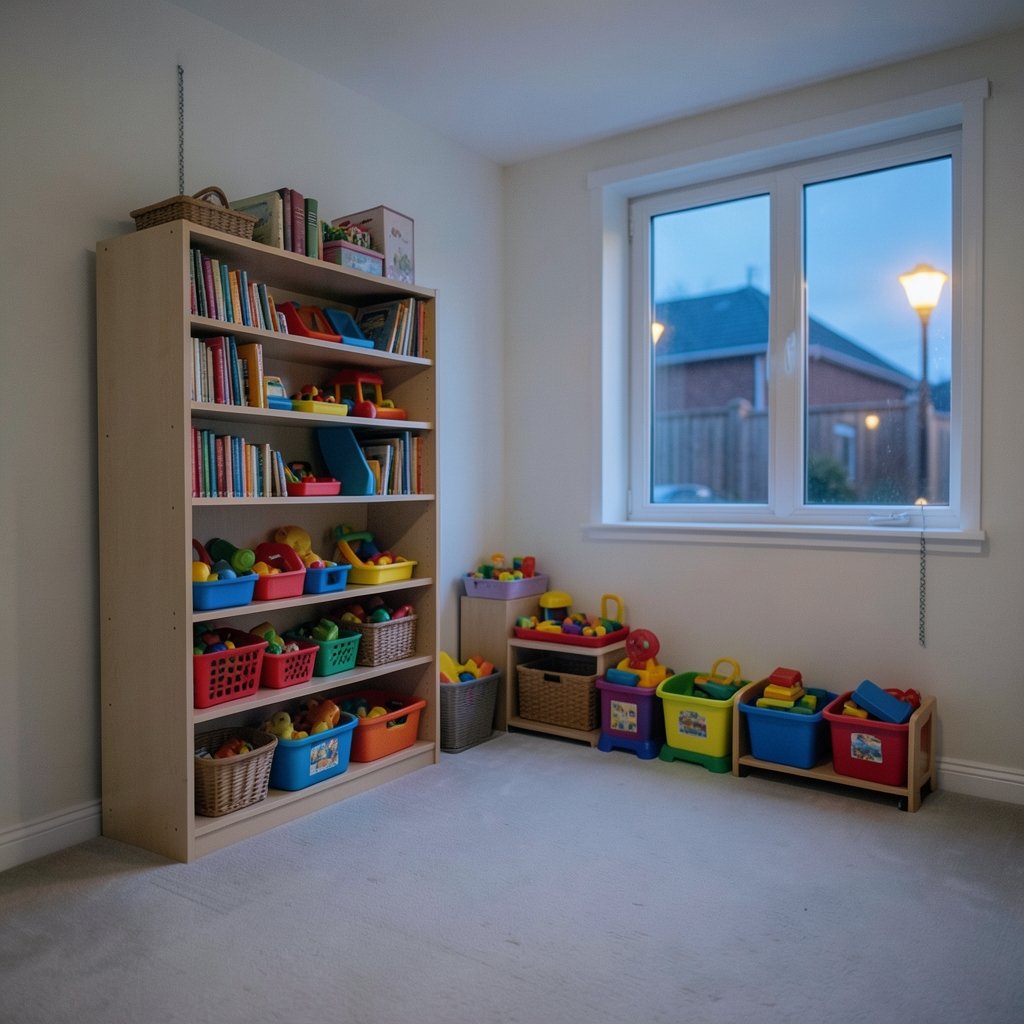
Vertical space is the most underused resource in small homes. Wall-mounted shelves, ceiling-height cabinets, over-door racks, and risers in kitchen cabinets all add usable capacity without eating a single inch of floor. Clear floor area is what makes a room feel bigger, so anything you can lift off the ground is a win.
But there’s a safety side to this that most organizing articles skip. Tall, top-heavy storage tips over, and the Consumer Product Safety Commission has documented serious injuries and deaths from furniture and TV tip-overs, many involving children. If you’re stacking shelves to the ceiling or mounting a tall bookcase, anchor it to a stud. That’s not optional advice. It’s the difference between efficient storage and a hazard.
A few vertical moves that actually work in practice:
- Kitchen cabinets: add a second shelf or riser so you use the dead air above stacked plates.
- Closet doors: hang a shoe organizer on the inside for small items, cleaning supplies, or accessories.
- Behind doors: slim over-door hooks hold coats, bags, and brooms without a floor footprint.
- Above doorways: a shelf over a door frame is prime real estate nobody uses.
- Under beds: shallow rolling bins for out-of-season clothing and bedding.
Zone Every Room Around a Single Job
Zoning means giving each area one clear function. A desk is only a desk. A dining table is only a dining table. When one surface does five jobs, it collects five kinds of clutter, and nothing ever gets put away because there’s no “away” to put it in.
In a small house, zoning often means rethinking what a room is for rather than what it’s called. A spare bedroom that’s really a storage room with a bed in it should be organized as storage first. A living room that doubles as a home office needs a defined work zone that can be closed, covered, or folded away at the end of the day. The goal is that every object has a home, and every home is within arm’s reach of where the object gets used. (Home & Garden)
This is where a lot of people get stuck, because zoning forces trade-offs. You can’t have a guest room, a gym, and a craft studio in the same 100 square feet without conflict. Pick the primary use, organize around it, and let the secondary uses adapt.
Choose Furniture That Stores Itself
Multi-function furniture is standard small-space strategy for good reason, but quality varies wildly and the ergonomics matter. A storage bed with a lift-up base gives you a whole closet’s worth of space. A fold-down desk frees a wall when you’re not working. A bench with a hinged lid hides shoes at the entry. The catch is that cheap versions of these pieces break, squeak, or become so awkward to open that you stop using them. (Indoor Air Quality (IAQ))
The practical test before buying: can one person open and close it easily, every day, without moving anything else? If the answer is no, it’ll become a permanent closed box. Also favor furniture raised on legs. Visible floor underneath a sofa or cabinet makes a room read as larger, and it gives you a spot to slide low baskets.
If the house has a home office corner, the same logic applies to the tech. A compact setup with fewer devices and cleaner cable routing does more for a small room than another shelf. There are good guides on picking best ai automation tools for small businesses if the home office is also a business office, since automating admin work means less paper and less equipment on the desk.
Rotate With the Seasons
Seasonal rotation is one of the highest-leverage habits in a small house, and it costs nothing. Winter coats don’t need to hang in the entryway in July. Holiday decorations don’t need to live in the hall closet year-round. Pull out-of-season items into the least accessible storage you have, typically the top shelf, under the bed, or a garage bin, and bring them back when the weather turns.
The rule of thumb: the things you touch daily live at eye level and within reach. The things you touch twice a year live high, low, or far away. Most small homes are organized backward, with daily items crammed into awkward spots and seasonal gear hogging prime real estate.
Tame the Paper and Digital Pile
Paper is the quiet clutter. Mail, receipts, manuals, school forms, and warranties pile up faster than anything else because there’s no natural moment when they leave the house. Set up a single landing spot for incoming paper, sort it weekly, and digitize what you can. A scanner app and a consistent folder structure do more than any filing cabinet.
The same applies to photos and documents. If your phone is full and your desktop is a wasteland of screenshots, a real system for best way to organize photos keeps the digital clutter from becoming a project you dread. Digital mess doesn’t take up floor space, but it takes up mental space, and in a small home the mental load is half the battle.
Make the Entryway Work Harder
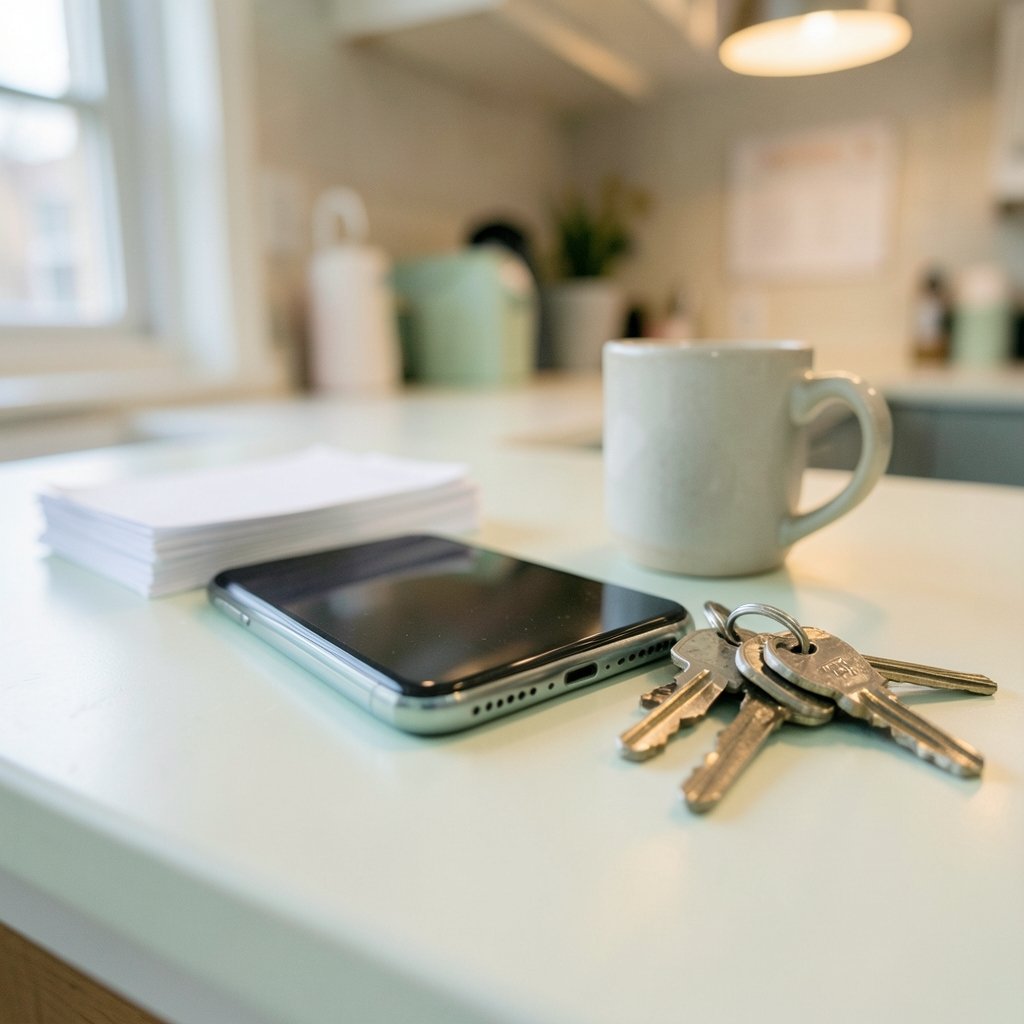
The entryway is the highest-traffic zone in any small house and usually the most neglected. Every object that enters the home passes through it: shoes, bags, keys, mail, coats, dog leashes. If there’s no system there, the clutter migrates into the living room within a day.
A working entry needs four things: a place to sit, a place to hang, a place to drop small items, and a place for shoes. That can be as simple as a bench with storage underneath, a row of hooks at adult and child height, a small tray for keys, and a boot mat. Keep the floor clear. A narrow console table with a bowl on top beats a bulky hall tree that blocks the door.
Use the Awkward Spaces
Every house has dead zones: the gap beside the fridge, the corner behind a door, the space under the stairs, the strip above the kitchen cabinets. None of them are big enough to matter individually. Together they’re a closet’s worth of storage.
Rolling carts fit beside appliances. Under-stair areas can take drawers, hooks, or a small desk. The gap above cabinets can hold rarely used items in labeled bins, though keep in mind that grease and dust collect up there, so seal anything fabric. Measure before you buy, because “close enough” carts and bins that don’t quite fit are a common and expensive mistake.
Keep the Systems Simple Enough to Maintain
The most efficient organization system is the one you’ll actually keep up with. Elaborate label makers, color-coded bins, and Pinterest-perfect pantries collapse under real life. Aim for systems a tired person can use at 10 p.m. without thinking.
A few practical rules that hold up:
- Label at eye level, not on top. If you can’t read it without climbing, you won’t use it.
- Leave 20 percent empty. Full-to-the-brim storage has nowhere to absorb new items and becomes a jam.
- Store items where they’re used, not where they fit. A step stool in the garage is useless if the high shelves are in the kitchen.
- Do a ten-minute weekly reset. Small, frequent maintenance beats a quarterly overhaul.
For households that run a business from home, the back-office side deserves the same treatment as the closets. Good small business accounting software keeps receipts and records out of shoeboxes and off the kitchen counter, and the right website builders for small business mean fewer paper brochures and printed materials cluttering the office shelf.
Know What Doesn’t Work
A lot of popular small-space advice falls apart in practice. Open shelving looks airy in photos but demands constant tidying and shows every mismatched mug. Deep cabinets without pull-outs swallow items you’ll never see again. Storage ottomans fill up with things that have no other home and then become too heavy to move. And buying a full matching bin set before decluttering is the single most common waste of money in small-space organizing.
Renters face an extra constraint: many vertical storage solutions assume permission to drill. Command strips, tension rods, over-door hooks, and freestanding shelving units cover most of the same ground without touching the walls. Check the lease before you commit to a wall-mounted system.
Conclusion
Organizing a small house efficiently comes down to a few durable habits rather than a shopping list. Purge before you buy storage, go vertical but anchor everything, give each zone one job, rotate with the seasons, and keep the systems simple enough to survive a busy week. The homes that stay organized aren’t the ones with the most bins. They’re the ones where every object has an obvious home and the floor stays clear. Start with one zone this weekend, and let the momentum carry the rest.
Frequently Asked Questions
How long does it take to organize a small house?
Most small homes can be reset zone by zone over two to four weekends. Trying to finish in a single weekend usually leads to rushed decisions and piles that get shoved into closets. One zone per session, with a purge and a setup phase, keeps the work manageable and the results lasting.
What should I organize first in a small house?
Start with the entryway, then the kitchen. The entryway controls what comes into the home, and the kitchen has the most daily-use items competing for space. Bedrooms and storage closets are easier to tackle once the high-traffic zones have working systems.
Is vertical storage safe in a small home?
It’s safe when it’s anchored. Tall bookcases, stacked shelving, and wall-mounted units should be secured to wall studs, especially in homes with children or pets. The Consumer Product Safety Commission tracks tip-over injuries, and most incidents involve furniture that was never secured.
How do I stop clutter from coming back?
Use the one in, one out rule, keep storage about 20 percent empty, and do a short weekly reset. Clutter returns when systems are too complicated to maintain or when there’s no landing spot for incoming items. A single tray for mail and keys solves more than most people expect.
Should I buy storage containers before I declutter?
No. Decluttering first tells you what you actually own and how much space it needs. Buying bins first almost always results in containers that are the wrong size or that end up holding things you should have donated.
What’s the best storage for renters who can’t drill into walls?
Freestanding shelving, tension rods, over-door hooks, under-bed rolling bins, and adhesive strips cover most needs without permanent changes. Measure the space carefully before buying, and favor units that can move with you to the next place.